







Brewing Huakui 8.0: A Natural Ethiopian Coffee in a V60
Huakui 8.0 is a naturally processed coffee from the Guji Hambella region of Ethiopia, known for its full body and fruit-forward sweetness. The beans come from the Buku Abel processing station and gained attention after winning the 2017 Ethiopia National Taste of Harvest competition. Natural processing gives the coffee layered aromas of florals, spices, and tropical fruits, with a smooth mouthfeel and a long, bright finish. Grinding fresh before brewing helps preserve these delicate aromas.
For a V60 pour-over, use a medium-fine grind and water just off a boil, around 92 to 94 degrees Celsius. Start with a 1:15 coffee-to-water ratio. Begin with a bloom pour, then follow with two more stages: first in a slow spiral from the center outward, then a final gentle pour to reach the target weight. Total brew time should be about two and a half to three minutes. This three-stage method highlights the berry notes and sweetness of Huakui 8.0.
Huakui coffee, with its full-bodied fruit aromas and sweetness, has become a favorite among many coffee lovers. This naturally processed bean from the Guji Hambella region—how exactly should it be brewed to showcase its best flavors? This article will walk you through Huakui's origin background and processing methods, and share in detail Front Street Coffee's V60 pour-over parameters and three-stage pouring technique. From grind size selection and water temperature control to coffee-to-water ratio, every step is clearly presented to help you easily replicate a cup of berry-forward Huakui 8.0 at home.
When selecting coffee beans, origin is certainly an important reference, but the processing method also deserves attention, as it directly determines the direction of the flavor. The natural process, as Ethiopia's most traditional method of drying green beans, is still widely used in most areas of Sidamo to this day. The typical style of Sidamo natural beans is full-bodied and rich, with complex sweetness and a silky-smooth mouthfeel, layered aromas of spices, florals, and fruits, plus a long, bright finish.
Compared to processing methods that trend toward washed styles, natural processing has a noticeably longer fermentation period, with more thorough interaction between microorganisms and fruit pulp. During fruit fermentation, microbes produce large amounts of volatile compounds, particularly esters. Although most sugars are broken down during roasting, these compounds can be transformed into other types of aroma molecules through caramelization reactions. It is precisely these substances that give natural beans richer floral and tropical fruit fermentation aromas—such as furan compounds—making natural coffee's flavor spectrum broader and its sweetness more prominent. The Sidamo Huakui on Front Street's bean list uses a natural batch from Hambella, and its full-bodied sweetness has many customers coming back for more.
Guji Hambella Huakui
Hambella is located in the transitional zone between the Sidamo and Guji regions, administratively under Guji's jurisdiction, separated from Yirgacheffe's Kochere by a 3,200-meter-high mountain range, making it one of Ethiopia's highest-altitude sub-regions. In 2017, DW Company entered Huakui in that year's TOH (Ethiopia National Taste of Harvest Competition) and won first place, bringing this bean into the public eye ever since. Huakui's English name, Hambella, is simply a transliteration of the origin name Hambella. Huakui coffee originates from the Guji Buku Abel processing station and belongs to a natural batch. The Buku processing station purchases coffee cherries from different areas around the farm, processes them uniformly, and then sells them.
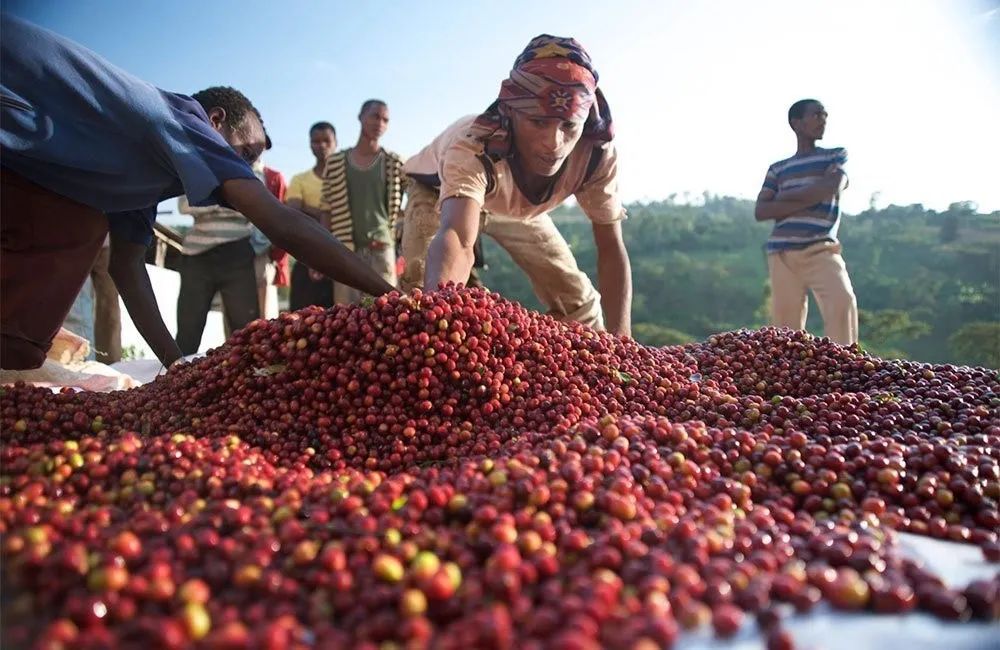
During the harvest season from December to January each year, the Buku processing station arranges for farmers to pick only fully red cherries, with a sugar content that must reach 30 or above. After sorting, the fruit is spread out to dry on African raised beds. The local temperature difference between day and night is extreme; farmers set up shade nets at noon to prevent excessive fermentation from high temperatures, and cover with plastic sheets at night to guard against sudden rainfall. The fruit is turned continuously throughout the day, ensuring even drying while avoiding sun damage or undesirable fermentation flavors. After about 18 days of sun-drying, the green beans' moisture content drops to around 13%, and they are ready for mechanical hulling.
To showcase Huakui's full-bodied fruit character, Front Street uses a medium-light roast. Cupping results show that this natural Sidamo Huakui has a dry aroma with notes of nuts, honey, berries, and a slight fermentation scent; on the palate, you can taste the rich sweet-tartness of passion fruit, cream, and strawberry, with a full body and a cocoa finish.
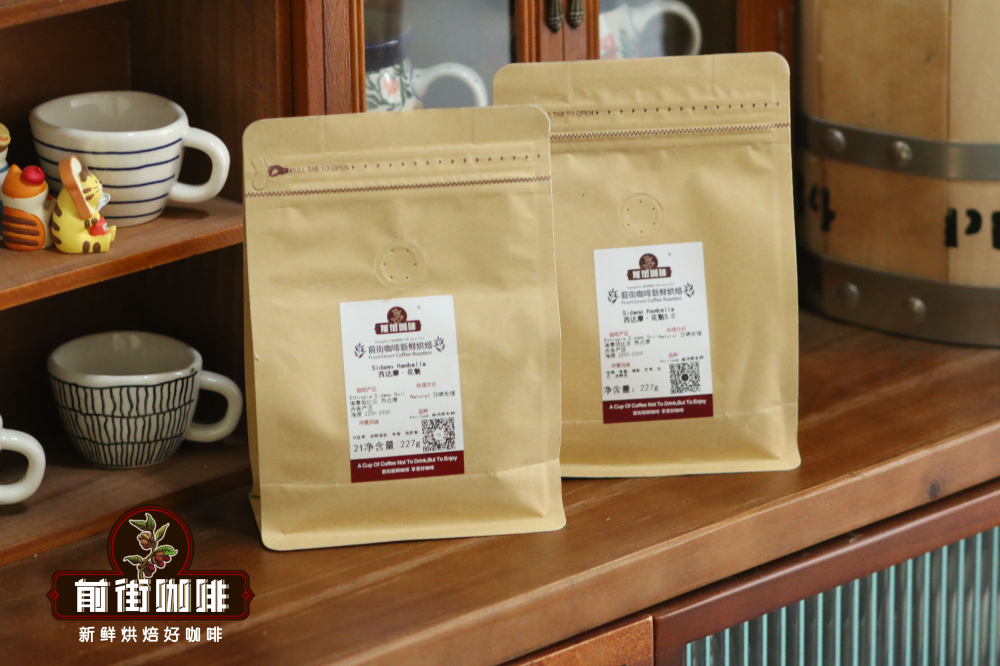
How to brew Sidamo Huakui 8.0 coffee?
Once you have good beans in hand, the next step is matching them with the right brewing equipment and parameters. Proper equipment can better amplify the coffee's positive flavors; reasonable parameters and technique are what allow Huakui's berry aromas to be fully activated. To brew a cup of pour-over coffee, you need at minimum: a pour-over kettle, dripper, server, grinder, filter paper, digital scale, and thermometer.
The grinder plays a crucial role in the pour-over process, with common types being manual and electric. Whichever you use, the goal is to achieve uniform grind particles. The coarseness of the grind directly affects the taste: too coarse leads to under-extraction and a thin mouthfeel; too fine leads to over-extraction and a bitter taste. When calibrating grind size, Front Street uses a Chinese No. 20 0.85mm standard sieve; medium-light roasted beans are typically controlled at a 75–80% pass-through rate, while medium-dark roasted beans use 70–75%. Huakui 8.0 is a high-altitude bean with a medium-light roast; to extract more aromatic substances, Front Street chooses a coarseness with an 80% pass-through rate on a No. 20 sieve, with the shop's EK43s grinder set at 10.
A thermometer is used to measure hot water temperature. Water temperature and grind size work similarly: the higher the temperature, the stronger the extraction efficiency, the more substances released, and the higher the concentration. If you use water close to boiling directly, it easily brings out unpleasant bitter flavors. So when brewing medium-dark roasted beans, Front Street adjusts the parameters, because with a higher degree of caramelization, large-molecule bitter substances are more easily released. To control off-flavors, the water temperature is appropriately lowered—87–90°C is recommended for medium-dark roasts—while light-roasted beans need higher temperatures to activate aromas, so 91–93°C is used.
Front Street Coffee's daily service uses both the Hario V60 and KONO drippers, with the V60 mainly handling light-roasted beans and the KONO handling dark-roasted beans. Here, Front Street Coffee's baristas will use a resin V60 to extract Yirgacheffe. The V60 has spiral ribs connecting the top and bottom as well as a large central hole, which speeds up water flow; the spiral grooves extend the water path, increasing contact time between coffee grounds and hot water. Each stream of water converges toward the center along the grooves, concentrating the force on the coffee bed, resulting in a more layered cup.
For Huakui 8.0's brewing ratio, Front Street believes both 1:15 and 1:16 work. For a richer mouthfeel, use 1:15; for clearer floral and sweet notes, use 1:16 to let the flavors open up more.
Huakui 8.0 pour-over parameters:
Dripper: V60 Water temperature: 92-93°C
Coffee dose: 15g Coffee-to-water ratio: 1:15 Grind size: fine granulated sugar (78% pass-through on No. 20 sieve)
Based on past experience, Front Street recommends that beginners use the three-stage pouring method. This method allows flavor substances to dissolve more fully, enhancing the mouthfeel layers, while avoiding over-extraction from steeping too long. Taking 15g of coffee, a 1:15 ratio, and a total water volume of 225ml as an example, the three stages are 30ml, 95ml, and 100ml, corresponding to scale readings of: 30g, 125g, and 225g.
After folding the filter paper to fit the dripper, wet it with a small amount of water and press it snug, then discard the water in the server. Add the coffee grounds and gently tap to level the bed. For the first stage, gently pour 30g of water for blooming, lasting 30 seconds; for the second stage, pour to about 125g, circling outward evenly and steadily. When the water level drops halfway, pour the final stage to 225g. Once all the coffee has dripped through, the total extraction time is about 2 minutes.
Front Street's coffee brewing tips:
Regarding brewing, Front Street has always believed that coffee bean freshness has an enormous impact on flavor, so all beans shipped by Front Street Coffee are within 5 days of roasting. Front Street's roasting philosophy is "freshly roasted good coffee," so every customer who places an order receives the freshest coffee possible upon delivery. The resting period is about 4–7 days, so by the time customers receive it, it's right at peak flavor.
For those who need ground coffee, Front Street warmly reminds you: once coffee beans are pre-ground, there's no need to rest them further. The pressure from carbon dioxide inside the packaging during transit also helps round out the flavors, so you can brew immediately upon receiving ground coffee. However, ground coffee should be used up as quickly as possible, because it oxidizes faster once exposed to air, and flavors dissipate more rapidly. So Front Street recommends buying whole beans and grinding fresh for each brew to better enjoy the coffee's flavors.
Front Street also carries single-origin coffees from different Ethiopian regions, such as: Yirgacheffe Kochere, Yirgacheffe Chaka, Yirgacheffe Red Cherry, Sidamo Huakui, Gesha Village Red Label, and Gesha Village Gold Label, among others—so you can experience the coffee flavors of different regions.
The above content is compiled by CoffeeHunters, a coffee news website.


