







How to fix sour cold brew by adjusting grind size?
Sour cold brew and sour espresso usually point to under-extraction: the water moved through the coffee too fast or the particles were too coarse. The fix is to grind finer, which slows the flow and pulls more sweetness and body from the grounds. Espresso magnifies every deviation, so a 0.1-step change can shift the cup noticeably.
Espresso particles are finer than fine salt, so the eye cannot judge them; flow rate and taste are the practical guides. If the shot runs too fast and tastes sharp, tighten the grind. If it runs slow and turns harsh, back off. The same logic explains why is americano so bitter: over-extraction, often from too fine a grind or too long a shot, drives bitterness rather than the water added afterward.
When making espresso, precise control of the grind size directly determines the quality of the final cup. Unlike pour-over or cold brew, espresso uses pressurized short-time extraction, where any tiny deviation gets magnified, so the demands on grind size are extremely strict. This article will walk you through just how fine an espresso grind really is, how to quickly lock in the right setting by observing flow rate, and how to make 0.1-step fine adjustments based on the flavor of the espresso. It will also share recommendations for Front Street Coffee's classic espresso blend beans, helping you easily recreate café-quality rich espresso and dense crema at home.
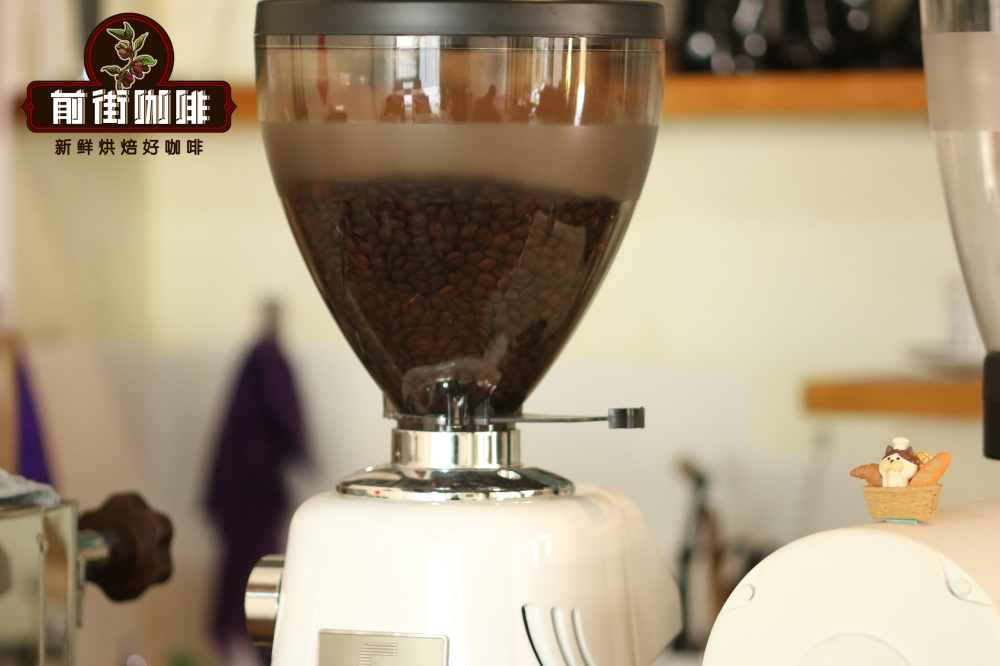
In the process of brewing coffee, controlling grind size is always the core step. Once the setting is wrong or the particle distribution is uneven, the coffee easily ends up under-extracted or over-extracted. Compared with methods like pour-over and cold brew, espresso requires much finer particles and must go through more precise calibration to bring the flavor of the espresso to its ideal state.
Just how fine is an espresso grind?
When it comes to the coarseness standard for pour-over coffee, Front Street Coffee usually introduces the Chinese No. 20 standard sieve, judging by the proportion of coffee particles that pass through a fixed aperture. But espresso is a pressurized short-time extraction, where everything is magnified—good flavors are magnified, and flaws are magnified too—so the demands on grind size are especially strict. Its particles are finer than fine salt, and the naked eye simply cannot tell the coarseness or uniformity, let alone use a sieve to test it.
If the grind is slightly finer, water passes through the coffee bed more slowly, easily causing over-extraction; conversely, if the grind is slightly coarser, water penetrates the bed more easily, leading to under-extraction. And what causes this deviation may be just a 0.1-step difference. For this reason, we generally judge whether the current coarseness is appropriate during brewing by observing the flow rate of the espresso and tasting the flavor.
Choosing the right coffee beans
In fact, for making espresso, besides controlling all the parameters, Front Street Coffee believes that choosing the right beans is equally key, because they are the fundamental factor determining whether the coffee ultimately tastes good. If you want to make café-style espresso at home, we recommend using Front Street classic espresso blend coffee. This coffee is composed of beans from three producing regions—Brazil, Indonesia, and Vietnam—combining the caramel sweetness of American beans with the wild character of Asian beans. To maximize the coffee's rich aroma and to make the extracted crema abundant and dense, Front Street Coffee uses a deep roast. Whether it's an Americano diluted with water or a latte paired with milk, it handles both with ease. You can place an order at the Front Street Taobao store or the Front Street Tmall flagship store.
A quick method to calibrate espresso grind size
Here is a simple and quick way to determine the grind setting. First, set a grind size at random (roughly flour-like in coarseness), for example 2.0 on the Q18 grinder at Front Street Coffee's shop, then apply the basic formula "1:2 coffee-to-liquid ratio, 20-30 seconds" as the extraction parameter set. The dose is determined by the basket's recommended capacity; for example, a 20g basket takes 20g of coffee, and an 18g-capacity basket corresponds to 18g of coffee.
If the extraction time exceeds 30 seconds, adjust the setting coarser next time, by about 0.5 steps; if the time is under 20 seconds, adjust finer next time.
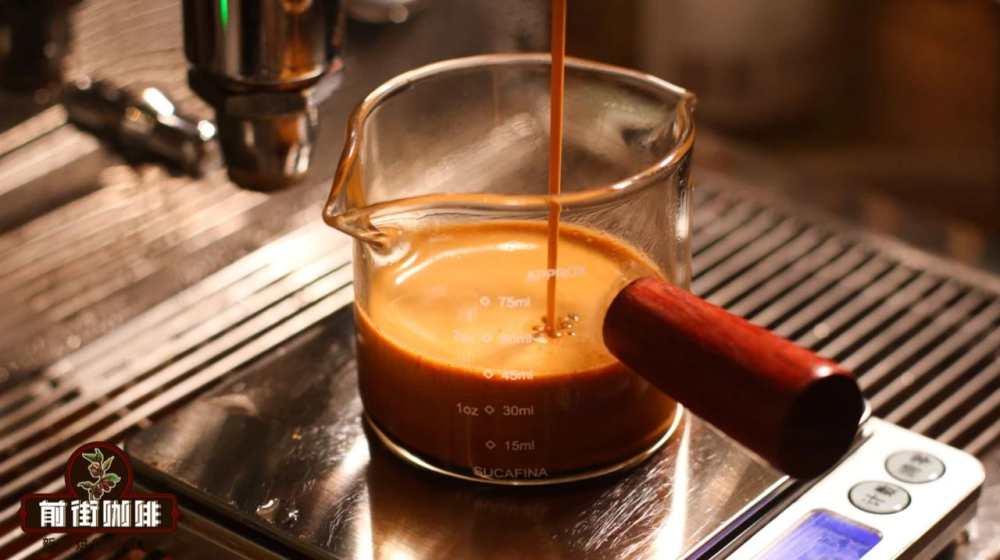
Once the extraction time stabilizes within 20-30 seconds, then fine-tune by tasting the espresso, with the adjustment magnitude now changed to 0.1 steps. If the coffee's aroma is weak and it tastes overall sour, adjust finer by 0.1 steps; if burnt bitterness or unpleasant flavors appear, adjust coarser by 0.1 steps, repeating until the espresso presents a satisfying flavor.
The above content is compiled by CoffeeHunters, a coffee news website.


