







Why Are Yunnan Coffee Beans Mostly Catimor Today?
Yunnan coffee beans are almost all Arabica, the species known in China as small bean coffee because its fruit is the smallest of the three native coffee species. Historically that name referred to Typica and Bourbon, brought in by French missionaries in the early twentieth century. Today the vast majority of Yunnan plantings are Catimor, so the same label covers two different genetic histories.
Coffee first reached Yunnan along two routes, one from Vietnam planted at Zhukula Village in Binchuan County and another entering Ruili County through Jingpo border people, but early plantings stayed small and mostly ornamental. Large-scale replacement came later, when Nestlé promoted Catimor for its yield and disease resistance, shifting both the flavor profile of the beans and the structure of the local industry.
Today, Yunnan beans appear more and more frequently on the menus of specialty coffee shops, and people habitually refer to them all as "Yunnan small bean." But behind this name actually lies a history of variety replacement: early Yunnan small bean referred to traditional Arabica varieties such as Typica and Bourbon, while today's Yunnan small bean is overwhelmingly Catimor. From missionaries introducing the crop and successful trial planting in Baoshan, to Nestlé driving the large-scale replacement with Catimor, the flavor and industry structure of Yunnan coffee have undergone tremendous changes. This article will sort out the origin of the name small bean coffee, the past and present of Yunnan small bean, as well as the genetic makeup and flavor characteristics of Catimor, and offer currently worthwhile Front Street Yunnan bean choices to try.
The quality of Yunnan coffee beans has improved noticeably over the years, and more and more specialty coffee shops have begun adding Yunnan options to their menus, usually collectively called "Yunnan small bean." So what kind of coffee exactly is called small bean coffee? And what specifically does Yunnan small bean refer to?
What is small bean coffee?
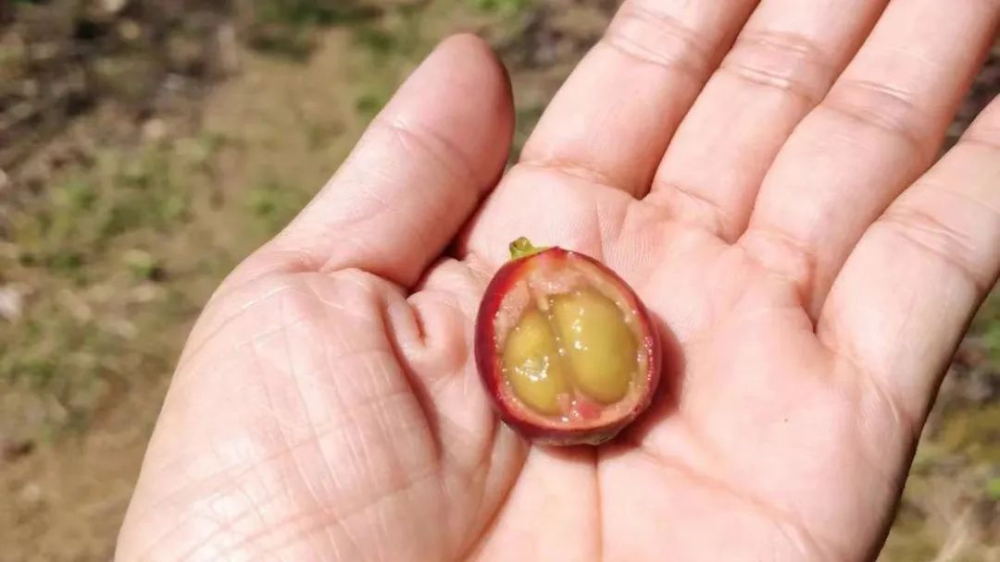
Small bean coffee is actually another name for Arabica. The reason Arabica received the name "small bean" is mainly that its fruit is the smallest among the three major native coffee species—here we are talking about the coffee fruit itself, not the coffee bean inside the fruit.

Hearing this, everyone should roughly understand: Yunnan small bean coffee refers to Arabica grown in Yunnan. That is correct, but it should be noted that what was called Yunnan small bean in the past and what is called Yunnan small bean today are not entirely the same concept.
The past and present of Yunnan small bean
At the beginning of the twentieth century, coffee entered Yunnan, China, along two routes. One was brought in from Vietnam by French missionaries, planted in Zhukula Village, Binchuan County, and they also taught local villagers how to grind and brew it; the other was introduced into Nongxian Village, Ruili County, through Jingpo border people. Because the red fruit produced by the coffee tree was very attractive, it was mostly planted in courtyards as an ornamental plant at the time, and it did not form large-scale recognition in China, with a very limited planting area.
By the beginning of 1952, experts conducting social surveys confirmed that the red fruit in farmers' courtyards belonged to the "small bean coffee" that originated in South America and was more widely found there. They then purchased a large amount of fresh fruit, brought it back to Lujiangba in Baoshan City for breeding and cultivation, and built China's first small bean coffee planting base there.
Yunnan has superior geographical conditions and a suitable climate, so the cultivation of small bean coffee was a great success, and in flavor it gradually formed the characteristics of "strong but not harsh, fragrant but not bitter, with a slight fruity aroma," making it quite popular in the international market. At that time, China was in the planned economy period after the founding of the People's Republic, and China existed as a coffee supply region for the Soviet Union and Eastern European countries (Cuba was responsible for sugar), which further promoted the development of Baoshan coffee, with the planting area once reaching more than 50,000 mu. At this point, Yunnan small bean coffee rose to fame, and when people spoke of Yunnan small bean at that time, they meant Arabica varieties such as Typica and Bourbon planted in Yunnan.
But the good times did not last long. In the 1960s and 1970s, Sino-Soviet relations deteriorated, Yunnan's role as a coffee bean supply region for the Soviet Union ceased to exist, and the coffee planting industry gradually faded away. It was precisely against this background that the name "Yunnan small bean coffee" began to spread.
Even though Yunnan's "old varieties" are now hard to find on the market, what has inherited the name "Yunnan small bean coffee" has already been replaced by "new varieties."
In the 1980s, the global coffee industry was hit by rust disease, with large-scale production reductions, and major coffee buyers urgently needed to develop new, previously undeveloped coffee origins. In 1988, Nestlé hoped to purchase a batch of lower-priced raw coffee beans to make instant coffee, so it strongly promoted the development of Yunnan's coffee agriculture and introduced Catimor 7963 from the Portuguese Coffee Rust Research Center (CIFC) for trial planting. In the following years, it continued to introduce different Catimors for attempted cultivation, but later Catimors never matched the yield of the original 7963.
These Catimors were originally developed for disease resistance and as instant coffee raw material, with no high requirements for flavor, so when discussing flavor, it is almost impossible to avoid less ideal descriptions such as low acidity, nuts, cocoa, and earthy notes. Corresponding to this are extremely high yield and strong disease resistance: under the same management level, the yield of Typica is only about one-third that of Catimor, which is also why many Typica and Bourbon coffee beans are relatively expensive.
Catimor
Catimor is a cross between Caturra and Timor. Among them, Caturra has pure Arabica lineage, while Timor is a natural hybrid of Arabica and Robusta. From the perspective of genetic identification, Catimor has 3/4 Arabica ancestry and is naturally classified as Arabica. But precisely because it carries 1/4 Robusta genes, its fruit yield is higher than that of ordinary Arabica, and it is easy to grow and not prone to disease; its drawbacks are also obvious. The book "The Professional Coffee Handbook" points out that coffee from Asian production regions carries a hint of a devilish aftertaste, and the reason lies precisely in this.
This wave of variety replacement reached its climax around 2010 to 2011 because Brazilian coffee bean prices peaked, and Yunnan coffee beans also entered their historical peak during this period, but soon faded again.
To this day, Catimor alone accounts for ninety percent of Yunnan's total production, and today's Yunnan small bean has fully inherited the name of the original old-variety Arabica in Yunnan, becoming synonymous with Yunnan Catimor. The coffee farmers still insisting on growing "old varieties" such as Typica and Bourbon are mostly doing so because of twists of fate in this variety transformation.
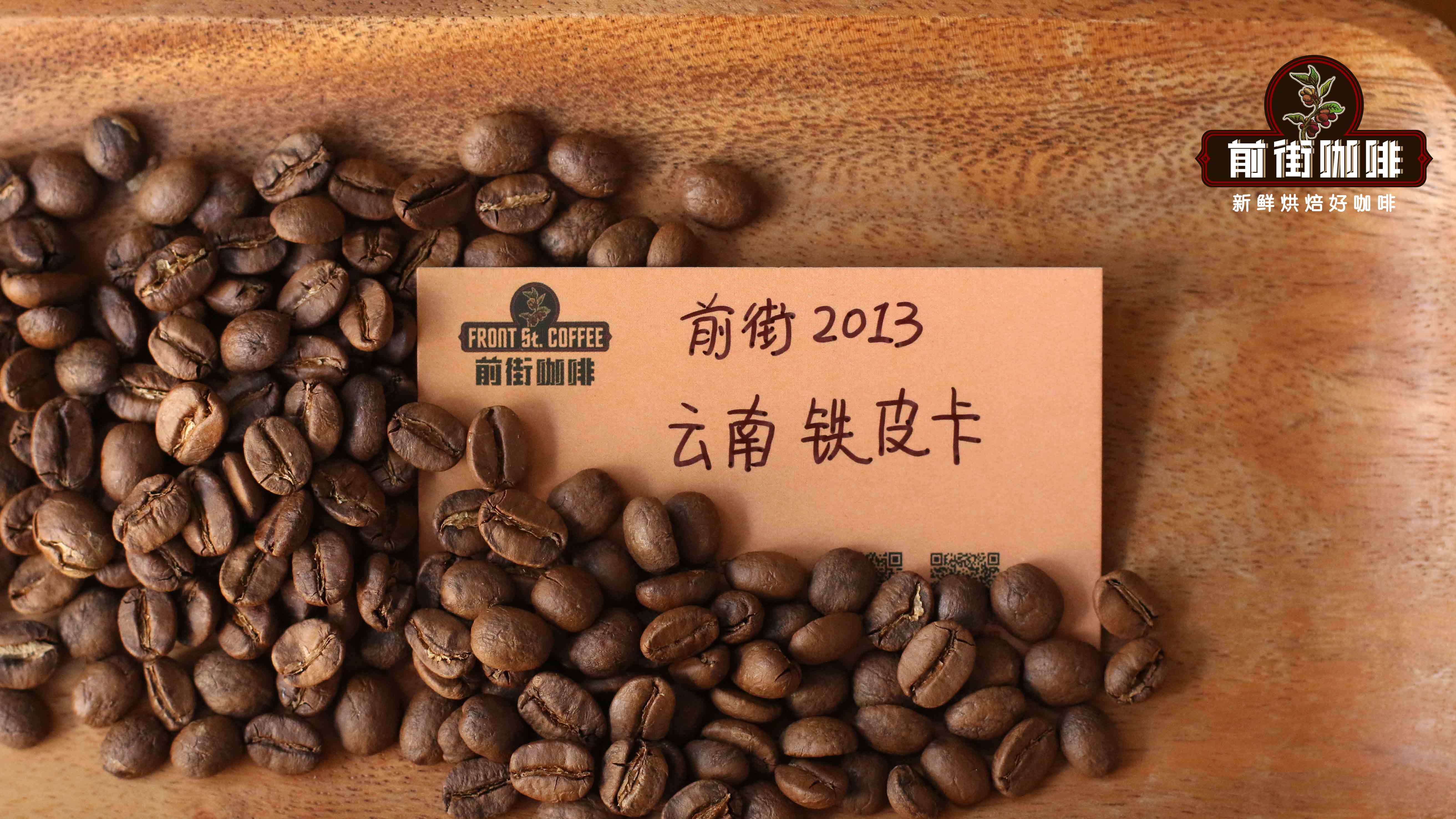
Therefore, if you want to taste the most representative Chinese specialty coffee flavor today, Front Street Yunnan small bean is the first choice, because its variety is precisely the most common local Catimor, and it uses washed processing and medium roasting, allowing you to most directly feel the true taste of the origin; if you want to drink the classic small bean coffee mouthfeel, then you must buy Front Street 2013 Sun-Dried Typica, which is grown in good locations at 1,300 meters altitude at Front Street Estate, and after medium roasting presents a balanced profile of nuts, dried apricot, chocolate, and black tea.
The above content is compiled by CoffeeHunters, a coffee news website.


