







Are Classic Coffee Drip Bags a Good Pour-Over Alternative?
Drip bag coffee traces back to 1990, when Yamanaka Sangyo of Japan moved the tea bag idea into coffee, and 1998, when Daiki Shoji improved and commercialized it. Each bag holds pre-ground classic coffee, so brewing needs only hot water and a cup. Compared with pour-over it gives up some control over grind and pour, but delivers consistent, convenient results.
Once coffee is ground, volatile aromatic compounds are lost faster, so drip bags taste freshest soon after opening. That trade-off matters because single-origin drip bags from Yirgacheffe, Mandheling, Brazil Cerrado and Huila each carry distinct terroir and processing character. For anyone without time to weigh beans and pour slowly, a drip bag remains a practical daily route to coffee seed flavor.
Drip bag coffee, with its convenience and flavor expression close to pour-over, has become the daily first choice for many coffee lovers. This article will start from the origin of drip bag coffee, review how in 1990 Yamanaka Sangyo Co., Ltd. of Japan transplanted the tea bag concept into the coffee field, and how in 1998 Daiki Shoji improved it and achieved commercialization. It will also explain in detail the differences between drip bag coffee and pour-over coffee in terms of equipment needs, and provide standard brewing steps and iced drink preparation techniques. Finally, the article focuses on recommending seven single-origin drip bag products under Front Street Coffee, covering Huakui, Golden Mandheling, Panama Butterfly, Yirgacheffe Red Cherry, Brazil Red Bourbon, Colombia Huila, and Costa Rica Tarrazu, introducing each origin's terroir, processing method, and flavor characteristics one by one, to help readers make choices according to taste preferences.
Front Street Coffee currently has more than fifty freshly roasted coffee beans on sale, covering specialty-grade single origins from many mainstream producing regions around the world, while also offering affordable daily beans, so customers can experience the signature flavors of classic origins without spending too much.
Even for the same bean, freshly roasted coffee beans and pre-ground drip bags will differ in flavor presentation—once coffee is ground into powder, the loss rate of volatile aromatic substances increases noticeably. Front Street does have quite a few regular customers who are used to asking for the coffee to be ground before shipping; in such cases, they are usually reminded to finish drinking it within as short a time as possible. Of course, compared with pour-over, the advantage of drip bags is convenience. If there really is no time to brew slowly, drip bag coffee is a quite practical alternative.
Front Street's drip bag product line covers flavors from multiple origins. Taking several of the most recognizable styles as examples: Front Street Yirgacheffe Drip Bag, Front Street Brazil Cerrado Drip Bag, Front Street Kenya Little Tomato Drip Bag, Front Street Butterfly Drip Bag, Front Street Mandheling Drip Bag, Front Street Honduras Sherry Drip Bag, etc. Of course, if a customer wants drip bags made from other types of coffee beans, Front Street can also make them on site according to demand. Previously, a customer tried a Golden Mandheling in the shop, was satisfied with the flavor, and did not want to grind beans at home, so we directly made it into drip bags for him.
When it comes to Japanese coffee, most people's first reaction is pour-over. Indeed, pour-over culture has developed quite maturely in Japan, but the pace of life of young Japanese office workers is getting faster and faster, and they simply do not have time to wait for a cup of pour-over to drip slowly. Drip bag coffee was born against this background.
In 1990, Yamanaka Sangyo Co., Ltd. of Japan applied the structural idea of tea bags to coffee, invented filter drip coffee, and applied for a patent. However, Yamanaka Sangyo's original design had an obvious flaw: the hanging ear part could not bear the weight of the coffee grounds and hot water, and it was easy to lose balance and tip over during brewing, so it was not successfully brought to market. It was not until 1998 that Daiki Shoji improved the original design by extending the hanging ears on both sides outward, forming the drip bag coffee form we are familiar with today. So how exactly do you use drip bag coffee? Front Street will now take everyone through it step by step. First, let us get familiar with the brewing method; it actually takes only a little more than making instant coffee.
What are the characteristics of drip bag coffee?
The most prominent advantage of drip bag coffee is convenience. Why is that? Drip bag coffee can be understood as a simplified version of pour-over coffee, but there are obvious differences between it and regular pour-over. Pour-over coffee requires quite a lot of equipment: a grinder for grinding coffee beans, a gooseneck kettle for pouring water, a thermometer for measuring water temperature, an electronic scale for weighing the coffee dose and water amount...
Therefore, completing a cup of pour-over requires a lot of preparation beforehand. This also limits the scenarios in which pour-over coffee can be used; it is usually enjoyed at home or in a cafe. If you want a cup of pour-over while traveling or in the office, it is obviously not very realistic—of course, if you are persistent enough, it is not impossible. But for beginners just starting out and customers seeking convenience, drip bag coffee solves the convenience problem very well.
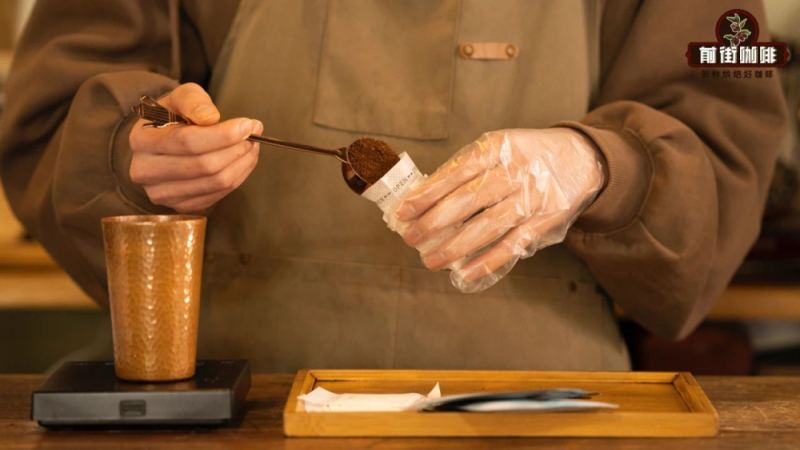
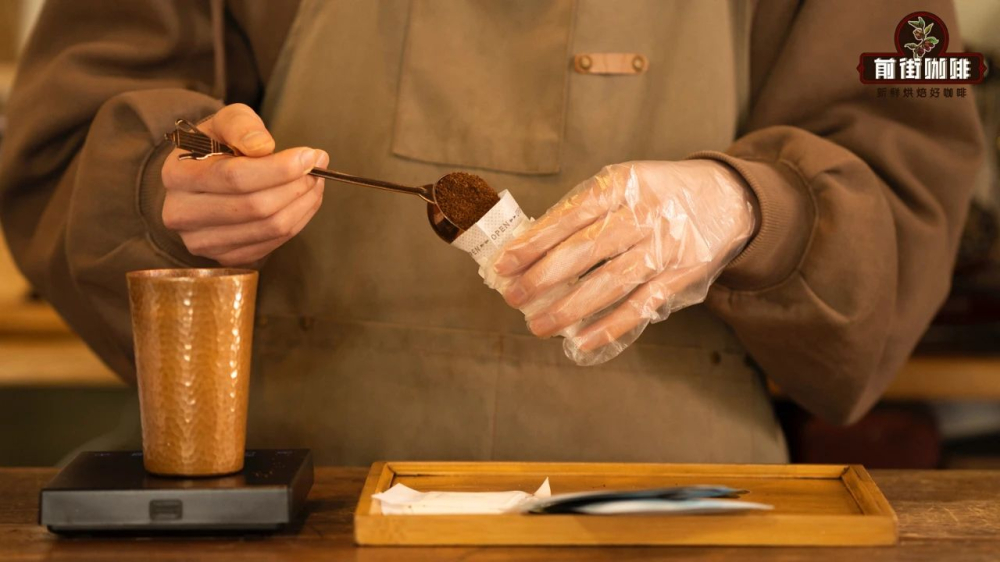
Drip bag coffee is different from pour-over coffee. It does not require a grinder, electronic scale, dripper, or filter paper. This is because drip bags have already moved a lot of the preparation work upfront. The drip bag coffee we buy on the market is actually already ground coffee powder, and the unique filter bag structure replaces the dripper and filter paper in pour-over. Consumers only need to do one thing: pour water and filter, and they can get a cup of drip coffee.
The correct brewing method for drip bag coffee
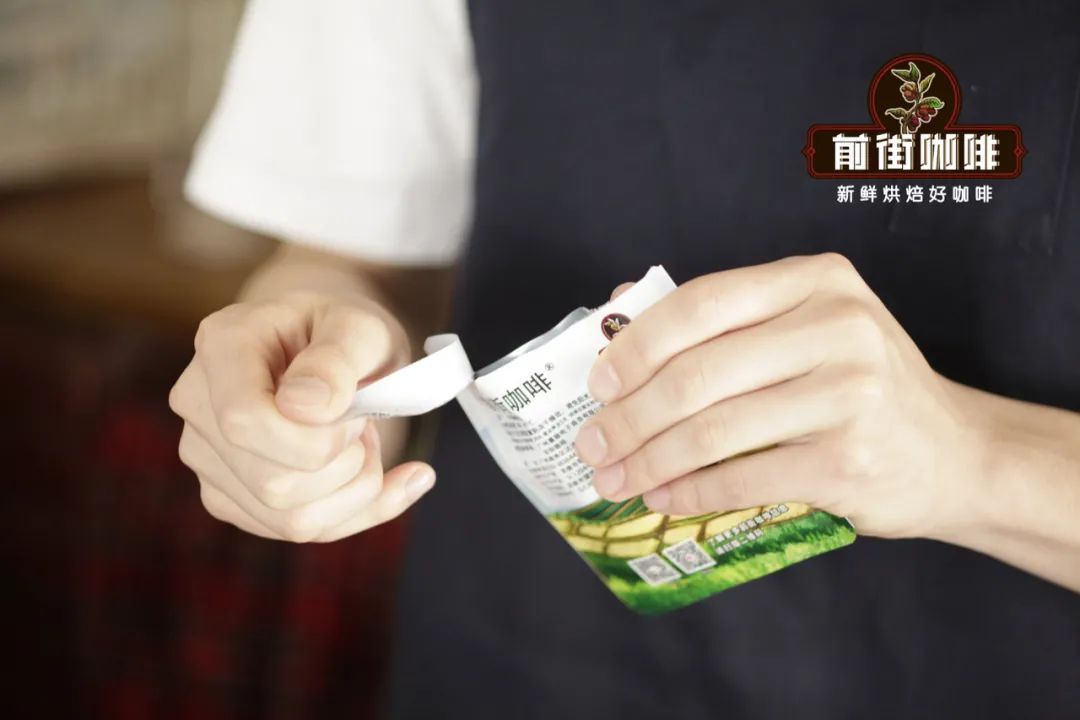
1. Pay attention to the indicator marks; tearing it open is very easy. The cup rim should not be too wide, otherwise the drip bag may not be able to rest on it.
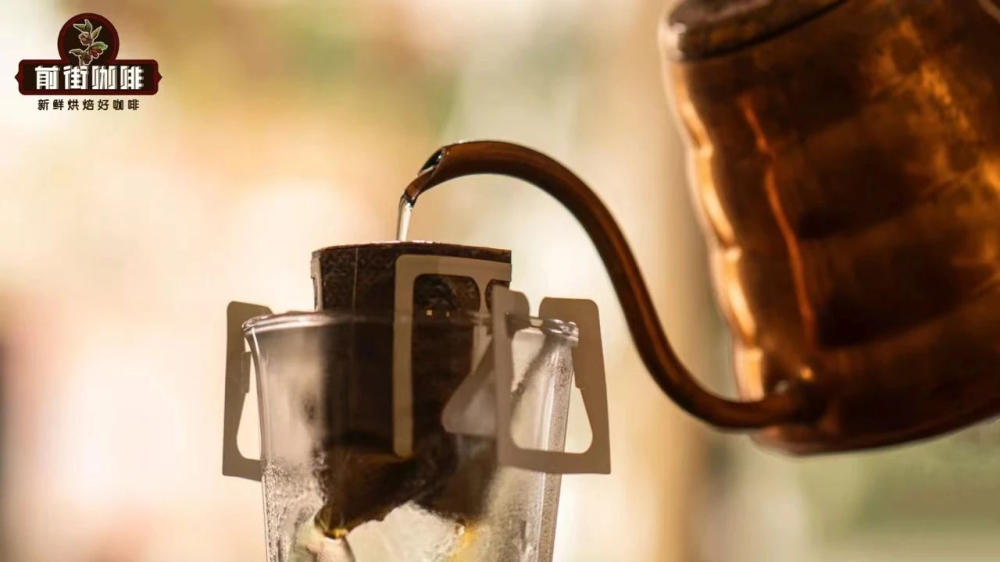
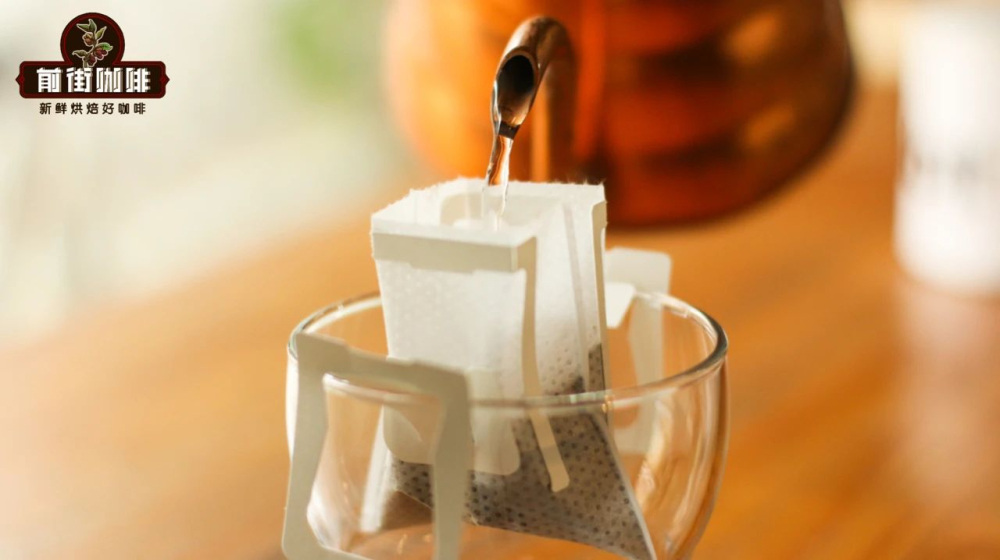
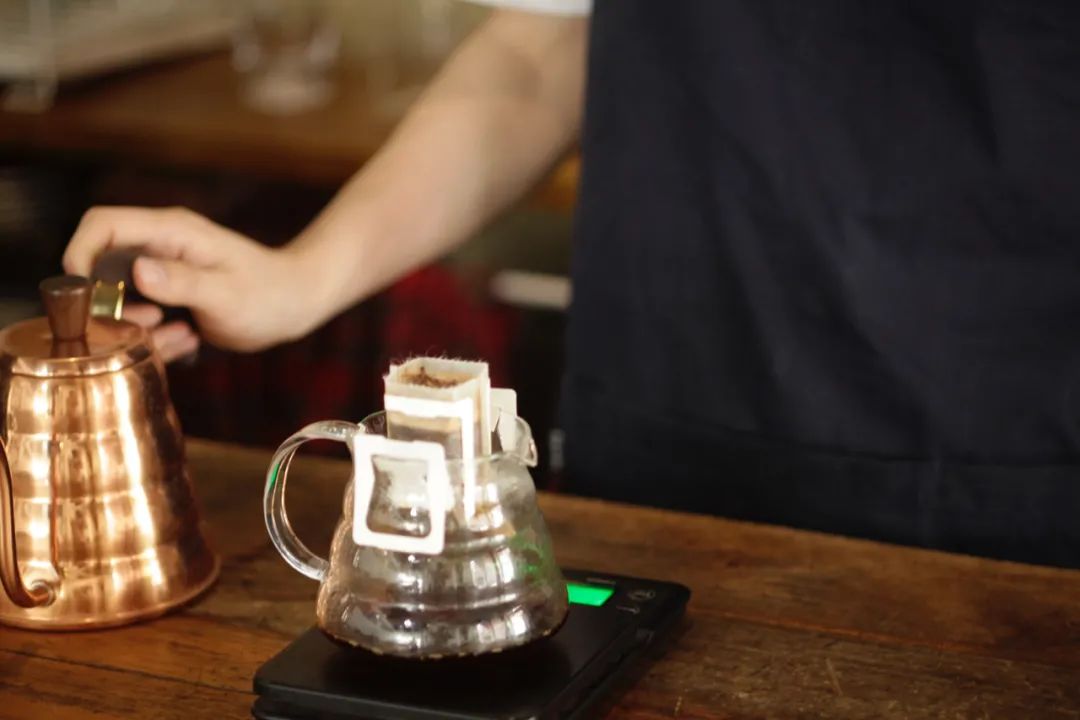
2. Pour in 90°C hot water, just enough to cover the coffee grounds, and let it bloom for 20 to 45 seconds.
3. After a short bloom, the coffee grounds have already released a very rich aroma. A Front Street drip bag contains 10 grams of coffee. At a 1:15 coffee-to-water ratio, pour in about 150 milliliters of hot water. If you like it stronger, add less water; if you like it lighter, add more water. The ratio can be adjusted entirely according to personal taste.
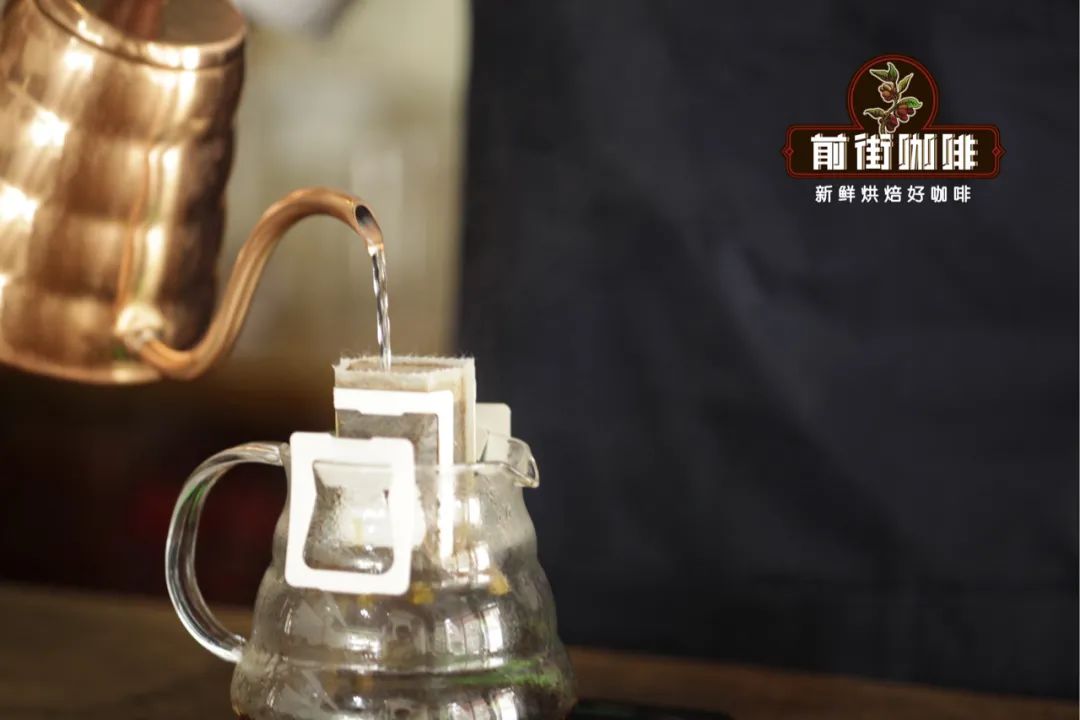
Regarding the pouring technique, Front Street often gets asked by customers whether to pour in stages. Actually, just pour in a small stream in a circular motion directly until it reaches 150 milliliters. What drip bag coffee pursues is simplicity and convenience, so there is no need to be too particular.
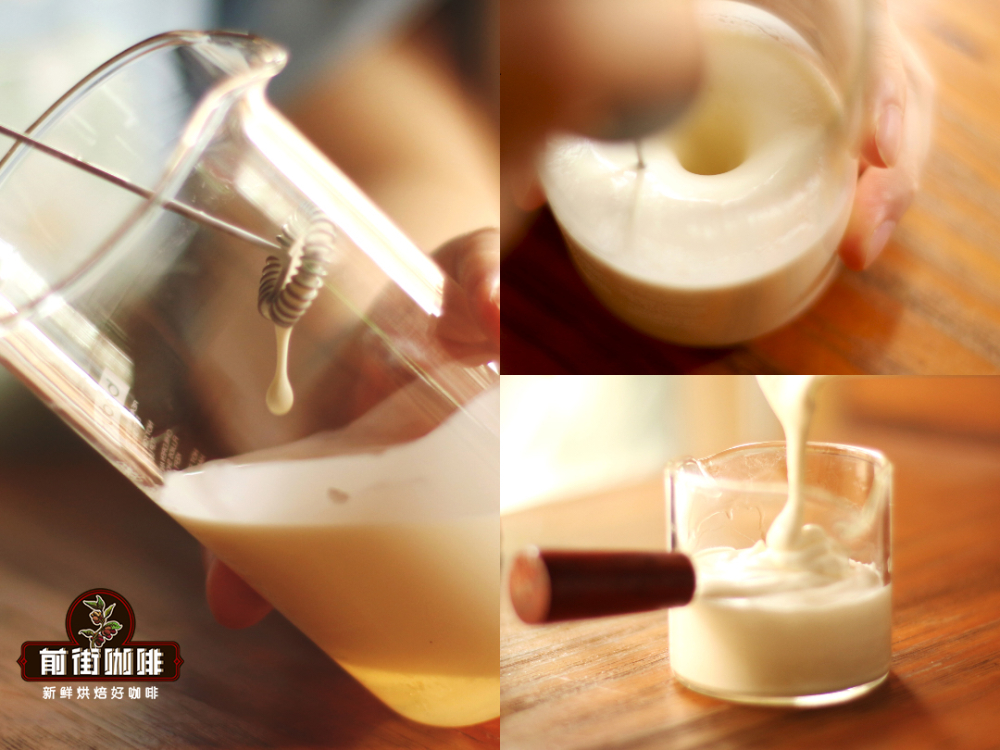
4. Lift out the drip bag and throw it into the trash. Then add sugar and milk according to your preference. If you like adding milk, the brewing ratio for drip bag coffee can be increased, that is, brew it stronger, and then mix it with milk at a 1:8 ratio of coffee to milk. You can also use a milk frother to turn the milk into foam, so you can make a simple latte.
How do you make iced drip bag coffee?
The standard specification for a drip bag coffee packet is 10 grams per bag, and the grind size is also preset by the shop. If you brew it according to the normal process and then add ice cubes, the taste will be as weak as water. So the brewing method needs to be adjusted. In order to carry through the simple and convenient characteristics of drip bag coffee, Front Street tries to keep the method and auxiliary tools as simple as possible.
Very few materials need to be prepared: ice cubes, a short cup, hot water, and a drip bag coffee packet. If conditions allow, you can also prepare an electronic scale.
① Open the outer packaging bag of the drip bag coffee, tear the seal along the "open" line, spread out the hanging ears, and hang it on a short cup.
② Prepare hot water, with the water temperature controlled at around 93°C. If there is no thermometer, you can open the lid after the water boils and let it sit for 2 minutes; the temperature will drop to about 90 to 94°C.
③ Pour 100 milliliters of hot water into the coffee filter bag, making sure all the coffee grounds are immersed in the water, and let it steep for 3 minutes. After that, lift the drip bag out of the cup and discard it.
④ The last step is to add ice cubes to cool it down. You can directly put large hard ice cubes into the cup, or prepare another cup filled with ice cubes and pour the hot coffee liquid into it. Front Street prefers the latter method, because the ice cubes last longer and the flavor and mouthfeel of the iced coffee will be better.
Drip bag coffee brand recommendation—Front Street Drip Bag Coffee
1. Front Street Coffee Huakui Drip Bag Coffee Beans
Huakui comes from Hambella in the Guji producing area of Sidama. Hambella is located in Guji (GUJI), Ethiopia's largest coffee producing region, and administratively belongs to Oromia Region. To the west, Hambella faces Yirgacheffe's Kochore across the mountains. The two producing areas are separated by a highland at an altitude of 3,200 meters and about 30 kilometers wide. To the southeast, east, and north, it borders Guji's Shakiso, Uraga, and Kercha sub-regions respectively. It is Ethiopia's highest-altitude coffee sub-region (Harrar is Ethiopia's highest-altitude main producing region).
Hambella farm covers 200 hectares and has 28 full-time employees; during the entire harvest season, the total number of people swells to more than 700. Of these workers, 70% are women, and there is a plan to enable local farmers to work closely with agronomists and processing experts to improve coffee quality. In addition to beans from its own farm, some coffee is also purchased and sold by the farm.
Huakui coffee beans use the traditional natural processing method. To prevent the coffee cherries from becoming moldy or absorbing undesirable odors such as soil during drying, the fruit is placed on raised beds to sun-dry for 21 days. During the drying period, it is constantly turned to ensure even drying and consistent moisture loss in the coffee beans. Every three to five days, coffee farmers manually screen out defective and moldy beans. After the fruit skin dries and hardens, a hulling machine is used to remove the dry, hard skin. After obtaining the green coffee beans, in pursuit of a more perfect taste, one final screening is also carried out.
This gives Huakui coffee a complex tropical fruit aroma, with rich floral and fruity flavors such as flowers, mango, jackfruit, citrus, and honey.
2. Front Street Golden Mandheling Drip Bag Coffee Beans
Mandheling has attracted more and more attention in the past two years. At Front Street Coffee, Mandheling sales used to be mostly concentrated in the Shanghai area. The taste preferences of Shanghai and Taiwan are relatively similar; both like a rich and full-bodied style. Previously, Front Street also met a Shanghai customer who kept emphasizing that the Mandheling should be roasted even darker than our usual dark roast.
Now, more and more people are gradually recognizing Mandheling's unique flavor, and more and more customers come to Front Street to order Mandheling, many of them Guangzhou locals.
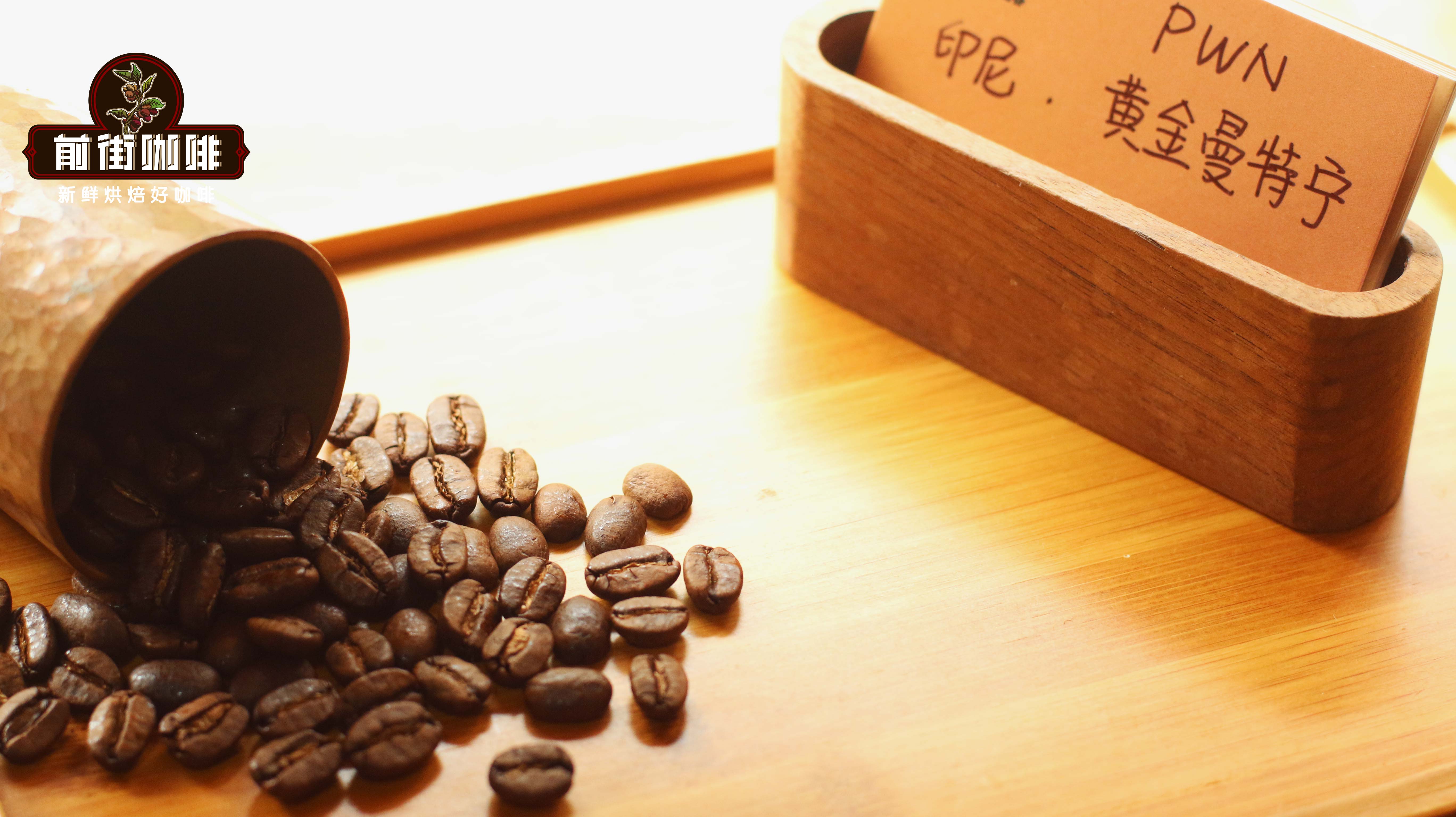
In terms of quality classification, Front Street Golden Mandheling is different from ordinary Mandheling. It comes from the local Indonesian green bean trader PWN, that is, the first company to cooperate with Japan on Golden Mandheling, and it registered Golden Mandheling as a trademark.
The biggest characteristic of Golden Mandheling is that it lacks the miscellaneous flavors commonly found in ordinary Mandheling. After three strict manual screenings, the bean size is ensured to be uniform, so it can color evenly during roasting. Therefore, the taste presents a clean, full-bodied richness, with a flavor much like Guangdong herbal tea. It is no wonder Guangzhou locals can accept this flavor. This time Front Street specifically made Golden Mandheling drip bags, also because it has found that people's acceptance is getting higher and higher.
[Wet-hulled processing method]
Because the local weather is mostly rainy, with continuous typhoons, it cannot achieve the good weather required for natural drying. In addition, local economic conditions are limited, so there is no capacity to adopt the more costly washed method. Under various reasons, the highly local wet-hulled method emerged (that is, during the ordinary washed process, drying in the sun with parchment still on for 2 to 3 days, and when the moisture content reaches 20% to 24%, removing the parchment).
Front Street feels that Indonesia's coffee industry is also developing very quickly now. The reason wet-hulled processing is still retained is not only because of economic and climate issues, but more because wet-hulled processing has become synonymous with Indonesia and an image of its local specialty. However, there is now also natural Mandheling. Front Street has newly added this coffee bean, which belongs to a relatively niche series and is not as popular as wet-hulled Mandheling, but it can also be an occasional change of taste.
3. Front Street Coffee Panama Butterfly Drip Bag Coffee Beans
Panama is a Central American country, bordering Costa Rica to the west and Colombia to the east. Panama coffee is famous in the coffee world for Hacienda La Esmeralda's Geisha coffee.
All of Panama is filled with a rich Geisha atmosphere, and many estates plant Geisha coffee beans. But because Geisha is difficult to grow, low in yield, and excellent in flavor, its price is not low either.
However, this Butterfly has 70% fine Geisha lineage, plus Catuai and Caturra, planted in the Baru Volcano area of Boquete, growing at an altitude of 1,600 meters in a volcanic zone. The local special microclimate brings abundant rainfall, along with large temperature differences between day and night, as well as meticulous harvesting and fine processing, making this coffee perform quite well in body, acidity, and floral aroma.
What is even more surprising is that with such excellent quality and conditions, the price is still very affordable, allowing people to experience Geisha flavor at a very high cost-performance ratio.
[Washed processing method]
The washed method uses a machine to first remove the skin and pulp, leaving only the coffee beans wrapped in the parchment. At this point, there is still a layer of mucilage on the outside of the beans, and the washing process is meant to wash away this mucilage. But the mucilage adheres strongly and is not easy to remove, so it must be placed in a tank for about 18 to 36 hours to ferment and break down the mucilage.
4. Front Street Coffee Yirgacheffe Red Cherry Drip Bag Coffee Beans
Red Cherry is actually a commercial plan to promote coffee quality improvement, initiated by Menno Simons, founder of the Dutch green bean trader Trabocca.
Trabocca realized that the quality of Ethiopian coffee beans was uneven, making it difficult to raise prices, and coffee farmers' incomes were not high either.
To turn this situation around, they jointly launched the Red Cherry plan with local coffee farmers to solve the problem from the source, encouraging coffee farmers to more carefully complete every step such as picking and processing by increasing the purchase price of high-quality green coffee beans. During the picking stage, fully manual picking is used to select coffee cherries with high ripeness.
[Natural processing method]
The natural processing method is the oldest and most primitive processing method for coffee beans. This natural Red Cherry places whole coffee cherries with the pulp and skin completely retained on raised drying beds for sun drying, isolating them from contact with the ground and preventing direct sun exposure from producing earthy and miscellaneous flavors. After more than two weeks of sun drying, the dark brown coffee cherries are stored to wait for flavor maturation. Before shipment, the processing station then removes the coffee beans from the coffee cherries. This natural processing method gives the beans lower acidity, obvious sweetness, and body, but it is not as clean as washed processing.
5. Front Street Coffee Brazil Red Bourbon Drip Bag Coffee Beans
Brazilian coffee beans were introduced in 1720 from French Guiana (a country in northern South America). Brazil was then a Portuguese colony, while many other South American countries were Spanish colonies. Therefore, most South American countries speak Spanish, while Brazil speaks Portuguese.
To introduce Guiana's coffee beans into Brazil (at that time, the outflow of coffee to other countries was strictly prohibited), a Portuguese military officer stationed in Brazil captured the heart of the wife of the governor of Guiana and successfully brought coffee seeds into Brazil. Since then, coffee adapted quickly in Brazil, spreading from the north to São Paulo state in the southeast. By 1845, Brazilian coffee beans already accounted for 45% of the world's total coffee beans. Currently, Brazil is the world's largest coffee exporting country.
Front Street Coffee not only includes Brazil in its drip bag series, but Brazil coffee can also be found in its daily bean series, which shows that Brazil, as a coffee producing country, is an indispensable presence in classic coffee flavors. Front Street daily beans are the "face" of regional coffee beans, because their basic regional flavor is more recognizable, and they are also low-priced, high-value coffee beans.
[Semi-washed processing method]
Before 1990, Brazil almost used the rough natural method. This was the main culprit that made Brazilian beans prone to earthy and decaying-wood flavors—during the 2 to 3 weeks of prolonged sun exposure, coffee cherries would absorb moisture again when it rained or would mold if the fruit was cracked or damaged, producing off-flavors. This problem was criticized for a long time and severely damaged the image of Brazilian coffee.
After 1990, Brazilian research institutions developed the semi-washed method based on Brazil's relatively dry climate, in order to shorten processing time. The semi-washed processing method is: after screening suitable coffee cherries, remove the skin, pulp, and part of the mucilage, then sun-dry with a small amount of mucilage for 1 to 3 days, then machine-dry until the moisture content is 12%, after which it can be placed into storage containers for maturation. This processing method can reduce the inferior miscellaneous flavors Brazilian beans previously had and enhance fruity aroma and sweetness.
6. Front Street Coffee Colombia Huila Drip Bag Coffee Beans
Today Colombia is the world's third-largest coffee producer and exporter. The Colombian coffee it produces is famous worldwide for its mild taste and rich, full-bodied nutty chocolate flavor. Colombia's Huila region has mountainous terrain, and coffee is planted on canyon slopes, so it has the high altitude and suitable temperature required for growing high-quality Arabica beans.
The climate of the canyon slopes not only keeps cold winds out, but the mountain breezes also bring coolness without high temperatures. In addition, rainfall is relatively abundant, making it a uniquely favored coffee cultivation area. Colombian coffee workers all go up into the mountains to hand-pick coffee cherries, and the vast majority of coffee beans are processed by the washed method.
7. Front Street Coffee Costa Rica Tarrazu Drip Bag
Costa Rican coffee has always been famous for balanced flavor, rich chocolate notes, and a smooth mouthfeel. Tarrazu is located south of the capital San Jose and is one of Costa Rica's most valued coffee-growing regions. Tarrazu coffee beans are plump, the coffee is rich, the mouthfeel is smooth, with rich chocolate and nutty aromas, moderate acidity, and an attractive fragrance.
For more specialty coffee knowledge, please follow: Front Street Coffee
The above content is compiled by CoffeeHunters, a coffee news website.


