








Which Classic Coffee Drinks Start With Espresso
Six classic coffee drinks share one base: espresso. Americano, Latte, Flat White, Cappuccino, and Mocha are all made by adjusting extraction parameters and adding milk, water, or chocolate. A properly pulled espresso shows a fine golden-brown crema, with acidity, sweetness, bitterness, and body in balance and a clean finish.
The distinction matters because each drink changes the ratio of espresso to additive rather than the bean itself. Front Street's Dongshankou store dials in the Warm Sun blend daily, taking 20 grams of coffee as the starting dose. Understanding when was coffee introduced to europe helps explain why these drinks spread so widely once cafes took hold.
As specialty coffee culture continues to deepen in China, more and more consumers are beginning to pay attention to the brewing logic and flavor differences behind espresso-based coffee. As the core foundation of the entire system, espresso gives rise to many classic categories such as Americano, Latte, Flat White, Cappuccino, and Mocha by adjusting extraction parameters and pairing with different additives. This article will break down the definitions, origins, and flavor characteristics of the six major espresso-based coffees one by one, and combine them with the actual serving parameters of Front Street Coffee stores to help coffee enthusiasts more systematically understand the composition and tasting points of each cup of coffee.
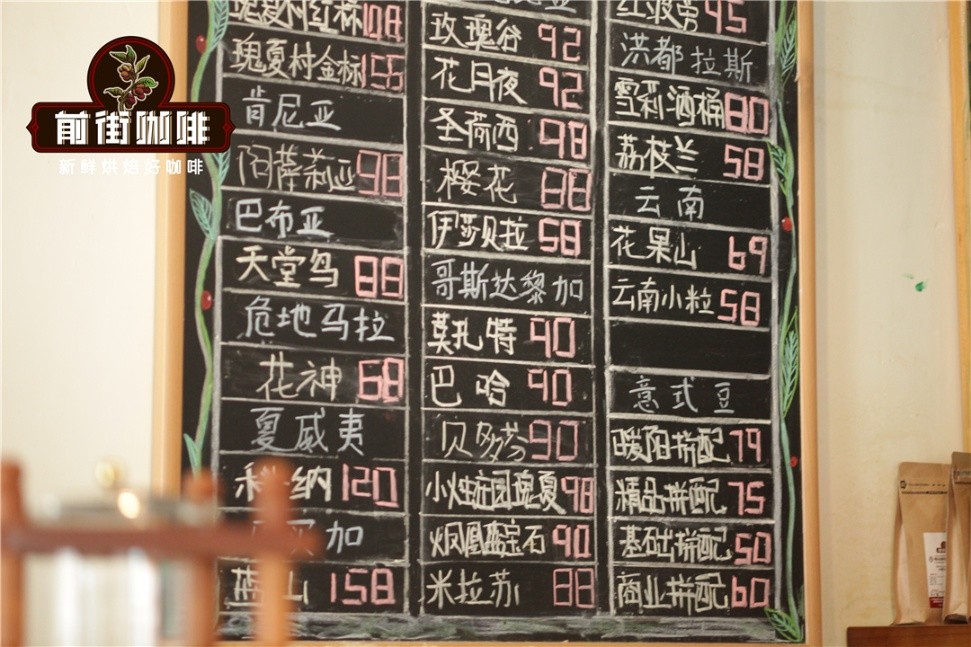
In recent years, in addition to the continued expansion of large chain brands, many independent specialty coffee shops have also emerged, and consumers' expectations for coffee quality have risen accordingly. If you can't go a day without coffee, do you truly understand the classification and origin of the cup in your hand? Below, Front Street Coffee starts from espresso and sorts out the characteristics of six popular espresso-based coffees one by one.
Definition of Espresso-Based Coffee
Espresso refers to the liquid extracted by using an espresso machine, under conditions of both high temperature and high pressure, allowing hot water to penetrate a finely ground layer of coffee at extremely high pressure, thereby extracting a liquid rich in crema, aromatic, and full-bodied. Americano, Latte, Mocha, and other drinks made with espresso as the base and various additives are all classified as espresso-based coffee.
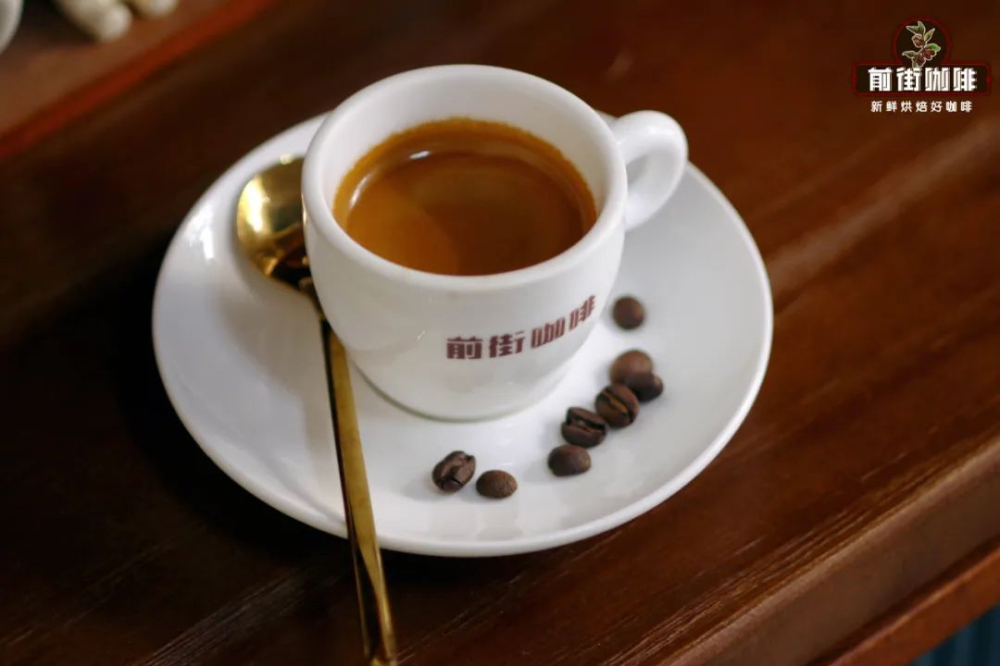
A qualified cup of espresso should be covered on the surface with a rich, fine, golden-brown layer of crema, and when tasted, the dimensions of acidity, sweetness, bitterness, and body should be balanced and full, with abundant aroma and a clean finish. Espresso can be called the foundation of a coffee shop. To make various espresso-based coffees exhibit ideal flavor performance, the barista's core daily work is to repeatedly dial in a qualified cup of espresso. Front Street Coffee takes the daily serving extraction scheme of the Warm Sun blend coffee beans from the Dongshankou store as an example to briefly explain the key operating points for extracting a cup of espresso.
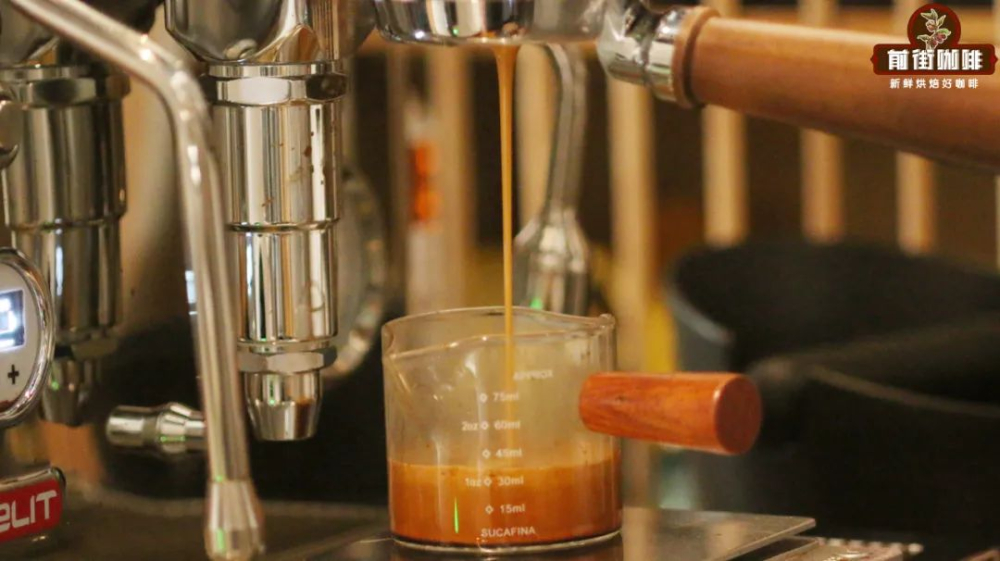
Front Street's approach is to take 20 grams of coffee powder, use a 1:2 coffee-to-liquid ratio, extract 40 grams of coffee liquid under 9 to 10 bar pressure, and control the time between 25 and 30 seconds. Then, adjust the flavor direction of the espresso through tasting comparisons. Front Street's Warm Sun espresso has notes of whiskey, vanilla, nuts, and tropical fruit, with a rich and layered taste. If the taste is weak, it usually means under-extraction, and the extraction rate can be increased by making the grind finer or increasing the dose. If the taste is strong and bitter, and even adding water cannot release the aroma, it may be over-extraction. Front Street recommends reducing the dose or making the grind coarser to speed up the flow rate, thereby reducing extraction concentration.
Americano
Americano belongs to a branch of black coffee, made from espresso plus water, without adding any other additives. During World War II, coffee was quite popular among the U.S. military, but American soldiers found it hard to accept the strong bitterness of espresso, so they diluted it with water to reach a concentration they could accept. Later, when Italians ran coffee shops in the United States, they also followed this habit and introduced "watered coffee" based on espresso. After that, this drink became widely popular.
Americano has no unified ratio standard; each shop sets it according to its own serving style, with the core goal of showcasing the coffee's flavor and mouthfeel. According to the 1:6 ratio determined after repeated testing by Front Street, pour 40 grams of coffee liquid into 240 grams of 88°C hot water, and hot Americano is complete. If making iced Americano, replace the hot water with 120 grams of ice plus 120 grams of room-temperature water, and the flavor is best before the ice fully melts. Front Street's iced Americano presents a rich whiskey aroma with berry-like sweet acidity, refreshing and cutting through heaviness, and is therefore especially popular at its Guangzhou stores; hot Americano emphasizes more the richness of roasted nuts and chocolate, as well as the fermented sweet acidity of tropical fruit, with a vanilla note in the finish.
Latte
The word Latte comes from the transliteration of the Italian word Latte. Latte coffee refers to espresso mixed with milk in a certain proportion, and is a type of flavored coffee. The earliest latte can be traced back to Vienna, the city of music. Viennese people have had the habit of drinking coffee since the 17th century. At that time, the Turkish army failed in its attack on Vienna and left behind 500 bags of coffee beans in its hurried retreat. These beans became the raw materials for Vienna's first coffeehouse (Blue Bottle). To suit European taste preferences, the coffeehouse operator filtered out the coffee grounds and added a large amount of milk, making the originally bittersweet black coffee smooth and sweet. This taste fascinated the Viennese, and milk coffee subsequently swept the world.
The ingredients for latte are not complicated; only espresso and milk are needed, and there is likewise no fixed ratio, with most ranging between 1:5 and 1:8. Front Street uses a 1:6 ratio, that is, 40 grams of espresso liquid paired with 240 grams of milk. When making a hot latte, Front Street first pours the espresso liquid into a preheated cup, then uses the espresso machine steam to froth the milk, keeping the milk temperature as much as possible between 55 and 65°C to form a dense milk foam of moderate thickness, then fully integrates it with the coffee liquid. The final latte art step is the icing on the cake. Front Street's hot latte has a sweet aroma like chocolate liqueur, with a texture as smooth as cream. For iced latte, first add 75 grams of ice and 25 milliliters of fresh milk, then extract 40 grams of coffee liquid and pour it on top. When serving, customers are reminded to stir thoroughly before drinking.
When mentioning iced latte, one cannot help but talk about Dirty coffee, which became popular starting in 2019. The method is to pour hot espresso over iced milk, creating a distinct layered effect. The espresso slowly sinks along the wall of the cup, visually creating a "dirty" effect. Usually, Dirty coffee is served in a smaller cup than iced latte and needs to be drunk as soon as possible to experience the unique mouthfeel of alternating hot and cold.
Flat White
Flat White is also called "Aobai," "Furui Bai," or "Pingbai." Flat White is a new product created by Australians after adjusting proportion parameters based on hot latte, with the main differences reflected in two aspects.
The base used in Flat White is called Ristretto. Australians want a milk coffee with a more prominent coffee flavor and believe that the latter part of the espresso shot "dilutes" the coffee flavor, so they take only the front and middle sections of the espresso and "restrict" the latter part from flowing out. This is why it is called Ristretto. When tasting Flat White, it is not hard to notice that its cup volume is smaller than that of hot latte. After the amount of coffee liquid is reduced, if the same amount of milk as in a latte is still added, the coffee flavor is difficult to highlight, so the proportion of hot milk is also reduced accordingly. The hot milk is frothed into a thin milk foam and then evenly integrated. Because there is no thick layer of milk foam covering it, the surface of the coffee liquid is usually level with the rim of the cup, hence the name "Flat White," also translated as "Pingbai," where Flat means "level" and White refers to the white coffee with milk added.
When Front Street serves Flat White coffee, it generally uses 20 grams of coffee powder to extract a double ristretto of about 30 grams, pours it into a 200-milliliter cup as the base, and adds milk at a ratio of 1:5, that is, 150 milliliters of hot milk, frothing the milk foam as thin as possible to highlight the coffee's rich taste.
Cappuccino
Cappuccino, like latte, is made from milk and coffee, with an extremely fine and rich layer of milk foam on top. Early cappuccino was usually made according to a 1:1:1 ratio of espresso, milk, and milk foam, but if served strictly according to this standard, the finished drink would be very strong, and the overly thick milk foam layer would also make it difficult to taste the coffee while drinking. The core difference between cappuccino and latte is that the essence of capp is exactly the full and dense mouthfeel brought by fine milk foam. The milk foam and espresso are poured together until the coffee amount reaches eleven-tenths full.
When Front Street serves cappuccino, it mainly ensures these points: a small cup volume of 180 milliliters, eleven-tenths full, a rich coffee flavor, and dense, thick milk foam. That is, using a double espresso as the base, frothing 150 milliliters of milk into thick milk foam, and integrating it into the coffee.
Mocha
In addition to the above "basic" espresso-based coffees that only add water and milk, different flavored syrups can also be added. For example, mocha coffee, named after Mocha, a place famous for coffee, is an extremely popular one. The flavor characteristic of classic mocha coffee lies in its rich dark cocoa aroma. To highlight this feature, espresso mocha adds chocolate sauce, chocolate powder, or chocolate chunks.
Hot mocha adds 15 grams of chocolate sauce to espresso, stirs thoroughly until uniform, then pours in frothed hot milk to integrate and create latte art. Finally, a layer of cocoa powder can be sprinkled on the surface to add chocolate aroma and mouthfeel. Iced mocha adds 15 grams of chocolate sauce to the espresso in an iced latte.
What seems like just a small cup of espresso can, through different extraction methods and the addition of various additives with adjusted proportions, give rise to hundreds or thousands of classic coffee categories. From this, it can be seen how important a high-quality espresso is.
For professional coffee knowledge exchange and more coffee bean information, please follow Coffee Workshop (WeChat public account: cafe_style)
For more specialty coffee beans, please add the private WeChat of Front Street Coffee (FrontStreet Coffee), WeChat ID: qjcoffeex
The above content is compiled by CoffeeHunters, a coffee news website.


