







What Is the History of Costa Rican Coffee?
Costa Rica was the first country in Central America to grow coffee, introduced from Cuba in 1729, and the first to grow it commercially. After independence from Spain in 1821, the government backed the industry: a tax exemption in 1825 and a law in 1832 granting land ownership to those who planted coffee. About 70,000 trees had already been planted by then.
To keep quality consistent, the government later required that farms grow only Arabica varieties, which is why Costa Rican coffee is known for clean, honey-processed flavor and Geisha layers. Three pour-over options show the range: Blackberry, Strawberry Candy, and Mozart, each built on honey processing, fruity aroma, or the Geisha variety.
Costa Rica was the first country in Central America to grow coffee and is also an important producer of specialty coffee worldwide. From the introduction of coffee trees in the 18th century, to a series of government support policies, to today's insistence on growing only Arabica varieties, Costa Rican coffee has won worldwide recognition for its excellent quality. This article will guide you through the development history of Costa Rican coffee, government support policies, and the unique charm of the honey processing method. At the same time, we have selected three Costa Rican pour-over coffee beans from the Front Street brand—Blackberry, Strawberry Candy, and Mozart—each presenting classic honey-processed flavors, the rich layers of the Geisha variety, and the alluring fruity aroma of fermented processing, helping you find the perfect cup for you.
The first country in Central America to grow coffee; government support spurred development
In 1729, coffee began to appear in Costa Rica, introduced from Cuba at the time. This made Costa Rica the first country in Central America to grow coffee and the first to grow it for commercial value. Later, in 1821, after Costa Rica gained independence from Spain, the local government began to vigorously support the coffee industry with a series of policies. At that time, it had been over a hundred years since coffee was introduced to Costa Rica, but about 70,000 coffee trees had already been planted, showing its rapid development. The local government's policies for the coffee industry included:
In 1825, the Costa Rican government implemented a tax exemption policy. In 1832, the local government enacted a law: "Those who cultivate coffee shall own the land," meaning that if a coffee farmer planted coffee on any vacant, unoccupied land, they could directly own that land. This law encouraged many people to grow coffee and promoted its development. (It also indirectly explains why much of Costa Rica's coffee now comes from private estates.)
It is imaginable that as production increased, quality would become uneven, affecting competitiveness. Therefore, to improve coffee quality and value, in the early 20th century, the government enacted a law: any coffee farm or plantation within Costa Rica could only grow Arabica varieties, thereby enhancing competitiveness. This explains why Costa Rican coffee beans are of such superior quality today: all coffee from Costa Rica is Arabica, and Robusta can never be found.
Later, in 1948, the Costa Rican government established a dedicated coffee department (the Costa Rican Coffee Industry Corporation ICAFE: Instituto del Cafe de Costa Rica. Now taken over by the official coffee commission Oficina del Cafe), mainly to guide estates in improving cultivation, post-processing, and sales systems. The country is also very meticulous in handling exported coffee. Among exported coffee, beans deemed substandard in quality are colored with blue vegetable dye and then sold domestically. Today, about one-third of Costa Rica's population is engaged in coffee or coffee-related industries, and local per capita coffee consumption is twice that of Italy or the United States. These policies show that government support for the coffee industry has indirectly led to the excellent quality of Costa Rican coffee beans and higher competitiveness compared to other countries.
Front Street Costa Rican Coffee Bean Recommendations
When it comes to Costa Rican coffee, Front Street first thinks of honey processing, a method between traditional washed and traditional natural. In honey processing, the coffee fruit first has its outer skin and pulp removed, leaving a sticky, glue-like substance that looks like honey, hence the name "honey."
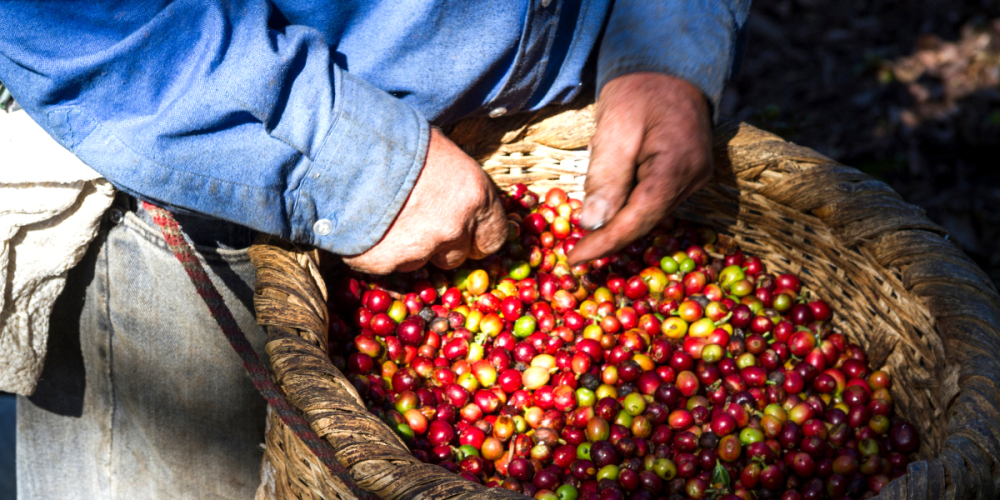
The traditional washed method uses clean water to wash it off, but due to water resource limitations in some high-altitude regions, this direct-dry "semi-washed" processing was born. Unexpectedly, honey-processed coffee has both the richness and sweet clarity of natural beans and the clean, serene quality of washed beans, so it has become increasingly popular with the development of specialty coffee.
When buying honey-processed coffee, the top choices are these Costa Rican single-origin options: Front Street Blackberry, Front Street Strawberry Candy, and Front Street Mozart.
If you want to taste the classic flavor of honey-processed coffee, buy Front Street Costa Rica Blackberry. This is a black-honey-processed coffee with floral and fruity notes, carrying distinct aromas of flowers, grapes, and berries. The flavor is fresh and pleasant, easy to drink, making it very suitable for coffee beginners.
Front Street Strawberry Candy is a coffee that includes the Geisha variety, offering aromas of roses, grapes, berries, and fruit gummies when brewed, with outstanding sweetness and rich layers;

Front Street Mozart adds a fermentation step on top of honey processing, developing alluring flavors of raisins, pineapple, jackfruit, and other beloved fruits, with delicate aromas whether extracted hot or cold.
The above content is compiled by CoffeeHunters, a coffee news website.


