








How do arabica coffee bean varieties differ in flavor?
Coffee flavor depends on variety as much as on origin. Arabica, Robusta and Liberica form the three main categories, but only the first two are widely traded commercially. Within Arabica, derivative varieties such as Typica, Bourbon, Pacas, Caturra, Catuai and Catimor each carry distinct plant traits, disease resistance and cup characteristics, and they dominate the specialty coffee market.
Roughly 66 countries grow coffee, grouped into Latin America, Africa and Asia. Asian coffees tend toward full body, African lots are known for fruity and citrus notes, and Latin American beans sit between the two, combining richness with fruity acidity. Robusta coffee beans differ again in caffeine level and flavor, which is why many specialty roasters build their lists mostly from Arabica varieties.
The flavor of coffee is not only influenced by its origin—the coffee bean variety itself is also a key factor determining the direction of its taste. About 66 countries around the world grow coffee, broadly divided into three major producing regions: Latin America, Africa, and Asia, each presenting different styles such as full-bodied, fruity and citrusy, or a blend of richness and fruity acidity. At the bean variety level, Arabica, Robusta, and Liberica are the three main categories, among which Arabica-derived varieties such as Typica, Bourbon, Pacas, Caturra, Catuai, and Catimor each have their own characteristics. In this article, Front Street Coffee systematically sorts out the origins, plant characteristics, disease resistance, and flavor performance of these varieties, helping coffee enthusiasts build a clear framework of variety knowledge so they can more precisely select coffee beans suited to their own taste.

Friends who love coffee more or less understand that the world of coffee is quite rich in intricacies: different origins bring flavor differences, and coffee bean varieties likewise influence the final taste you drink. In this article, Front Street will talk about the classification system of coffee varieties and the flavor characteristics of various coffee beans.
Types of Coffee
According to the information Front Street has, about 66 countries around the world grow coffee. On a broad scale, they can be divided into three major coffee-producing regions: Latin America, Africa, and Asia. Because these three regions differ in geographical conditions and climate environments, their coffee flavors also show clear distinctions: the Asian region tends toward full-bodied richness, the African region is known for fruity aromas and citrus notes, while Latin America falls between the two, combining richness with fruity citrus flavors.
Coffee bean varieties are also clearly classified. At present, the three most common major categories worldwide are Arabica, Robusta, and Liberica. However, only Arabica and Robusta are truly used commercially. The coffee beans currently selected by Front Street's stores basically all belong to the Arabica category.
Arabica
Arabica is the most widely planted variety in the world, ranking first in quality among the three major bean types, and therefore occupies a dominant position in the specialty coffee field. Its output is also the highest in the world, accounting for about 75% of total global coffee production.
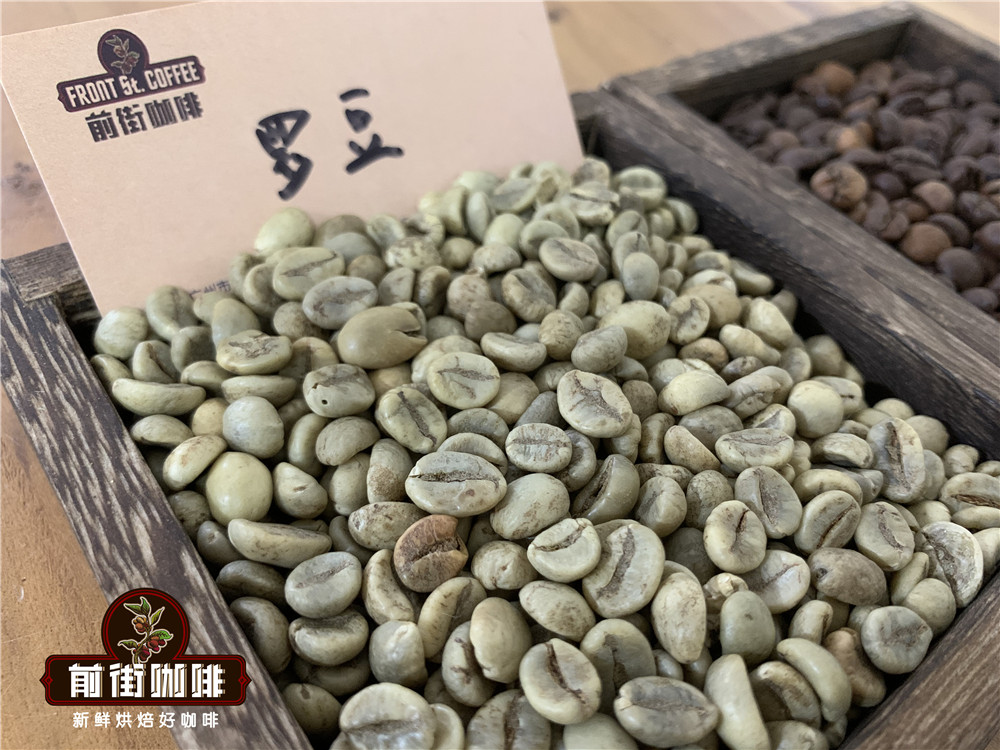
According to Front Street's understanding, Arabica coffee beans mainly come from the tropical regions of Central and South America. The beans are relatively small, with an elongated oval shape on the front, a narrow and curved center crack, and a relatively complete curved arc on the back of the bean.
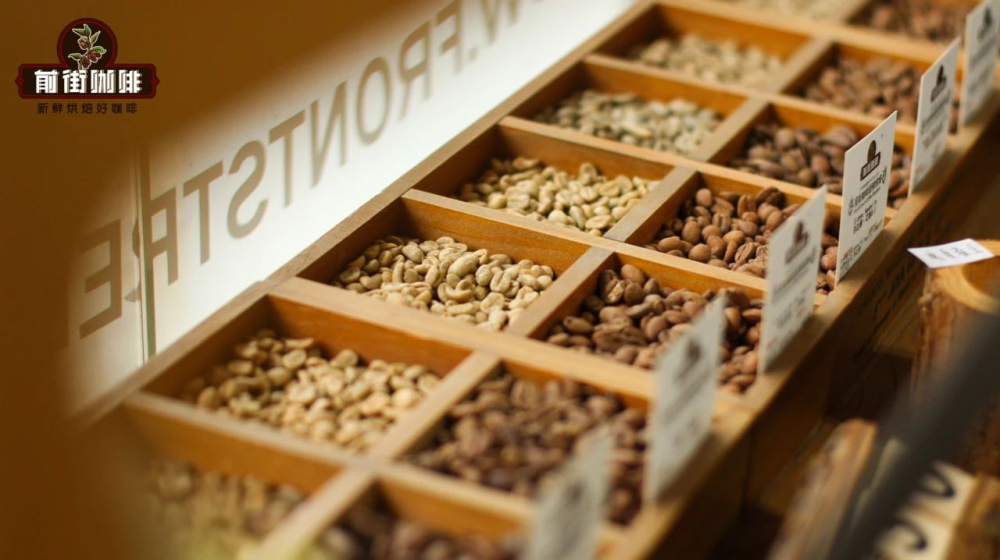
Arabica coffee trees are also relatively difficult to cultivate. They prefer mild daytime and cool nighttime temperatures, and climates that are too cold, too hot, or too rainy are unfavorable for growth. Arabica coffee trees need to be planted on high-altitude sloping land, and harvesting must rely on manual hand-picking, which is extremely difficult.
From Front Street's analysis of Arabica's composition, its caffeine content is relatively low, only 0.9% to 1.2%; its fat content is 60% higher than Robusta's, and its sugar content is twice that of the latter. Taking these factors together, Arabica's taste is naturally sweeter and milder, with a berry-like acidity.
In addition, Arabica's chlorogenic acid content is relatively low, about 5.5% to 8%. Chlorogenic acid not only has antioxidant properties but is also an important component for resisting pests, so Arabica is more susceptible to pest damage and more easily affected by climate conditions, which is also why it is usually planted at higher altitudes.
At present, the largest Arabica-growing country is Brazil, while Colombia produces only Arabica coffee.
Robusta
As Front Street mentioned above, Robusta's quality is inferior to Arabica's, so it is not suitable as specialty coffee and is instead used in large quantities in the instant coffee market. Robusta coffee trees are mainly distributed in west-central and eastern Africa, Madagascar, and the Indonesia region of Asia.
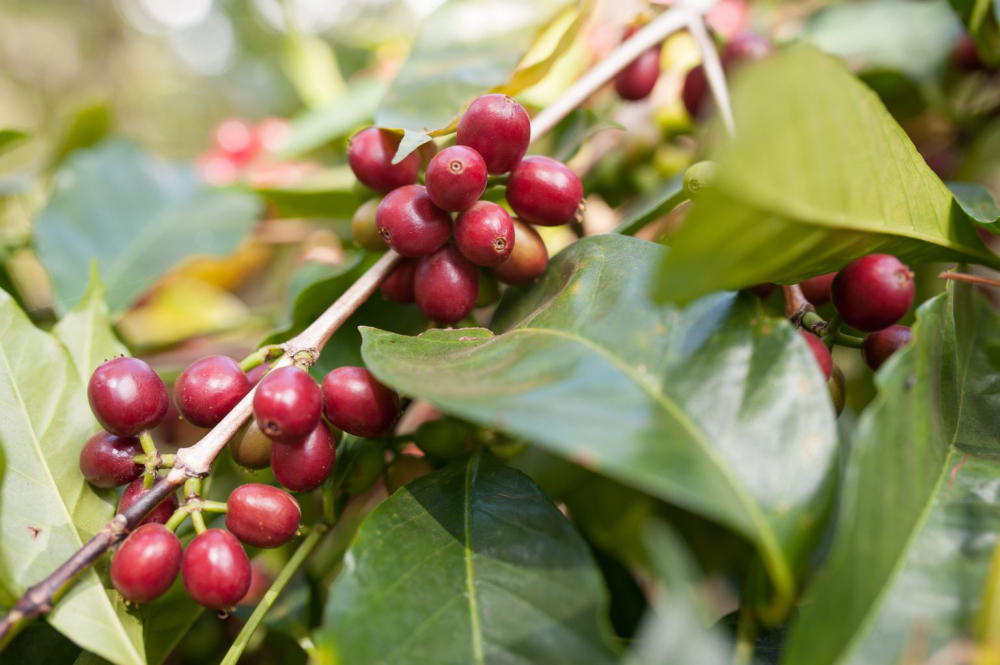
Front Street also learned that Robusta's trees and leaves are both larger than Arabica's. The bean shape is more round on the front, convex and rounded on the back, with a relatively straight crack, somewhat resembling a large pearl barley.
Robusta coffee trees can tolerate high temperatures, cold, drought, and humidity, and can even resist disease attacks, especially not fearing leaf rust, Arabica's natural enemy, and they have the characteristic of multiple harvests. Their adaptability is extremely strong, and they can grow well at low altitudes; harvesting does not necessarily require manual labor and can be done with vibrating machines. From a cultivation standpoint alone, Robusta coffee trees can be said to have many advantages, but unfortunately, the coffee beans they produce have relatively poor aroma, strong bitterness, insufficient acidity, and a caffeine content twice that of Arabica. For this reason, Robusta coffee beans are mostly used to make iced coffee, instant coffee, canned coffee, and blended espresso blends.
As Front Street stated earlier, compared with Arabica, Robusta has a higher caffeine content, reaching 1.6% to 2.4%, and lower fat and sugar content, causing Robusta's taste to be more bitter and intense; some coffee enthusiasts even describe it as having a rubbery taste. So it is not suitable for entering the specialty coffee market.
Robusta's chlorogenic acid content is also twice as high as Arabica's, so it is less susceptible to pests and climate influences, and can grow well even when planted at low altitudes. At present, the largest Robusta-growing country is Vietnam, and Africa and India also produce it.
Liberica
Liberica coffee beans are rarely mentioned because their output is extremely small and they are not suitable as commercial coffee, so they seldom appear in discussions.
The above are the three most important coffee bean varieties at the macro level. But if Front Street were to further subdivide them, many more types could be identified. For example, Front Street's Arabica coffee beans have different varieties in each producing region, such as the common Typica, Bourbon, Caturra, Catuai, and so on. Next, Front Street will explain the characteristics of these Arabica-derived coffee varieties.
Arabica-Derived Varieties
Typica
Front Street will start with the oldest, Typica coffee beans. It is Ethiopia's oldest native variety, and today almost all Arabica coffee bean varieties are derived from Typica. Typica's flavor is elegant, but the plant is relatively weak, has low disease resistance, and is prone to leaf rust. Therefore, coffee bean yields are low and cannot satisfy economic returns. In recent years, Typica in Central and South America has gradually been replaced by Caturra and Catuai, so Typica is becoming increasingly rare. Although Typica's flavor is elegant, its popularity is less than Bourbon's.
Bourbon
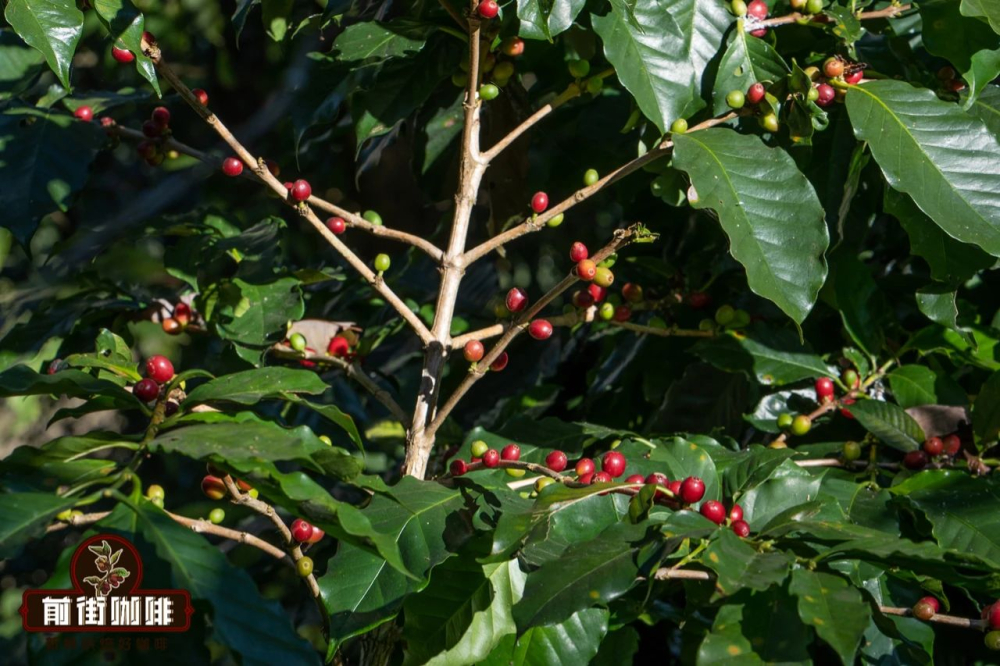
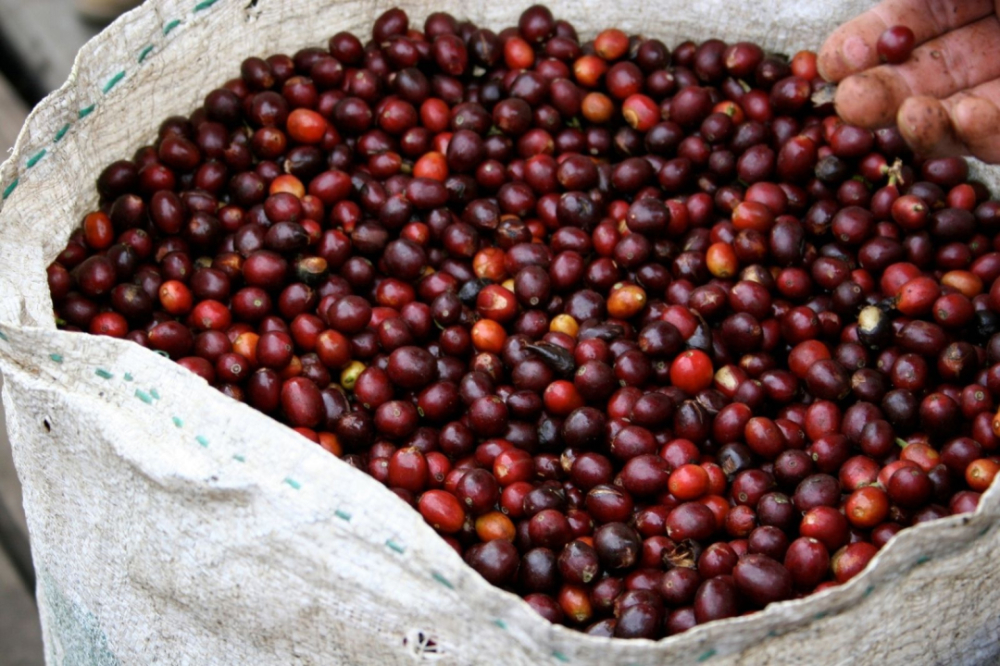
Bourbon is a secondary variety produced by a mutation of Typica and, together with Typica, belongs to the oldest existing coffee varieties; its green fruit turns bright red when ripe. Compared with Typica, Bourbon's leaves are broader and its growth is denser. Although its yield is higher than Typica's, its harvest period is likewise two years, so it is also considered a relatively low-yield variety, yet it has a high-quality taste with a red-wine-like acidity and a sweet finish.
Pacas
Pacas is a natural mutation of Bourbon and was first discovered in 1949 on the Pacas family's estate. In 1956, someone found some plants with different morphology in a Bourbon planting area, collected them, and began selection and research, also inviting University of Florida professor William Cogwill to identify them. The identification results showed that a single-gene mutation had occurred in the Bourbon planted on the Pacas farm, causing the plant to become smaller and forming a new variety. This new variety was named "Pacas" after the farm owner. The Pacas coffee plant has a smaller morphology, can be planted more densely, and has higher yield than native Bourbon. High-density planting brought the farm higher yields, and its flavor performance is also more excellent.
Caturra
Caturra is a single-gene mutation of Bourbon and was discovered in Brazil in 1937. Its productivity and disease resistance are both better than Bourbon's, and the tree is shorter, making harvesting convenient. Unfortunately, like Bourbon, it has the cyclical problem of fluctuating productivity every two years. But its flavor is comparable to or slightly inferior to Bourbon beans, and more importantly, its adaptability is extremely strong; it does not need shade trees and can thrive directly exposed to bright sunlight, commonly known as sun-grown coffee. It can adapt to high-density planting, but must be fertilized more, increasing costs, so early coffee farmers did not readily accept it.
Catuai
Catuai is a hybrid Arabica variety, produced by crossing Mundo Novo (New World) with Caturra. It has relatively good resistance to natural disasters, especially wind and rain. It inherits Caturra's advantage of a low tree height and changes Mundo Novo's shortcomings; another advantage is that its fruit is firmly set and not easily knocked off by strong winds, making up for Arabica's defect of fragile fruit. But its overall flavor performance is more monotonous than Caturra's, and also more monotonous than Mundo Novo's and lacking in body—this is the greatest regret. In addition, its fruit growth and harvest lifespan is only about ten years, and its short lifespan is also one of its weaknesses.
Catimor
Catimor is a hybrid of the Timor variety under the Robusta branch and the Caturra variety under the Arabica branch. It was developed in 1959 by the Portuguese Coffee Leaf Rust Research Center CIFC, with research focused on disease resistance and high yield. Catimor coffee beans are characterized by high yield, short plants, suitability for dense planting, and reddish-brown new leaves. Front Street learned that because Catimor inherits Timor's Robusta genes, it can better resist coffee berry disease and coffee leaf rust, while also having stronger resistance to pests and diseases. But it also has a defect: its flavor performance is slightly inferior to other Arabica branch varieties. However, its high yield corresponds to a relatively shorter commercial lifespan, averaging only ten years.
Front Street cupped and brewed Catimor coffee beans grown at low altitude and considered that its coffee bean performance showed no obvious advantage or disadvantage compared with other commercial varieties. But when cupping and brewing Catimor coffee beans grown above 1,200 meters, the cup flavor was clearly inferior to other Arabica branch coffee varieties.
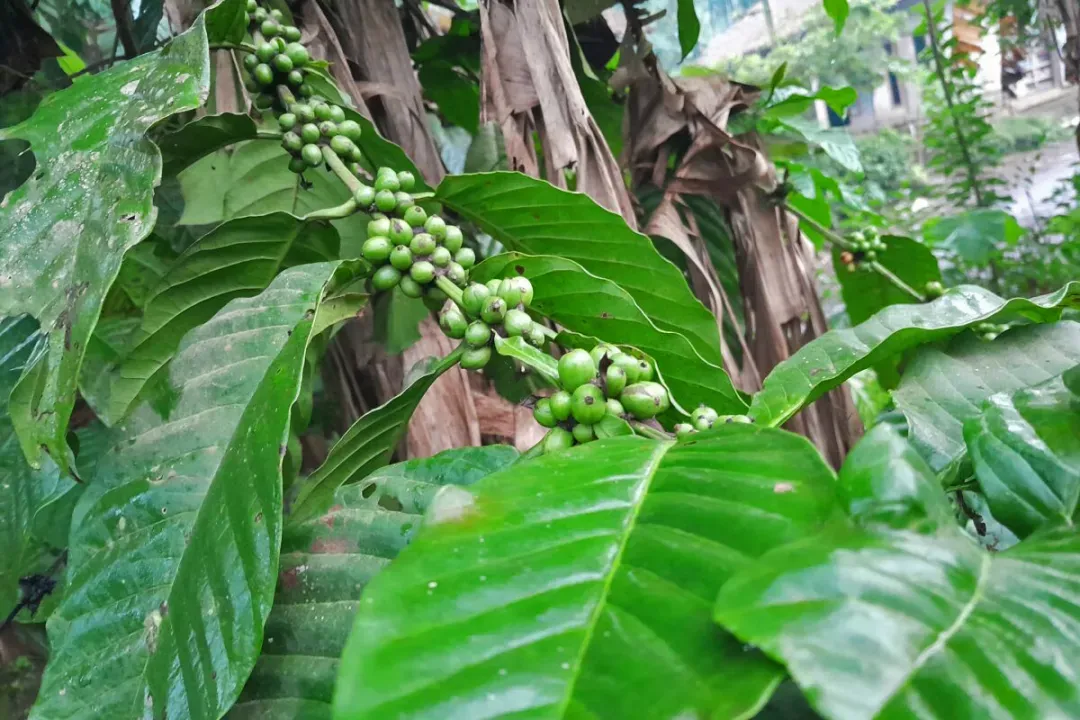
The above are several common coffee varieties derived from Arabica. Next, Front Street will also mention the common coffee categories currently found in Front Street's stores.
Common Coffee Categories at Front Street Coffee (FrontStreet Coffee)
Cappuccino
Cappuccino coffee is espresso topped with a layer of soft milk foam. In Italy, drinking a cup of cappuccino in the morning is a deeply rooted popular habit. Because a layer of milk foam floats on the originally bitter espresso, the coffee's flavor becomes richer and the mouthfeel milder. The bitter taste remaining in the mouth after drinking allows the drinker to enjoy the aroma of roasting. If some cinnamon or lemon peel is sprinkled on top, it can highlight the aroma and create yet another different taste. According to Front Street's observation, most guests who come to Front Street's store in the morning also choose a cup of cappuccino to greet the new day; after all, who wouldn't want a fragrant cappuccino in the morning to refresh themselves?
Mocha Coffee
Mocha coffee beans can be said to be one of the world's main coffee origin beans. At present, mocha coffee beans produced in Yemen are considered the best, because the name mocha was originally spread from Yemen's Mocha Port in the early period, so Yemen's mocha coffee is the most classic. According to Front Street's brewing, mocha coffee has particularly good sweetness, a unique flavor, a distinctive aroma like yogurt, and contains chocolate notes, making it a very distinctive pure coffee. In Front Street's stores, mocha coffee is also the most popular coffee besides classic hand-brewed coffee, and according to Front Street's understanding, mocha, Brazil, and Colombia are together called the "three crowned kings of blends," so most comprehensive espresso blends use mocha coffee.
Americano
Americano is the most common and ordinary type in coffee shops. It is black coffee made with a drip coffee maker, or made by adding an appropriate amount of water to espresso. Americano's flavor is also relatively light, because the extraction time is longer than Front Street's hand-brewed coffee, so its caffeine content is correspondingly higher.
Hand-Brewed Specialty Coffee
Hand-brewed specialty coffee, as the name suggests, is manually brewed specialty coffee, and its flavor is also better because it is made by freshly grinding and hand-brewing coffee beans on site, then brewed by a professional barista, so the flavor of the hand-brewed coffee drunk in Front Street's stores is certain to be guaranteed. The coffee beans used for hand-brewed specialty coffee are also, as Front Street mentioned above, brewed from Arabica coffee beans, such as the commonly seen Ethiopian Yirgacheffe, Indonesian Mandheling, Yunnan small bean, Brazilian Red Bourbon, and so on at Front Street; these all belong to the category of specialty coffee, and as Front Street wrote at the beginning, their flavors are all different. Therefore, hand-brewed coffee is the coffee type with the most distinctive coffee flavor characteristics.
The above is what Front Street has compiled regarding the characteristics of coffee beans and common coffee varieties. Front Street also hopes this article can help coffee-loving friends gain a deeper understanding of coffee, so they can choose coffee beans suited to their own personal taste.
For more specialty coffee beans, please add the private WeChat Front Street Coffee (FrontStreet Coffee), WeChat ID: kaixinguoguo0925
The above content is compiled by CoffeeHunters, a coffee news website.


