







Why is coffee central to Ethiopia's foreign exchange?
Ethiopia's coffee exports account for roughly 3 percent of the global market, making it the world's eighth-largest coffee exporter, and coffee has long been the main pillar of the country's foreign exchange earnings. In the Guji area, Hambela town's high altitude, red-brown soil and wide day-night temperature swings give beans floral, jackfruit, candied fruit and apricot notes.
Export volume climbed from 58,000 tons in 1990-1991 to 127,000 tons in 2002-2003, but a decade of falling international prices cut coffee's share of foreign exchange earnings from over half to about 35 percent. Prices later recovered, reaching 60.8 cents per pound in March 2004. Hambela uses refined natural processing with African raised-bed drying and up to 21 days of slow fermentation.
Ethiopia is a globally important coffee-producing region, and coffee exports occupy a key position in its economy. Hambela town, located in the Guji producing area, nurtures coffee with a unique flavor thanks to its high altitude, red-brown soil, and large temperature difference between day and night. The local area uses refined natural processing, combined with African raised-bed drying and strict manual hand-sorting, allowing the coffee cherries to develop rich layers through a slow fermentation lasting up to 21 days. Front Street Coffee Huakui is a representative bean from this producing area, attracting attention for its floral, jackfruit, candied fruit, and apricot notes. This article will review the background of Ethiopian coffee exports, take an in-depth look at Hambela's terroir and processing techniques, and sort out the origin and market performance of Huakui coffee beans.
Coffee plays a core role in Ethiopia's export economy and is the main pillar of the country's foreign exchange earnings. Ethiopia's coffee exports account for about 3% of the global market, ranking it as the world's eighth-largest coffee exporter. Starting from 58,000 tons in 1990-1991, export volume steadily climbed to 110,000 tons in 1995-1996, and then remained basically within this range for several years. In 2001-2002, exports exceeded 110,000 tons, and in 2002-2003 they further reached 127,000 tons. However, international coffee prices declined for ten consecutive years, dealing a clear blow to Ethiopia's foreign exchange earnings. Before the sharp price drop, coffee export revenue once accounted for more than half of Ethiopia's foreign exchange earnings; now this proportion has fallen to about 35%. According to a report by the International Coffee Organization, coffee prices began to recover in 2002, rising from 41 cents per pound in September 2001 to 52 cents in 2002, and continuing to rise to 59.7 cents per pound in 2003. In March 2004, the average price reached 60.8 cents per pound, up 50% from September 2001. This is undoubtedly a positive signal for Ethiopia.
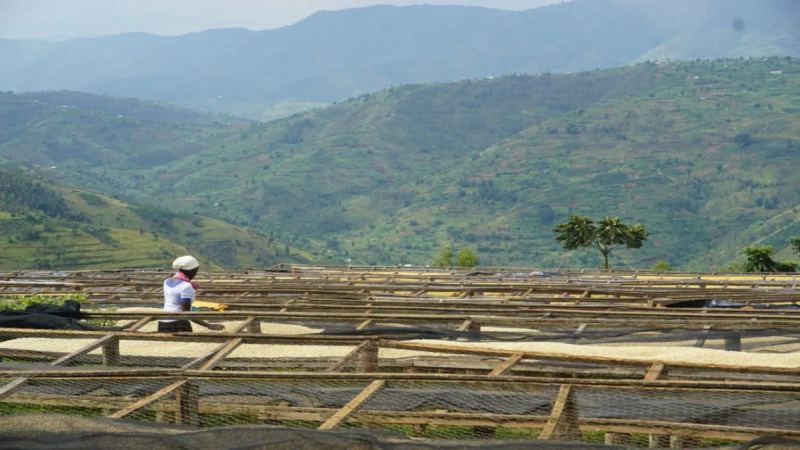
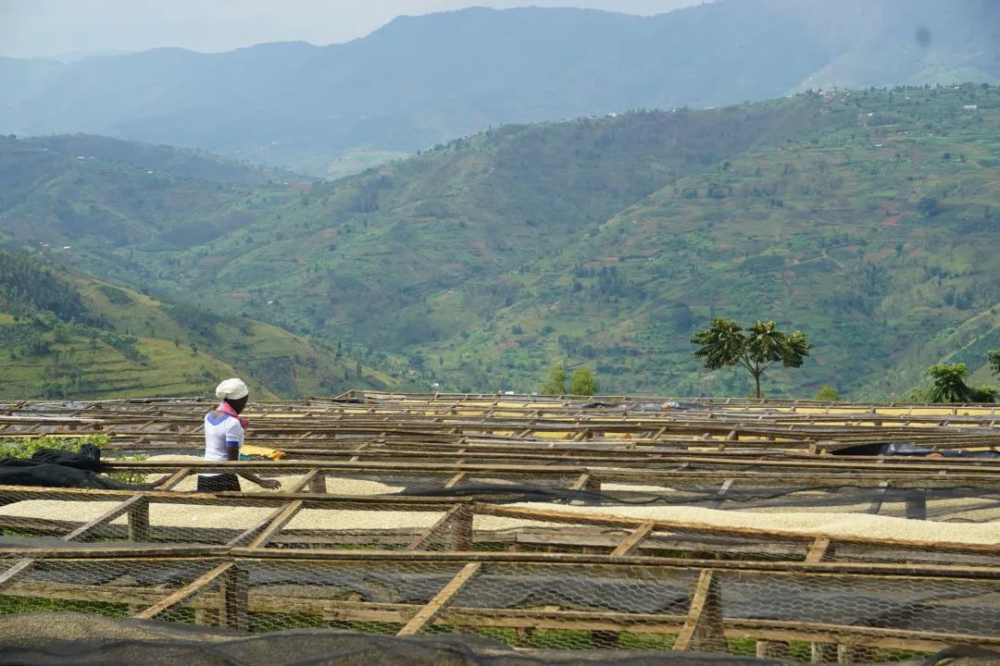
Hambela is located in Guji, Ethiopia's largest coffee-producing region, and administratively belongs to Oromia State. To its west, it faces Yirgacheffe's Kochere across the mountains, and to its south, east, and north it borders the Guji sub-regions of Shakiso, Uraga, and Kercha, respectively, making it Ethiopia's highest-altitude coffee sub-region. It has humus-rich red-brown soil, an altitude of about 2,300 meters, and a pronounced temperature difference between day and night, allowing the coffee fruit to grow slowly. During harvest, only fully red cherries are picked, and refined natural processing is used, drying on African raised beds with thickness limited to 2-3 layers. According to the color changes after drying, manual hand-sorting is carried out twice a day on the first 3 days of drying, removing 10% each time. After that, the beans are turned once every three hours, and at noon and at night the coffee beans are covered to avoid rain and dew, accurately controlling the degree of fermentation. The entire process lasts up to 21 days, creating the unique flavor of Front Street Coffee Huakui.
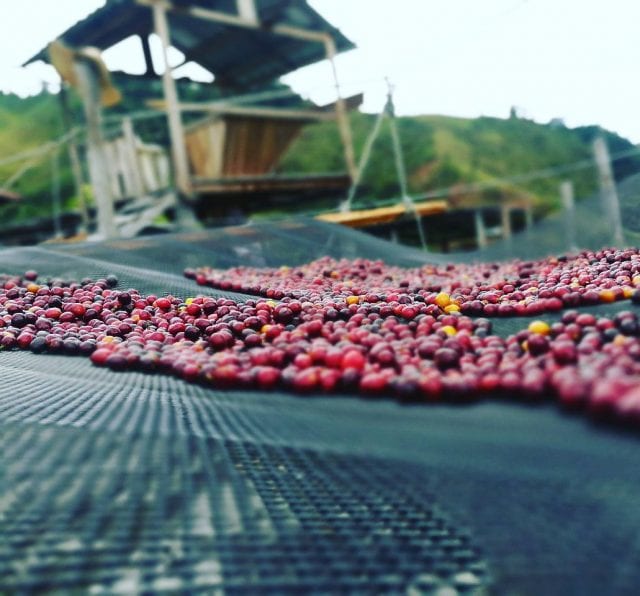
At present, the Hambella producing area has nearly 20 processing plants of various scales. Hongshun, as a green bean company rooted in Ethiopia's coffee-producing areas, has established four natural processing plants in the GUJI Hambella producing area through cooperative arrangements since 2016. The four estate processing plants in the core Hambella producing area are the "Dire" Church processing plant, the "mansa" Mountain Pond processing plant, the "Bobea" Red Flag processing plant, and the "Goro baessa" Mountain Spring processing plant. Goro baessa is a small village at an altitude of 2,280 meters surrounded by mountains. Every December is its coffee harvest season, when the mountains are full of bright red ripe coffee cherries, neatly arranged in the village on African drying beds.
As a relatively well-known coffee bean from the Hambela producing area, Front Street Coffee Huakui has attracted a lot of attention.
Front Street Coffee 2026 New Crop Season Huakui Coffee Beans
Country: Ethiopia
Producing Area: Sidama · Guji Producing Area
Altitude: 2,250-2,350 meters
Variety: Local heirloom varieties
Processing Method: Natural processing
Flavor: Floral, jackfruit, candied fruit, apricot, juicy
Looking back to 2017, a naturally processed coffee bean from DW Company's "Buku Aebl" processing plant won the TOH natural group championship. At that time, a Chinese green bean merchant introduced this champion bean into China and named it "Huakui." At that time, this coffee bean had rich strawberry and cream aromas. In the same year, Li Jianfei from Beijing used this Huakui coffee to win second place in the China region of the 2017 World Brewers Cup (the other competition beans that year were Geisha), which further increased the popularity of Huakui coffee beans. It should be noted that the Huakui coffee beans at this time held the title of the 2017 TOH champion bean.
The above content is compiled by CoffeeHunters, a coffee news website.


