







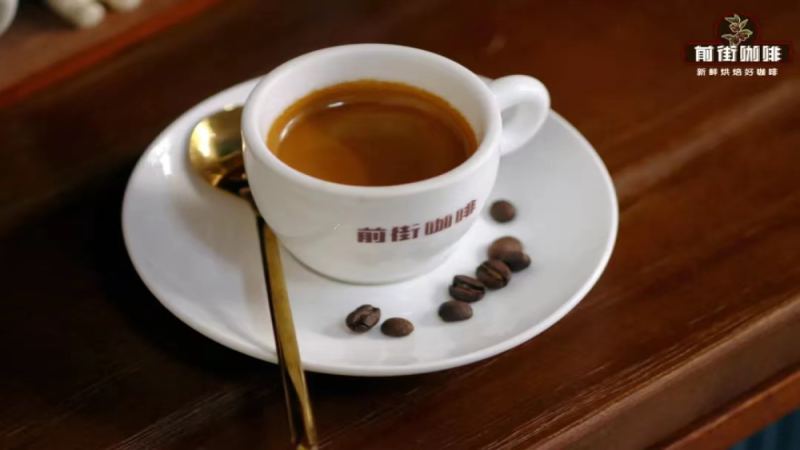
How Does an Espresso Coffee Ratio Shape Flavor?
Espresso usually works with a coffee-to-liquid ratio near 1:2, meaning a dose of roughly 18-20 grams of ground coffee yields about 36-40 grams of liquid espresso in the cup. The dose itself is capped by the portafilter basket's capacity, so the ratio, not the dose, is what most home brewers adjust to fix flow rate and flavor.
Blends, rather than single-origin beans, are standard for espresso because pressure amplifies whatever the bean already carries, so combining origins keeps the cup balanced. Front Street lists four espresso blends, each with its own recipe, and tasting focuses on mouthfeel, aroma and aftertaste rather than the temperature shifts pour-over drinkers track. Coffee machines for espresso drinks such as mocha and coffee milk drinks build on this same base.
Want to make a decent espresso at home? The coffee-to-water ratio is one of the most critical parameters. Drawing on Front Street Coffee's hands-on experience, this article first explains why espresso mostly uses blend beans rather than single-origin beans, then explains how the dose is limited by the portafilter basket capacity, why a 1:2 coffee-to-liquid ratio is considered the golden ratio, and how too much or too little coffee affects flow rate and flavor. It then introduces, one by one, the four espresso blends currently offered by Front Street—Sunflower Warm Sun, Specialty Blend, Commercial Blend, and Black Cocoa Blend—including recipe proportions, flavor descriptions, and suitable drinkers. Finally, it covers how to taste espresso, helping you understand why it emphasizes mouthfeel, aroma, and aftertaste rather than distinguishing temperature changes like pour-over does.
As specialty coffee has become more and more widespread, more people are clearly choosing espresso-based coffee, and many enthusiasts have started figuring out at home how to extract Espresso. Espresso is usually the base of various espresso drinks: add different proportions of milk and it becomes a cappuccino, latte, or mocha; add water and it becomes an Americano. This shows Espresso's core position in the espresso coffee system. So how exactly should the coffee-to-water ratio of espresso be determined? How many grams of coffee to how many milliliters of water counts as a qualified espresso? Next, Front Street Coffee (FrontStreet Coffee) will talk about how to determine the coffee-to-water ratio for espresso.
Espresso What is it?
As Front Street Coffee (FrontStreet Coffee) mentioned earlier, Espresso is concentrated coffee, referring to the coffee liquid quickly extracted under the high-pressure environment of an espresso machine. The most prominent ability of an espresso machine is to multiply the flavor of the coffee beans themselves: for example, Yirgacheffe has citrus and lemon acidity, and when extracted with an espresso machine this acidity is amplified; the bitterness of Indonesian Mandheling is likewise amplified. For this reason, espresso generally does not use single-origin beans from one place, but instead blends beans from multiple origins so that the overall taste becomes more balanced.
It can be seen that extraction parameters have an enormous influence on the flavor of an espresso; even a very small deviation will cause the final flavor to change exponentially. Traditionally, the volume of a single shot of espresso is about 1 ounce. So how exactly should its water-to-coffee ratio be calculated?
How is the espresso coffee-to-water ratio allocated?
First, Front Street Coffee (FrontStreet Coffee) needs to explain that the dose is mainly determined by the capacity of the espresso machine's portafilter basket (see the image below). The double basket specifications provided by some manufacturers include 16g, 18g, 20g, 22g, and so on. These numbers are recommended capacities, and the allowable filling error is about ±1g. For example, the reasonable dose range for an 18g basket can be 17-19g.
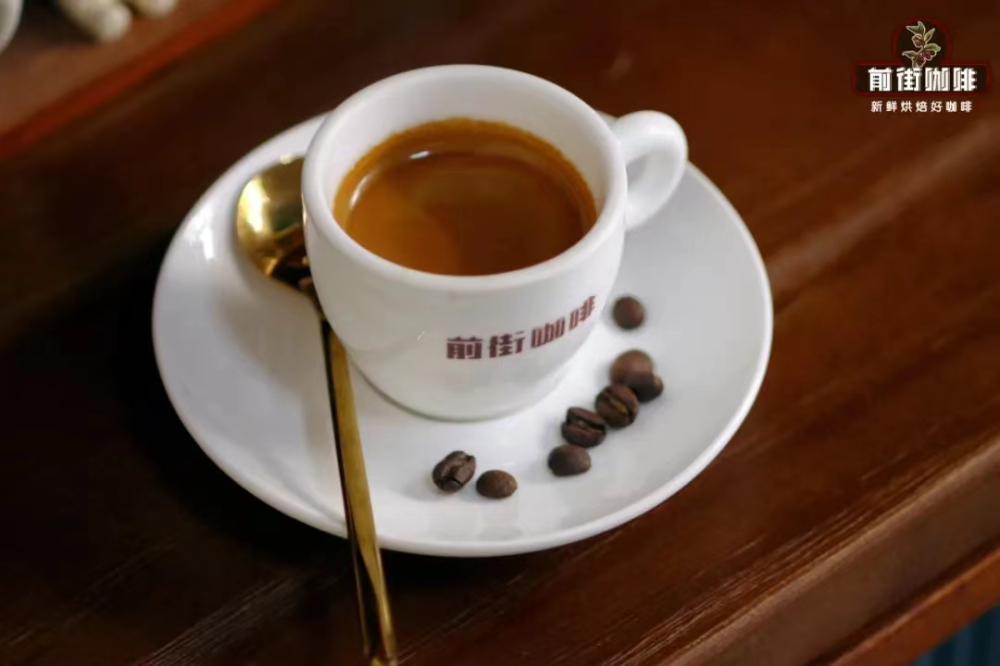
(Portafilter basket)
Therefore, Front Street Coffee (FrontStreet Coffee) does not recommend using a dose much smaller or much larger than the basket capacity. The dose directly affects the density of the coffee puck: under the same tamping force, too little coffee makes it loose, the water flow is faster, and under-extraction is likely; too much coffee makes the density too high, the flow slows down, and it may even be difficult to extract coffee liquid.
Characteristics of the espresso coffee-to-liquid ratio
Espresso uses the ratio between coffee grounds and espresso liquid. In practice, Front Street Coffee (FrontStreet Coffee) has found that this ratio cannot be used to infer how much water actually participated in extraction, although some newer coffee machines now install a flow meter at the water inlet to display the water volume. The earliest extraction ratio was the single-shot espresso standard, usually extracting 25-30ml of espresso liquid from 7-8g of coffee. The former is a unit of weight, while the latter is a unit of capacity (volume); the two are equal only when the density is the same. But coffee enthusiasts all know that the extracted espresso has a layer of golden crema on the surface, and the thickness of the crema depends on the roast level and freshness, so measuring by volume easily leads to inconsistent results.
Thus came the method of calculating by coffee weight versus liquid weight. This ratio is usually between 1:1.5 and 1:2.5, with 1:2 being more commonly used, for example extracting 40g of coffee liquid from 20g of coffee. The ratio is affected by two factors: the dose and the water amount. If the ratio is too low, it tastes very rich and heavy, and easily brings out the bitterness of over-extraction; if the ratio is too high, it becomes weak and bland, with a sharp acidity caused by under-extraction. So the golden coffee-to-water ratio for espresso is 1:2.
The above is what Front Street Coffee (FrontStreet Coffee) has compiled regarding the allocation of the espresso coffee-to-water ratio. As mentioned earlier, espresso is mainly made with blend beans, so which specific blend beans are better? What coffee beans should be chosen for espresso? Next, Front Street Coffee (FrontStreet Coffee) will introduce the four blends currently offered that are suitable for espresso machines, along with their respective flavor characteristics.
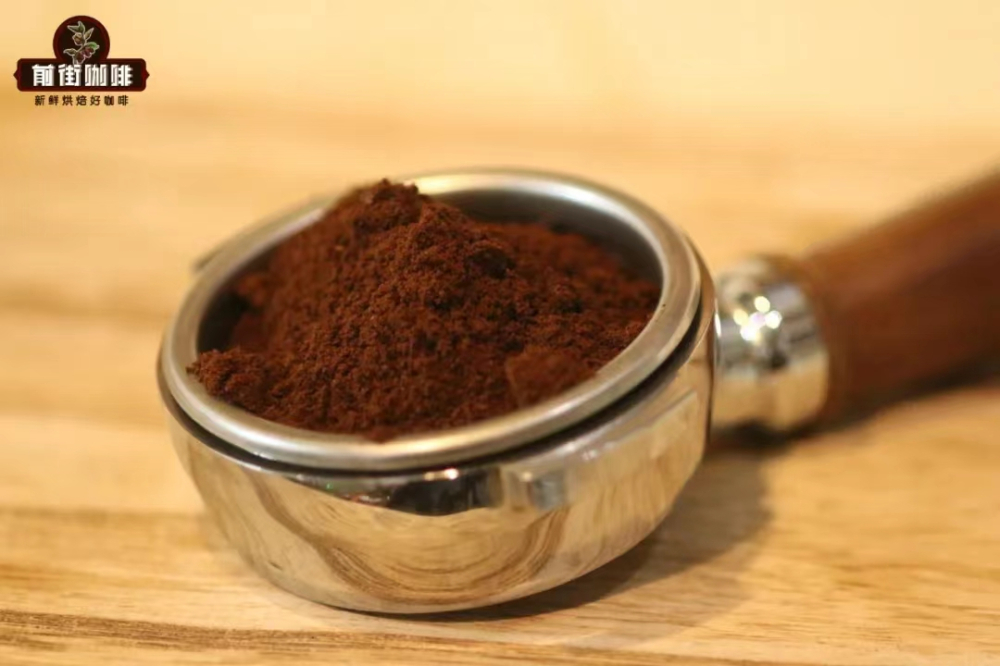
What coffee beans are used for espresso? 1. Front Street Coffee (FrontStreet Coffee) Sunflower Warm Sun Blend
Flavor: obvious fruit acidity, faint berry aroma, winey aroma, rich chocolate flavor, with a clear sweet aftertaste.
Recipe: Honduras Sherry : Yirga Red Cherry = 7:3
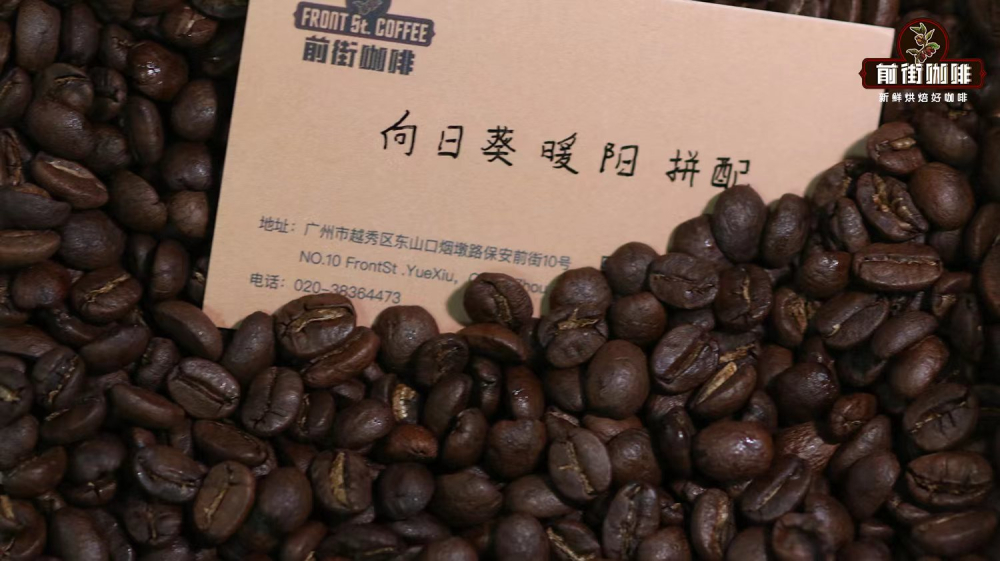
This blend is made by blending Yirgacheffe natural Red Cherry with Honduras Sherry. Front Street's design concept for it is that it can be used for both espresso and pour-over. When made into espresso, the aroma it gives off carries an obvious fermented winey note; on the palate you immediately feel the acidity of citrus and berries, accompanied by a whisky-like winey aroma, with a dark chocolate aftertaste.
When this Warm Sun Blend is brewed by pour-over, however, the flavor is not as rich as when made into espresso: the brewed cup has a fermented winey aroma and a little citrus aroma; at high temperature the palate shows only an obvious winey aroma and a dark chocolate aftertaste, and only after the temperature drops does it slightly reveal the acidity of citrus and berries. Overall it is clean and fresh, without a vanilla-cream-like mouthfeel.
2. Front Street Coffee (FrontStreet Coffee) Specialty Blend
Flavor: soft slight acidity, light sweetness, nutty sweet aftertaste; the overall impression is not too stimulating, mild, with medium crema.
Recipe: Colombia : Brazil = 3:7
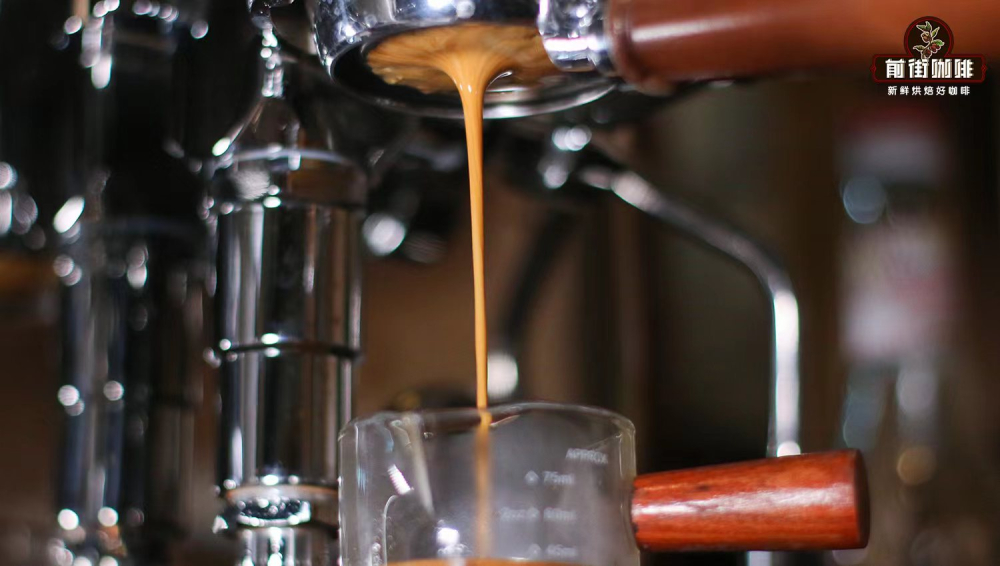
This blend is made from Brazil and Colombia. It tastes of a faint roasted grassy aroma, with a light fragrance and a slight bitterness, smooth and pleasant, leaving a comfortable aftertaste. This is because beans from Colombia's Huila region have a pleasant acidity, an aromatic smell, moderate acidity, and a rich, intriguing sweetness; beans from Brazil's Cerrado region have a comfortable bittersweet taste and are extremely smooth on the palate. The combination of the two is truly excellent. 3. Front Street Coffee (FrontStreet Coffee) Commercial Blend
Flavor: caramel sweetness, nutty and cocoa-like, dark chocolate flavors, balanced acidity and sweetness, with a slight bittersweet note, and a lingering aftertaste.
Recipe: Colombia : Brazil : Robusta = 3:6:1
This blend uses Brazilian and Colombian beans, plus 10% Robusta. The taste is classic; Front Street believes it drinks with rich crema and mouthfeel, as well as caramel sweetness, along with nutty, cocoa-like, and dark chocolate flavors, balanced acidity and sweetness, a slight bittersweet note, and a lingering aftertaste. This Commercial Blend uses the same ratio of Colombia and Brazil as Front Street Coffee's (FrontStreet Coffee) Specialty Blend; the difference is that the addition of Robusta provides abundant crema, making the mouthfeel even richer. 4. The espresso beans recommended by many baristas—Front Street Black Cocoa Blend
Flavor: with soft fruit acidity, caramel sweetness, nutty and dark chocolate flavors, smooth and viscous, but the taste is on the lighter side.
Recipe: Yunnan : Brazil = 3:7
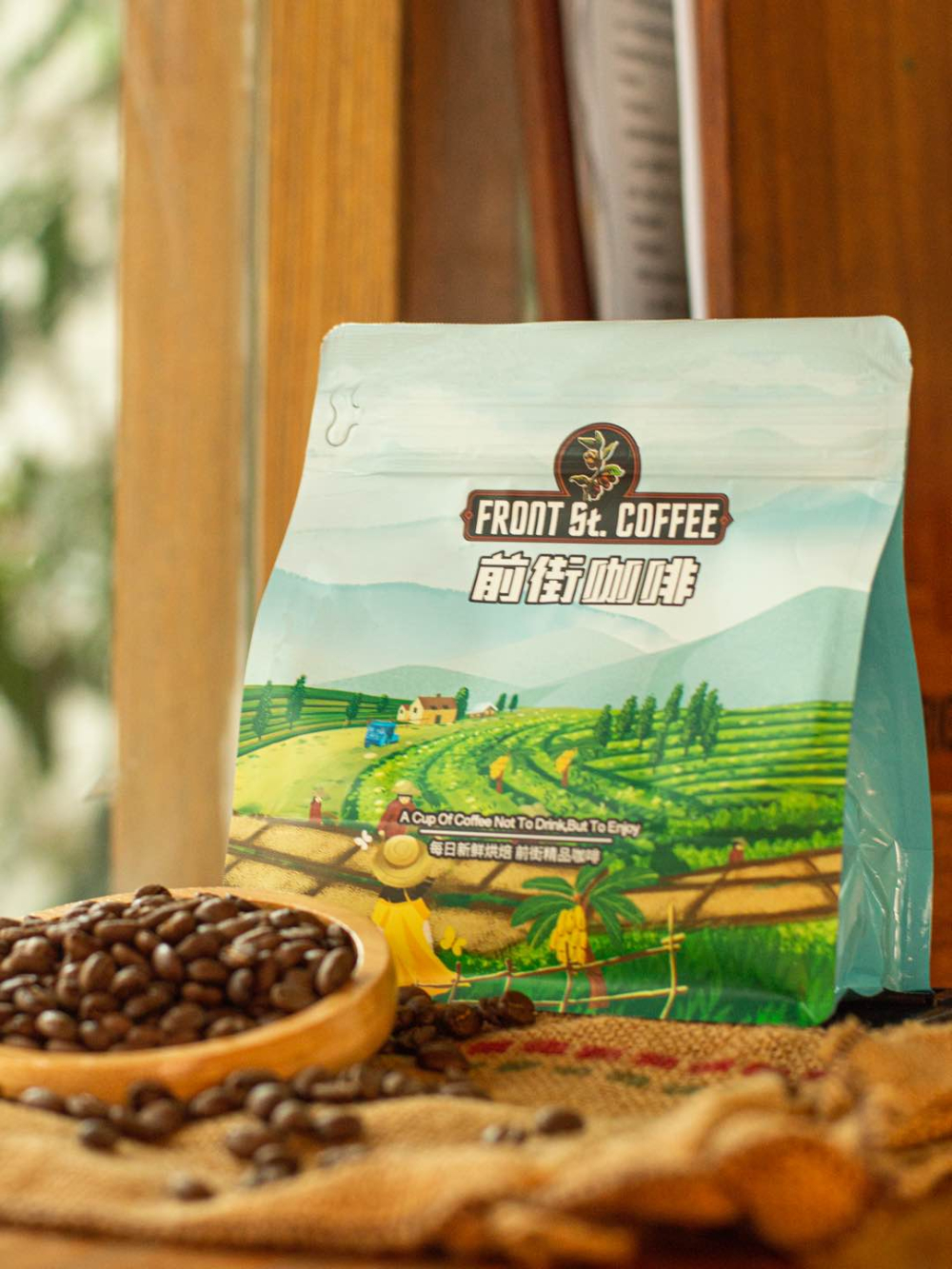
This blend is made from Brazil and Yunnan. Front Street believes it drinks with soft fruit acidity and caramel sweetness, as well as nutty and dark chocolate flavors, smooth and viscous, but the taste is on the lighter side. This is because Yunnan's natural conditions are very similar to Colombia's—high altitude, large temperature difference between day and night—and its flavor is of the mellow-aromatic type, with moderate acidity, a rich and full-bodied taste, uniform bean size, high oil content, and fruity notes; its quality and mouthfeel are close to Colombian coffee, only a little lighter in taste. Meanwhile, beans from Brazil's Cerrado region have a comfortable bittersweet taste and are extremely smooth on the palate. So mixing these two kinds of beans also gives a good flavor. This espresso bean recommended by many baristas—Front Street Black Cocoa Blend—is very cost-effective and suitable for espresso beginners and small coffee shops.
The above are the four espresso blend coffee beans recommended by Front Street Coffee (FrontStreet Coffee). Next, Front Street Coffee (FrontStreet Coffee) will introduce how to drink espresso.
How to drink espresso ?
As Front Street Coffee (FrontStreet Coffee) said earlier, espresso is mainly used as the base of espresso drinks; it is good for both milk coffee and Americano, and there is another way—downing it in one gulp, drinking it straight. Because coffee fans all know that the characteristics of espresso mainly lie in the crema, the coffee oils, and the soluble substances in the coffee.
Compared with pour-over coffee, espresso is characterized by a strong and quick taste; it cannot be used to distinguish flavor changes at high, medium, and low temperatures the way pour-over can, since it is finished before it even has time to cool. Front Street Coffee (FrontStreet Coffee) achieves the high concentration through a lower coffee-to-water ratio and high-pressure extraction, making espresso taste rich and intense. In addition, espresso extracted under high pressure also produces the unique "crema," which also gives it a unique mouthfeel experience. So when drinking espresso, one tends to appreciate its mouthfeel, texture, aroma, and aftertaste, plus a few obvious flavors. For this reason, many coffee fans are devoted only to espresso.
The above is the information Front Street Coffee (FrontStreet Coffee) has compiled on how to drink espresso and how to allocate the espresso coffee-to-water ratio, in the hope of helping coffee fans who want to learn about related knowledge, making it easier to choose single-origin coffee beans that suit their own taste in the future.
For more specialty coffee beans, please add the private WeChat Front Street Coffee (FrontStreet Coffee), WeChat ID: kaixinguoguo0925
The above content is compiled by CoffeeHunters, a coffee news website.


