







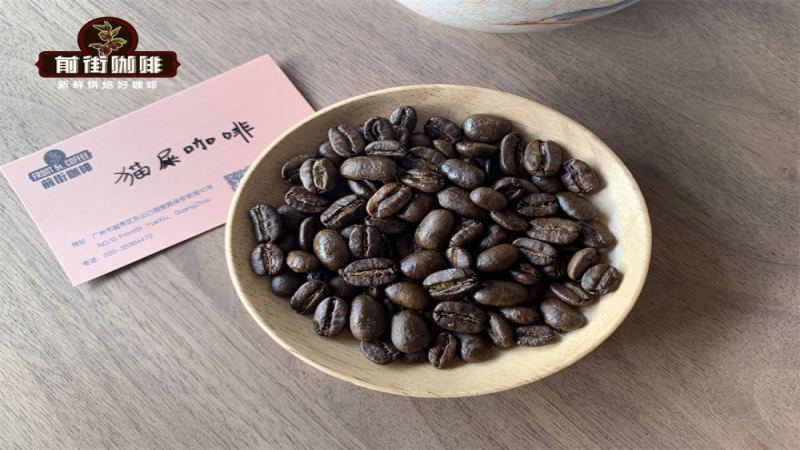
Where does kopi luwak come from and what does it taste like?
Kopi Luwak, also called civet coffee, comes from Indonesia, where coconut civets eat coffee cherries in the plantations. Farmers collect the excreted beans, wash them and sun-dry them. Fermentation in the animal's stomach fluids and intestines is what gives the coffee its fragrance and mellow body, and because production is so limited, the price stays high.
The method skips the usual steps from coffee fruit to dried green beans, which is why farmers in the producing region value it. In the specialty coffee world, however, civet coffee is openly rejected, largely because the production process is considered cruel. Kopi Luwak is often understood as a regional cultural phenomenon rather than a model for quality.
Kopi Luwak, also known as civet coffee, is a name that even those who rarely drink coffee have likely heard of, yet within the specialty coffee community, this coffee faces explicit resistance, and the root cause lies in its excessively cruel production method. This time, Front Street Coffee examines Indonesian Kopi Luwak: from coconut civets stealing coffee cherries, through biological fermentation in their stomach fluids and intestines, to the traditional processing flow where coffee farmers collect the feces, wash them, and sun-dry them; from the hybrid background of Indonesian Golden Mandheling varieties, to the similar practice of Brazilian bird poop coffee; and then to the origin and method of Vietnamese egg coffee. At the same time, Front Street Coffee will also discuss the flavor controversies surrounding Kopi Luwak, its SCAA scoring performance, and specific recommendations for roasting and brewing, helping coffee enthusiasts view this highly talked-about coffee more rationally.
For more specialty coffee knowledge, welcome to follow the WeChat public account: Front Street Coffee (FrontStreet Coffee).
Kopi Luwak is also called civet coffee, and Front Street Coffee thinks that even people who don't usually drink coffee have probably heard this name. However, in the specialty coffee world, Kopi Luwak is explicitly rejected, because its production process is simply too cruel.
In the eyes of Front Street Coffee, traditional Kopi Luwak can be seen as a coffee cultural phenomenon of the Indonesian production region: coconut civets eat coffee cherries in the coffee plantations, and coffee farmers then collect the feces they excrete, wash them, and sun-dry them to obtain traditional Kopi Luwak. According to information Front Street Coffee has, this flavor comes from the biological fermentation occurring between the coconut civet's stomach fluids and intestines. Compared with conventional processing methods, it omits the entire cumbersome process from coffee fruit to dried green beans.
Because of this, local Indonesian coffee farmers place great value on this unique production method. They found that coffee beans fermented in this way are especially fragrant and mellow, and since Kopi Luwak production is extremely limited, based on the market conditions Front Street Coffee understands, its selling price is quite expensive. Front Street Coffee believes this is only reasonable, since things are precious when they are rare. Most Indonesian Kopi Luwak varieties are hybrids, just like Indonesia's Golden Mandheling; this year's variety is Catimor, a cross between Caturra and Timor, and Timor itself combines Arabica and Robusta genes, so Catimor has relatively high sweetness. However, Front Street Coffee also understands that coconut civets usually eat the fruit of the Timor variety, though of course this cannot be generalized.
Besides Kopi Luwak from Indonesia and Southeast Asia, Front Street Coffee also knows that Brazil has a similar production method, except the main character is birds. A certain bird in Brazil especially loves eating coffee fruit, so coffee farmers imitate the Indonesian Kopi Luwak approach, collecting bird droppings and then going through a series of follow-up processes such as cleaning and drying, finally storing the processed coffee beans for drinking. Front Street Coffee has not personally tasted this coffee, but understands that this bird poop coffee has a faint nutty aroma, a more prominent sweetness than ordinary Brazilian beans, and a softer mouthfeel.
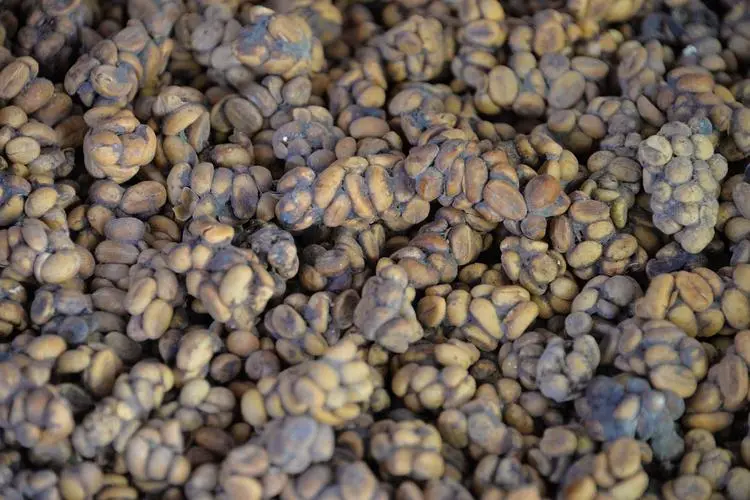
Brazilian farms do not treat these birds as pests, but regard them as members of the farm's agricultural ecosystem, treating them as picking "workers" sent by nature. Front Street Coffee strongly agrees with this idea. In contrast, most Kopi Luwak on the market today no longer counts as true Kopi Luwak. In some production areas, coffee farmers focus only on high profits and begin using cruel production methods, locking coconut civets in tiny cages, not letting them eat anything else, and feeding them only coffee cherries, which causes problems such as malnutrition in the civets. Moreover, Front Street Coffee also understands that the quality of coffee beans produced this way is not stable. This is exactly why the specialty coffee world rejects Kopi Luwak.
This can also be regarded as a piece of the history of traditional Indonesian Kopi Luwak. Since every place has its own coffee culture, Front Street Coffee suggests that everyone need not insist on pursuing some expensive coffee; the one that suits you is good coffee. Vietnam also has Kopi Luwak, but besides Kopi Luwak, Vietnam also has a very special coffee—Vietnamese egg coffee.
Front Street Coffee believes everyone has probably rarely heard of this Vietnamese coffee. It is said to have a history of seventy years, and its inspiration came from cappuccino. Front Street Coffee knows that in 1946 Vietnam's economic conditions were still relatively backward, and there was no fresh milk supply at the time, so local cafés decided to use eggs as a substitute. When this coffee first appeared, no one was willing to try it, but later it turned out that both locals and tourists loved it.
But don't think that Vietnamese egg coffee with eggs added will be fishy—it actually isn't. Front Street Coffee finds its method quite simple: whisk two egg yolks, an appropriate amount of sugar, and condensed milk into a creamy texture, then pour in strong Vietnamese coffee. Compared with Kopi Luwak, this common Vietnamese coffee is much simpler, cheap, and delicious.
Of course, Kopi Luwak sells for a high price for a reason, but opinions about its flavor have always been contentious. Front Street Coffee cites what experts who have tasted Kopi Luwak say: generally speaking, Indonesian coffee has an earthy taste and a Chinese herbal medicine taste, with a thicker body, but a very special aroma. If you don't like the flavor of Indonesian coffee, Kopi Luwak may not be suitable for you; but if you can accept the fishy taste of aged beans, you may fall in love with the unique flavor of Kopi Luwak.
However, some critics believe that Kopi Luwak's selling point lies in its story, not its quality. Because according to SCAA standards, Front Street Coffee understands that Kopi Luwak's score is sometimes not much higher than ordinary coffee beans, and occasionally even lower. During cupping, Front Street Coffee also found that compared with other ordinary Indonesian coffees such as Mandheling, Kopi Luwak's flavor is somewhat flatter in acidity and taste.
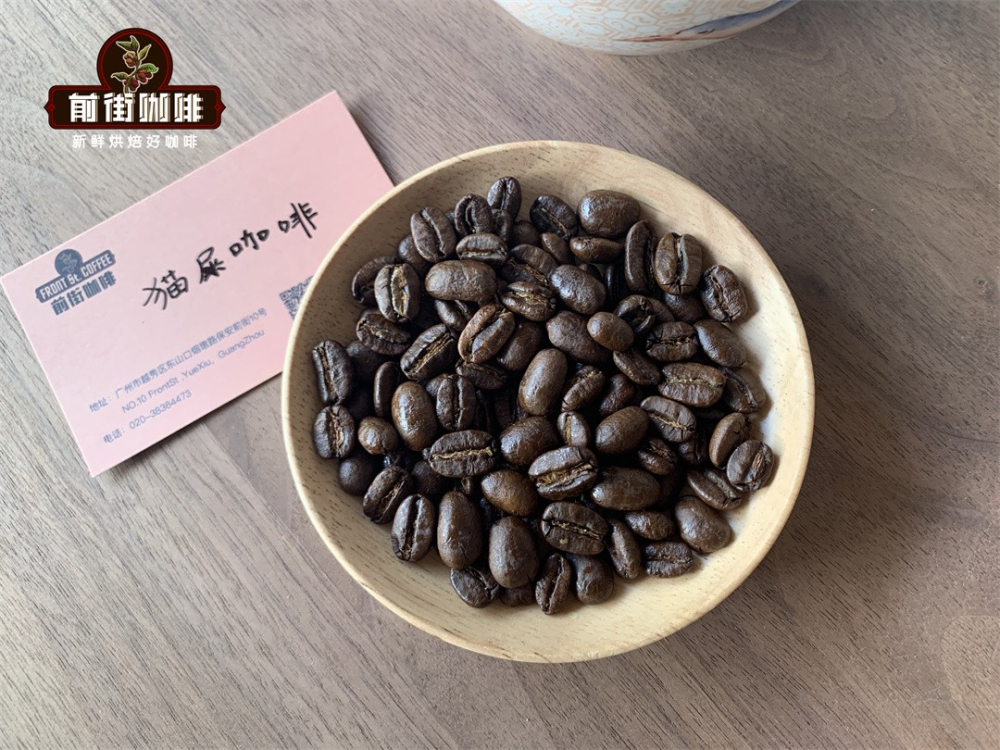
Therefore, when roasting Kopi Luwak, Front Street Coffee (FrontStreet Coffee) usually uses a medium-dark roast, which better showcases its herbal flavor and rich mouthfeel. In addition, since medium-dark roasted beans are generally lighter in weight, when brewing, Front Street Coffee usually uses a thick stream of water, allowing the beans to remain in the brewing process for a longer time, and then slowly circles around.
Of course, when brewing Indonesian coffee, such as medium-dark roasted beans like Golden Mandheling, a KONO dripper is generally chosen, with the water temperature controlled at around 88 degrees; otherwise, too high a temperature will extract too much bitterness. As for the brewing method of Kopi Luwak, if everyone wants to learn more, welcome to come to Front Street Coffee (FrontStreet Coffee) to exchange coffee experience together.
For more specialty coffee beans, please add the private WeChat Front Street Coffee (FrontStreet Coffee), WeChat ID: kaixinguoguo0925
The above content is compiled by CoffeeHunters, a coffee news website.


