







What Coffee-to-Water Ratio Should Pour-Over Use?
The everyday reference for pour-over is a 1:15 coffee-to-water ratio, meaning one part ground coffee to fifteen parts water. That starting point sits between the stronger 1:13 and the lighter 1:16, so it produces a cup that is neither harsh nor thin. Adjust the number up or down to shift intensity, not the technique.
Front Street breaks pour-over into seven elements: fresh beans, grind size, water temperature, water quality, dripper, ratio, and time. The three-pour method applies them in order, starting with a blooming pour, then staged additions with a steady rhythm and controlled total brew time. Golden Mandheling works as a beginner-friendly bean for following the plan directly.
When making pour-over coffee at home, one core question is unavoidable: how much water should coffee grounds be paired with? This seemingly simple ratio actually directly determines whether the flavor in the cup is intense, balanced, or weak. Front Street Coffee, combining years of in-store brewing experience, breaks pour-over coffee down into seven elements: fresh beans, grind size, water temperature, water quality, dripper, coffee-to-water ratio, and time, and provides the most commonly used daily reference value of 1:15. This article will not only explain the ratio ranges corresponding to different tastes, but also fully demonstrate the operational details of three-stage pouring, including blooming water amount, pouring rhythm, and time control. Finally, using Golden Mandheling as an example, it gives a brewing plan that beginners can follow directly to avoid detours.
As specialty coffee has become more and more popular, many people have started making pour-over coffee at home. One question often asked in Front Street Coffee stores is: how exactly should the ratio of coffee grounds to water be determined, and how much water should one scoop of grounds be paired with? In the article below, Front Street Coffee explains the relevant knowledge of pour-over brewing and the coffee-to-water amount all at once.
Basic Knowledge of Pour-Over Coffee -----Seven Elements of Pour-Over Coffee
To make pour-over coffee, having equipment alone is not enough. Based on past experience and basic knowledge, Front Street Coffee summarizes seven key elements of pour-over coffee to help enthusiasts understand the whole process more intuitively.
1. Fresh Coffee Beans
Front Street Coffee usually regards 30 days after roasting as the flavor window for coffee beans. Beyond this time, aroma molecules will dissipate along with carbon dioxide, and the brewed coffee often appears monotonous and weak. This is also why Front Street reminds people before every brewing discussion to "please use freshly roasted beans."
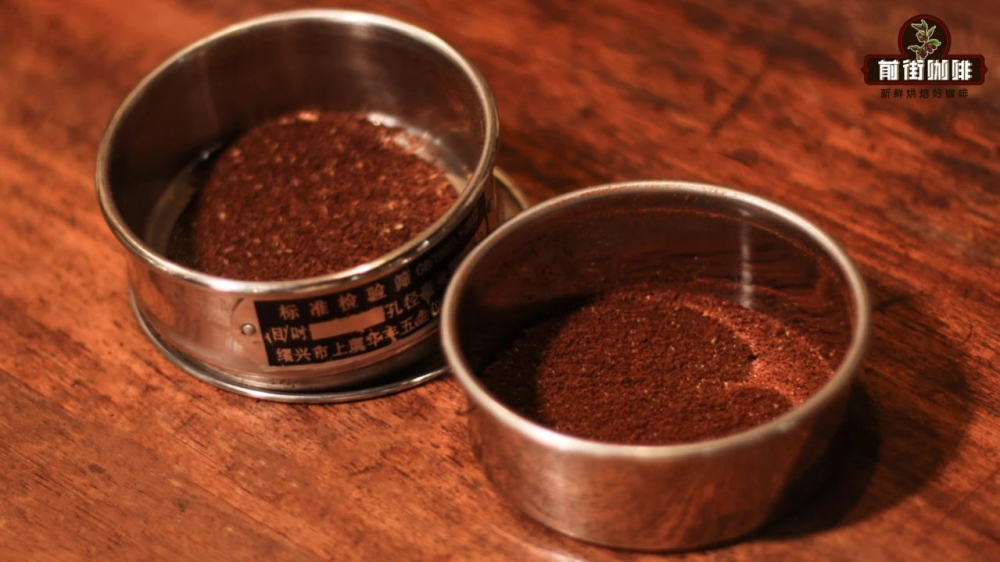
In addition, in order to find the appropriate grind state for each bean, Front Street recommends preparing a No. 20 cup testing correction sieve with a aperture of 0.85mm. Take 10g of beans, grind them to roughly the target grind size, pour the grounds into the sieve and sift until no more grounds can pass through, then weigh the fine grounds that passed through. An 80% pass rate (8g out of 10g) corresponds to the ideal grind size for medium-light roasted beans; a 70%-75% pass rate (7-7.5g out of 10g) is suitable for medium-dark roasted beans. If the actual sifting rate is too high, adjust the grind coarser; if it is too low, adjust it finer.
3. Brewing Water Temperature
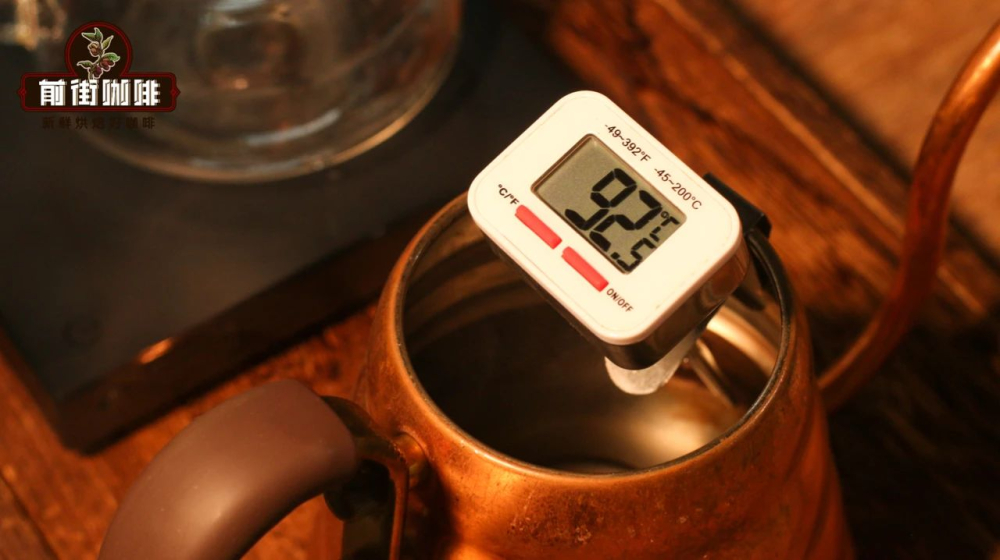
For beans with different roast levels, Front Street Coffee chooses different water temperatures. The darker the roast, the more substances inside the bean have been lost. To avoid extracting excess off-flavors, the water temperature should be lowered accordingly. For medium-light roasted beans, Front Street Coffee recommends 90-91℃, while for medium-dark roasted beans it recommends 87-89℃.
4. Water Quality
Mineral ions in water such as calcium, magnesium, sodium, and potassium affect the thermodynamic performance of coffee extraction, thereby changing the direction of the flavor. Front Street Coffee does not recommend directly heating tap water to brew coffee. Tap water contains relatively many impurities and can easily bring out unpleasant tastes.
5. Choice of Brewing Dripper
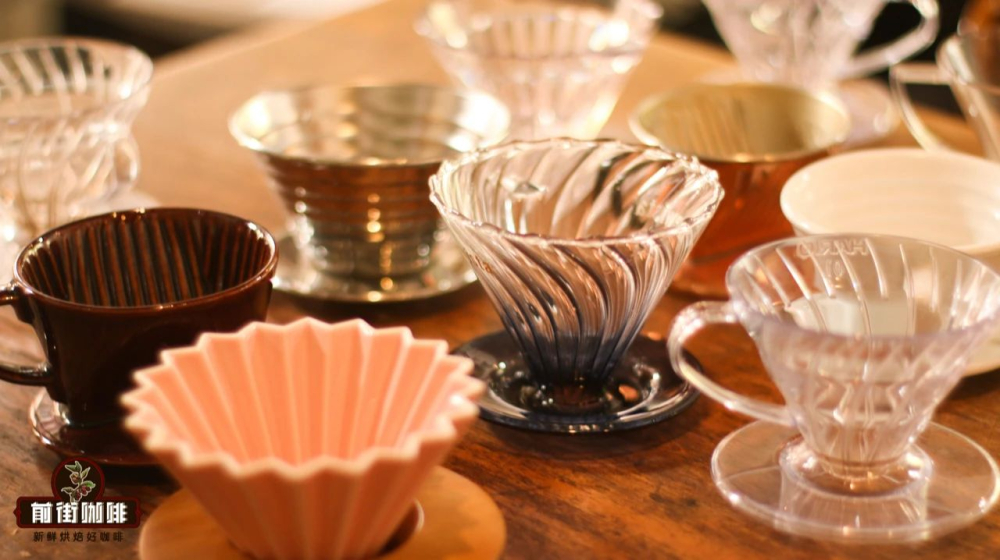
Front Street recommends that beginners start with the V60 01 dripper. The V60 conical dripper has a wider opening and, with its unique spiral ribs, allows smoother air release, helping improve extraction quality. Its mouthfeel may not be considered heavy, but the acidity and sweetness brought by high concentration and its clear aroma are its hallmarks.
6. Coffee-to-Water Ratio
Below is the correspondence between pour-over coffee-to-water ratios and tastes derived from the SCA Golden Cup extraction theory:
【Heavy taste】1:10~1:11 (i.e. 1:12.5~1:13.5 under the Golden Cup standard)
【Moderate taste】1:12~1:13 (i.e. 1:14.5~1:15.5 under the Golden Cup standard)
【Light and fresh】1:14~1:16 (i.e. 1:16.5~1:18.5 under the Golden Cup standard)
When the ratio of coffee bean grams to brewing water is between 1:14.5 and 1:15.5, it is most likely to fall within the golden range of 18%-22% Golden Cup extraction yield and 1.15%-1.35% concentration. This is also why Front Street Coffee has always recommended brewing at 1:15.
7. Brewing Time
During extraction, the aroma and flavor are strongest in the early stage, and the concentration is also high; the further it goes, the lighter the flavor and aroma become. The amount of water poured also affects the overall extraction time. Front Street Coffee generally uses 15g of grounds, depending on the bean, and under a 1:15 coffee-to-water ratio controls brewing within 2 minutes to 2 minutes 30 seconds, making over-extraction or under-extraction less likely.
Pour-Over Coffee Coffee-to-Water Ratio
Now that the seven elements have been explained, let's return to the main topic: how exactly should the coffee-to-water ratio be allocated? As mentioned above, Front Street Coffee recommends using 1:15.
This parameter was not obtained out of thin air; it had been verified many times before. Although 1:12-1:15 is only a suggested range, Front Street Coffee still tried parameters outside the range: 1:20 drip coffee tasted very light, while 1:10 was too intense. After repeated adjustment, 1:15 is the ratio Front Street Coffee considers suitable for most beans. Of course, some people are used to 1:14 or 1:17, and that is completely fine too; the key is whether you can accept it. What Front Street provides is only a reference value acceptable to the general public.
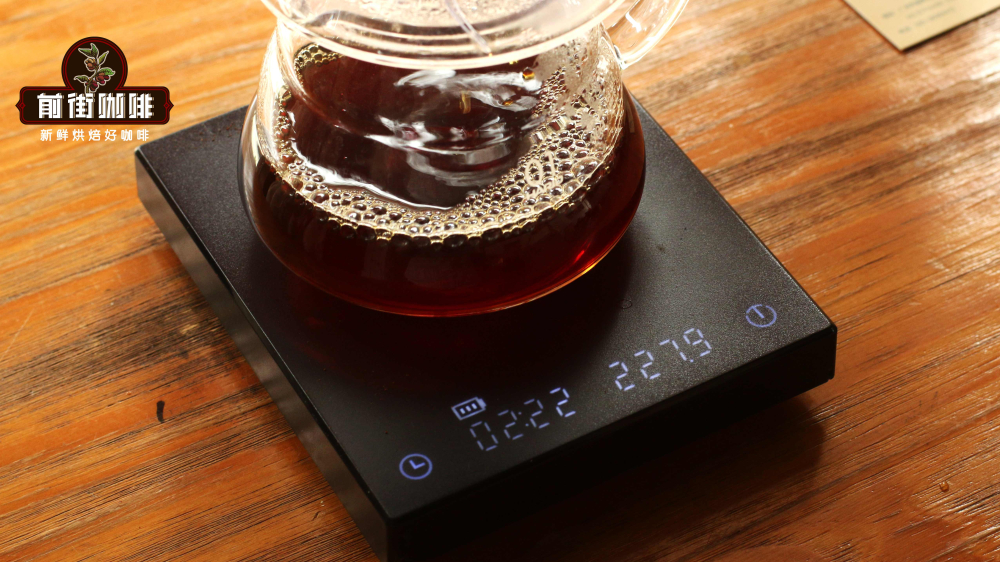
Once the ratio is set, the next step is to determine the amount of grounds. Front Street Coffee uses 15g of grounds for one serving, corresponding to 225g of water, which is exactly one cup.
Pour-Over Coffee Brewing Technique
In addition to the basic knowledge above, brewing technique also affects the final flavor. There are many kinds of pour-over techniques, and one-stage, drip, and three-stage methods are all common, but the most widespread and most suitable for beginners is still three-stage pouring. It is both elegant and reliable. Next, Front Street Coffee will explain how to perform three-stage pouring.
Pour-Over Coffee Pouring Technique: Three-Stage Pouring
The three-stage pouring method is staged extraction, dividing the total water amount into three pours, which can more clearly present the front, middle, and rear flavors of the coffee. Front Street Coffee's approach is: after blooming, gradually increase the amount of water poured, usually pouring when the liquid level is about to drop to the surface of the coffee bed, completing three-stage extraction with small, medium, and large flows. The requirements for flow rate and control are relatively high.
In the three-stage pouring method, during blooming there is no need to stir to improve even water absorption, nor to use dripping to increase saturation depth. Therefore, the beans it suits fall between light-roasted beans that use stirring during blooming and dark-roasted beans that use dripping during blooming, and it is generally suitable for medium-roasted coffee beans. This also corresponds exactly to the current situation in which most specialty coffee beans use medium roasting between first crack and second crack, which is why the three-stage pouring method is so widespread.
However, Front Street Coffee still mostly uses the three-stage pouring method in daily practice, whether for light or dark roast, with only slight differences in flow control, which tests the barista's skill. Front Street Coffee also mostly recommends the three-stage method when talking with customers, because technique requires accumulation over time. Only after becoming proficient in one method can one more fully understand the rules of brewing, and when switching to other methods, one will not lose sight of one thing while focusing on another.
First Pour: Blooming (Helps Release Gas)
During the roasting process in which coffee beans change from green beans to roasted beans, a series of chemical reactions and physical changes occur. After roasting to a certain degree, a large amount of gas accumulates inside the beans, most of which is carbon dioxide.
Generally, the fresher the beans and the closer to the roast date, the more bubbles appear during blooming. Dark-roasted beans also release more gas during blooming than light-roasted beans. Front Street Coffee's beans are all freshly roasted, and customers are generally advised to rest them for three days first so that part of the carbon dioxide is released in advance, avoiding instability and under-extraction during brewing.
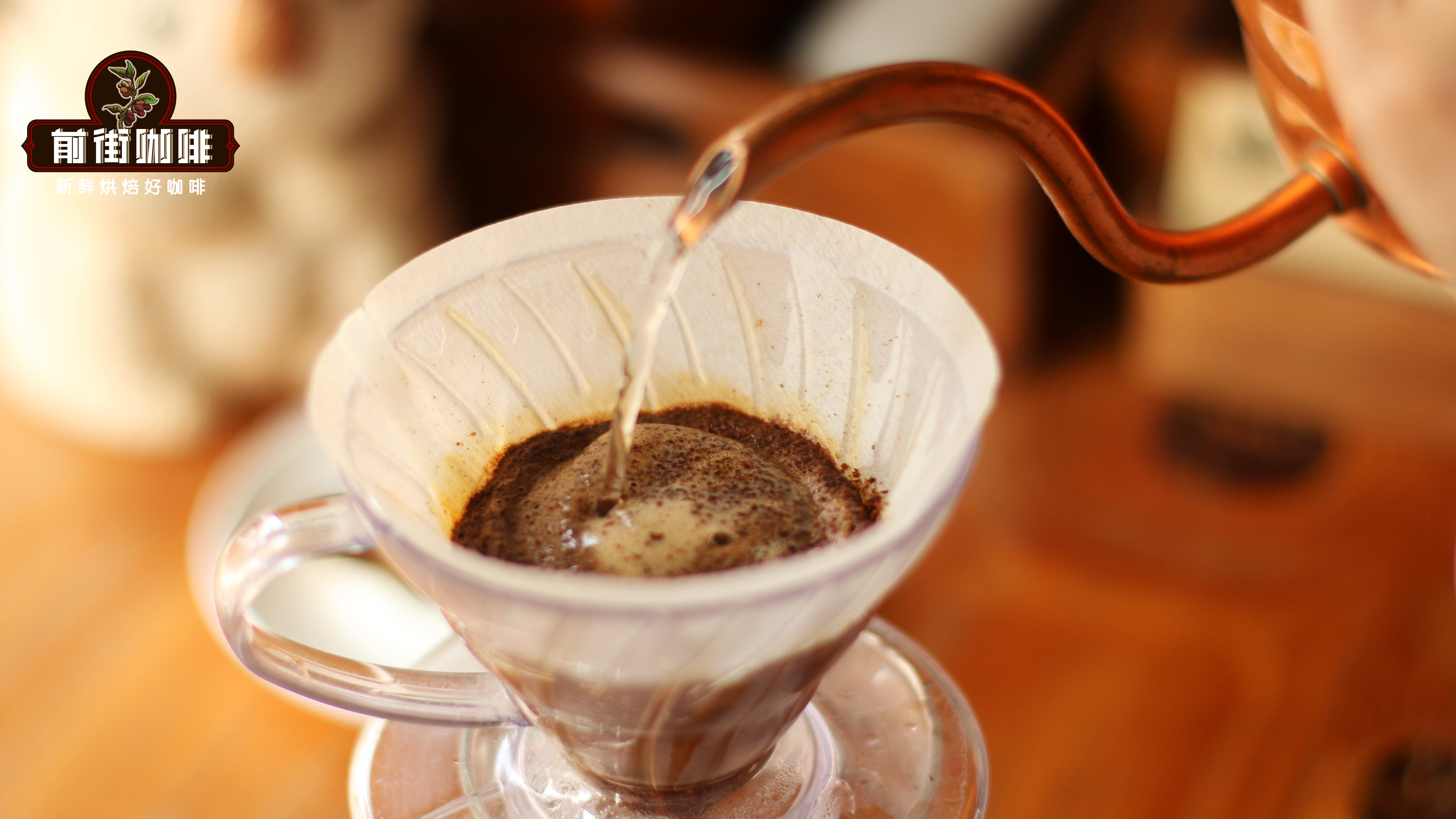
Only after the gas is released during blooming can the coffee particles absorb water evenly, making subsequent extraction more uniform. A good bloom can both allow the coffee grounds to release gas quickly, fully, and evenly, and allow the grounds to fully contact the water, helping achieve even extraction.
During blooming, pay attention to the following five points:
1. Before pouring water for the bloom in pour-over brewing, first level the coffee grounds.
2. When pouring during blooming, do so gently.
3. During blooming, as little extracted liquid as possible should drip down; when too much extracted liquid appears in the server, reduce the amount of water poured, or pay attention to the grind size. (If too much water is used for blooming and a large amount of coffee liquid drips down, the falling water does not stay but directly carries out substances from the outside of the coffee grounds, and the off-flavors and astringency of the outer layer begin to dissolve. The coffee brewed this way is both weak and has off-flavors from over-extraction. If the bloom water is insufficient and no drops fall at all, it means the coffee grounds have not absorbed enough water, and some coffee has not released enough gas, causing under-extraction.) Based on this situation, after many bloom tests, Front Street Coffee found that pouring water at twice the weight of the coffee grounds is more appropriate.
4. The blooming time is about 30 seconds to 40 seconds. When the surface of the coffee grounds finishes expanding and begins to shrink, it means blooming is complete and pouring can begin. (If blooming is too long, the coffee easily develops bitterness and astringency; if too short, the soaking is insufficient, which may lead to under-extraction or incomplete flavor development.) Generally speaking, the end time of blooming differs for each bean, but Front Street Coffee found that this is not good for beginners, since beginners need standardization and ease of use. Therefore, on the premise that the beans are still freshly roasted, Front Street Coffee recommends a 30-second bloom, and experienced people can adjust it themselves.
5. Brewing water temperature is very important and directly affects extraction yield and mouthfeel. Pour-over water temperature should be adjusted according to roast level: darker roasted beans use a lower water temperature, 86-88℃, because dark-roasted beans are loose in texture and active, and gas is easily released; light-roasted beans use 90-91℃, because light-roasted beans are relatively hard and release gas more slowly, requiring higher water temperature to accelerate gas release. Front Street Coffee recommends adjusting the water temperature according to roast level during extraction, thereby stably bringing out the coffee's mouthfeel and quality. A customer once questioned this brewing temperature, so Front Street Coffee brewed Golden Mandheling, a dark-roasted bean, at 90℃, and the result was a mouthfeel almost comparable to espresso.
Second Pour
The second pour starts from the center, pouring into the bottom of the coffee bed with a small stream. In order to concentrate the penetrating force of the stream, the circular movement range should be small, about the size of a one-yuan coin, and then spiral outward. From the start of the second pour, pay attention to the water amount and try not to exceed the height of the coffee bed; that is, when the stream circles to near the filter paper, you can stop pouring.
Third Pour
As the thicker coffee bed near the edge of the filter paper absorbs water and becomes heavier, it will slide down and become thinner as the water level drops. When the water level drops to half, the third pour can be carried out. From the start of the third pour, observe the extent of the water level drop, also starting from the center and circling, with the water amount not exceeding the height of the coffee bed. At this time you will also see that foam has covered the surface. The third pour should increase the tumbling of the coffee particles so that all the settled particles are turned up, thereby dissolving soluble substances.
The tumbling particles will stop when pouring stops. At this point, the flow rate caused by the dropping water level is needed to make the coffee particles rub against each other. Therefore, once pouring stops, the coffee particles will sink downward, causing clogging, so special attention must be paid to the rhythm of pouring. If pouring is interrupted too many times, it is equivalent to letting the coffee particles soak in water all the time, and the final stage of extraction will produce astringency and off-flavors.
The above is all theoretical knowledge, and some people may still feel confused. That's all right. Through many tests, Front Street Coffee has developed a standard brewing plan. Below, take Front Street PWN Golden Mandheling coffee beans as an example.
Country: Indonesia
Region: Sumatra, Aceh, Gayo Mountain
Altitude: 1100-1600m
Variety: Ateng
Processing Method: Wet Hulling
Flavor: Baked toast, nuts, pine wood, caramel, herbs
Brewing Suggestions
Dripper: Kono dripper
Water temperature: 86℃
Coffee dose: 15g
Coffee-to-water ratio: 1:15
Grind size: medium granulated sugar grind (EK43s setting 11)
*Reason for choosing the Kono dripper: The Kono dripper has few ribs and they are located at the lower end. The filter paper fits tightly against the dripper, which can restrict airflow and prolong the contact time between water and coffee grounds, allowing the coffee grounds to be fully extracted and enhancing the rich mouthfeel.
Brewing technique: staged extraction
Use 30g of water for a 30-second bloom, pour in a small stream in circles until 125g, then pause; when the water level is about to expose the coffee bed, continue pouring until 225g and stop. When the water level is about to expose the coffee bed, remove the dripper. (Start timing from the beginning of blooming.) The extraction time is 2'00".
Flavor description: Layered and variable, rich and clean, highly balanced, with strong nut and chocolate flavors, rich spice and caramel aroma, a fruity note, and a long finish.
For more specialty coffee beans, please add the private WeChat of Front Street Coffee, WeChat ID: kaixinguoguo0925
The above content is compiled by CoffeeHunters, a coffee news website.


