







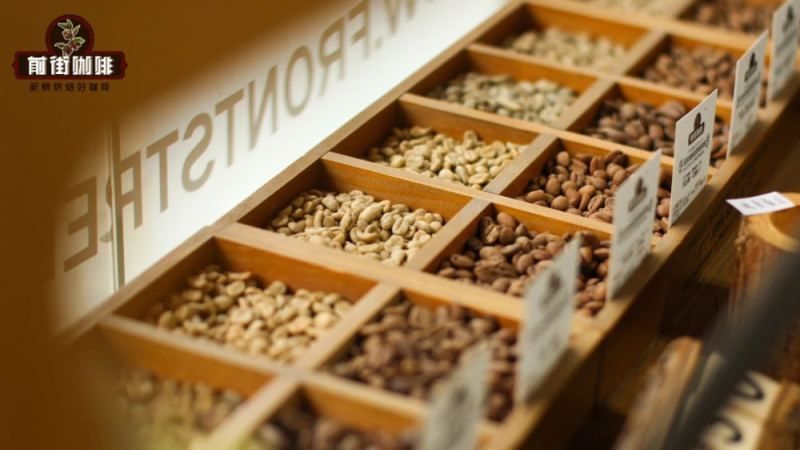

Although more and more people are paying attentionsingle-origin coffeethese days, when it comes to the ordering situation at Front Street Coffee, espresso-based drinks still account for a larger proportion. This is simply a matter of preference trends, and does not mean thatespressois better than single-origin coffee, or that people who drink espresso don't understand single-origin coffee, etc. Front Street Coffee has always believed that coffee is a highly inclusive culinary culture—it can purely showcase the flavors of a single origin, or blend multiple origins to present a comprehensive flavor profile. Speaking of blending origins, we must mention the most common blended coffee beans inespresso. Today, Front Street Coffee will talk aboutespresso blend coffee beans, considering several aspects comprehensively: origin selection, roasting, and blending ratios.

What are espresso coffee beans?What coffee beans are suitable for making espresso?
Espresso coffee beansmostly refer to blended coffee beans. What is blending? It is mixing various single-origin coffee beans together. Generally, blending two or three types of coffee beans is more common. The several espresso coffee beans currently produced by Front Street Coffee use two-bean and three-bean blending methods.
The purpose of blending is obvious: to bring together the flavors of different coffee beans, presenting a brand-new flavor profile to achieve a more balanced effect. For example, if one coffee bean is smooth but lacks aroma, you can add another bean rich in aroma, maximizing strengths and minimizing weaknesses, complementing and enhancing each other. Front Street Coffee believes that it is precisely this complementary nature of espresso coffee beans that makes them more widely accepted by the public.

Espresso blend coffee
The roasting aspect of espresso blend coffee can be roughly divided into two schools: one prefers to blend first and then roast, while the other roasts each origin separately and then blends the beans. These two different methods naturally produce different flavors.
Front Street Coffee adopted the method of blending green beans before roasting and found that the roasted color is relatively uniform, and the flavor presentation is also more consistent. This method is more convenient. When using the method of roasting first and then blending, you need to have prior knowledge of the different bean characteristics from different origins, including their hardness and moisture content, and adjust the roasting process accordingly. Roasting first and then blending is like a one-on-one approach, presenting the flavors of each coffee bean individually. The layering is richer than the former, but it also challenges the roaster's understanding of the beans.

Espresso blend coffee bean recipes? What coffee beans are suitable for making espresso?
What coffee is suitable for making espresso? Front Street Coffee currently has four different flavor profiles ofFront Street espresso blend coffee beans.
1. [Front Street Specialty Espresso Blend Coffee Beans] Made from Colombian and Brazilian coffee beans blended at a 3:7 ratio, meeting the daily needs of running a shop.
Flavor characteristics: Comfortable bittersweet taste, extremely smooth on the palate, with a faint grassy aroma, light fragrance with slight bitterness, sweet and smooth, with a pleasant aftertaste.

2. [Front Street Sunflower Warm Sun Espresso Blend Coffee Beans] Made from Front Street Honduras Sherry and Front Street Yirga Red Cherry blended at a 7:3 ratio.
Flavor characteristics: Noticeable fruit acidity, a faint berry aroma lingering, rich wine and chocolate flavors, with a comfortable sweet aftertaste.

3. [Front Street Commercial Espresso Blend Coffee Beans] Made from Colombian and Brazilian coffee beans and Robusta, at a ratio of 3:6:1, suitable for daily production in coffee shops.
Flavor characteristics: Richer crema, classic taste, with caramel sweetness, nutty and cocoa-like, dark chocolate flavors, balanced acidity and sweetness, slightly bittersweet, with a lasting aftertaste.

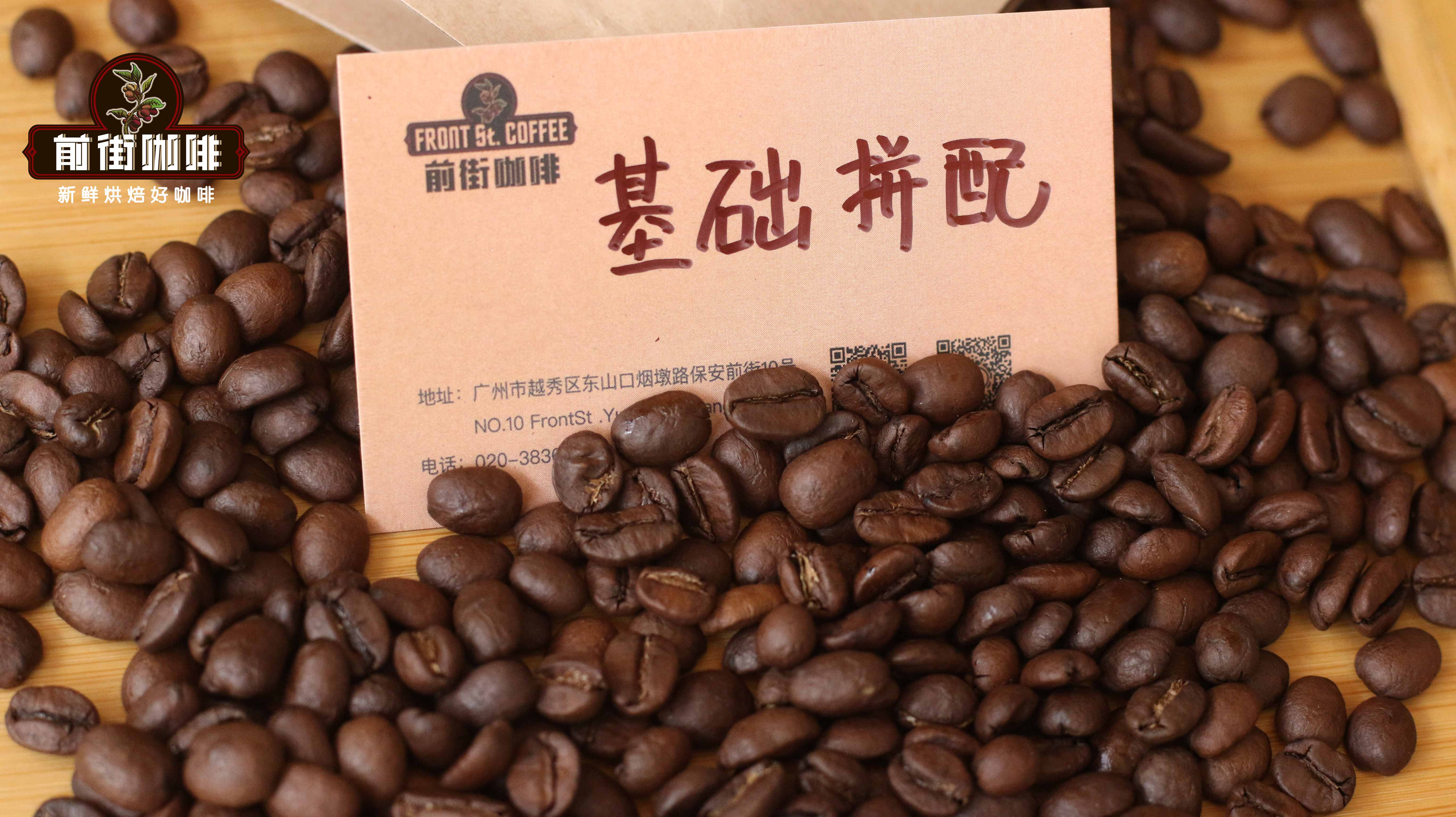
4. [Front Street Basic Espresso Blend Coffee Beans] Made from Yunnan coffee beans and Brazilian coffee beans at a 3:7 ratio, suitable for shop owners and home users who prioritize cost and have general flavor requirements.
Flavor characteristics: With soft fruit acidity, caramel sweetness, nutty and dark chocolate flavors, smooth and viscous, but with a relatively light taste.
What is a latte?
The "latte" in latte coffee is transliterated from the Italian "latte," meaning "milk." Latte coffee literally translated can be understood as "milk coffee." Every shop has slight differences in the milk-to-coffee ratio, bean selection, and extraction parameters for their lattes. But generally speaking, a latte is a coffee beverage made by adding a large amount of milk to espresso.

Many friends have privately messaged Front Street Coffee asking what a barista needs to learn, whether knowing how to do latte art is enough to become a barista, and so on. Actually, to become a barista, you not only need to know how to make coffee, but also need to learn a lot of coffee knowledge. The most basic skills, of course, are extracting espresso and steaming milk. Many cafés interview baristas by using latte coffee as a test question to assess whether the interviewee has basic barista skills.
How does Front Street Coffee make its latte?
Using Front Street Coffee's own Front Street Sunflower Blend beans for demonstration,Coffee bean informationas follows:
Coffee name: Front Street Sunflower Warm Sun Espresso Blend Coffee Beans
Blend bean sources: Front Street Honduras Sherry Wine Barrel & Front Street Sun-Dried Yirgacheffe Red Cherry
Composition ratio: 7:3
Flavor description: Vanilla, cream, fermented notes, wine character, chocolate

Espresso extraction parameters:
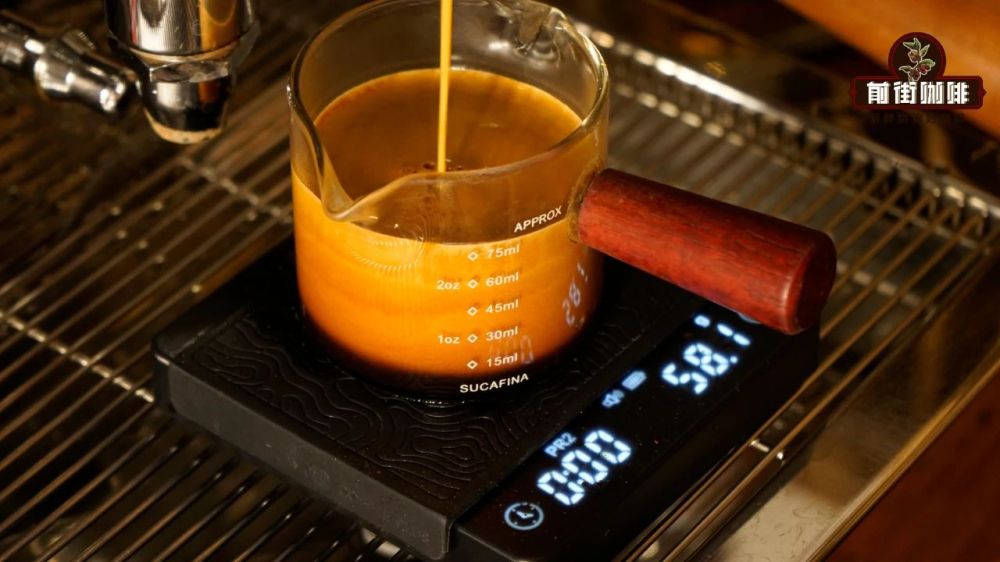
Coffee powder dose: 18g
Coffee liquid yield: 36g
Extraction time: 28 seconds
Milk parameters:
Milk type: Whole milk
Steaming temperature: 50°C
Milk foam thickness: 1cm
Milk-to-coffee ratio: 1:9

Cup details:
Cup capacity: 200ml
Material: Ceramic
How to make a good espresso extraction?
1. Choose beans
Front Street Coffee generally recommends resting espresso coffee beans for about ten days. But everyone knows that dark-roasted beans degas faster than light-roasted ones. So why do we recommend such a long resting period? This is because when making espresso, unlike pour-over, there isn't enough space for the coffee to degas. If the coffee beans are too fresh and degassing is vigorous, channeling is very likely to occur, making the resulting espresso unstable.
2. Adjust the grind size
Now that we have suitable coffee beans, we need to look at the espresso grind size! This is basically something you need to do every day—dialing in the grind. The grind size for espresso isn't something you just set at one particular number and forget about. When do you need to adjust the grind size?
Situations that may require adjusting the grinder
1. When temperature, air pressure, or humidity changes abruptly: especially noticeable in open spaces.
2. When switching between old and new coffee beans: when one bag of coffee beans is used up and newly opened beans are poured in. Because newly opened coffee beans may have different roast dates, batches, and resting periods, resulting in vastly different extraction results.
3. Continuous brewing: after 5-6 consecutive shots, the grind size suddenly becomes very fine. This is because after continuous use of the grinder, the heat from the motor conducts to the burrs, and combined with the heat generated by friction between the burrs and coffee beans, the upper and lower burrs expand and contract due to heat, causing the gap to become very fine.

The moisture content and storage time of coffee beans are constantly changing, and the wear level of the grinder burrs also changes over time. Therefore, baristas should regularly adjust the grinder to ensure the ground coffee powder remains perfect.
When coffee beans enter the grinder, the burrs inside crush the coffee beans into powder. The smaller the distance between the burrs, the finer the coffee particles are ground. The finer the grind particles, the more tightly packed they are, making it harder for water to pass through, thereby greatly extending the extraction time. Conversely, if the distance between the burrs increases, the grind particles become coarser, water passes through more easily, and the extraction time becomes faster.

Generally, we use the previous extraction parameters to pull a shot, with time controlled within 25-30 seconds. Single basket dose is 13-14g, and double basket dose is about 20g.
After ruling out factors like puck perforation, if the extraction time becomes longer, it may be that the surface is over-extracted while the interior is under-extracted, manifesting as sharp acidity, burnt bitterness, and astringency. This likely means the grind is too fine, so you can adjust it slightly coarser. But if the coffee flow rate becomes faster, the stream is thick, the extraction is shallow, and the color is pale, it may mean the grind is too coarse, so you can adjust it slightly finer.
3. Receiving the grounds
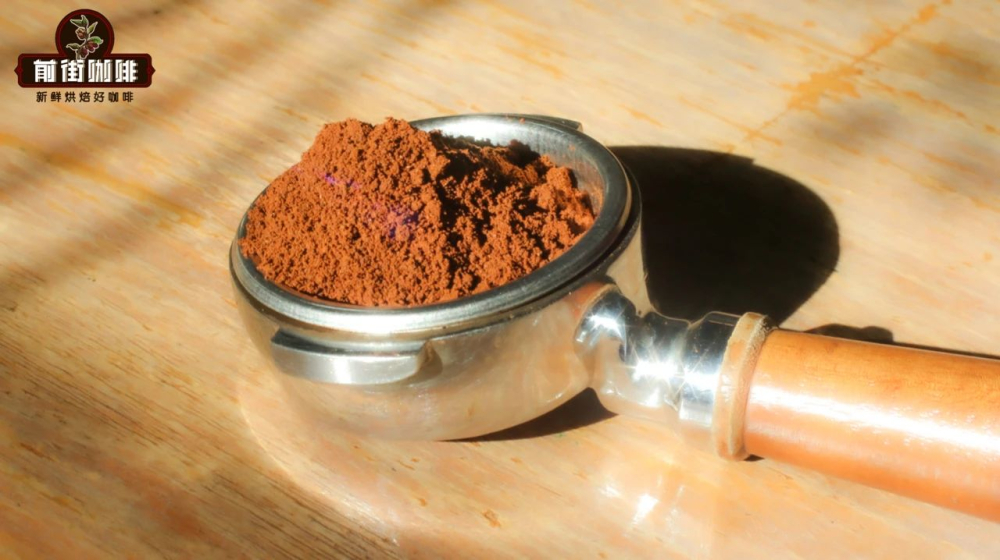
Receiving the grounds is the first step of distribution. Uneven distribution of grounds during receiving will greatly mislead and affect the subsequent distribution steps. Even if you use very advanced distribution tools, you cannot completely ignore the impact of the grounds-receiving step on espresso extraction.
What are the effects of uneven grounds receiving?
1. Flavor differences: If the grounds are received unevenly, the distribution of the lower part of the coffee bed cannot be remedied during leveling. Uneven density distribution of the coffee bed leads to uneven puck thickness, and during extraction, hot water passes through different positions at different speeds. A slight misstep can easily cause perforation and channeling (water's inertia makes it choose the path of least resistance, ignoring other routes), resulting in some parts of the puck being under-extracted and others over-extracted, making the coffee taste unstable every time.
2. Extraction parameters fluctuate too much, causing you to spend ages adjusting the grinder—the flow rate is wrong, the time is wrong, the grind size is still wrong—you waste a pile of coffee beans and still can't produce consistently.
So how do you practice receiving grounds?
1. Prepare an electronic scale
Weighing the grounds before each extraction is an essential practice for making perfect espresso. Even with a quantitative grinder, I suggest you periodically check the grinder's weighing accuracy—after all, no matter how advanced the machine, errors and malfunctions are inevitable.

2. Rotate while receiving grounds
Whether using a manual doser or direct output, as long as the coffee grounds don't fall completely vertically, under the influence of lateral acceleration, the coffee bed will still show some degree of bias. For example, when using a manual doser, the effect of pushing hard versus gently is naturally different—the harder you push, the more it shifts to the left.
At this point, you need to maintain a steady dosing speed while rotating the portafilter at a steady pace, to keep the grounds evenly distributed to different positions in the basket—of course, absolute evenness is impossible, but at least it's much better than receiving grounds in a fixed position.
4. Distribution
The common distribution methods we see are as follows:
1. Leveling distribution method
The leveling distribution method has three great tools: the dosing funnel, a bamboo stick, and your finger. The leveling distribution method is one of the most common and earliest techniques that beginners encounter. It usually involves back-and-forth pushing motions, and can be divided into four-direction leveling (front, back, left, right) and 360-degree rotational leveling, etc.
2. Tapping and settling distribution method
Tapping and settling are two motions, but they are usually used in sequence. Quickly tap the bottom of the portafilter with your palm to shake the coffee mound even, then follow with straight up-and-down settling taps. This can effectively eliminate large gaps in the coffee bed, making the coffee mound denser, while also increasing the amount of coffee that can fit in the basket.
3. Tool-assisted distribution method
Speaking of tool-assisted distribution, everyone has their own tricks. Based on the various gadgets on the market, they mainly fall into several categories: ① stirring or shaking even; ② smoothing the surface; ③ sifting to disperse; ④ rotational distribution.

Distribution effect check
During extraction, if you notice the coffee flow quickly becomes unstable, with large jumps, and the color quickly becomes very pale, you can judge: there's a problem inside the puck (cracks have appeared), or uneven tamping has caused the area with less coffee to be over-extracted (and this is also likely caused by uneven distribution leading to uneven tamping), or simply uneven distribution has left the edge areas uncovered by coffee grounds, allowing water to flow directly through there.
After extraction is complete, remove the portafilter and observe the shape of the puck. If the edges have no coffee grounds, or the coffee grounds have been washed up, or the puck has obvious gaps, then the extraction failure was caused by uneven distribution.
4. Tamping
Tamping uses a certain amount of pressure to compact the loose coffee grounds, so that the pressurized hot water can penetrate evenly.
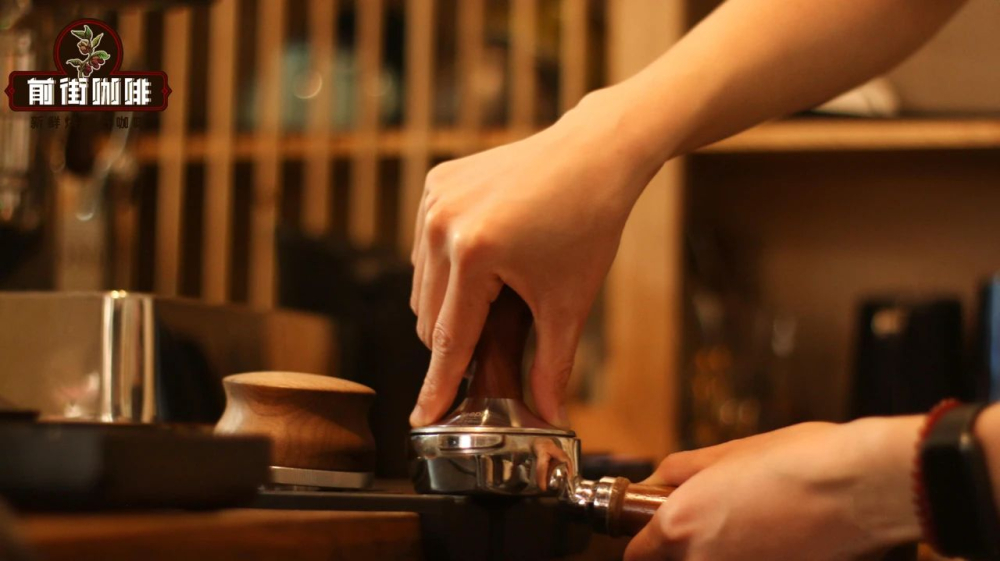
The direction is vertically downward. If you tamp at an angle, the high-temperature, high-pressure hot water from the group head will seek the path of least resistance to penetrate, causing uneven extraction. It also easily leads to what we call channeling.
The amount of tamping force and what kind of tamper you use doesn't matter much, as long as the coffee is tamped firmly. So keeping the tamping force consistent each time is even more important.
How to steam milk foam?
How do you steam the milk foam essential to a latte so that it's silky? Front Street Coffee recommends using whole milk with a fat content of 3.2-3.8%.
For this experiment, Front Street Coffee used Vitasoy fresh milk.
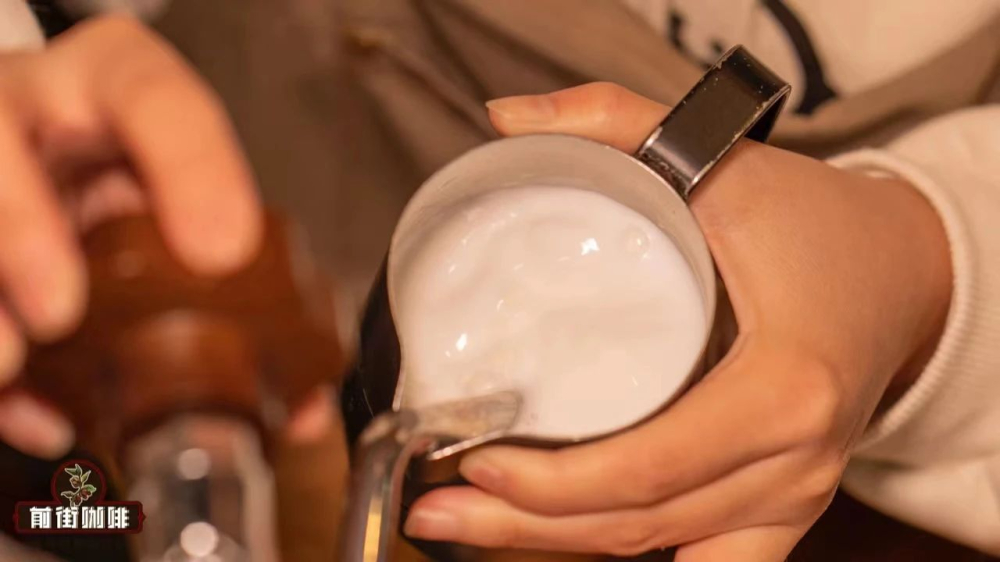
The process of steaming milk
1. Place the steam wand at the center point of the milk pitcher, tilted 45 degrees toward the upper right near the edge of the pitcher, at a depth of about 1 cm. (This depth is fairly common, but given coffee machines with varying steam intensity, this is just a suggestion.)
2. Turn on the steam, slowly move the pitcher downward, and let the steam wand's tip contact the milk surface to create aeration, rolling up and down to gradually expand the volume and create foam.
3. When the aeration and foaming have expanded to the desired thickness, tilt the steam wand and move it to the right of the center point of the pitcher, near the edge of the pitcher, so that the milk foam rolls in a vortex pattern.
4. Control the angle and depth of the pitcher to roll in coarser foam, and stop when the desired temperature is reached.
The principle of steaming milk
The first stage is: aeration/intake. Aeration is when the steam wand tip contacts the milk surface and steam enters the milk to create foam.
The second stage is: texturing. Texturing is using the vortex method to roll the aerated milk, incorporating air, and causing larger bubbles to break up into fine microfoam, while creating bonding between milk molecules, making the foam texture more dense and silky.
Points to note
Aeration/intake
Turn on the steam to begin aeration, and observe the milk surface. If the milk is rotating but you don't hear the "zzz" sound, it means air isn't getting in. At this point, you need to lower the pitcher slightly to expose the tip a bit for aeration. When you hear the "zzz" aeration sound, stop lowering the pitcher and hold it in place.
At this point, observe the milk's movement. Normally, it should be aerating while the liquid rotates, forming a vortex.
The action of lowering the pitcher to aerate must be subtle and gradual, not too aggressive. When you hear the sound indicating aeration is happening, stabilize and stop lowering.

The angle of the steam wand when steaming milk foam
Many people are used to placing the steam wand at the 2-3 o'clock or 9-10 o'clock direction of the pitcher (with the pitcher spout as the 12 o'clock direction).
Finding the right angle for the steam wand—besides placing the steam wand in the correct position, the angle between the steam wand and the liquid surface is also very important.
If the steam wand is too vertical, most of the steam sprays downward, making it difficult for the milk to form a small vortex. If the steam wand is too horizontal, most of the steam sprays in a parallel direction, making the small vortex too large and creating turbulence that is hard to control, or causing milk to overflow.
Latte art practice methods for beginners
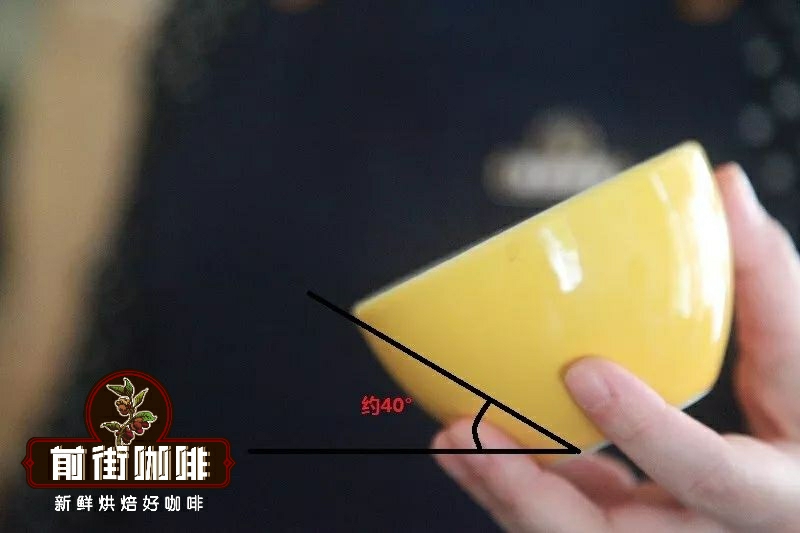
After we've extracted a shot of espresso and steamed the milk foam, first swirl the espresso in the cup to coat the walls with crema, then tilt the cup to about a 40-degree angle.
When pouring the milk, control the stream so it's not too large, letting the milk pierce directly through the coffee liquid to the bottom, then begin circling to mix the milk and coffee liquid.
Note here that when pouring the milk, the stream should be thin and targeted at the center of the coffee liquid. As shown below:
Then begin circling to mix the milk and coffee liquid until about six-tenths full, then start pouring the latte art.
Pushing stacked hearts latte art
For pushing stacked hearts, pour milk at the 1/3 point of the cup, push out a semicircular arc, then immediately push another one forward. When forming the final heart shape, raise the pitcher higher and pour a small amount of milk to let the initial semicircular arcs surround the entire heart, then finish with a thin stream to close.
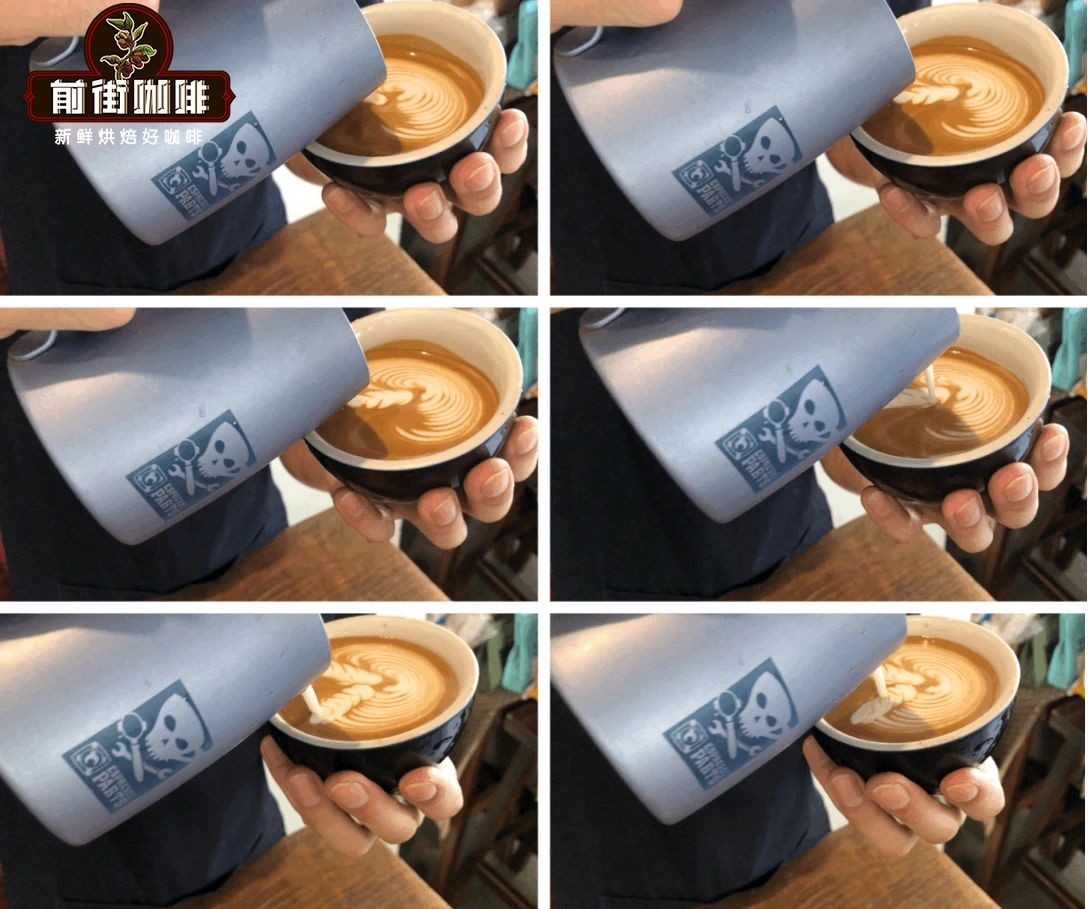
Front Street Latte Coffee flavor description
The espresso coffee bean currently used by Front Street Coffee is a Front Street Sunflower Warm Sun Blend coffee bean, made from Front Street Honduras Sherry wine barrel fermented beans blended with Front Street Ethiopia Yirgacheffe Red Cherry Project sun-dried coffee beans. The espresso made from this blend paired with milk becomes a distinct liqueur chocolate, with obvious sweetness, a long finish, and clean. It's very suitable for those who enjoy wine-aroma flavors.
For more specialty coffee beans, please add private WeChat Front Street Coffee, WeChat ID: kaixinguoguo0925
The above content is compiled by CoffeeHunters, a coffee news website.


