







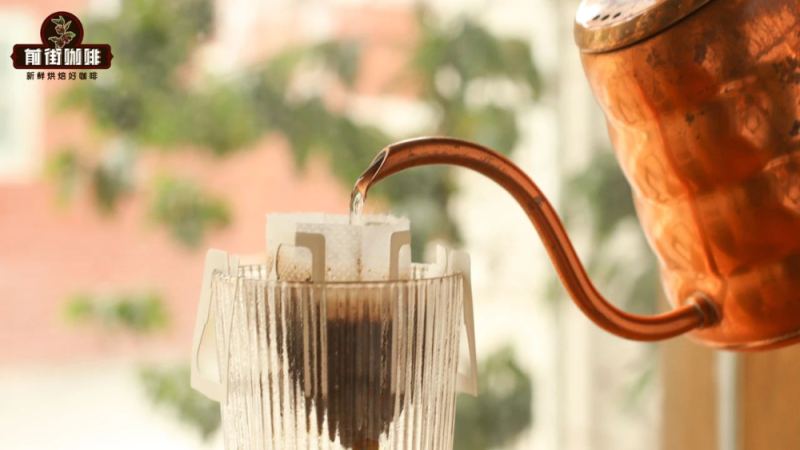
Can drip bag coffee be brewed more than once?
Drip bag coffee is meant to be brewed once, not steeped repeatedly like tea leaves. Reusing the bag yields a weak, bitter cup because only about 30 percent of a coffee bean's material is extractable. Use hot water and a cup, keep the coffee-to-water ratio steady, and follow a simple pouring rhythm. Drip bags are convenient for office or travel, though freshly ground and brewed coffee still tastes better.
Because packaging adds cost, the same bean sold as drip bags usually costs more than a whole bag of roasted beans. Front Street Coffee's five drip bag options come from Ethiopia, Kenya, Panama, Indonesia, and Honduras, each with its own processing method and flavor source. Buying from coffee farms that roast their own beans gives more origin choice, so drinkers can pick a flavor profile and reproduce it consistently.
Drip bag coffee, with its portability and ease of use, has become the entry-level choice for many people getting into specialty coffee. But how much water a single drip bag should use, how hot the water should be, and whether it can be brewed repeatedly are still common questions for beginners. This article, drawing on Front Street Coffee's brewing practices, explains in detail the coffee-to-water ratio, pouring rhythm, and extraction frequency limits for drip bag coffee, and introduces one by one the flavor sources and processing method characteristics of five drip bags from Ethiopia, Kenya, Panama, Indonesia, and Honduras, helping readers consistently reproduce a good cup of coffee even in the office or while traveling.
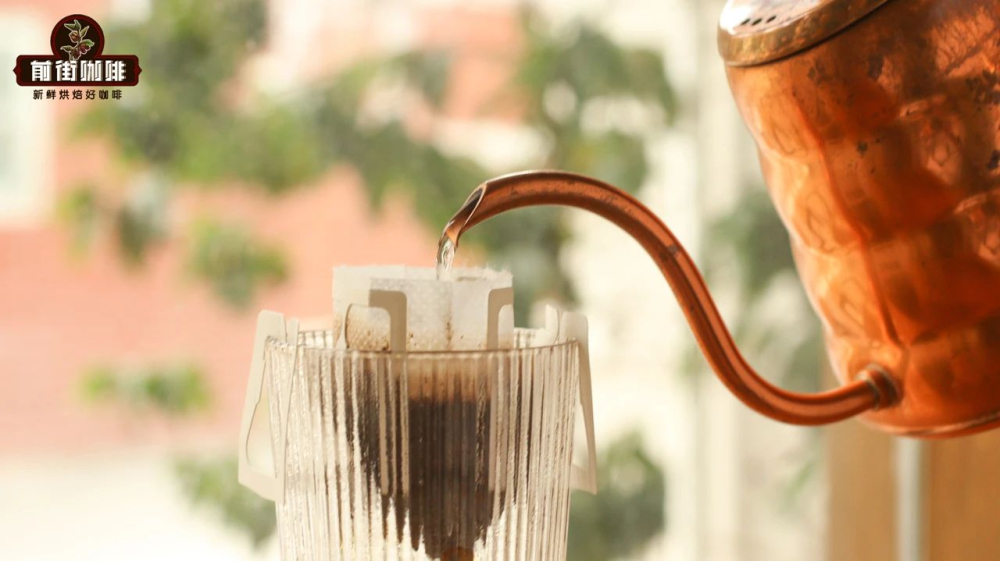
Many friends who are just getting into coffee easily confuse drip bag coffee with pour-over coffee. In reality, because the packaging step adds cost, the same bean made into drip bags often sells for more than a whole bag of roasted beans. So can drip bag coffee also be brewed repeatedly with added water like tea leaves? Front Street Coffee (FrontStreet Coffee) will now sort out the correct brewing method for drip bag coffee.
Drip bag coffee is essentially a portable coffee packet. As long as you have hot water and a cup nearby, you can make a decent cup of coffee at any time. Front Street believes that this highly convenient coffee packet is very suitable for office workers or for outings. As a coffee shop that roasts its own beans, Front Street offers beans from a variety of origins for customers to choose according to taste. Drip bag coffee is often called "one-minute brewed coffee," allowing coffee lovers to quickly satisfy their caffeine needs, and Front Street has therefore prepared a rich range of flavor options. Although the finished product may be slightly inferior to freshly ground and freshly brewed coffee, after eliminating the cumbersome steps it can still deliver a good taste, and this compromise is acceptable.
How many times can drip bag coffee be brewed
Many people think that extracting drip bag coffee only once is too wasteful and that it should be steeped several times like tea to be worthwhile. Front Street would like to remind you that coffee brewed repeatedly is not only weak and tasteless, but also brings out bitterness. The reason is that the extractable substances in coffee beans account for only about 30%. As plant seeds, after roasting these flavor substances have already been fully activated, and this is the fundamental reason coffee can present flavor. The remaining about 70% is woody fiber, and brewing it again can only yield a wood-like smell, so coffee is only suitable for one extraction.
Front Street drip bag coffee brewing method
1. The powder amount of commercially available drip bag coffee is usually clearly labeled, generally 10 grams. This saves the trouble of a grinder and an electronic scale, and the coffee-to-water ratio can follow the usual 1:15.
2. Next, determine the amount of water and the water temperature. Consistent with pour-over coffee, use a ratio of 1:15 to 1:16, and the final coffee liquid in the cup should reach 140 to 150 milliliters. Adjust the water temperature according to the roast level: use about 90°C for medium-light roast, and 88°C for medium-dark roast. It is best to have a thermometer or a temperature-controlled kettle. If not, you can make a rough judgment—after the water boils, turn off the heat source, open the kettle lid, and let it sit for 2 to 3 minutes; the water temperature will drop to about 90°C (at a room temperature of 28°C).
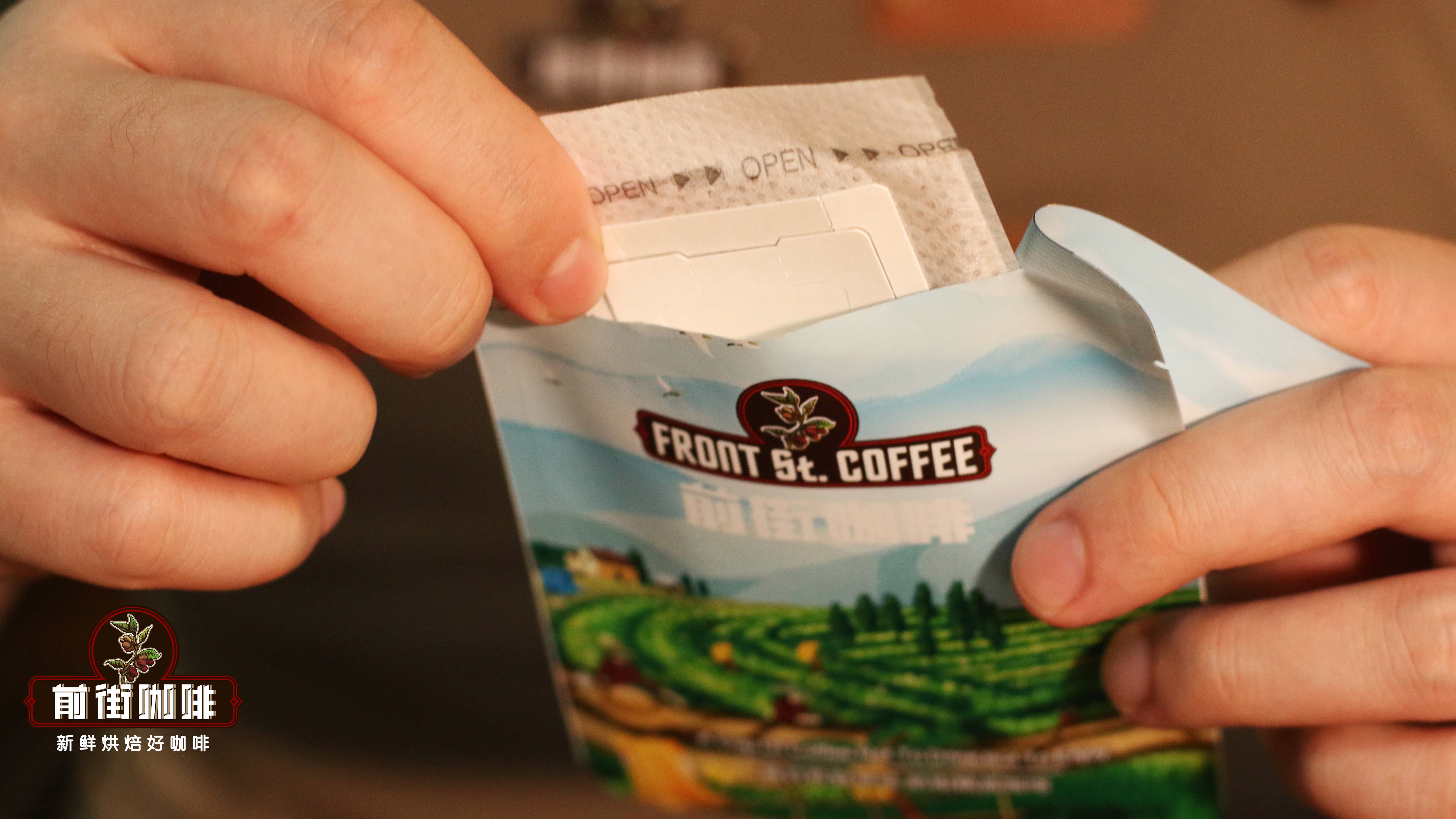
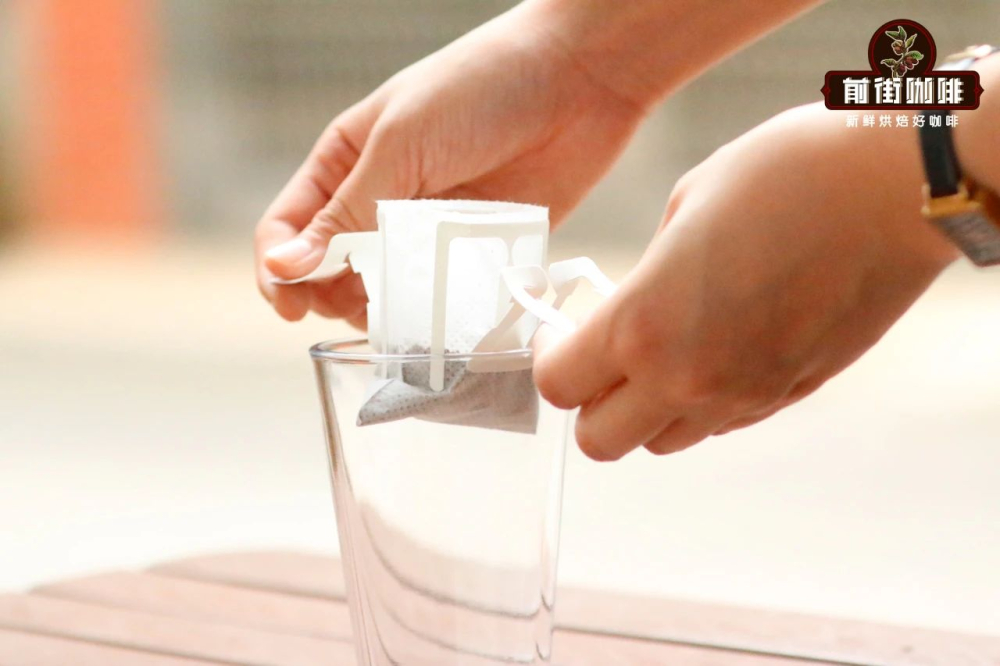
3. Once ready, first warm the mug, take out the drip bag, tear open the sealed opening, pull apart the filter cardboard on both sides, set it on the rim of the cup, and gently shake the coffee bed flat.
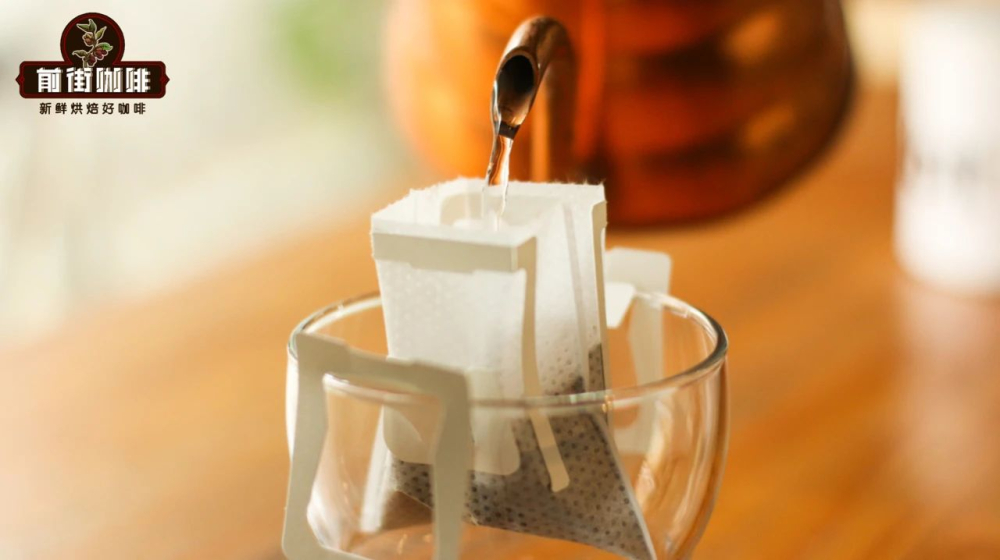
4. For the first pour, add 20 to 30 grams of water for blooming. Drip bag coffee is also called "convenient pour-over," and this step follows the same logic as pour-over.
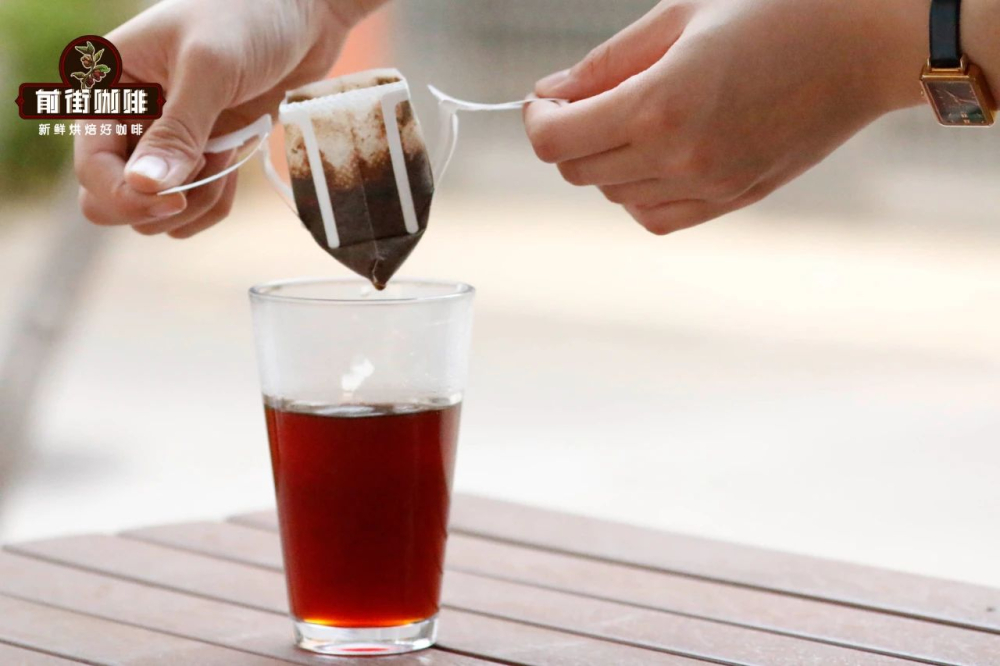
5. After the blooming is finished, begin the second pour. Using a thin stream, pour in circles directly to fill it, and when the coffee bed drops slightly, continue adding water to the top. Repeat this until the coffee liquid in the cup reaches 140 to 150 milliliters, then remove the drip bag and drink.
6. If you want to control the water amount more precisely, you can also pour 150 to 160 milliliters of water into the pouring kettle, pour all the water in the kettle during brewing, and remove the drip bag after the coffee liquid filters into the cup. The whole process takes about 1 minute.
Because drip bag coffee uses pre-ground coffee powder, its flavor dissipates much faster than whole coffee beans. If you want to taste the best flavor, it is recommended to drink it as soon as possible.
For beginners who want to learn more about different coffee flavors, Front Street has launched a five-origin assorted drip bag coffee pack. Front Street has selected specialty coffees with flavors from different origins, covering five specialty coffee producing regions: Ethiopia, Kenya, Panama, Indonesia, and Honduras.
Front Street Coffee (FrontStreet Coffee) — Ethiopia Yirgacheffe Natural Red Cherry Drip Bag Coffee
Red Cherry is actually a business program to improve coffee quality, initiated by Menno Simons, founder of the Dutch green bean trader Trabocca. Trabocca noticed that the quality of Ethiopian coffee beans was uneven, it was difficult to raise prices, and coffee farmers' incomes were not high. To change this situation, they jointly launched the Red Cherry program with local coffee farmers, starting from the source and incentivizing coffee farmers to carry out picking and processing more carefully by raising the purchase price of high-quality green coffee beans. During the picking stage, all work is done by hand, selecting only highly ripe cherries.
The natural processing method is the oldest and most primitive coffee processing method. This Natural Red Cherry keeps the whole coffee fruit pulp and skin intact and dries it on raised beds in the sun, avoiding contact with the ground and contamination by earthy off-flavors. After more than two weeks of sun drying, the coffee fruit turns dark brown and is then stored, waiting for the flavor to mature. Only before shipment does the processing station take the beans out of the fruit pulp. This method gives the beans lower acidity, prominent sweetness, and good body, but less cleanliness than washed processing.
Flavor: obvious sweet-and-sour sensation, with lemon, berries, and fermented wine aromas; the lingering lemon acidity is persistent with a clear sweet aftertaste.
Front Street Coffee (FrontStreet Coffee) Kenya Asalia Drip Bag Coffee
Kenyan coffee mostly grows at altitudes of 1,500 to 2,100 meters, with two harvests a year, and is mainly grown by smallholders. The producing areas are concentrated near the central Kenyan mountains, and the cultivated variety is high-quality Arabica.
Kenya grades coffee by bean size and cupping results. According to bean size, shape, and hardness, from high to low they are AA or AA+, AB, PB, C, E, TT, and T. For AA-grade and AB-grade green beans, exporters have also added special grading based on cupping results (not officially recognized by Kenya), from high to low as TOP, PLUS (+), and FAQ.
Kenyan coffee's distinctive acidity is closely related to its excellent processing method. General washed methods screen for highly ripe cherries, remove the skin and pulp, and then soak in fermentation tanks to remove mucilage; this process usually does not exceed 36 hours, but Kenya's fermentation time is as long as 72 hours. After that, it is dried until the moisture content drops to 12%.
Flavor: cherry tomato and smoked plum acidity, with prominent sweetness in the middle, berry aroma and yellow sugar sweetness in the aftertaste, and green tea aroma.
Front Street Coffee (FrontStreet Coffee) Panama Butterfly Drip Bag Coffee
Panama is located in Central America, bordering Costa Rica to the west and Colombia to the east. Panamanian coffee is famous in coffee circles because of Hacienda La Esmeralda's Geisha, and the whole country is filled with a strong Geisha atmosphere. Many estates grow Geisha, but Geisha is difficult to grow, low in yield, excellent in flavor, and not cheap in price. This Butterfly has 70% high-quality Geisha lineage, plus Catuai and Caturra, grown in the Baru Volcano area of Boquete at an altitude of 1,600 meters. The local special microclimate brings abundant rainfall and a large temperature difference between day and night, and together with careful harvesting and fine processing, this coffee performs excellently in body, acidity, and floral aroma.
What is even more surprising is that with such quality and conditions, the price is very affordable, allowing people to experience Geisha flavor with high cost-effectiveness.
The washed method first uses a machine to remove the skin and pulp, leaving only the coffee beans wrapped in parchment. At this point there is still a layer of mucilage on the surface of the beans, and the washing process is meant to wash away this layer of mucilage. But the mucilage adheres strongly and is not easy to remove, so it must be placed in a tank for about 18 to 36 hours to ferment and break down the mucilage.
Flavor: citrus, floral, tea-like, honey, high sweetness.
Front Street Coffee (FrontStreet Coffee) Indonesia Lintong Mandheling Drip Bag Coffee
Coffee cultivation in Indonesia began during the Dutch colonial period, and afterward a unique flavor style gradually formed, the most famous of which is Sumatra Mandheling coffee. Mandheling was originally the name of a tribe, and when the Japanese spread it they mistakenly thought it was the name of the coffee, so it passed into common use by a twist of fate.
The local weather is rainy and typhoons are frequent, which cannot satisfy the good weather needed for natural processing. In addition, limited economic conditions made the more expensive washed method unaffordable. Under various factors, the highly locally distinctive wet-hulling method emerged—during the ordinary washing process, the beans are sun-dried with parchment for 2 to 3 days, and when the moisture content drops to 20% to 24%, the parchment is hulled off.
Flavor: herbal, nuts, cocoa, full-bodied
Front Street Coffee (FrontStreet Coffee) Honduras Sherry Drip Bag Coffee
Honduras's geographical conditions are no inferior to those of neighboring coffee-producing countries such as Guatemala and Nicaragua. Honduras has 280,000 hectares of coffee farms, mainly small coffee farms, most smaller than 3.5 hectares, and these plantations contribute 60% of the country's coffee output. The Sherry coffee beans come from the city of Masaguara in the Intibuca province in southwestern Honduras. There is a Mokha estate there, which is exactly the origin of this wine-aroma-flavored coffee bean.
Flavor: vanilla, cream, sherry wine aroma
For more specialty coffee knowledge, please add Front Street Coffee (FrontStreet Coffee) private WeChat ID: kaixinguoguo0925
The above content is compiled by CoffeeHunters, a coffee news website.


