







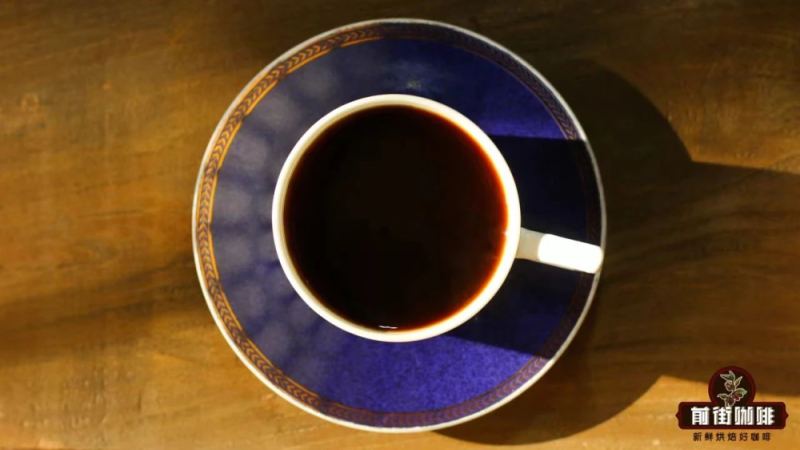
Is Black Coffee the Same as Plain Coffee?
Plain coffee and black coffee refer to the same drink. The term comes from the English Black Coffee, meaning a cup with only coffee and no milk, sugar, or flavored syrup. Cantonese speakers call it jaai fe, Shanghai locals say qing ka, and both describe the same concept. The question of whether coffee is a proper noun does not change what is in the cup.
Sugar and milk appeared on the side in earlier years because beans were roasted extremely dark and were hard to drink without them. Better roasting and extraction have since broadened the range of black coffee, including pour-over, cold brew, and Americano. Spanish coffee types follow a similar logic, varying mainly by what gets added to the base coffee.
Many people, upon first hearing the terms "original flavor coffee" and "black coffee," wonder whether they are actually the same thing. In fact, original flavor coffee is simply the Chinese expression for black coffee, derived from the English "Black Coffee," referring to pure coffee without milk, sugar, or flavored syrup. In Cantonese, it is called "jaai fe," while Shanghai locals habitually call it "qing ka." This article will center on this concept, first clarifying the relationship between original flavor coffee and black coffee, then extending into the preparation methods and differences of common categories such as Americano, Espresso, and Latte. Combined with the production practices of Front Street Coffee, it will explain how different roast levels and regional beans affect the flavor of Americano, helping you choose the cup that better suits your taste, whether at home or in a shop.
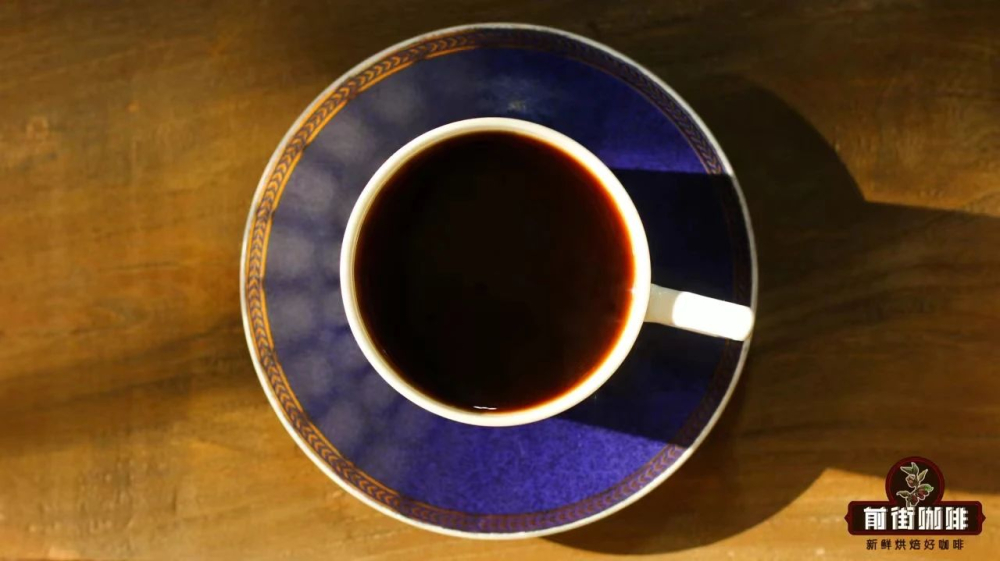
Original flavor coffee and black coffee actually refer to the same thing. The term comes from the English "Black Coffee," meaning there is only coffee in the cup, with no additives like milk, sugar, or flavored syrup. Cantonese people call it "jaai fe," while Shanghai locals habitually say "qing ka," both expressing the same concept. The reason black coffee later often came to the table with sugar and milk on the side is that in earlier years, coffee was roasted extremely dark, making it nearly undrinkable without adding some sugar and milk, so guests were left to adjust it themselves. Now, with continuous advances in coffee quality and extraction techniques, black coffee not only tastes better but also comes in increasingly diverse varieties. Pour-over coffee, cold brew coffee, and Americano are all familiar choices.
Americano can be said to be one of the most popular members of the black coffee family. When making an Americano, the baristas at Front Street Coffee first pour the extracted Espresso into hot water and dilute it to the appropriate ratio, and a hot Americano is ready; if the hot water is replaced with an ice-water mixture, you get a refreshing iced Americano. Since Americano contains no dairy or sugar, with only water and Espresso as ingredients, its flavor is not heavily modified, which places higher demands on the quality of the coffee beans themselves and the skill level of the barista.
The difference between Americano and Latte
When talking about Americano, one cannot help but mention Espresso, which Front Street often brings up. Using an espresso machine, uniformly and finely ground coffee powder is loaded into the extraction handle and extracted under high-temperature water and about 9 atmospheres of pressure for a short time, yielding a liquid with aromatic oils—this is Espresso. Many common items on coffee shop menus are based on Espresso, such as the aforementioned Americano, as well as Latte, Mocha, Flat White, and so on.
On the chalkboard menu at Front Street's shop, there aren't many types of milk coffee, but there are quite a few customers who love Front Street's Latte. By blending fresh milk into Espresso, the bitterness of the Espresso is weakened, allowing you to taste both the aroma of coffee and the sweetness of milk. Compared to customers who can accept bitterness and often drink black coffee, the soft mouthfeel of Latte is more easily accepted by friends who are just starting to drink coffee.
Front Street's shop uses only one espresso blend for its espresso-based drinks—Front Street's Warm Sun Blend, made from Ethiopia's naturally processed Red Cherry coffee and Honduras's Sherry coffee beans. When preparing it, the baristas at Front Street Coffee use about 20 grams of coffee powder to extract about 40 grams of coffee liquid, which is then poured into about 240 grams of hot water—a 1:6 ratio. For iced Americano, a pre-chilled coffee cup is taken out, 180 grams of ice and 100 grams of room-temperature water are added, and then the espresso liquid is poured in—here the ratio is 1:7, giving a more refreshing taste than hot Americano. Front Street's Americano offers notes of whisky, vanilla, and a sweet-and-sour berry flavor.
Front Street will use a 1:6 ratio, 40g of espresso liquid, added to 240g of milk.
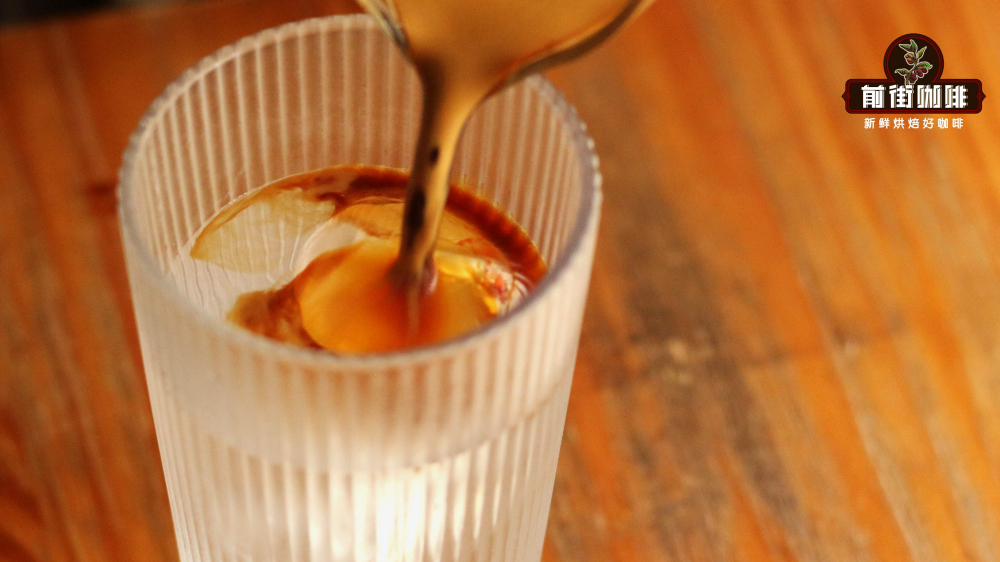
When serving a hot latte, Front Street will use a 1:6 ratio, adding 40 grams of espresso liquid to a pre-warmed coffee cup, then using the espresso machine's steam to froth the milk. The milk temperature is best controlled at 55-65°C to form a dense, moderately thick milk foam, which is then evenly blended with the coffee liquid. The coffee blended with milk presents a rich, smooth chocolate mouthfeel. For an iced latte, simply replace the water in the aforementioned iced Americano with milk, and you get an iced latte.
Making an Americano is simply diluting Espresso with water, so the coffee's flavor is not disturbed—what we taste is mainly the coffee's original flavor. Therefore, if we don't want the coffee to have too much bitterness, the first thing to choose is a coffee bean that is not roasted too dark.
But the lighter the roast, the higher the demands on coffee bean quality. Without the roasted aroma from a long roast to mask flaws, the coffee's shortcomings are completely exposed. This is also why dark roasts were mainstream in the last century—most coffee beans then were not of high enough quality, so the burnt bitterness from dark roasting was needed to cover them up. In summary, the direction for choosing our coffee beans is clear. If you want the hot Americano you make to have not too much bitterness but also not too much acidity, you can choose some medium-dark roasted coffee beans, such as beans from the Brazil region, which are excellent—low in acidity and affordable (if the price hasn't gone up). The Americano made from them won't have prominent bitterness, while also being suitable for making milk coffee.
Of course, you can also, like Front Street, choose a specialty blend like Sunflower Warm Sun that achieves both through blending. With its medium roast, it has a balanced sweet, sour, and bitter taste, distinct layers, and can simultaneously accommodate the making of milk coffee.
If you want the Americano's flavor to show mild bitterness and a fuller sweet-and-sour profile, the best direction for bean selection is medium-light to medium roast coffee beans from regions such as Ethiopia, Panama, and Colombia. Coffee beans from these regions have very pronounced floral and fruity aromas, though the price is relatively higher.
The above content is compiled by CoffeeHunters, a coffee news website.


