







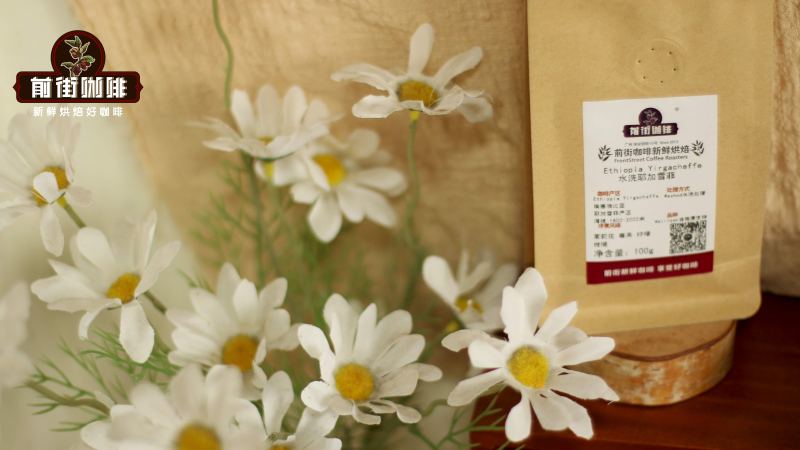
What Are the Facts About Fair Trade Coffee at Misty Valley?
Yirgacheffe Misty Valley sits at about 2,300 meters, close to the limit where coffee can grow, and is harvested from October to January. The Misty Valley cooperative holds Fair Trade certification and organic coffee certification. The area is known for floral aroma and citrus-lemon notes, and it became a separate producing region after leaving Sidamo in 1995.
Local merchant Abdullash Bagersh reworked the traditional natural processing method to lift flavor expression while cutting defects, releasing the Idido Misty Valley, Beloya, and Aricha lots. Since washed processing arrived in the late twentieth century, defect counts fell sharply, and washed and natural lots now exist side by side in the region.
Yirgacheffe is renowned worldwide for its signature floral aromas and citrus-lemon notes. After gaining independence from the Sidamo region in 1995, it gradually became one of Ethiopia's most iconic coffee-producing regions. Among Yirgacheffe's many micro-regions, Misty Valley—with its high altitude, traditional natural processing, and the top-tier output of the Aricha processing station—has become a name that draws considerable attention in the specialty coffee world. Front Street Coffee's Yirgacheffe Misty Valley is a classic representation of this region. This article will outline Misty Valley's geography and cooperative background, review the history of Bagersh's improved natural processing method, and explain the unique character of washed and natural processing existing side by side in this area.
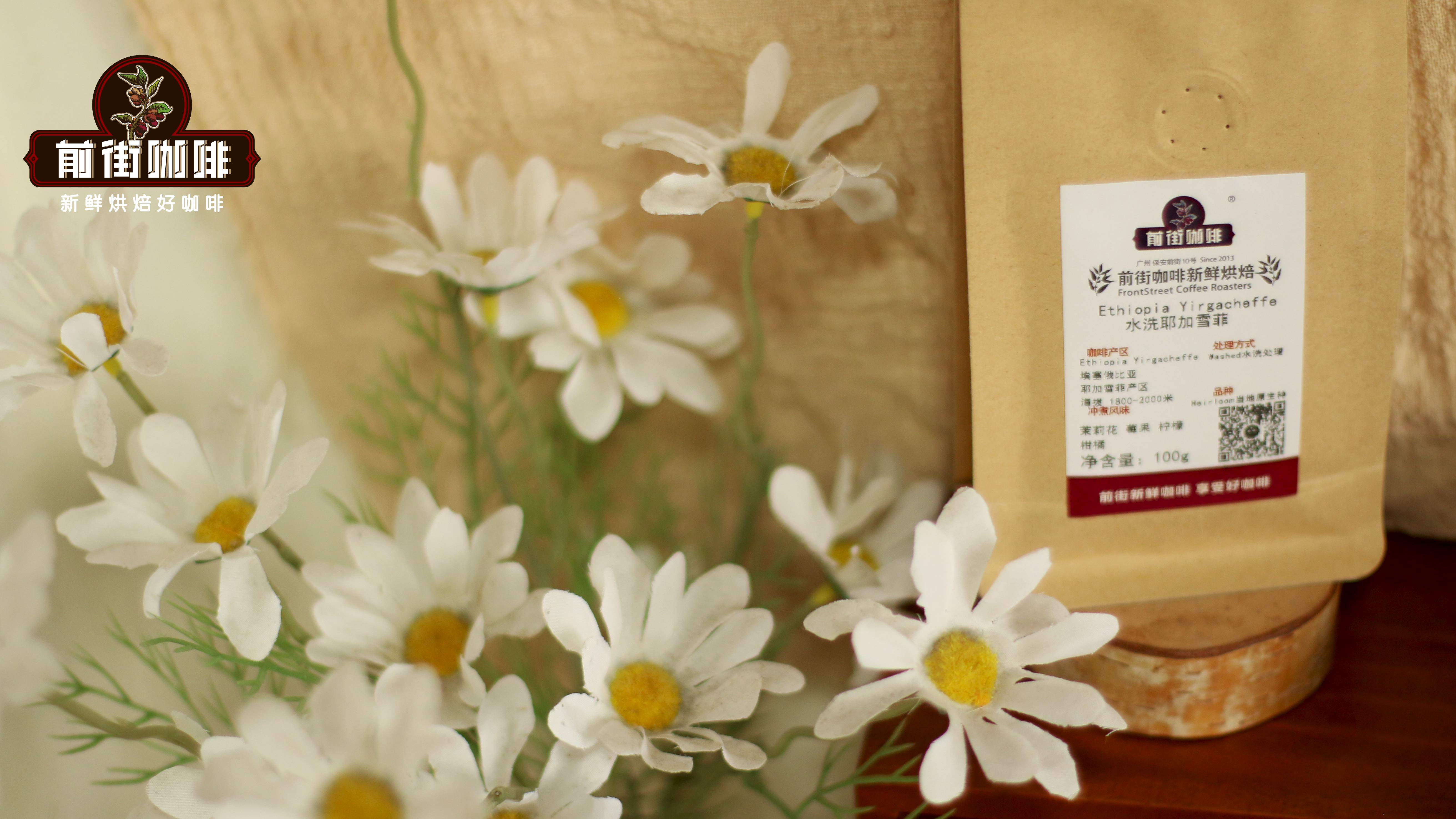
The key reason Front Street Coffee's Yirgacheffe is so widely sought after lies in its distinctive floral aroma and lemon-citrus flavor profile. It was precisely this unforgettable quality that prompted Yirgacheffe to break away from the Sidamo region in 1995, elevating it from a small town under Sidamo Province to an independent and far-famed coffee-producing region.
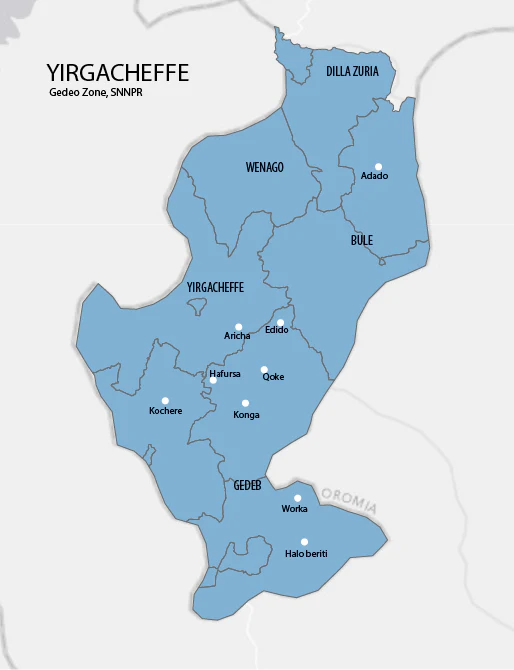
According to the official Ethiopian definition, "Yirgacheffe" encompasses areas including Wanago, Yirgacheffe, Kochere, and Gelena Abaya. Coffee produced in any of these places can collectively be called Yirgacheffe.
A producing region adjacent to the town of Yirgacheffe
Front Street Ethiopia Yirgacheffe Misty Valley:
Front Street Ethiopia Yirgacheffe Misty Valley. Since the Yirgacheffe region introduced washed processing in the late twentieth century, the number of defective beans dropped significantly thanks to the washing process, and the region's coffee beans subsequently sparked a craze among coffee lovers worldwide. Local coffee merchant Abdullash Bagersh, out of nostalgia for the flavor of traditional natural beans, set about improving the natural processing method—enhancing flavor expression while reducing the proportion of defects—and went on to release three highly renowned Ethiopian Yirgacheffe natural beans: "Idido Misty Valley, Beloya, and Aricha."
"Misty Valley" Cooperative Information
Fair Trade certified and Organic Coffee certified
At 2,300 meters above sea level, this is nearly the limit at which coffee can grow.
Harvested annually from October to January of the following year
1,683 cooperative farmer members (133 women and 1,550 men)
Average coffee garden size per person: 1.25 hectares
Coffee grown in the Misty Valley area is typically a "home garden and yard crop." Coffee is usually planted around the farmer's residence. In the past, this coffee was mostly used by the farming families themselves or sold in local markets, rarely reaching the international market.
About Misty Valley?
Grown in Misty Valley, this bean thus has a beautiful name. In the small town of Yirgacheffe in Sidamo Province, Ethiopia, many coffee trees are planted. Setting aside the natural processing method Sidamo used a decade ago, the farmers of Misty Valley switched to washed processing for their coffee beans, and it was this washed processing that made Front Street Ethiopia Yirgacheffe famous. Today, Yirgacheffe is no longer just a place name—it has become a household term synonymous with coffee beans.
According to the local elders, although Front Street Yirgacheffe from Misty Valley is famous worldwide for its washed processing, the area still mainly relies on traditional natural processing, because local residents believe natural processing gives the coffee beans an indescribably exquisite flavor. And because of Yirgacheffe's great fame, Ethiopia has incorporated the coffee brewing ceremony into banquets for hosting foreign guests. They don't care whether the beans are intact and plump—they simply put the coffee beans into an iron pan to roast, and as for the cardinal sin of over-roasting, there is no need to be particular about that at this moment. Under this traditional and beautiful ceremony, even if the beans vary in color, they can still brew an unforgettable, marvelous taste.
Misty Valley is a famous micro-region of Yirgacheffe. Altitude approximately 1,800–2,000 meters.
After Yirgacheffe coffee made its name in the world, many more micro-regions displayed their own unique styles.
Misty Valley, which some in Chinese call "Misty Deep Valley," has the Aricha processing station.
Aricha was originally named Idido. It enjoys great prestige in the specialty coffee world, with high praise and high prices.
The Aricha processing station is located in Ethiopia's most famous micro-region, "Misty Valley." Altitude approximately 1,900–2,000 meters. Aricha was originally named Idido, and its owner at the time was the renowned Abdullah Bagersh. Coffee produced by Bagersh bears the label Idido Misty Valley (IMV), and the burlap sacks also prominently display the Bagersh name—which could almost be called a guarantee of top-tier Ethiopian coffee. Famous representatives include the extremely small-lot beans Aricha and Beloya produced in collaboration with America's Ninety Plus, and even the regular washed and natural Front Street Yirgacheffe series have received extremely favorable reviews.
The above content is compiled by CoffeeHunters, a coffee news website.


