







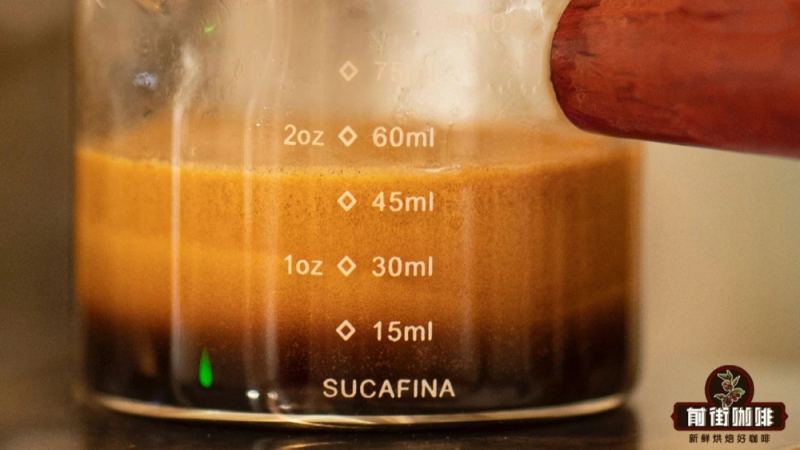
How do you make americano and espresso differently?
Espresso is forced through finely ground coffee under high pressure in a short extraction, while an Americano is simply espresso diluted with hot water. That single step changes body, strength, and aroma: espresso lands concentrated with crema on top, and the Americano spreads the same flavors across a larger, lighter cup.
Espresso rests on five parameters — dose, brew ratio, extraction time, pressure, and water temperature — and pulling it well requires an espresso machine plus a grinder. Italian espresso machines trace back to Angelo Moriondo's 1884 patent in Turin and Luigi Bezzera's 1901 Milan patent. The Americano needs no extra equipment: pull the shot, add hot water, and adjust the ratio to taste.
What exactly is the difference between espresso and Americano? This is a common question for many coffee lovers just entering the world of specialty coffee. From the perspective of Front Street Coffee, this article systematically sorts out the origin and evolution of espresso, explains in detail the five core parameters of coffee powder amount, powder-to-liquid ratio, extraction time, pressure, and water temperature, and, combined with the actual production experience of Front Street stores, introduces the flavor characteristics of espresso blend beans such as Sunflower Warm Sun, Specialty Blend, and Black Cocoa. Finally, it clarifies the fundamental difference between espresso and Americano in preparation methods, providing coffee lovers with a complete and practical knowledge reference.
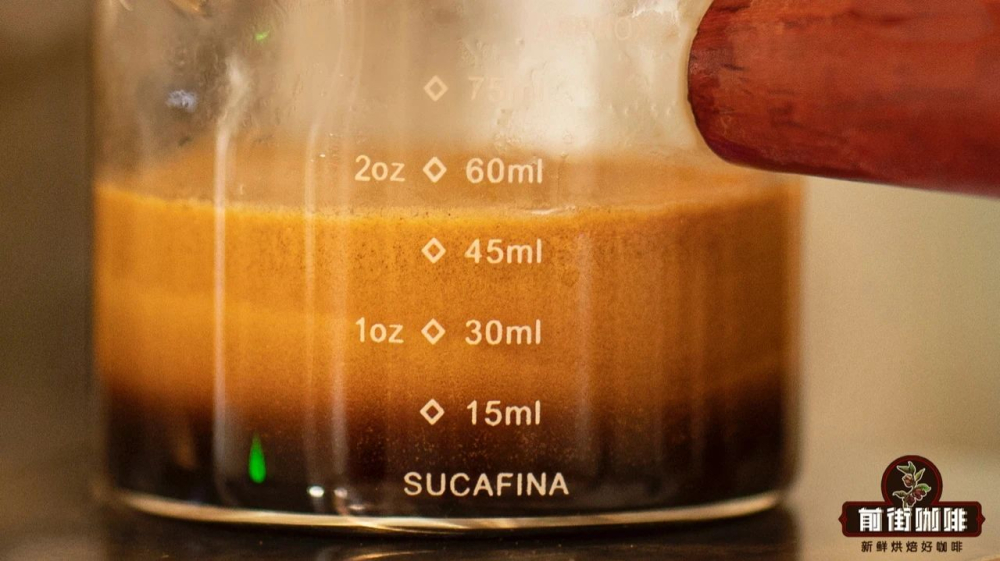
In recent years, the popularity of domestic specialty coffee has continued to rise. However, in most cases, whenever you gather with a few friends to chat at a cafe, espresso is always an unavoidable presence on the menu. Interestingly, under the category of espresso, there is actually also an option listed as Americano, which confuses many friends who are new to coffee—what exactly is the difference between espresso and Americano? Below, Front Street Coffee (FrontStreet Coffee) first helps everyone understand what espresso is all about.
Anyone who runs a coffee shop will probably notice the bulky, massive, almost immovable piece of equipment placed in the store—that is the semi-automatic espresso machine. It can be said that this machine is the heart of the entire espresso system. Every drink in the espresso family depends on the espresso it produces.
Anyone with a little understanding of espresso machines knows that making espresso requires three key conditions: high pressure, high-temperature hot water, and a relatively short extraction time. After reviewing relevant literature, Front Street learned that the world's first espresso machine dates back to 1884, when Angelo Moriondo of Turin, Italy, applied for a patent for his invention. This early machine was very different from today's espresso machines on the market. It had multiple dispensing outlets, with the aim of serving multiple customers at the same time in as short a time as possible.
History of Espresso Machines
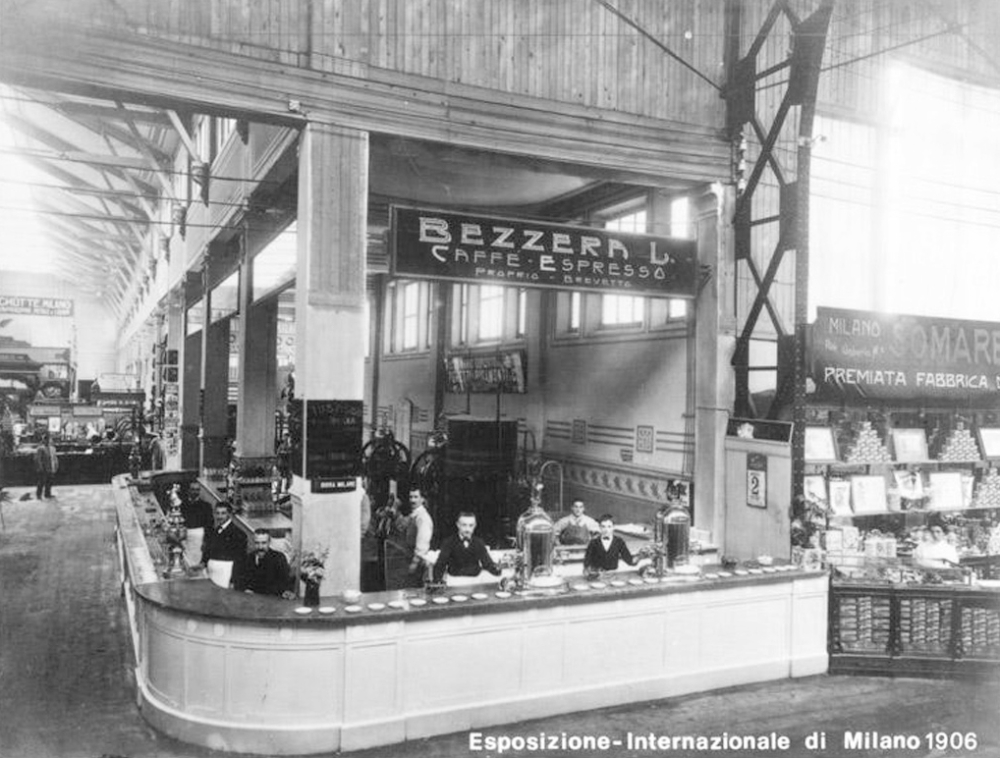
In 1901, Luigi Bezzera of Milan applied for a patent for his improved coffee machine. This device was equipped with a boiler, but had as many as four dispensing outlets.
In 1903, Desiderio Pavoni bought Bezzera's patent, and in 1905 founded the company "La Pavoni," beginning mass production of commercial espresso machines. However, measured by modern standards, that machine's design had obvious flaws—the group head temperature could soar to 140 degrees Celsius, while the pressure was only 1.5 bar. The coffee liquid extracted in this way probably had a flavor closer to the output of an American drip machine.
It was not until 1961 that Faema launched the commercial espresso machine Faema E61. This was the world's first semi-automatic espresso machine and is hailed as the "father of the modern espresso machine." From then on, baristas could freely adjust variables such as extraction pressure and time.
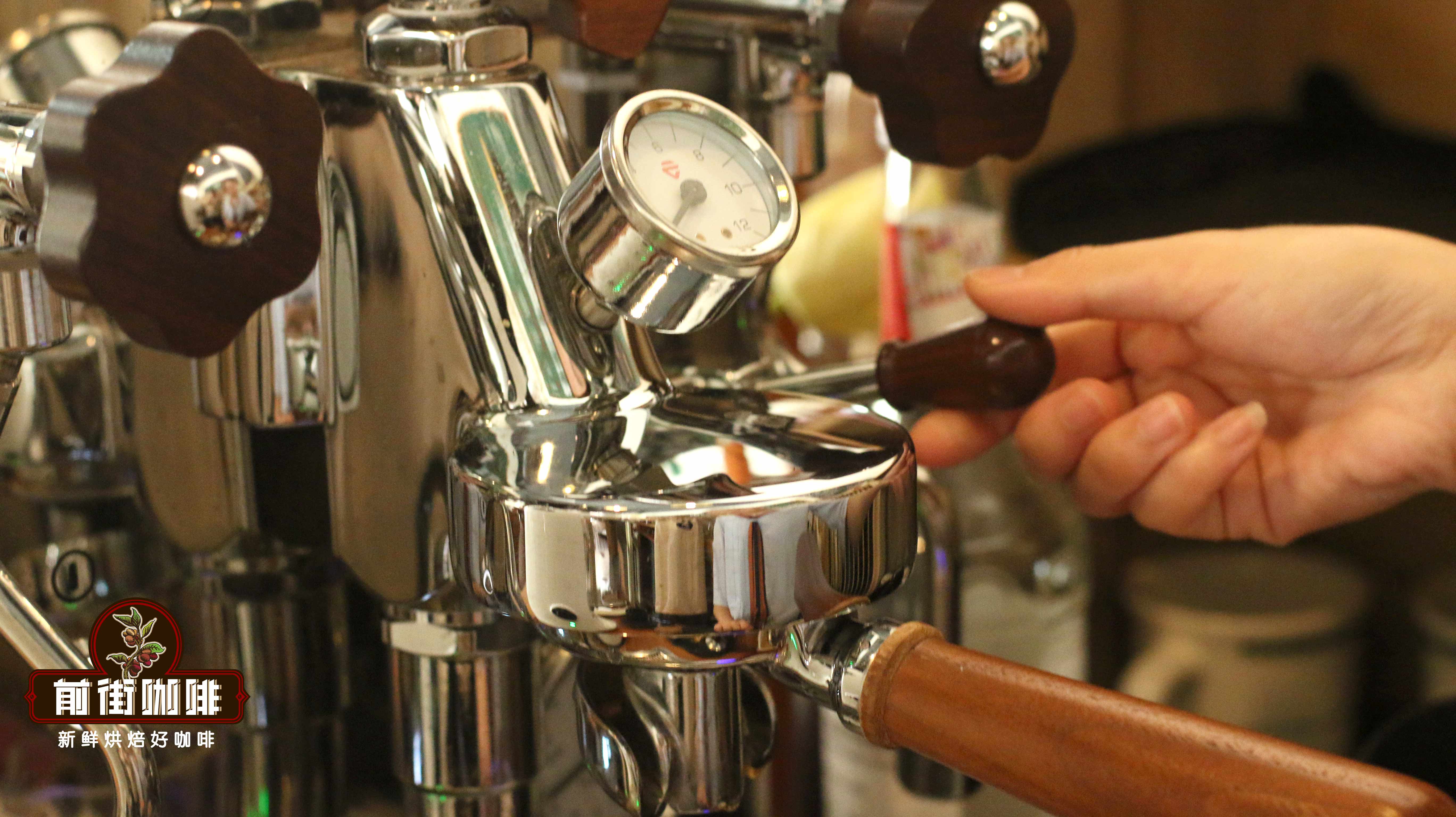
After the advent of the semi-automatic espresso machine, the extraction standards for espresso had already changed dramatically compared with more than a hundred years earlier. Detailed steps for making espresso But the core process has still not changed much: dosing, distribution, tamping, extraction.
Espresso Extraction Standards
The parameters have changed significantly. After all, coffee made by an American drip machine is far less rich in flavor than what an espresso machine produces. The currently internationally accepted standard is: 7 grams of coffee powder, water temperature 92 degrees Celsius, pressure 9 Bar, extraction time 20 to 30 seconds, and extracted liquid volume 20 to 30 milliliters.
However, anyone who has actually operated one will find that the actual situation varies:
[Powder amount] depends on the capacity of the portafilter basket. Here it is not recommended to choose a basket that is too large or too small. The basket specification used by Front Street stores is 20 grams.
[Powder-to-liquid ratio] The ratio of coffee powder to extracted liquid is usually between 1:1.5 and 1:2.5, with 1:2 being the most common. When the ratio is lower, the coffee tastes rich and heavy, but it easily brings out an unpleasant bitterness; when the ratio is higher, it easily becomes bland and tasteless, and may even develop a sharp acidity.
[Time] is affected by both grind size and powder-to-liquid ratio. The higher the powder-to-liquid ratio, the more extracted liquid there is, and the time is correspondingly lengthened; the finer the grind, the smaller the gaps between particles after tamping, the harder it is for water to pass through, and the time is also prolonged, which easily causes over-extraction.
[Pressure] Pressure around 9 Bar can produce a moderate crema. If the pressure is insufficient, crema cannot fully form; if the pressure is too high, it will destroy too much coffee structure and over-extract desirable components, making over-extraction likely.
[Water temperature] is usually controlled between 90 and 94 degrees Celsius. If the water temperature is too high, over-extraction and bitterness are likely; if the water temperature is too low, extraction is insufficient, resulting in sharp acidity.
Based on the parameter standards for Front Street Coffee (FrontStreet Coffee)'s production:
The espresso machine used by Front Street Coffee (FrontStreet Coffee) stores is the Faema E98, with 20 grams of coffee powder, a water temperature of about 92 degrees Celsius, and an extraction time of 26 to 28 seconds, yielding 35 grams of coffee liquid. Of course, this set of parameters is also for reference only.
Selection of Espresso Beans
The flavor presented by the espresso blend beans used by Front Street Coffee (FrontStreet Coffee) stores under the above extraction parameters is: obvious fruit acidity on entry, a faint berry aroma emerging, followed by the surge of vinous notes and chocolate tonality, with a comfortable sweet aftertaste in the finish.
The ability to show layers of berry acidity and vinous chocolate is thanks to the Sunflower Warm Sun espresso blend beans independently blended by Front Street, composed of 70% Honduras Sherry and 30% Ethiopian natural Red Cherry.
Seeing this, some friends may think: then can't I just buy a bag of Sherry and a bag of Red Cherry and blend them together myself? Front Street would like to remind everyone here that the roasting curves of espresso blend beans and pour-over coffee beans are not the same, and the flavors they need to present also have different emphases. This is like the same dish: whether stir-fried over gentle heat or high heat, the resulting taste is completely different.
Of course, the choice of blend beans can be rich and varied. The espresso beans sold by Front Street are all blend types. In addition to the Warm Sun Blend, there are also the Specialty Blend, the espresso beans recommended by many baristas—Front Street Black Cocoa Blend—and the Commercial Blend.
[Specialty Blend] is blended from 70% Brazilian coffee beans and 30% Colombian coffee beans, with a balanced flavor, soft fruit acidity, and nutty sweetness in the finish.
[The espresso beans recommended by many baristas—Front Street Black Cocoa Blend] is blended from 60% Brazilian coffee beans and 40% Yunnan coffee beans, with a flavor profile of cream, nuts, and chocolate.
[Commercial Blend] is composed of 60% Brazilian coffee beans, 30% Colombian coffee beans, and 10% Robusta beans. This blend has rich crema and a high-quality mouthfeel, with caramel sweetness, along with flavors of nuts, cocoa, and chocolate. It is balanced in acidity and sweetness, with a slight hint of pleasant bitterness and a lasting finish.
The Difference Between Espresso and Americano
Front Street mentioned at the beginning that Americano appears on the espresso menu. It should be understood that Americano has two sources: one is made by an espresso machine, and the other is made by an American drip machine. Americano in cafes outside is usually made with an espresso machine by adding an appropriate amount of water to the espresso to dilute it.
Taking Front Street Coffee (FrontStreet Coffee)'s production as an example: use 20 grams of coffee powder to extract 40 grams of espresso, and finally add 240 grams of water at a ratio of 1:6, that is, 40 grams of coffee liquid, to make Americano.
For more coffee bean information, please follow Coffee Workshop (WeChat public account cafe_style) For professional coffee knowledge exchange, please add WeChat ID kaixinguoguo0925
The above content is compiled by CoffeeHunters, a coffee news website.


