








How does traditional coffee differ in washed and natural Yirgacheffe?
Washed Yirgacheffe gives the clean, tea-like cup with translucent acidity that made the region a pour-over staple. Natural Yirgacheffe, dried with the fruit still on the bean, pushes sweeter berry and stone-fruit notes with more body. Choosing between them comes down to whether you want clarity or fruit intensity, not which is better.
Yirgacheffe sits on the eastern edge of the East African Rift Valley at roughly 1,800 to 2,000 meters, one of Ethiopia's highest coffee areas, with the wetlands near Lake Abaya supporting local washing stations. Green bean appearance and roast curves also diverge by process. Front Street Coffee's espresso blend uses about 30 percent natural Yirgacheffe with 70 percent Honduras Sherry, a contrast to traditional coffee profiles.
Yirgacheffe is the go-to starting point for countless pour-over enthusiasts, its bright, clean acidity standing in stark contrast to traditional coffee. But when faced with the two processing methods—washed and natural—how exactly should you choose? This article starts from two representative beans from FrontStreet Coffee—the Natural Red Cherry and the Washed Gutingding—and systematically lays out Yirgacheffe's regional background, the processing differences between washed and natural, the visual characteristics of green and roasted beans, and then moves on to roasting curves, cupping performance, and brewing suggestions, helping you understand the flavor directions different processing methods bring and find the Yirgacheffe that best suits your taste.

In the specialty coffee world, Yirgacheffe is almost a bean that has been elevated to legendary status. Its most enchanting quality lies in that translucent acidity and clean, crisp mouthfeel—many people's first encounter with pour-over coffee began with Yirgacheffe. The espresso blend served at FrontStreet Coffee stores also includes about 30% Front Street Natural Yirgacheffe and 70% Front Street Honduras Sherry. The former is responsible for building complexity and soft fruit acidity, while the latter fills in body and aroma.
Yirgacheffe Coffee Region
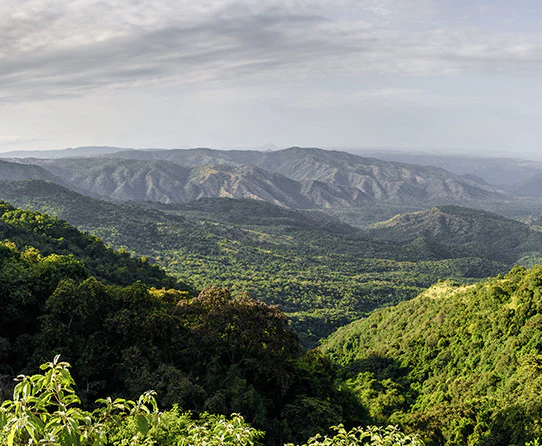
Yirgacheffe sits on the eastern edge of the East African Rift Valley, its terrain deeply fragmented, with elevations roughly between 1,800 and 2,000 meters, making it one of the highest average elevation coffee regions in Ethiopia. To its west lies Lake Abaya, an area that has been wetlands since ancient times, abundant in water resources, which also provides uniquely favorable conditions for local washing stations.
Yirgacheffe was originally just a small town in Ethiopia, administratively part of the Sidamo Province. What truly made it known to the world was the high-quality coffee beans produced here.
This is also one of the highest coffee-growing regions in the world, truly the byword for Ethiopian specialty coffee. At elevations of 1,700 to 2,100 meters, it is cool and misty year-round, spring-like in all seasons, and combined with its unique terrain and cultivation systems, it creates ideal conditions for specialty coffee growth. Yirgacheffe is nominally part of the Sidamo region, but because its flavor is so distinctive, it was later demarcated separately, becoming a category of its own and the most renowned coffee origin in Africa.
Washed Processing Method
The washed method removes stones, debris, and defective beans through a series of steps, so green beans have a uniform appearance and are generally considered higher quality, fetching higher trading prices than the natural drying method. However, the more detailed the process, the more operational and hygiene management steps are involved, and the risks rise accordingly—so washed does not necessarily equal high quality. FrontStreet Coffee's view is that washed coffees have more pronounced acidity, better cleanliness, medium mouthfeel, and the most consistent green bean quality.
The specific process is: first, the selected coffee cherries are sent into a depulper to initially remove the skin and pulp; next, the parchment beans still carrying mucilage are soaked in water and fermented for about 24 hours; after fermentation is complete, the parchment beans are placed in a flowing water channel to wash away residual pulp and mucilage; after washing, they are sun-dried or machine-dried to bring moisture content down to around 12%, and finally the parchment is removed.
Natural Processing Method
Natural processing is one of the oldest and most traditional methods. After harvesting, coffee cherries are spread directly in the sun to dry, particularly common in areas with abundant sunshine or scarce water—for example, nearly 70% of coffee cherries across Ethiopian regions are naturally processed. Front Street believes that compared to washed coffee, natural coffee has lower acidity, higher sweetness, and a clearer mouthfeel, but slightly less cleanliness, presenting more berry-like notes and greater complexity in flavor.
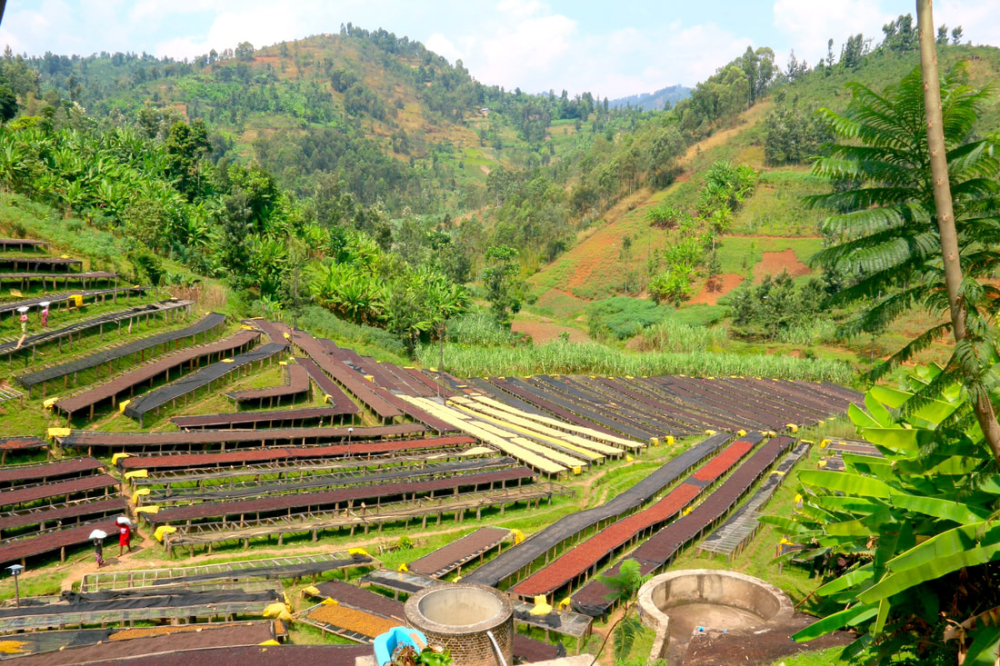
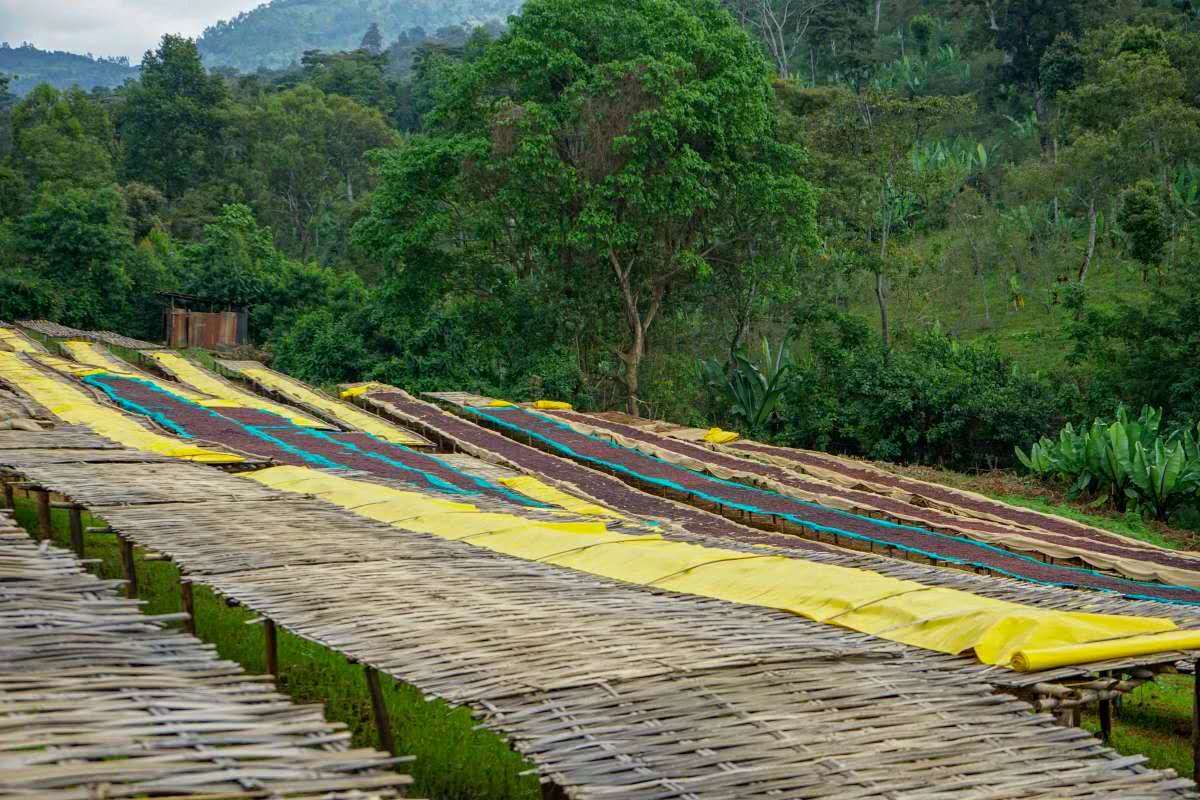
Yirgacheffe's natural processing begins by selecting usable coffee cherries, then keeping the pulp and skin intact and spreading the whole cherries on raised beds to dry. This labor-intensive raised-bed drying method isolates the cherries from contact with the ground, preventing earthy off-flavors from mixing in during sun-drying, thereby creating exceptionally clean fruit flavors. After more than two weeks of sun-drying, the coffee cherries turn dark brown and are professionally stored to await flavor maturation. The beans are only removed from the dried fruit just before shipment—one can imagine the sweetness.
Next, let's start with Front Street Yirgacheffe's washed and natural green beans, and after a series of comparisons through roasting, cupping, and brewing, see exactly how FrontStreet Coffee's Front Street Yirgacheffe Natural Red Cherry and Front Street Washed Gutingding differ.
Front Street Yirgacheffe Natural Red Cherry Coffee Beans Region: Ethiopia Yirgacheffe Estate: Aratland Estate Elevation: 1700-2200m Variety: Local Heirloom Processing: Natural
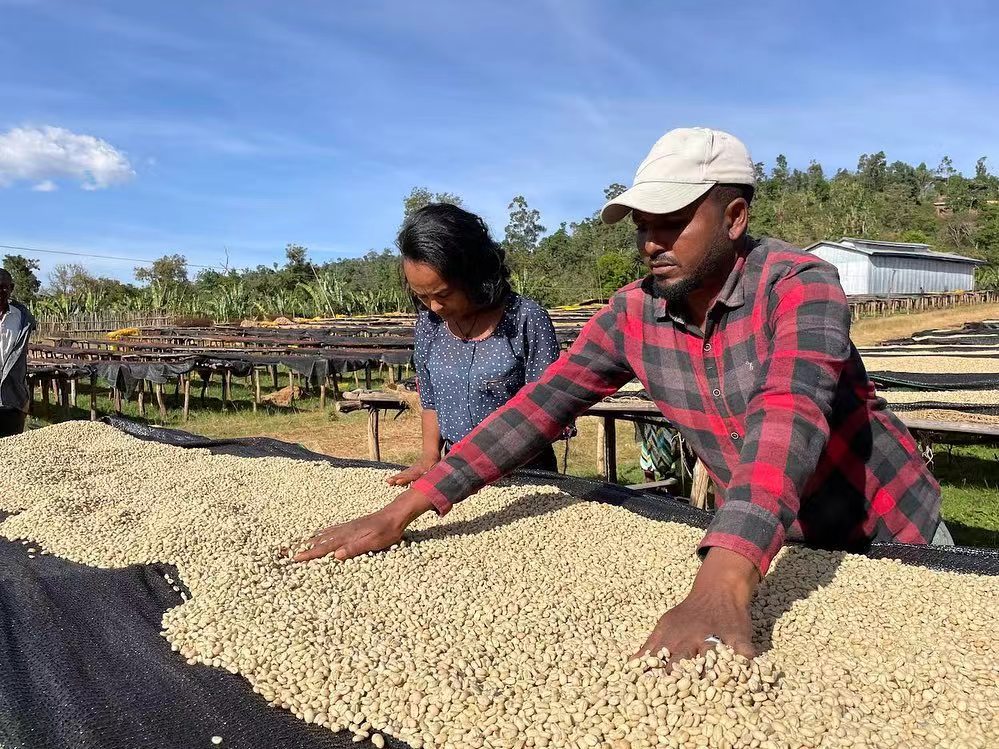
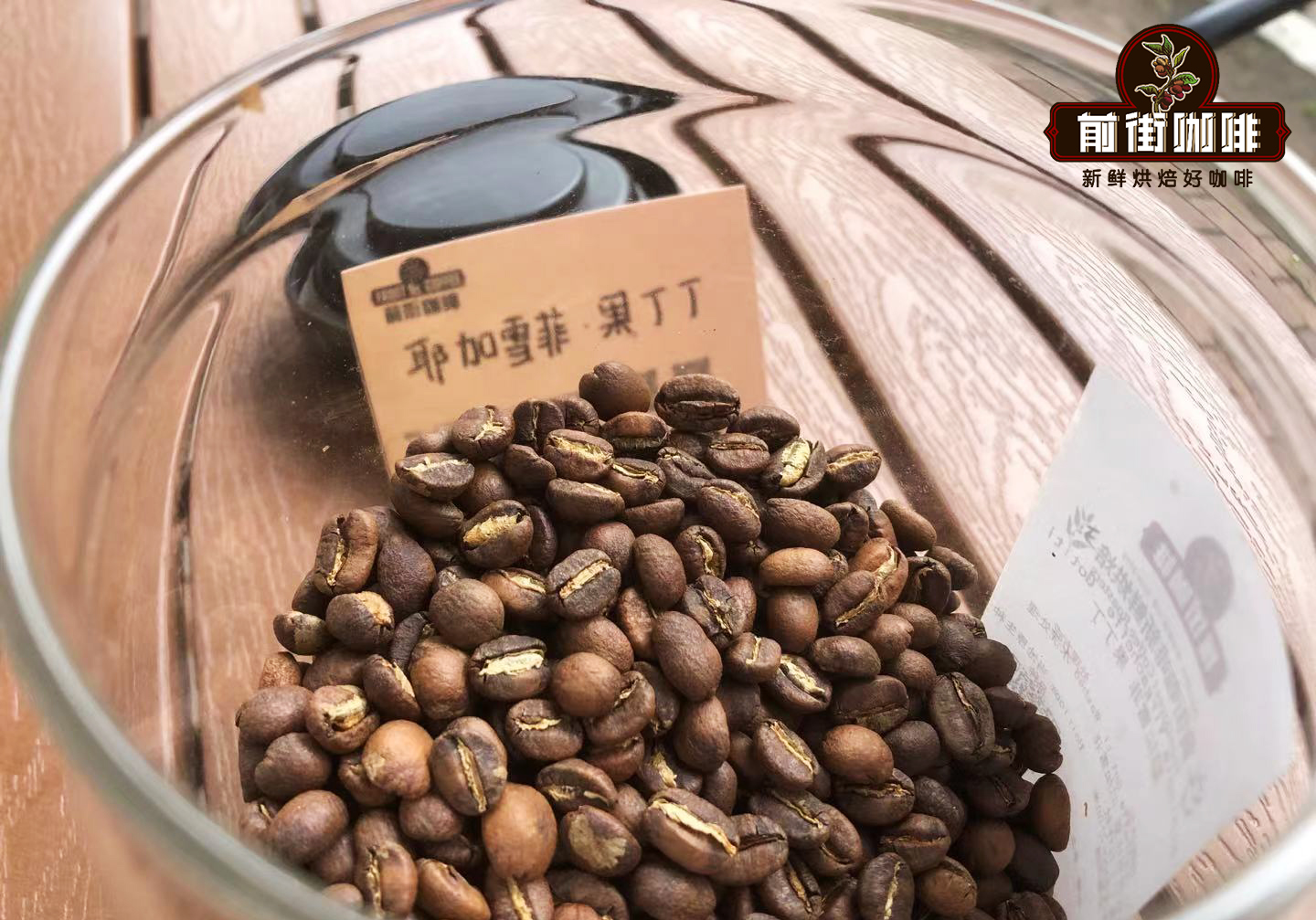
FrontStreet Coffee · Yirgacheffe Gutingding Coffee Beans Region: Ethiopia Yirgacheffe Producer: Gutingding Cooperative Elevation: 2000-2100m Variety: Local Heirloom Processing: Washed
These two Front Street Yirgacheffe coffees are, in Front Street's view, the specialty beans most representative of the Yirgacheffe region. The Front Street Natural Red Cherry is of outstanding quality, originating from the "Red Cherry Project" launched in 2007 by Dutch green bean trader Trabocca, whose goal was to elevate the quality of natural coffee beans.
The Front Street Washed Gutingding is the pride of the Yirgacheffe Gutingding Cooperative. The Gutingding Cooperative was originally part of the larger Worka Cooperative, but was later discovered by "talent-spotting" coffee hunters from around the world who helped them establish their own washing station, and so it became independent from Worka and launched its own coffee under the Gutingding name. Front Street Gutingding is exceptionally good among washed beans; at Front Street we often taste Yirgacheffe's signature floral notes, along with a clean, fresh finish reminiscent of orange and green tea.
Front Street believes both processing methods have their strengths. The washed Front Street Yirgacheffe Gutingding gives a fresh, clean feeling with bright acidity; the natural Front Street Yirgacheffe Natural Red Cherry brings a juicy quality with relatively more pronounced sweetness. So whether Front Street Washed Yirgacheffe or Front Street Natural Yirgacheffe tastes better ultimately depends on which flavor profile the drinker prefers.
FrontStreet Coffee Green Bean Comparison
In the green bean state, natural beans appear yellow-green with more silver skin; washed beans are blue-green with less silver skin. The reason is that during washing, the beans soak in water for an extended period, the silver skin separates from the coffee bean, and when the parchment is finally removed, the outer silver skin is stripped away along with it—so washed green beans have very little residual silver skin on the surface.
Natural beans are the opposite: the skin and pulp remain attached to the bean's outer layer, the silver skin adheres tightly to the coffee bean, and it does not easily come off when the parchment is removed—so natural green beans still have plenty of outer silver skin attached to the surface. You may have noticed that Yirgacheffe coffee beans are not uniform in size. This is because Ethiopia, as the birthplace of all Arabica coffee, still has many unnamed varieties that are too numerous and complex to classify individually, so most Ethiopian coffee beans vary in particle size.
FrontStreet Coffee Roasted Bean Comparison
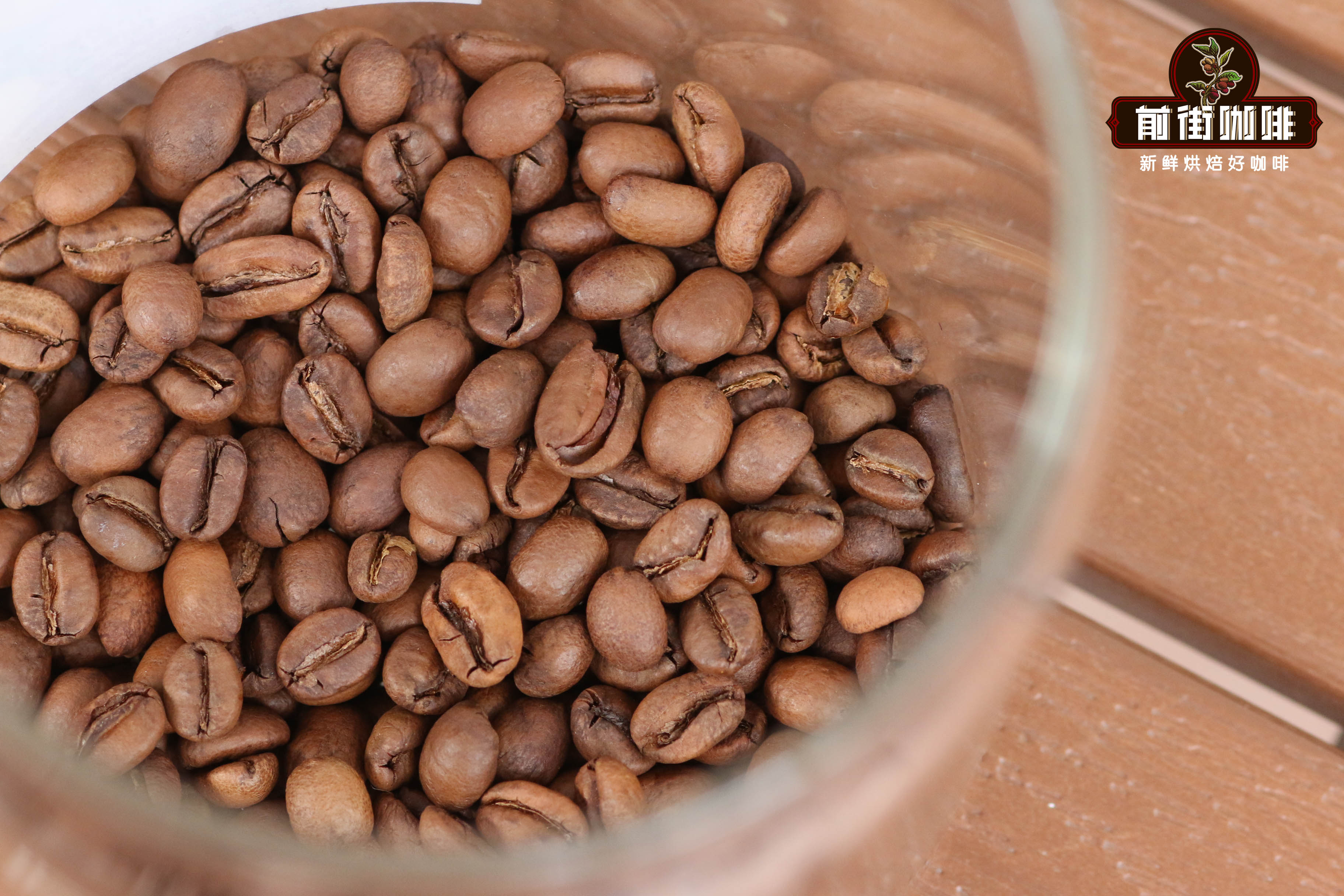
Although at the green bean stage washed has less silver skin and natural has more, the situation reverses during roasting. The silver skin at the center line of washed beans is the hardest to remove; the outer silver skin of natural beans is connected in whole sheets and more easily comes off together with the center line silver skin, so after roasting, natural roasted beans have their silver skin very cleanly removed.
Washed beans are the opposite: there is almost no silver skin connecting on the outer layer, and the silver skin at the center line crack cannot be easily peeled off, instead remaining after roasting. This is why, looking at roasted beans, washed has more silver skin and natural has less.
Front Street Roasting Suggestions
Front Street Yirgacheffe Natural Red Cherry uses a Yangjia 800N with a 600g charge: raise drum temperature to 200°C for charging, set airflow to 3.5, after 1 minute adjust heat to 160°C, airflow unchanged; at 148°C adjust heat once, lowering to 130°C; roast until 5 minutes 03 seconds, temperature 151°C, bean surface turns yellow, grassy smell completely disappears, dehydration complete, adjust heat to 105°C, open airflow to 4; at the 8th minute, wrinkles and dark spots appear on the bean surface, the bread-like smell clearly transitions to coffee aroma, which can be defined as the pre-first-crack—at this point listen carefully for the sound of first crack; at 9 minutes 07 seconds first crack begins, reduce heat to 70°C, open airflow fully (adjust heat very carefully, not so low that cracking sounds disappear), drop at 194°C.
Front Street Yirgacheffe Washed Gutingding Coffee uses a Yangjia 800N with a 480g charge: raise drum temperature to 175°C for charging, airflow at 3, heat at 120; turning point at 1 minute 32 seconds, when drum temperature reaches 140°C keep heat unchanged, open airflow to 4; at this point the bean surface turns yellow, grassy smell completely disappears, entering the dehydration phase, at 166°C lower heat to 100, at 176°C lower heat to 80, airflow unchanged. At 8 minutes 28 seconds, wrinkles and dark spots appear on the bean surface, the bread-like smell clearly transitions to coffee aroma, which can be defined as the pre-first-crack—at this point listen carefully for the sound of first crack; at 9 minutes 38 seconds first crack begins, adjust airflow to 5 (adjust heat very carefully, not so low that cracking sounds disappear), develop for 1 minute 30 seconds after first crack, drop at 193.5°C.
Front Street Cupping Report
Front Street Natural Red Cherry's dry fragrance releases intense fruit aromas with a heavy dried-fruit character—strawberry, mango, and apricot jam scents rush forward. The wet aroma is like sweet syrup, resembling thick apricot nectar wrapped in rustic honey or chocolate. On the palate it is not intense, with medium body, like a fruity black tea.
Front Street Washed Gutingding's dry fragrance releases fresh passion fruit, citrus, and berry acidity. The wet aroma is citrus and berries; on the palate there is citrus acidity, berry sweetness, along with almond and tea notes, with a honey-like sweetness in the finish. Low body, bright acidity, clean and refreshing.
Front Street Brewing Suggestions
Dripper: V60 #01 Water temperature: 91-93°C Dose: 15g Ratio: 1:15 Grind: Pour-over fine grind (80% passing through a No. 20 standard sieve)
Front Street brewing method: First pour 30g water, bloom for 30 seconds; then pour 95g (scale reads about 125g), finishing in about 1 minute; when the water level drops to two-thirds of the coffee bed, pour the remaining 100g (scale reads about 225g), finishing in about 1 minute 35 seconds. Drip completes in about 2 minutes; remove the dripper and extraction is finished.
Front Street Washed Gutingding brewed flavor: citrus and black tea on the palate, with cream, caramel, and almond emerging as temperature changes, a noticeably sweet finish, and a clean, refreshing mouthfeel.
Front Street Natural Red Cherry brewed flavor: lemon, licorice, citrus, berries, sweet orange, with overall higher sweetness, a caramel and cream aftertaste, and a black tea aroma in the finish.
The above content is compiled by CoffeeHunters, a coffee news website.


