








Growing conditions for coffee in Colombia's Andean regions
Colombia is one of the few single-origin coffees named after a country, and it sits with Brazil among the world's top three producers, together supplying about 15% of global output. The country's clustered volcanoes, fertile soil, and abundant rainfall yield coffee that is clear and sweet with noticeable fruity aroma.
Producing regions run along the southern section of the Cordillera, part of the Andes, where a mild climate, humid air, and steady rainfall create favorable growing conditions for coffee. Colombia and Brazil take different paths: Brazil's flat, dry, low terrain leans on technology, while Colombia's varied terrain and rich soil support coffee growth across regions from Bucaramanga in the north to southern specialty zones.
As one of the few single-origin coffees in the world named after a country, Colombian coffee stands alongside Brazil firmly in the world's top three for production, together accounting for about 15% of the global total. Unlike Brazil, which relies on technology to compensate for its flat terrain and dry climate, Colombia is blessed with clustered volcanoes, fertile soil, and abundant rainfall, giving rise to coffee that is clear, sweet, and full of fruity aromas. This article will take you through the major producing regions among the Andes Mountains, from Bucaramanga in the north to the specialty zones in the south, and further into the evolution of varieties such as Castillo. At the same time, the processing methods and brewing recipes of Colombian single origins from Front Street Coffee—such as Rose Valley, Flower Moon Night, Sakura, and Huila—will also be presented, helping you understand the scenery in the cup from this gentle land of Latin America.

Front Street Colombian coffee is one of the few single-origin coffees named directly after a country. Colombia and Brazil are both among the world's top three coffee exporters, together supplying about 15% of global production. The two countries take completely different paths: Brazil has flat terrain, a dry climate, low altitude, and relatively lean soil, relying more on technological means to improve quality; Colombia, by contrast, has varied terrain, many volcanoes, fertile soil, and abundant rainfall, depending on superior natural conditions. It is precisely for this reason that Front Street Colombian coffee presents a clear taste and rich aroma, accompanied by abundant fruitiness, impressive acidity, and the sweetness that follows.
Colombian Producing Regions
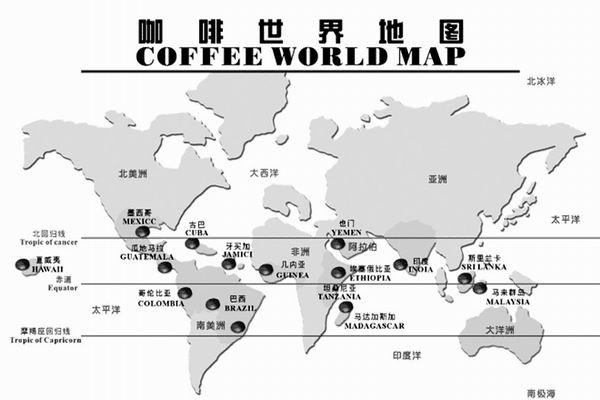
Colombia is located in northern South America, bordered by Venezuela and Brazil to the east, Ecuador and Peru to the south, the Pacific Ocean to the west, Panama to the northwest, and the Caribbean Sea to the north. Most of the country lies between 4°N and 12°N, placing it squarely within the coffee-growing belt.
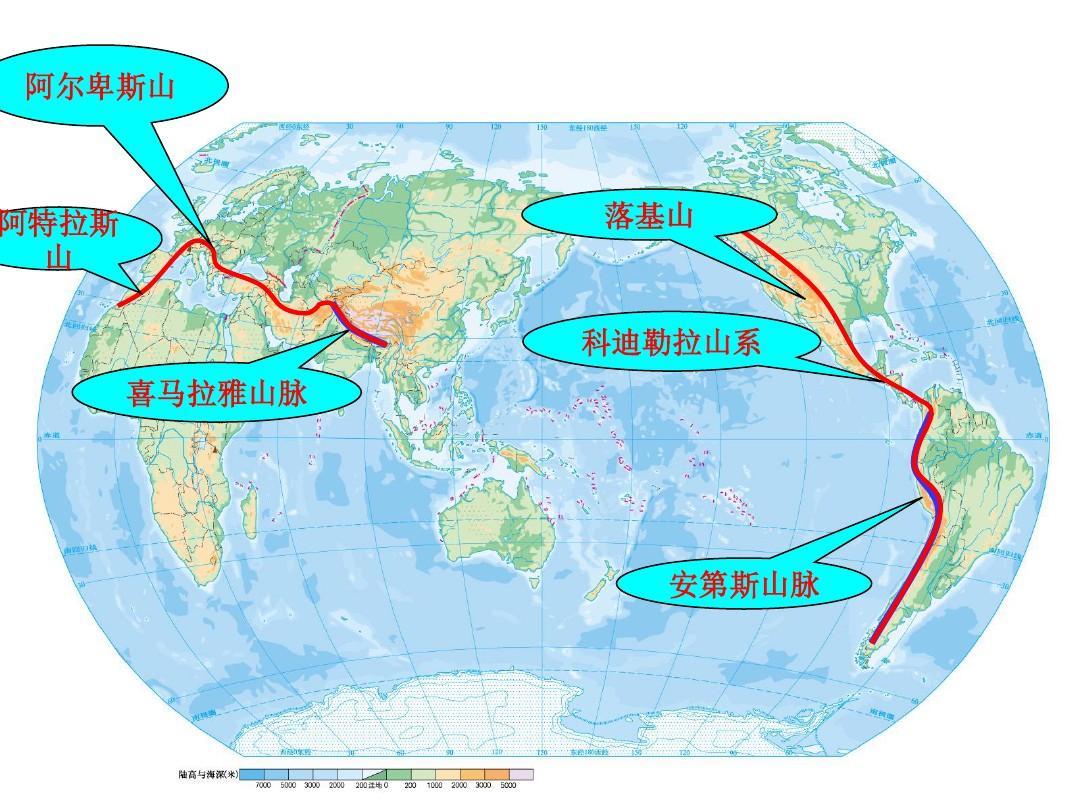
The producing regions of Front Street Colombian coffee are mainly distributed in the southern section of the Cordillera mountain system—the longest fold mountain system in the world, running through the Americas—that is, the Andes Mountains. Here the climate is mild, the air humid, and rainfall suitable, providing ideal growing conditions for coffee trees.
[North]
Although Colombia is known for high altitudes, the Bucaramanga producing region in the north is relatively low, at about 1,000 meters. The coffee produced there has low acidity, a mellow body, and good sweetness, with a flavor profile close to Front Street Indonesian Mandheling.
[Central]
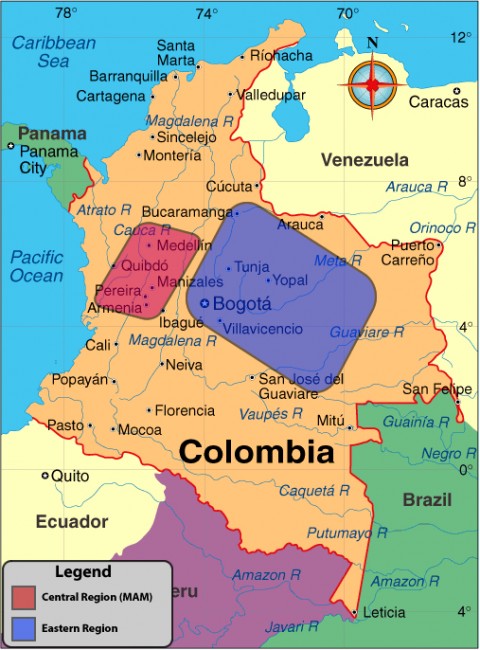
The most famous of Colombia's producing regions is undoubtedly "MAM": Medellin, Armenia, and Manizales. This area is the main producing region for Colombia's large-volume commercial coffee and the largest coffee-producing region in the country, but its growing conditions and bean quality are relatively ordinary.
[South]
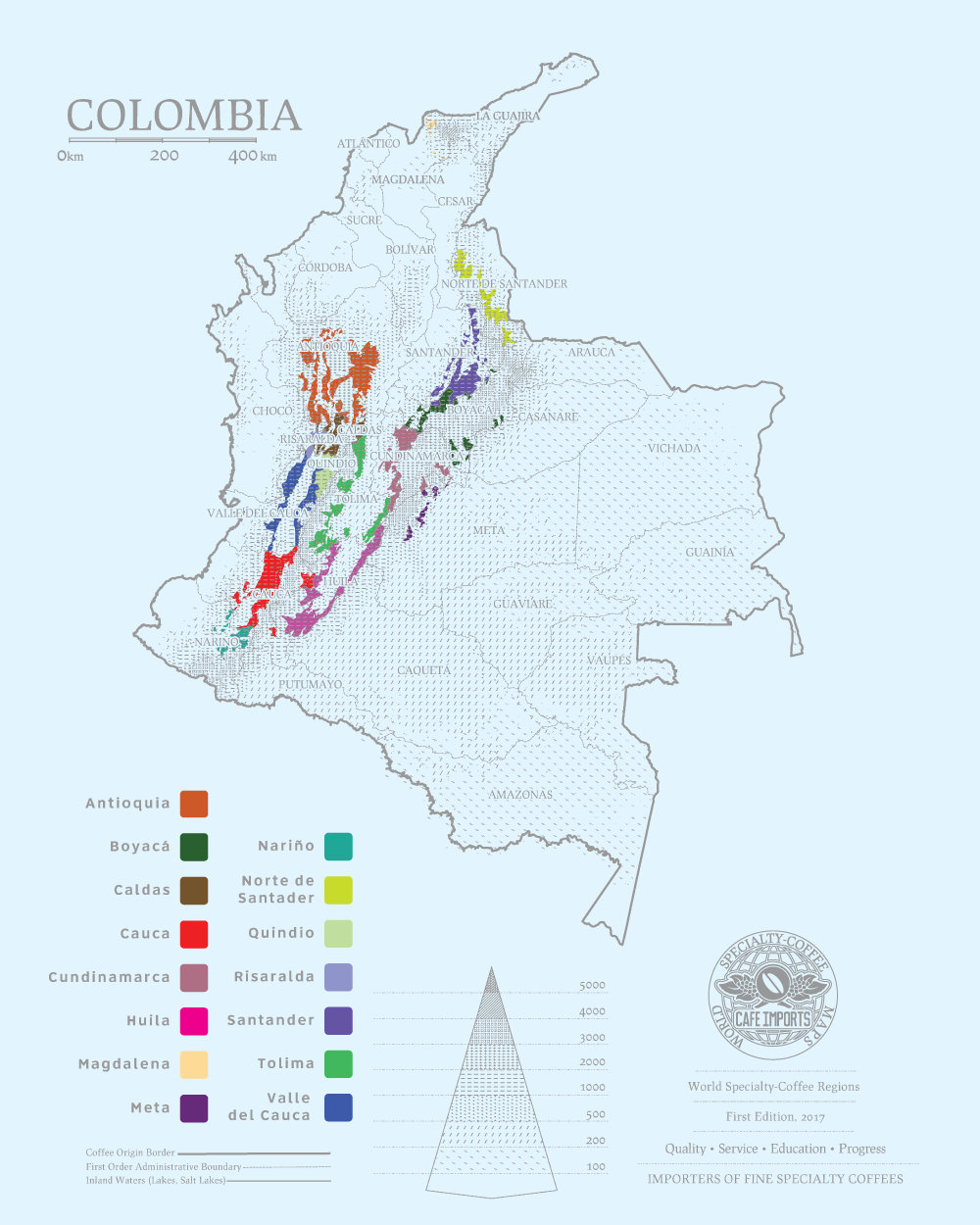
The producing regions for Front Street Colombian specialty coffee beans are mainly in the south, with an average altitude above 1,500 meters, covering Santander, Antioquia, Tolima, Huila, Cauca, Narino, and other places. Coffee from these areas generally has delicate acidity and berry aromas, accompanied by caramel notes and abundant sweetness.
Santander: Located in northern Colombia, bordered by the Magdalena River to the west, with a growing altitude of about 1,400 to 1,600 meters and an area of 30,537 square kilometers. Coffee beans from this region are known for their strong taste, long finish, and unique fresh grassy flavor.
The Front Street Colombia Rose Valley on the Front Street Coffee menu comes from the Santander producing region.
Front Street Coffee Colombia Rose Valley
Region: Santander, Colombia Farm: Big Tree Estate Altitude: 1700m Variety: Caturra Processing Method: Anaerobic Enzyme Washed
Antioquia: Located in north-central Colombia, its coffee production accounts for 18% of the country's total. Most of the producing region consists of the high mountain terrain of the Andes, while also being brushed by the warm sea breezes of the Caribbean.
Tolima: The word Tolima comes from the local indigenous "Pijao people" and means "snow-covered" in their ancient language. Farms in Tolima are generally slightly larger than those in other southern Colombian producing regions, usually between 10 and 15 hectares. The cooperative model is also prevalent in this region, with farmers sending their small batches of coffee cherries to cooperative processing stations. Some farmers also choose to process their own coffee, using their own small-scale processing facilities so that cherries picked on the same day can be processed immediately.
Huila: Located in southwestern Colombia, it is one of the country's main coffee-growing regions, accounting for 12% of Colombia's total coffee production. Through cupping, Front Street found that coffee from this region has strong nut, chocolate, and caramel flavors. On the Front Street menu there are two Colombian coffees from the Huila producing region.
Front Street Coffee Colombia Flower Moon Night
Region: Huila, Colombia Farm: El Diviso Estate Altitude: 1800m Variety: Caturra Processing Method: Anaerobic Natural
Front Street Coffee Colombia Huila
Region: Huila, Colombia Altitude: 1500-1800m Variety: Caturra Processing Method: Washed
Cauca: Located in southwestern Colombia, its total coffee production accounts for about 8% of the country's total. The average altitude of the producing region is 1,758 meters, reaching as high as 2,100 meters. The temperature difference between day and night is significant; the low nighttime temperatures and high altitude together slow the growth pace of the coffee, allowing the beans to absorb nutrients from the coffee cherries more fully.
Front Street Coffee Colombia Sakura comes from the Cauca producing region and uses double anaerobic washed processing. Double anaerobic is similar to anaerobic, with the difference being that the anaerobic stage is carried out twice, and controlling the length of these two anaerobic stages can present different flavors. First, fresh coffee cherries are placed in a sealed fermentation tank for anaerobic fermentation; after that, the coffee cherries are removed, the pulp and skin are removed, and they are placed in a new fermentation tank to continue anaerobic fermentation, and finally dried.
Front Street Coffee Colombia Sakura
Region: Cauca, Colombia Estate: Paradise Estate Altitude: 2050m Variety: Castillo Processing Method: Double Anaerobic Washed
Narino: Located at the southwesternmost tip of Colombia, at 1°N near the equator, with abundant sunlight all year round. The altitude is mostly 1,600 meters, and the volcanic soil provides rich nutrients for coffee growth. Coffee from this region has a round and delicate flavor, with a slight sweetness and cocoa notes, a rich aroma, and a walnut-like fragrance.
Coffee Bean Varieties
The coffee varieties grown in Colombia are extremely diverse: Typica, Bourbon, Caturra, Maragogype, Pacamara, Catimor, Geisha, Mocha, Laurina, and more. But there is one variety that must be mentioned, and that is Castillo. In 1982, Colombia released the Colombia variety, developed through multiple generations of backcrossing between Catimor and Caturra, aimed at washing away the undesirable flavors of Catimor. In recent years, the authorities have introduced an improved version of Colombia, namely Castillo. This variety was obtained by cleansing through multiple generations of backcrossing between Colombia and Arabica.
Front Street Colombian Coffee Brewing Parameters Water Temperature: 90℃ Dose: 15g Coffee-to-Water Ratio: 1:15 Grind Size: Fine granulated sugar coarseness (80% passing through China standard No. 20 sieve)
Front Street brewing method: Pour 30g of water in the first stage for a 30-second bloom, then pour 95g (the electronic scale shows about 125g), completing the pour in about 1 minute; when the water level drops to 2/3 of the coffee bed, pour the remaining 100g (the electronic scale shows about 225g), completing the pour in about 1 minute 35 seconds. Drip filtration is completed in 2 minutes; remove the dripper and extraction is complete.
Flavor Description
[Front Street Rose Valley] The sweet fragrance of peach, accompanied by the aroma of roses, with both the fine sweet-and-sour sensation of black grapes and a silky mouthfeel like cream toffee, followed by a finish reminiscent of liqueur chocolate. [Front Street Flower Moon Night] An oncoming sweetness of strawberry jam and the fermented feel of ripe berries; after entering the mouth, the acidity of cranberry and the juicy berry sensation spread to every corner of the mouth, immediately followed by a liqueur chocolate-like finish in the nasal cavity. [Front Street Sakura] In the wet aroma, one can smell the sweetness of strawberry jam and the fragrance of chamomile. On the palate, there is strawberry-like sweet acidity and a strawberry jam-like fermented feel, followed by the aroma of basil and rosemary, and finally a hint of mint tea-like coolness in the mouth. [Front Street Colombia Huila] Overall relatively balanced, with obvious sweetness; on the palate there are dark chocolate, nuts, and caramel, and under temperature changes there is a soft fruity acidity.
The above content is compiled by CoffeeHunters, a coffee news website.


