








In 2015, Starbucks introduced the flat white to the Chinese market and translated it as "馥芮白." This drink, commonly known as "澳白," had actually been popular in New Zealand and Australia for decades. Like cappuccino and latte, it uses espresso as its base, yet due to differences in milk foam thickness, the ratio of coffee to milk, and extraction methods, it delivers a completely different mouthfeel. This article, from the perspective of Front Street Coffee, will sort out the differences between hot and iced flat whites, and compare it one by one with cappuccino and latte in terms of preparation details and flavor positioning, helping coffee lovers find the cup that suits them best.

For more specialty coffee knowledge, please follow: Front Street Coffee (Frontsteet Coffee)
In January 2015, Starbucks officially launched the flat white in the US market, offering different cup sizes; in September of the same year, mainland China stores followed suit, giving it a rather poetic translated name—"馥芮白." In fact, this drink is what the coffee community commonly calls "澳白." It belongs to the espresso family, and its preparation shares much in common with cappuccino and latte. Today, Front Street Coffee (FrontStreet Coffee) will help everyone clarify the differences among these coffees.
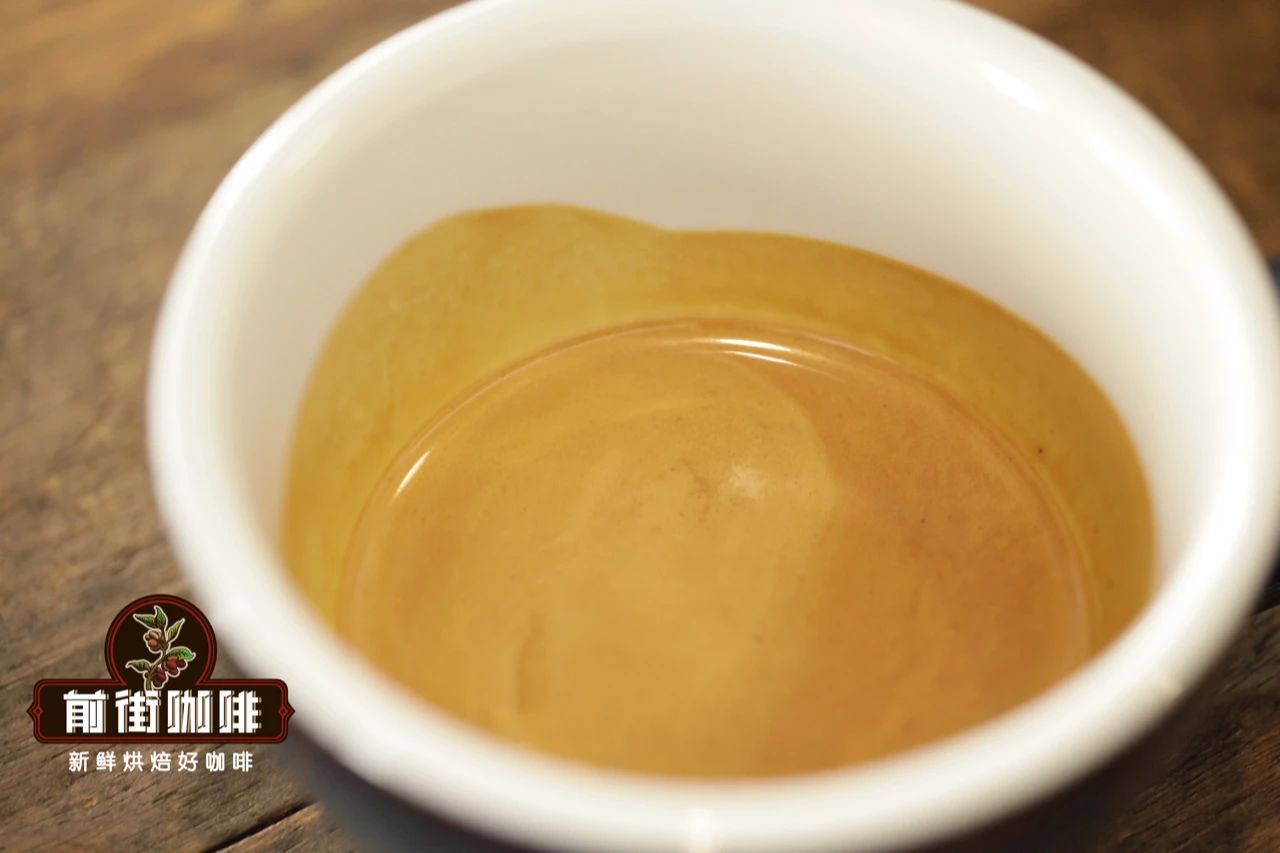
Whether it's cappuccino, flat white, or latte, the base is always espresso. Espresso can be considered a calling card of Italian food culture, and it has now spread across the global coffee landscape. It uses high-pressure water to penetrate finely ground coffee, extracting the crema layer that fascinates espresso enthusiasts.
Then, by combining the extracted espresso with milk in different proportions, various espresso drinks can be created. The flat white mentioned earlier, i.e., 澳白, has extremely thin milk foam, a smooth mouthfeel, and quite prominent coffee flavor. When making it, some prefer a single shot of espresso, while others choose a double ristretto, that is, Ristretto.
The reason flat white recipes are so varied is rooted in its origin in New Zealand in the 1970s and 1980s, after which it swept the globe and naturally evolved during its spread. For example, New Zealanders habitually use Double Ristretto, while Australians tend toward Single Espresso. Therefore, you'll find that the flat white at every shop has its own distinct flavor.
The milk foam of a flat white is fine and thin, and the serving temperature of the milk coffee is not too high, so every sip lets you feel the blend of milk foam and the coffee-milk beneath. In addition, flat white is usually served hot—only then can you appreciate the essence of its mouthfeel; once ice cubes are added, the melting ice water quickly dilutes the concentration, and it ultimately becomes an iced latte.
When Front Street Coffee (FrontStreet Coffee) makes a flat white, it first extracts the espresso, then steams the milk. A 180ml tulip cup is used, and the steamed milk is poured into the espresso, integrating until eight-tenths full, then gently pushing out a pattern. Because the flat white's milk foam is on the thin side, the pattern easily loses its shape, so simple hearts or dots are recommended, or even no latte art at all.
The preparation process for cappuccino is basically the same as for latte—also extracting espresso first, then steaming milk—but the two still differ. Cappuccino is further divided into dry cappuccino and wet cappuccino: dry cappuccino has more milk foam and a rich mouthfeel; wet cappuccino has relatively less milk foam and a more pronounced milk aroma, but overall the foam amount is on the higher side. In China, the latter method is more common—thick milk foam paired with an appropriate amount of milk, and its dense mouthfeel has captured many coffee lovers. Front Street Coffee (FrontStreet Coffee) believes that cappuccino is like a latte with less milk and thicker foam, with a stronger taste than latte, and because the foam is thicker, the mouthfeel is denser. Therefore, when encountering customers who like thick milk foam, Front Street Coffee (FrontStreet Coffee) usually recommends this one.
Now let's talk about the latte that everyone often orders. The word "latte" in Italian originally means "milk," and almost everyone simply abbreviates it as latte. Front Street Coffee (FrontStreet Coffee) feels that a latte is more like a cup of milk with coffee flavor. When making a latte, the ratio of milk to coffee varies from shop to shop, but overall there is always more milk than coffee.
Front Street Coffee (FrontStreet Coffee) mainly divides latte preparation into three steps: first extract the espresso, then steam the milk, and finally integrate the steamed milk with the coffee and pour latte art. To make the milk coffee richer, Front Street Coffee (FrontStreet Coffee) recommends using Front Street Classic Espresso Blend. This recipe is composed of beans from three origins—Brazil, Indonesia, and Vietnam—and uses a dark roast, which maximally highlights the coffee's rich aroma and makes it easy to extract abundant, dense crema. It is suitable whether making an Americano diluted with water or a latte paired with milk, and can be purchased and ordered at the Front Street Taobao store or the Front Street Tmall flagship store.
After multiple extraction tests, Front Street Coffee (FrontStreet Coffee) determined the parameters of extracting 40g of coffee liquid from 20g of coffee grounds in 28 seconds. For latte service, a 300ml cup is used, into which 280ml of milk can be poured. The milk in the pitcher generally should not exceed 2/3, otherwise it will easily overflow when steaming. Before steaming the milk, slightly open the steam knob and purge briefly to release excess moisture in the steam wand, then submerge the steam tip into the milk surface, and then open the knob.
Next, let the steam hole contact the milk surface. The purpose of this stage is to introduce air and create foam; it produces a fairly loud sound and also determines the thickness of the milk foam. Once the foam thickness approaches what is needed for a latte, it enters the texturing stage: lift the pitcher so that the steam hole is submerged in the milk, causing the milk to rotate and steam under the action of the steam; this stage determines the quality of the milk foam. After steaming is complete, open the steam hole and rinse away any residual milk. Usually, latte milk foam has a glossy surface, no bubbles, a moderate thickness of about 1cm, and a certain fluidity. Finally, integrate the steamed milk with the extracted espresso and pour latte art, and a fragrant hot latte is complete.

Of course, there is also iced latte. Compared with hot latte, iced latte is much simpler to make. Front Street Coffee (FrontStreet Coffee) generally first pre-chills the cup with ice cubes, pours in 100g of ice cubes and 180g of milk, and finally pours in the espresso; stir well before drinking.
In summary, a latte is more like a cup of milk with coffee flavor; a flat white is a coffee with a milky taste, extremely thin milk foam, and a smooth mouthfeel; and a cappuccino is a drink with a rich coffee flavor and a dense mouthfeel. Everyone might as well choose according to their preferred mouthfeel.
The above content is compiled by CoffeeHunters, a coffee news website.


