







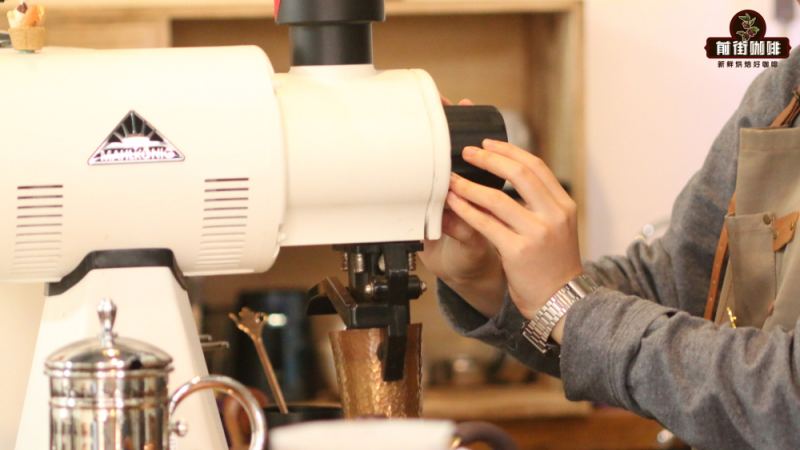
Many coffee lovers are puzzled after getting their coffee beans: which grinder setting should they actually use? In reality, the burr design and scale standards of different grinder brands vary greatly, and the same number can produce dramatically different particle sizes on different devices. Therefore, when Front Street Coffee performs daily grinding calibration, it uses the Chinese No. 20 standard sieve (0.85 mm aperture) to measure the passing rate as a unified reference. This article will start with the specific steps of sieve calibration, combine different roast levels and brewing methods to give grinding recommendations, and share how to judge whether the grind is appropriate through brewing time and the settling state of the coffee bed, helping you build a grinding judgment system that does not rely on grinder settings.
"After buying coffee beans, which setting should the grinder be adjusted to?" Almost every pour-over enthusiast has asked this question. But in reality, we cannot determine particle size solely by the numbers on the grinder—each brand's grinder and burr structure are different, and even with the same setting, the ground coffee particle size can differ greatly. For this reason, Front Street Coffee uses the Chinese No. 20 standard sieve (0.85 mm aperture) uniformly in daily grinding calibration to measure the passing rate.
Many people are used to describing coffee grind size by comparing it to the coarseness of granulated sugar, but in fact white sugar itself is divided into four grades by specification: refined sugar is fine granulated sugar (0.280-0.800 mm); premium-grade sugar is medium granulated sugar (0.450-1.25 mm), which is the most common white sugar; first-grade sugar is large granulated sugar (0.63-1.60 mm); and second-grade sugar is coarse granulated sugar (0.800-2.50 mm).
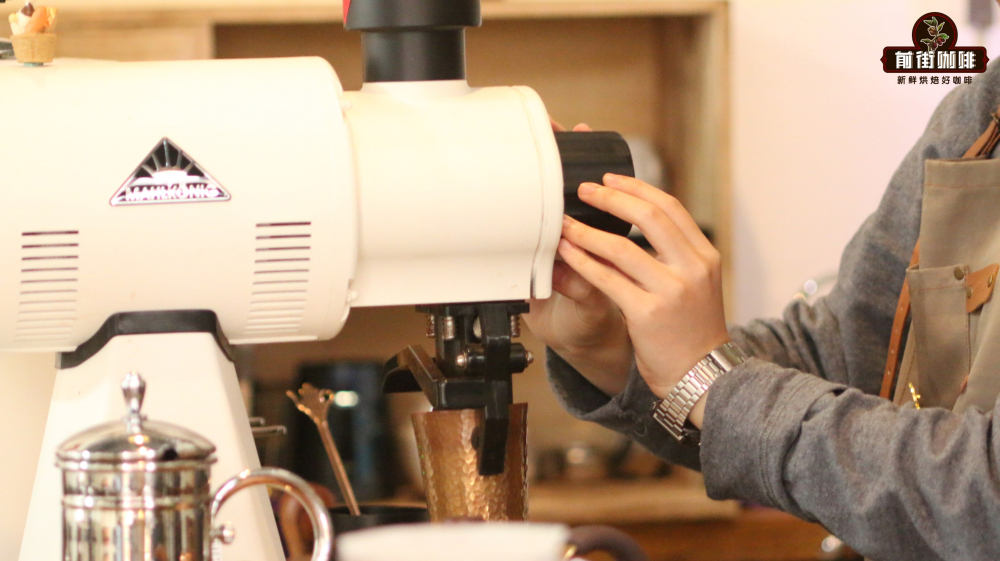
If it is not first made clear which grade of sugar is being referred to, Person A may understand it as fine granulated sugar, while Person B imagines ordinary white sugar. For sugar, the difference in coarseness at most affects mouthfeel; but for coffee particles, a tiny change in particle size significantly changes the release rate of flavor compounds, directly making a cup of coffee stronger or weaker. To eliminate misunderstandings between people as much as possible, the existence of a calibration sieve is especially crucial.
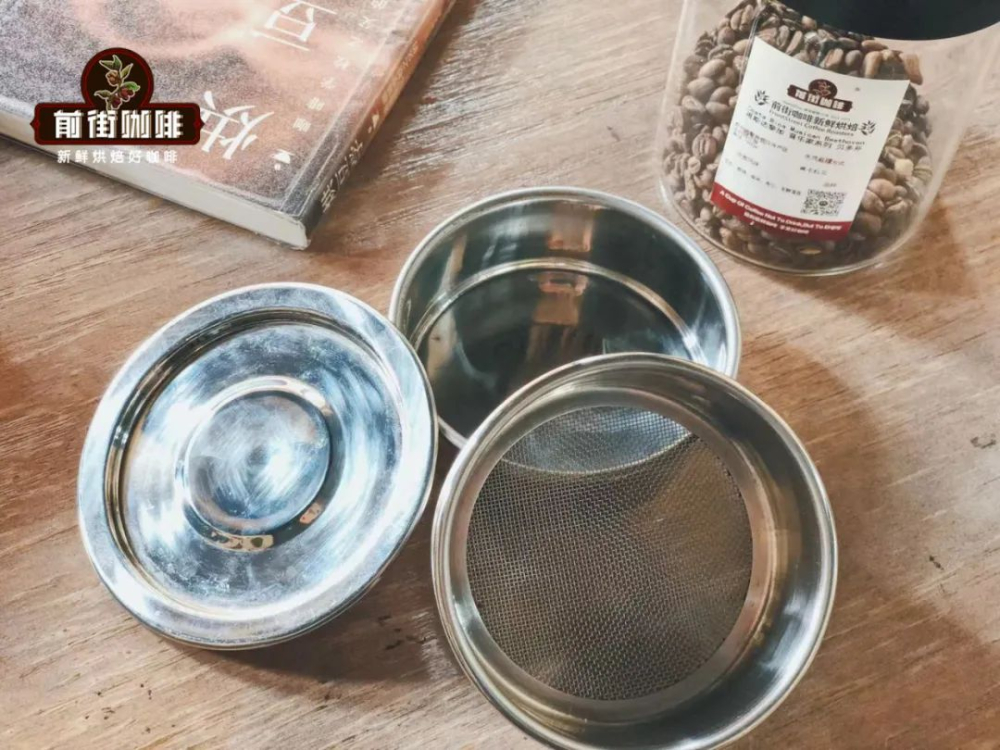
Using the Chinese No. 20 sieve to calibrate coffee grind size is not complicated. First set a rough grinding setting, then grind 10 g of coffee beans to be calibrated. After grinding, pour the coffee grounds into the perforated sieve section and shake horizontally back and forth until no more particles fall through (usually 3 to 5 minutes). Then weigh the fallen grounds and divide by the total coffee weight to get the passing rate—for example, if the weight of grounds passing through the sieve is 5 g, the passing rate is 50%. If the target is to reach the 80% standard, you need to adjust the grind finer, grind again, and measure again until the passing rate stabilizes at 80%.
The above is the complete process for determining grind size with the help of a calibration sieve. Different roast levels and different brewing methods have different requirements for grind size, meaning the passing rate standards are different. For this reason, based on years of brewing experience, Front Street Coffee has compiled a set of coffee grinding calibration recommendations:
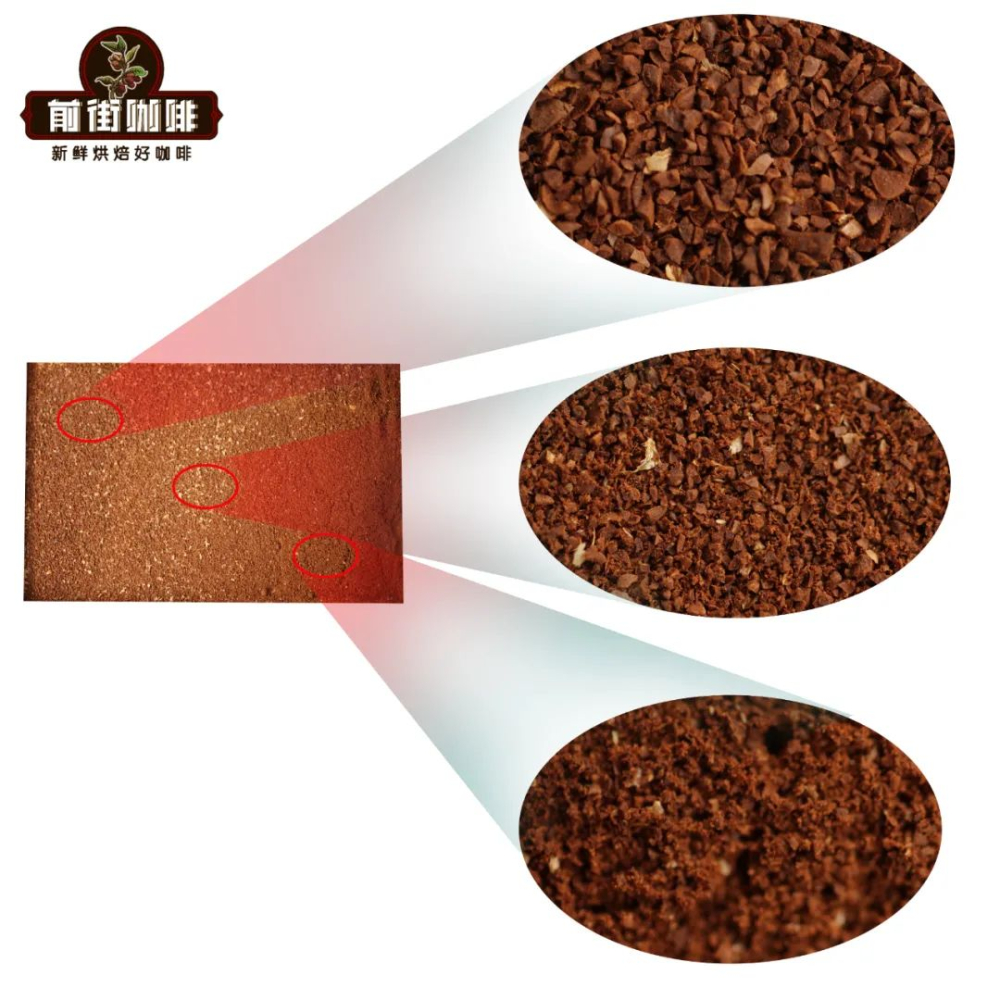
For pour-over, drip coffee makers, cold brew, and ice drip to extract light to medium roast coffee beans (that is, beans whose flavor descriptions are mainly floral and fruity), you can use a grind size with a 75%-80% passing rate (fine granulated sugar size); if using a French press, use a 70% grind size (white sugar size).
-Fine granulated sugar particle size-
For pour-over and drip coffee makers to extract medium-dark to dark roast coffee beans (that is, beans whose flavor descriptions are mainly heavy flavors such as nuts and dark chocolate), you can use a grind size with a 65%-70% passing rate (white sugar size); for cold brew and ice drip extraction, use a 75% passing rate grind size (fine granulated sugar size); for French press extraction, use a 65% grind size (coarse granulated sugar size).
- White sugar coarseness -
Regardless of the roast level of the coffee beans, as long as cupping is used to evaluate the flavor, it is recommended to use a 75% grind size and extract with 94°C water (fine granulated sugar size).
Of course, in addition to relying on the passing rate data from a calibration sieve to judge grind size, we can also infer whether the grind is appropriate from what happens during brewing.
First, brewing duration can serve as a reference for grind size. According to Front Street's brewing parameter standards, when a cup of coffee is brewed with a three-stage pour, the extraction time usually falls around 1 minute 50 seconds to 2 minutes 10 seconds. If the grind is finer, the extraction time will be longer; if the grind is coarser, the extraction time will be shorter. From this, you can make a preliminary judgment about whether the grind is appropriate.
Another way to judge is to observe the state of the coffee bed in the dripper after brewing ends. Again taking three-stage brewing as an example, under normal conditions the coffee bed sinks slowly and steadily. If you find that it descends very quickly, the grind may be too coarse; if it settles more and more slowly, or even clogs, the grind may be too fine or there may be too many fines, and the bottom of the coffee bed will appear muddy.
However, it should be noted that both of the above judgment methods can be affected by the pour rate. If you are really unsure, you can also infer from the overall body and flavor performance of the coffee after brewing is completed: if the final coffee shows sharp acidity and a thin body, the grind is too coarse; if it shows astringency, burnt bitterness, or an interwoven sour-astringent feeling, the grind is too fine.
For professional coffee knowledge exchange and more coffee bean information, please follow Coffee Workshop (WeChat public account: cafe_style)
For more specialty coffee beans, please add the private WeChat of Front Street Coffee: qjcoffeex
The above content is compiled by CoffeeHunters, a coffee news website.


