







Many people hope to bring out a more pronounced sweetness when brewing coffee, because sweetness often delivers a more enjoyable drinking experience. But coffee's sweetness does not exist in isolation—it is closely tied to the balance between acidity and bitterness, and is also significantly affected by roast level and the extraction process. This article starts from the logic behind how coffee sweetness forms, combines the sweetness expression at different stages of light, medium, and dark roast, sorts out the release rhythm of sour, sweet, and bitter compounds in pour-over coffee, and addresses the two common scenarios of over-extraction and under-extraction by giving specific adjustment methods for water temperature, grind size, coffee-to-water ratio, and staged pouring, to help you more effectively enhance coffee's sweetness in your daily brewing.
Why do we always want to brew coffee sweeter? Probably because sweetness prompts the body to release dopamine, which brings pleasure.
To brew coffee sweet, the first step is to understand what the sweetness in coffee actually is. Coffee's sweetness does not stand on its own; it can only be highlighted after achieving harmony between acidity and bitterness. Take light-roast coffee as an example: it naturally has fewer bitter compounds, and its sweetness often attaches to a structure of high acidity and low bitterness, presenting as a fruit-like profile where sourness and sweetness interweave. Dark-roast coffee is the opposite: it has more bitter compounds, and its sweetness relies on a framework of low acidity and high bitterness, showing a caramel-like bittersweetness.
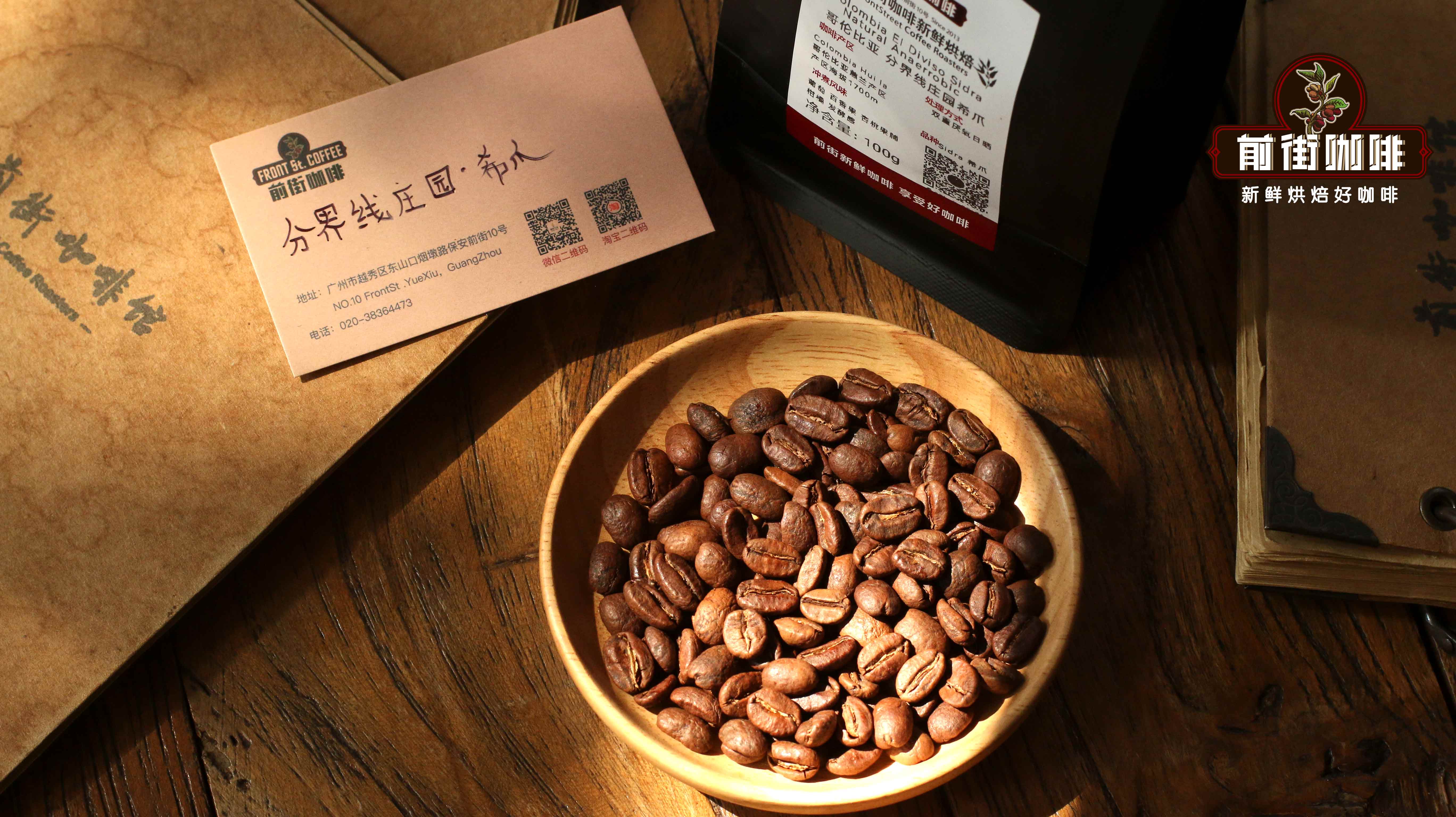
Coffee beans with prominent sweetness in light roast include Front Street Xizhua, Front Street Blackberry, and Front Street Huakui; for medium roast, you can choose Front Street 2013 Yunnan Small-Molecule, Front Street Bird of Paradise; for dark roast, Front Street Queen's Estate and Front Street Brazil Cerrado are recommended.
To brew coffee sweet, the core idea is to extract as much of the sweet compounds as possible during brewing. The specific principle is as follows:
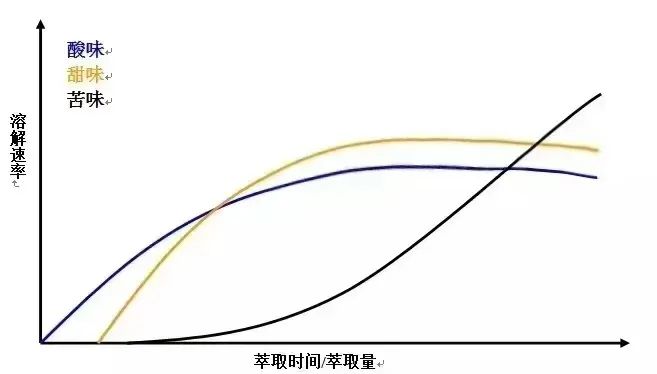
During pour-over extraction, the points at which sour, sweet, and bitter compounds are released in large amounts are not the same. Sour compounds are the easiest to extract, so the early stage is dominated by acidity, while also containing some sweet and bitter compounds released earlier. Entering the middle stage, the release of sour compounds gradually decreases, the extraction efficiency of sweet compounds begins to exceed that of sour compounds, and bitter compounds are also increasing at a slower rate.
In the later stage, the release of sour compounds declines further, and sweet compounds also show a downward trend, while the extraction efficiency of bitter compounds begins to rise.
In this model, the ideal state for brewing sweetness is to make sweet compounds account for as large a proportion as possible in the cup, that is, to achieve a higher extraction yield. It is generally believed that coffee with an extraction yield between 18% and 22% tastes better. Placing this range on the model chart is roughly as follows:
An extraction yield of 22% is theoretically close to the limit of coffee's highest sweetness. Once it exceeds 22%, unpleasant bitterness easily appears.
After looking at the extraction model, let's look at examples in actual brewing. Usually, the situations where sweetness cannot be brewed fall into two categories: one is over-extraction, and the other is being too conservative.

In the first situation, the sweetness has actually been extracted fairly completely, but bitterness is also brought out in large amounts at the same time, causing sweetness's proportion in the overall cup to decrease instead. In the end, the coffee tastes both sour and bitter, and the sweetness is not obvious.
If your coffee also performs this way, you can first check whether the water temperature is reasonable. For medium-light roast coffee, 90 to 93°C is generally recommended; for medium-dark roast, 86 to 89°C, and you can choose a lower water temperature within the recommended range.
Next, check whether the grind size is too fine. You can judge from the flow rate and extraction time. For example, if 15 grams of coffee grounds take more than 2 minutes 30 seconds to extract, or 20 grams of coffee grounds take more than 3 minutes, you need to make the grind size coarser.
The second situation is also the most common one. Many friends worry about extracting the miscellaneous bitterness of the later stage, so they set the grind size relatively coarse and can basically finish extraction before 2 minutes.
The extraction yield of coffee brewed this way is about 17% to 19%. The bitterness is not obvious, but the proportion of sweetness is also not large, and acidity dominates absolutely, presenting as bright or even sharp acidity, while sweetness is faint and elusive.
If the coffee you brew has strong acidity and weak sweetness, uses a 1:15 or lower coffee-to-water ratio, and has an extraction time of about 2 minutes, then the most direct solution is to continue pouring water and extend the coffee-to-water ratio to 1:16 or 1:17. The extra water will prolong the extraction time and continue extracting flavor compounds, the proportion of coffee's sweetness will increase, and the sweetness will naturally become more obvious.
If the coffee itself is already on the thin side, continuing to extend the ratio will only make the taste more watery. In this case, Front Street recommends using staged pouring to prolong the extraction time. For example, if you originally use a three-stage pour and coffee brewed at a 1:16 ratio has obvious acidity and inconspicuous sweetness, then you can increase the number of pouring stages to four. This will prolong the overall extraction time, while concentrating the high-efficiency flushing extraction in the middle and later stages, which is beneficial to the release of sweet compounds.
The above content is compiled by CoffeeHunters, a coffee news website.


