







For more specialty coffee knowledge, please follow: Front Street Coffee (Frontsteet Coffee)
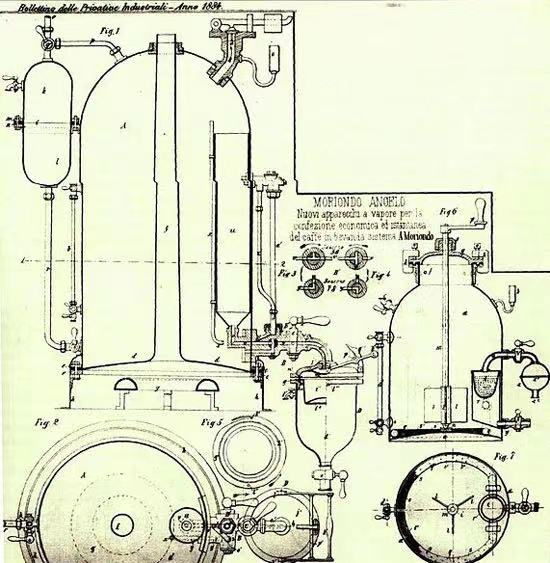
The earliest method of making espresso was born in 1884, when an Italian named Angelo Moriondo designed a patented model of an espresso machine. At first, the working principle of the espresso machine was to boil water in two separate boilers to produce steam, then use steam pressure to pressurize the hot water (around 1.5 bar) through the coffee grounds layer, extracting a highly concentrated coffee liquid.
But this extraction method could not guarantee the stability of every espresso extraction. So in the early 20th century, an Italian named Luigi Bezzera obtained a patent for an espresso machine and carried out design improvements, inventing a method to pressurize hot water within tens of seconds and quickly pass it through very finely ground coffee powder, extracting espresso and dropping it directly into the cup.
He made several improvements to Moriondo's design and lowered the temperature to a range that could produce better-tasting espresso—about 94°C. He also added a coffee powder basket to achieve a filtering effect, improving the taste of the espresso. After the upgraded coffee machine was modified, it was sold commercially, and from this time on, espresso quickly extracted by steam pressurization soon won the admiration and affection of people throughout Italy.
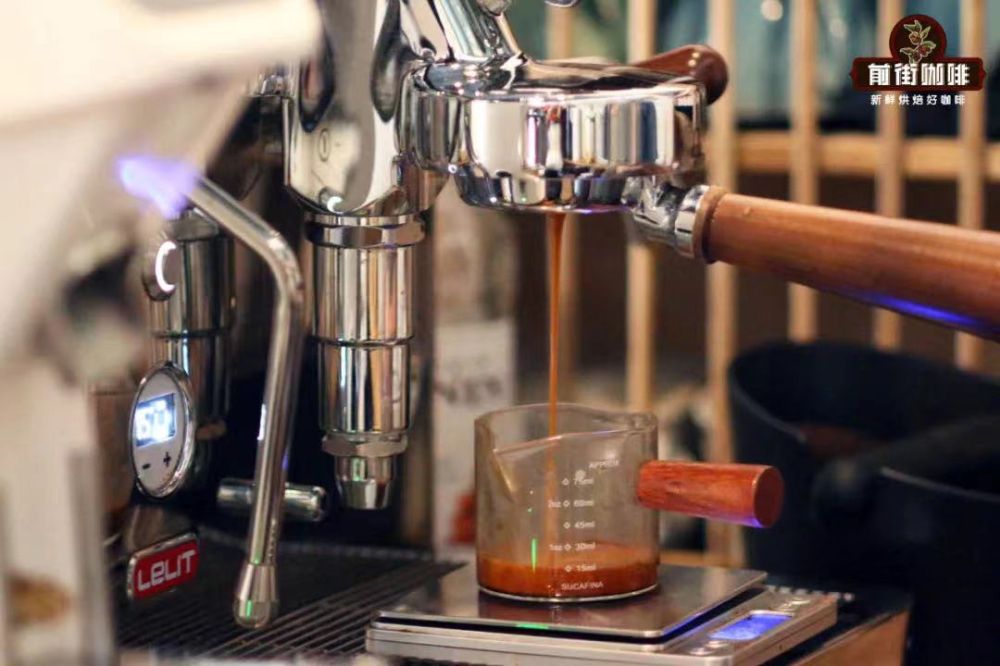
After espresso became popular in Italy, a designer named Desiderio Pavoni purchased Bezzera's patent, and the two collaborated to create a better coffee machine with a pressure valve and steam wand, which was launched at the Milan Expo in 1906. Now, the brand's name is "La Pavoni." This espresso machine design and extraction principle are the same as the method of making espresso that we now know well.
What isespresso?
From what Front Street Coffee just shared about the working principle of the espresso machine, we can understand that espresso is a highly concentrated coffee liquid made by using very finely ground coffee powder and then injecting 94°C hot water under pressure through the powder layer via the coffee machine.

Although the concentration is high, a properly extracted espresso will not taste so bitter that it makes the drinker uncomfortable. Front Street Coffee believes that although a good cup of espresso has a strong flavor, it will not have a burnt bitterness. The crema is delicate and smooth, the overall mouthfeel is mellow and clean, and there will be an obvious sweet aftertaste at the end.
After extraction is completed, the espresso will have a layer of golden crema. The crema of espresso is not entirely oil; rather, freshly roasted coffee beans themselves contain a large amount of carbon dioxide due to structural changes during roasting.

After being ground into very fine particles and extracted under a pressure as high as 9 bar, in a sealed and pressurized environment, the coffee bean oils and carbon dioxide merge with each other and are squeezed out by water, forming a crema foam with a delicate and smooth mouthfeel. Therefore, if you want espresso to taste good, choose freshly roasted coffee beans at a medium-dark roast level or darker, grind them fresh, and make it fresh, so that appropriate carbon dioxide can form espresso crema.
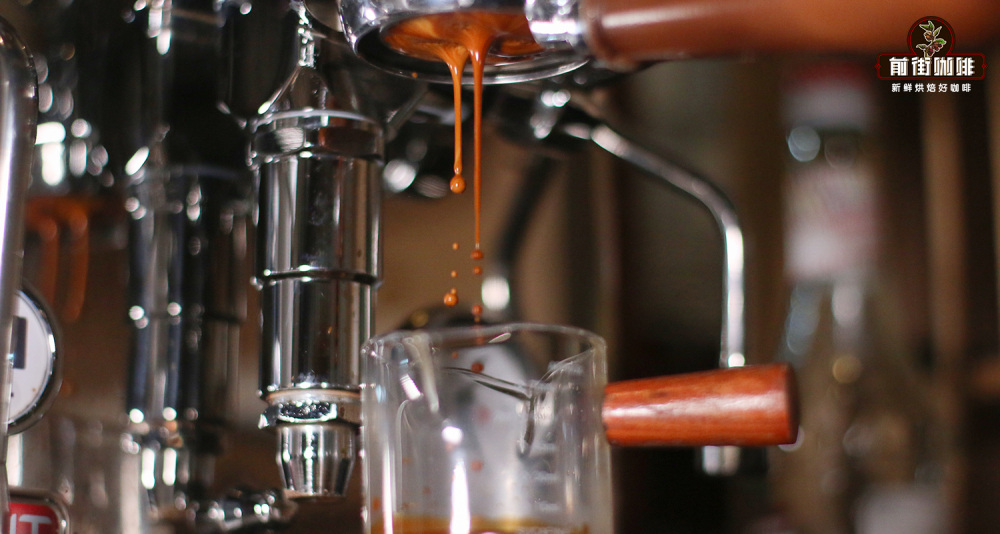
The longer coffee beans are roasted, the more carbon dioxide they will contain due to continuous structural changes. But it is not the case that the more carbon dioxide, the better the espresso will taste. Too much carbon dioxide will make the crema of the espresso rough in texture and will also affect the release of soluble substances during extraction. All coffee beans sold by Front Street Coffee are shipped within 5 days after roasting is completed, 100% freshly roasted.
After purchasing Front Street Coffee espresso beans, friends can first leave them unopened and place them in a cool, dry place for 7 days after the roasting completion date on the back label before starting to use them. During this period, the coffee beans will release carbon dioxide on their own and discharge it through the one-way exhaust valve on the packaging. Releasing an appropriate amount of carbon dioxide helps achieve more stable extraction.
To achieve stable extraction, Front Street recommends giving priority to high-quality blended coffee beans. We recommend Front Street Classic Espresso Blend. This is a blend composed of beans from three origins: Brazil, Indonesia, and Vietnam. It uses a dark roast, which can maximize the coffee's rich aroma and also allow everyone to easily extract rich and dense coffee crema. Whether making an Americano diluted with water or a latte paired with milk, it is very suitable. You can place an order at the Front Street Taobao store or the Front Street Tmall flagship store.

How to extractespresso?
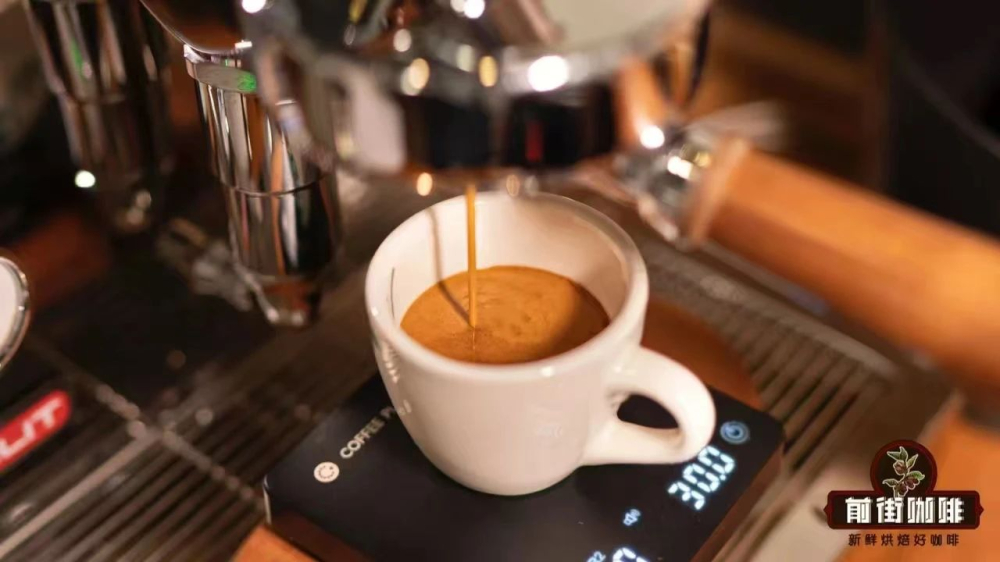
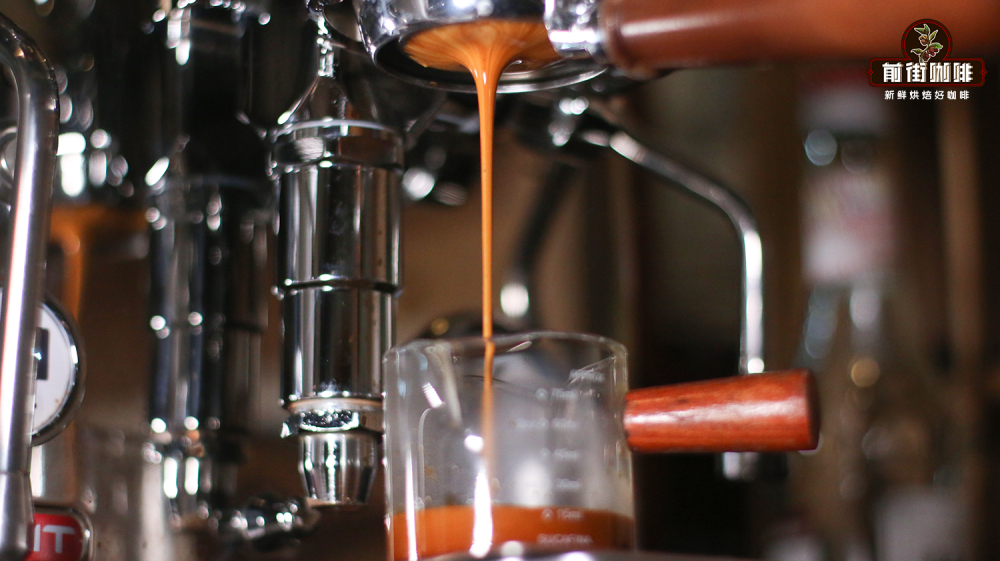
According to the Specialty Coffee Association SCA standards, use 7-9 grams (double: 14-18 grams) of coffee powder to extract 25-35 g of coffee liquid in 20-30 seconds. The extraction pressure is 9-10 bar, and the water temperature is 90-96°C.
Each coffee machine, grinder, and the coffee beans used to extract espresso are different, so the coffee extraction parameters will differ to some extent. Therefore, you cannot judge only by the grind setting and extraction time. The most important thing is to adjust the parameters according to the final taste performance of the espresso.

Each coffee shop will make upward or downward adjustments according to the coffee beans and equipment used. The Front Street Coffee store uses its own "Sunflower Warm Sun Blend Coffee Beans" with a unique whiskey vanilla cream flavor, made of 70% Honduras Sherry coffee beans blended with 30% Ethiopian natural Yirgacheffe Red Cherry coffee beans.
According to the daily adjustments by the baristas in the store, on the day this article was edited, 19.5 g of very finely ground coffee powder was extracted with 94°C hot water under pressure to obtain 35 g of coffee liquid, with an extraction time of about 30 seconds. The espresso shows a vanilla cream-like smoothness, slight berry sweetness and acidity, fermented wine aroma, and the sweet fragrance of hazelnut caramel.
EspressoHow to drink it?
Compared with the strong and bitter taste of espresso more than a decade ago, coffee bean quality has continued to improve, and everyone has done more research on coffee roasting. Now the quality of espresso has also improved.
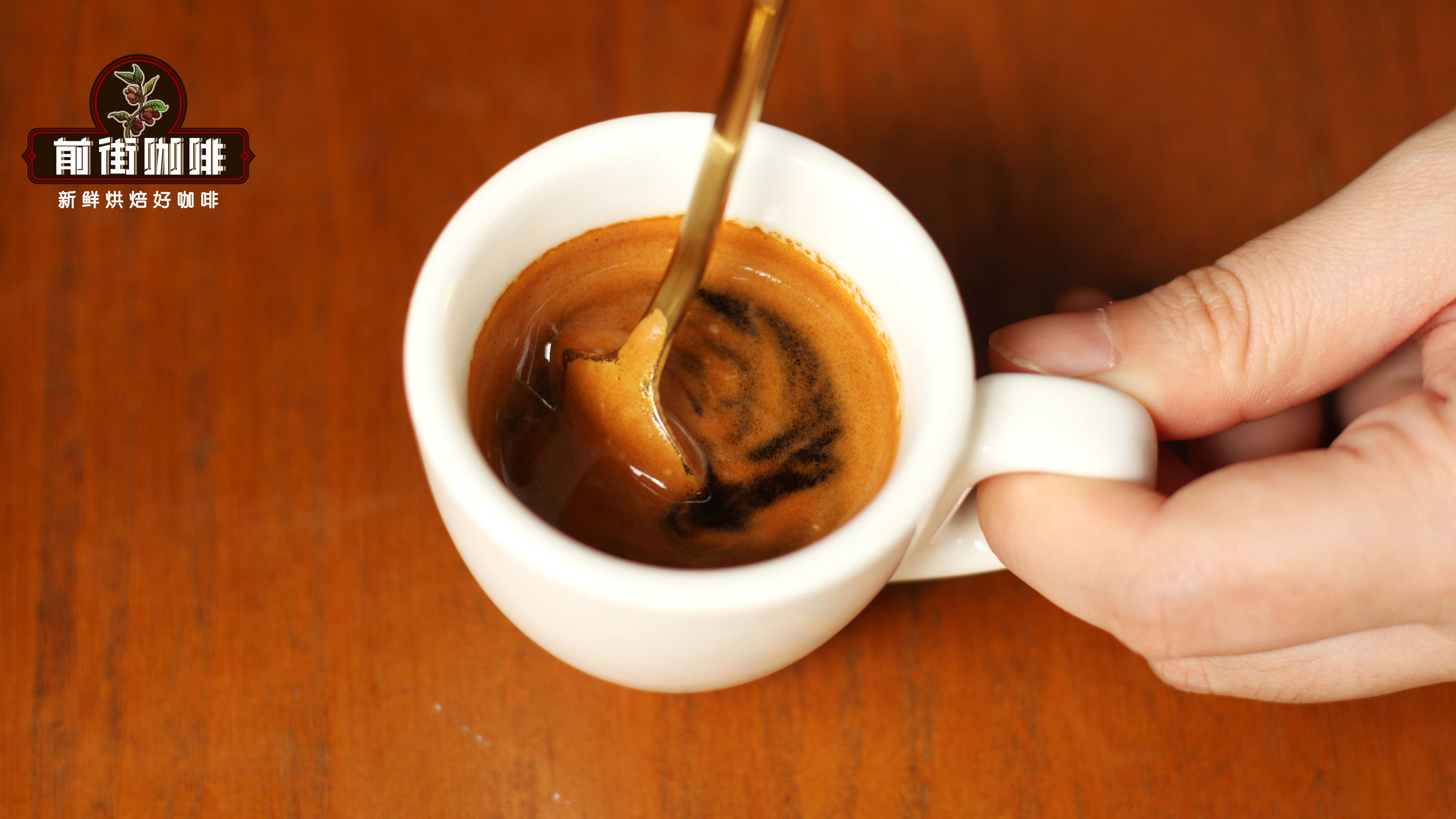
Before tasting, we first take a sip of ice water to clean the mouth and allow the muscles on the surface of the tongue to contract slightly. After the barista serves the espresso, you can stir the coffee with a spoon to make it more uniform overall. Then taste it in three sips. The first sip is to taste the flavors in it, the second sip is to feel its mellowness, and the third sip is to feel the coffee's sweet aftertaste and finish.
The above content is compiled by CoffeeHunters, a coffee news website.


