







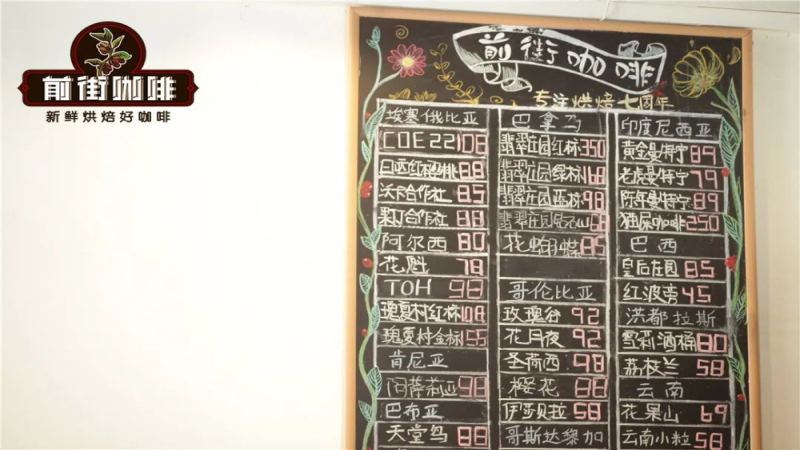
Front Street Golden Mandheling is the bean with the highest body and most prominent bitterness on the menu, and it is also Front Street's top recommendation for customers who prefer strong, bitter coffee. Many customers ask about brewing parameters when ordering, so in this article Front Street will systematically explain how to brew Front Street Golden Mandheling to achieve an authentic Mandheling flavor. The content covers how the wet-hulling process shapes the unique woody, spicy, and herbal notes of Indonesian coffee, the quality characteristics of Front Street Golden Mandheling as a signature product of PWN, and the specific parameters for pour-over brewing, including grind size, water temperature, dripper selection, and three-stage pouring. Whether you are a beginner just getting to know Mandheling or a seasoned coffee drinker looking to refine your pour-over skills, you will find practical brewing ideas here.
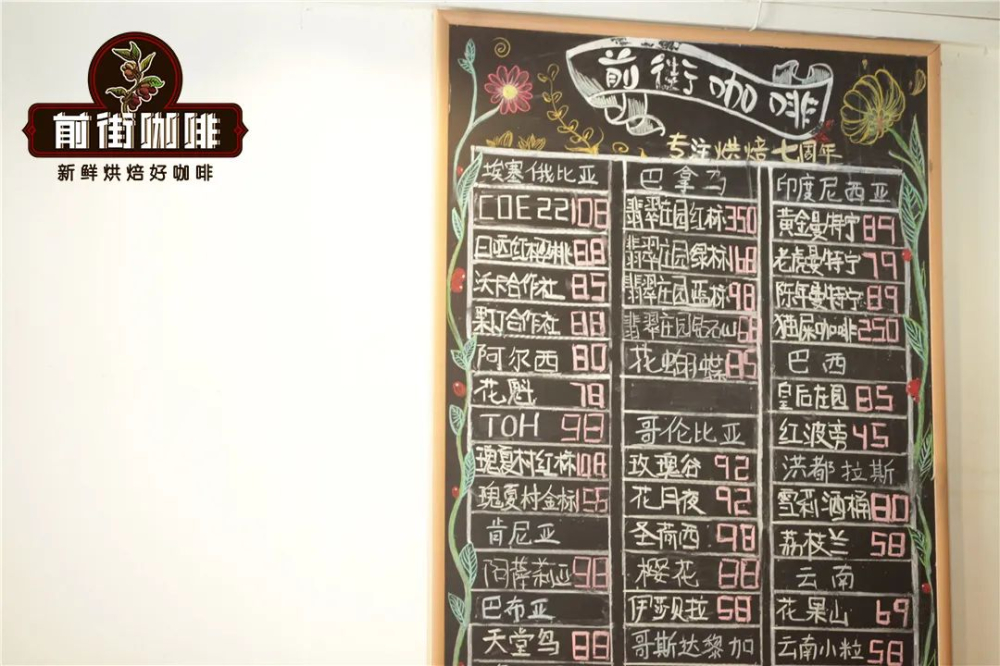
As the coffee bean with the highest body and most obvious bitterness on the Front Street menu, Front Street Golden Mandheling has always been Front Street's top recommendation for customers who love strong, bitter coffee. When Front Street serves pour-over coffee, some customers ask about various brewing parameters, so in this article Front Street will explain how to brew Front Street Golden Mandheling coffee to bring out its Mandheling character~
What is Mandheling flavor?
Since 1699, when Dutch colonists introduced coffee to Indonesia for cultivation, coffee has become a major cash crop for local farmers. Using the traditional natural process would take too long, making it difficult to sell to merchants in time for profit; sun-drying and washing require at least 2–3 weeks of drying time. Most critically, the islands of Indonesia are often windy and rainy with high air humidity, so the green coffee beans would mold and spoil before they were even dry.
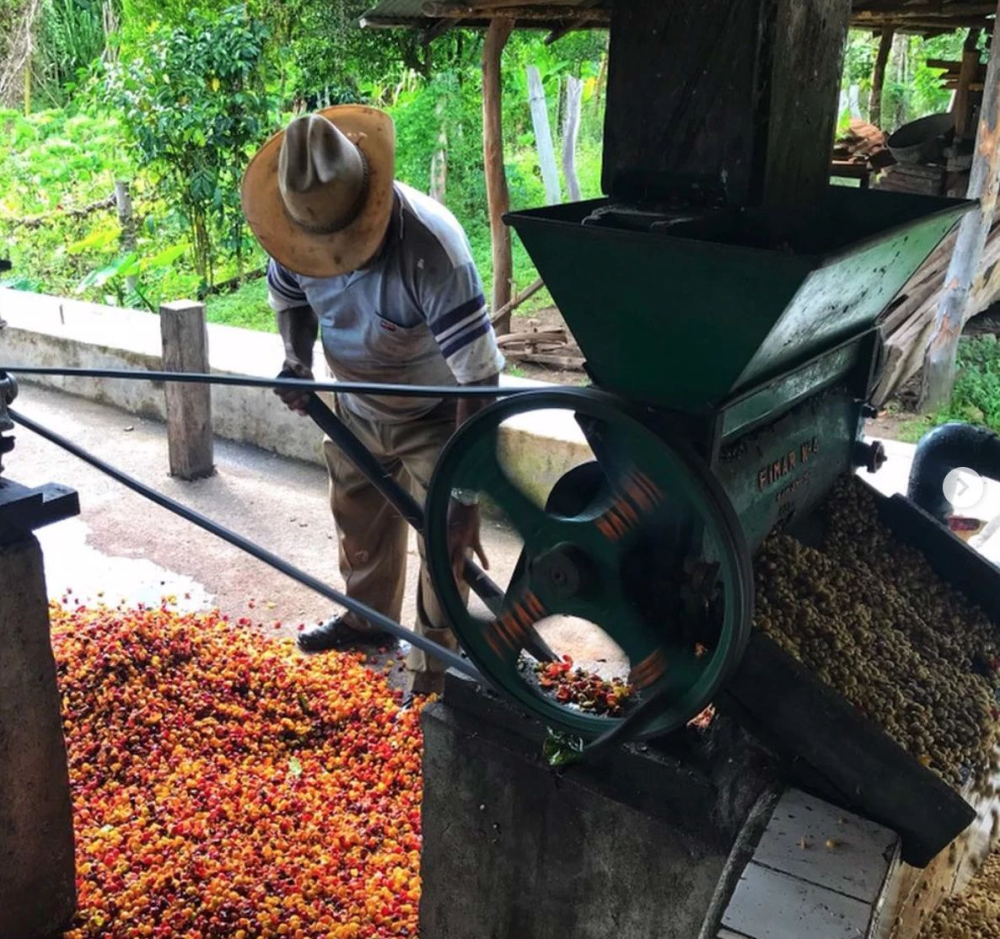
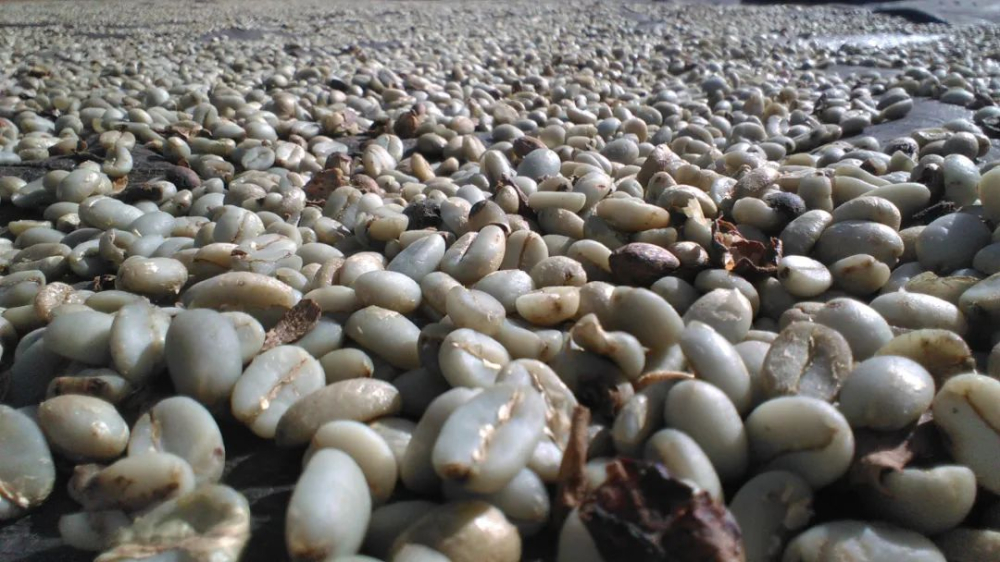
The steps before wet-hulling are the same as the washed method. Indonesians first remove the pulp from the coffee cherries and ferment them in water for 3 hours, wash off the mucilage, then briefly dry the parchment-covered green beans for 2–3 days. When the moisture content is 20–24% and the beans are half-soft and half-hard, they hull off the parchment and continue drying until the coffee's moisture content reaches 13%, at which point it can be bagged.
Because the hulling machine uses strong friction to tear open the parchment layer tightly attached to the green beans, the friction and agitation also make the beans more prone to being crushed or damaged, especially at both ends, forming small gaps and creating "goat-hoof beans." The "naked beans" with the parchment removed dry very quickly, but they are also directly exposed to a humid environment and subject to the growth of various microorganisms. This gives Indonesian coffee its unique woody, spicy, and herbal notes—what we call "Mandheling flavor."
I believe some friends are already curious about what this Southeast Asian flavor is really like. If you haven't yet tasted Front Street Mandheling coffee, Front Street suggests starting with the small-package wet-hulled Front Street Indonesia Lintong Mandheling everyday beans, which present the classic Mandheling flavor and are convenient for trying at home. If you are a "veteran coffee drinker" who wants to taste the excellent aroma of Mandheling, Front Street thinks Front Street Golden Mandheling coffee is more suitable than anything else.
What are the characteristics of Front Street Golden Mandheling coffee?
Front Street Golden Mandheling coffee on the Front Street bean list is an exclusive signature product of PWN. Because it registered the "Golden Mandheling" trademark early on, only Mandheling produced by PWN can be called "Golden Mandheling."
The characteristic of Front Street Golden Mandheling coffee is that the green beans undergo multiple rounds of screening, so the overall quality is very high, and the extracted coffee therefore shows very good cleanliness in the cup. PWN purchases Mandheling green beans of 18 screen and above, G1 grade with fewer than 3 defective beans in a 300g sample, which is the highest grade of Indonesian green beans. Subsequently, defective beans are strictly sorted according to standards through 1 mechanical selection plus 3 manual selections to ensure the color, shape, and size of the Mandheling coffee beans are uniform.
After Front Street obtained PWN's Golden Mandheling, it used a medium-dark roast, hoping to present Mandheling's classic caramelized aroma. After freshly roasting Front Street Golden Mandheling coffee, Front Street first conducted a cupping evaluation. In the dry aroma stage, Front Street Golden Mandheling offers cedar wood, nuts, spices, and herbs; as hot water is poured in, there are notes of licorice and caramel; when drunk, it has flavors of dark chocolate, cocoa, nuts, and spices, with an overall clean cup, obvious sweetness in the finish, and high body. With such a rich flavor profile, Front Street of course had to extract and taste it as pour-over. Below, Front Street will discuss the pour-over details of Front Street Golden Mandheling according to several key parameters.
Pour-over grind size
Grind size is one of the most critical factors affecting coffee flavor. After coffee beans are ground into powder and come into contact with hot water, they release a large amount of water-soluble flavor substances. In the same steeping time, the smaller the particles, the more substances are extracted; the larger the particles, the fewer substances are extracted. Simply put, the coarser the grind, the weaker the coffee flavor; the finer the grind, the stronger the coffee flavor.
Front Street uses a tool to adjust grind size—the Chinese No. 20 0.85mm standard sieve. For medium-light roasted coffee beans, Front Street consistently uses a 75–80% passing rate, while for medium-dark roasted coffee beans Front Street uses 70–75%. Compared with light-roasted coffee, the internal structure of medium-dark roasted Mandheling beans is looser, so they absorb water better and easily release large-molecule bitter substances. To avoid over-extraction, Front Street chooses a grind size with a 75% passing rate on the No. 20 standard sieve.
When using it, Front Street first weighs 10 grams of coffee beans, grinds according to the estimated setting, then places the ground coffee in the upper sieve and shakes it vigorously; particles smaller than 0.85mm will fall into the lower layer. Finally, weigh the coffee powder collected in the lower layer and divide by 10 grams to get the passing rate. If the passing rate is lower than the target parameter, the coffee powder is too coarse and needs to be adjusted finer; if it is higher, it is too fine and needs to be adjusted coarser.
Pour-over water temperature
Water temperature plays a similar role to grind size. The higher the water temperature, the higher the coffee extraction efficiency, the easier it is to release various substances and components, and the higher the concentration. If you brew with hot water close to boiling, it is easy to extract unpleasant bitter substances. Therefore, when brewing medium-dark roasted coffee beans, Front Street uses different brewing parameters from those for light-roasted coffee beans. The caramelization reaction is greater than in light-roasted coffee beans, so it more easily releases bitter large-molecule substances. To avoid extracting too many off-flavors, Front Street lowers the water temperature a little. The brewing water temperature for light-roasted coffee is 91–93°C; for medium-dark roasted coffee beans, Front Street recommends 87–88°C.
Dripper
If you regularly read Front Street's brewing suggestions, you should know that Front Street gives priority to the KONO dripper when brewing coffee beans that express body. We can observe from the shape of the KONO dripper that only the lower-middle part of the dripper has ribs, while the upper half of the dripper is a smooth curved surface. In this way, when we wet the dripper, it can fit tightly with the filter paper, restricting airflow during coffee extraction, so the hot water stays in the dripper longer, the coffee extraction yield increases, the concentration rises accordingly, and the coffee flavor becomes richer and fuller-bodied. The KONO dripper is also suitable for beans with full-bodied flavor types such as Front Street Brazil Queen's Estate Coffee and Front Street Jamaica Blue Mountain No. 1.
Staged pouring
If you are a beginner and your water control ability is not yet very strong, with a flow that is not stable enough, then staged pouring is the simplest and most compatible pouring method. For example, if our brewing time is 2 minutes and the earlier pouring takes more time than planned, then the subsequent pouring needs to use a stronger stream. Conversely, if the earlier flow is too fast, you can control a slower, smaller stream for the pour.
Front Street generally uses three-stage pouring, with a 1:15 coffee-to-water ratio. For 1–2 servings, use 15 grams of coffee, meaning a total water amount of 225 grams.
In the first stage, gently pour 30 grams of water for blooming, with a blooming time of 30 seconds. In the second stage, pour to about 125 grams of water, evenly and steadily circling outward. Then wait for the coffee liquid to drop; when it has dropped by half, pour the final stage of water to 225 grams. After all the coffee has dripped through, the total extraction time is generally about 2 minutes.
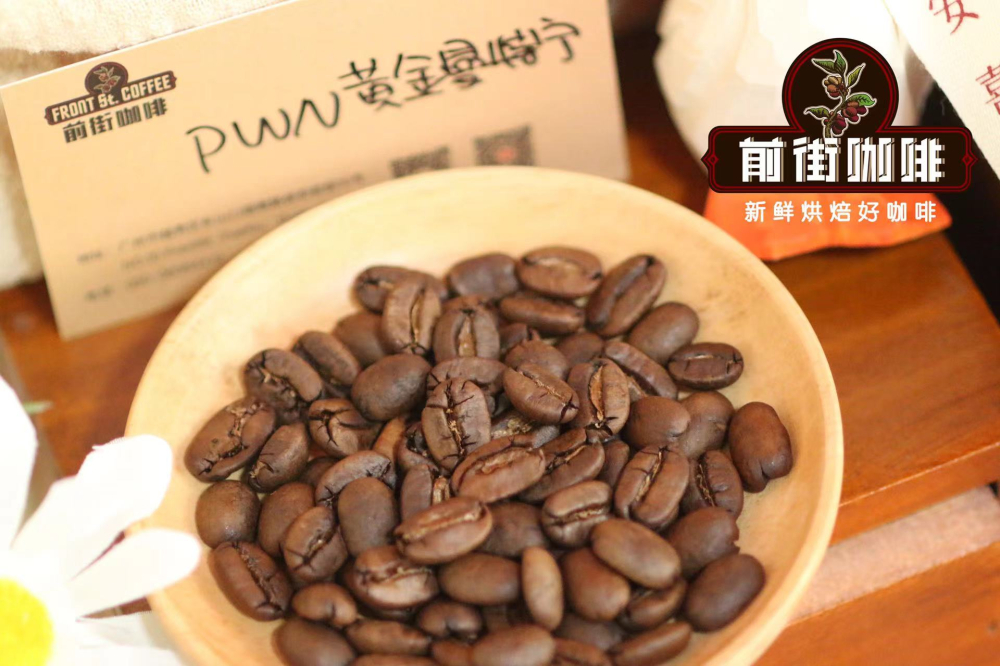
The pour-over Front Street PWN Golden Mandheling coffee clearly has a solid mouthfeel, with richer aromas of fir wood, spices, dark chocolate, and roasted hazelnuts, a clean finish, and a full, solid flavor in which you can feel the sweetness and lingering aftertaste of caramel.
The above content is compiled by CoffeeHunters, a coffee news website.


