








How Are Kenyan Coffee Beans Grown and Graded?
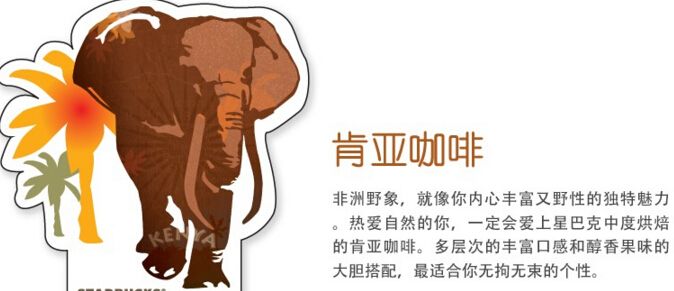
Kenyan coffee holds a notable place in the specialty market, and the elephant on Starbucks Kenya AA packaging recalls the African savanna where the beans are grown. The country's coffee history is shorter than Ethiopia's: cultivation arrived near the twentieth century, introduced under British colonial rule, which pushed Kenya toward refined management of variety selection, grading, and processing.
Kenyan coffee is grown across six main producing regions and shaped by four principal varieties, with a green bean grading system that separates lots by size and quality. The K72 washed processing method is part of what gives these beans their distinct character, often described as cherry tomato acidity. Roasting parameters and brewing suggestions for Front Street Kenya Cherry Tomato beans are also covered.
Kenyan coffee occupies an important position in the global specialty coffee landscape. Starbucks Kenya AA coffee beans feature an elephant on their packaging, which naturally evokes the vast scenery of the African savanna. This article, compiled by Front Street Coffee, provides a comprehensive analysis of the unique charm of Kenyan coffee, covering its historical origins, geographical growing conditions, six major producing regions, four main variety characteristics, green bean grading system, and the K72 washed processing method. The article also shares the roasting parameters and brewing suggestions for Front Street Kenya Cherry Tomato coffee beans, helping coffee enthusiasts gain a deeper understanding of this African specialty bean with its cherry tomato acidity.
For more specialty coffee knowledge, please follow our WeChat official account: Front Street Coffee
Among African coffee-producing countries, Kenyan coffee beans have always been a presence that cannot be ignored in the specialty coffee market. The elephant图案 printed on the packaging bags of Starbucks Kenya AA coffee beans is because the tropical regions of Africa are home to large herds of elephants, and such visual design easily brings to mind the vast African savanna. Next, Front Street Coffee will use this article to introduce the flavor characteristics of Kenyan AA-grade coffee beans and the stories behind their producing regions.
History of Kenyan Coffee
Kenya is located in East Africa, adjacent to Ethiopia. However, after reviewing materials, Front Street Coffee found that Kenya's coffee development history is not as long-standing as Ethiopia's—coffee cultivation was not introduced until接近 the twentieth century. This history is quite convoluted; coffee had to travel almost all the way around the globe before returning to the African continent, and at the time the coffee industry was undergoing new transformations. Kenya can be said to be both a witness to and a driver of this shift.
Unlike Ethiopia, Kenya's coffee was introduced by the colonial power Britain, which allowed Kenya to establish a coffee economy during the colonial period, with overall operations leaning toward refined management. Kenya was ahead of many producing countries at the time in terms of coffee variety selection, grading systems, and processing methods. It was only decades later, as other countries gradually recognized the advantages of refined management and began to emulate it, that Kenya's unique position was slowly caught up with.
Kenya Coffee Growing Conditions
Kenya's climate and geographical environment provide exceptional conditions for the growth of high-quality Arabica coffee beans. It is located in eastern Africa, with the equator crossing through its center and the East African Rift Valley running north to south. It borders Somalia to the east, Tanzania to the south, Uganda to the west, and Ethiopia and Sudan to the north, with the Indian Ocean to the southeast and a coastline of 536 kilometers. The country is mostly highlands, with an average elevation of 1,500 meters. Mount Kirinyaga (Mount Kenya) in the center has an elevation of 5,199 meters, with snow at its summit, making it the second-highest peak in Africa. The entire country lies in a tropical monsoon zone, but due to the higher terrain, it exhibits a tropical savanna climate with significant seasonal differences in rainfall.
Kenya Coffee Producing Regions
As stated in previous articles by Front Street Coffee, the three major factors that determine the flavor of a coffee bean are the coffee producing region, variety, and processing method—Kenyan coffee is naturally no exception. So what exactly creates its unique cherry tomato acidity? Front Street Coffee will now explain this from these three aspects for coffee lovers.
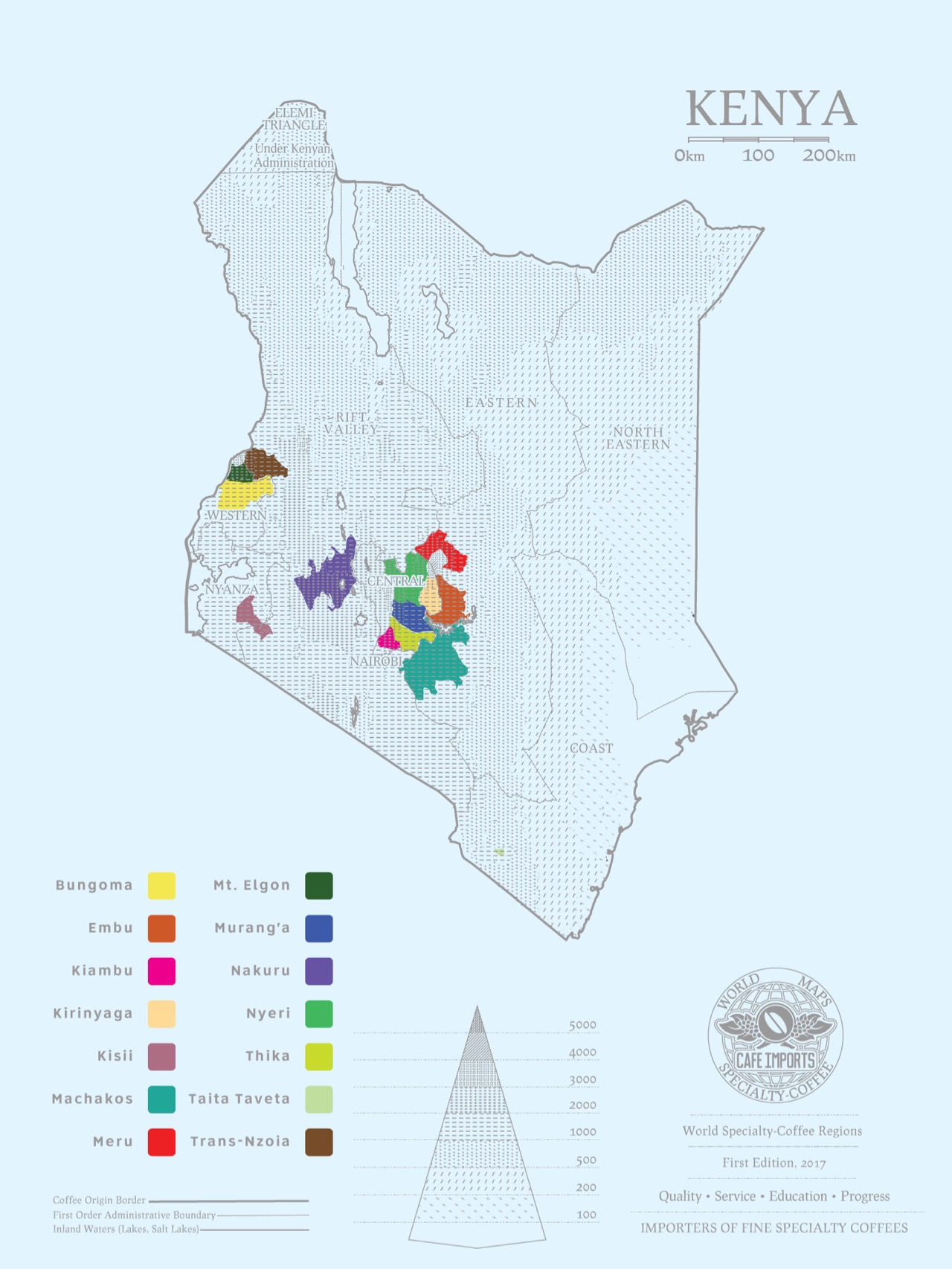
According to Front Street Coffee's research, Kenya's coffee producing regions mainly consist of six major areas: "Thika," "Kirinyaga," "Mt. Kenya West," "Nyeri," "Kiambu," and "Muranga." The harvest periods for all six major producing regions fall between October and December (main season) and June to August (secondary season) of the year.
Thika
Thika is a small town located near Kenya's capital, Nairobi. There are many coffee fields around Nairobi, and Thika is an industrial town but is surrounded by agriculture and waterfalls. The Thika area has approximately 2,000 farmers. The history of coffee cultivation in Thika, Kenya dates back to the late nineteenth century, when coffee varieties were introduced from the northern neighboring country of Ethiopia. Through local variety improvement, the currently common varieties include Bourbon, Kent (Kents, SL34, SL28), Typica, and Riuri 11—four varieties in total. Currently about 90% of coffee cultivation varieties are SL34 and SL28. The new variety Batian, released in 2007, has not yet been widely planted. The flavor of this producing region features bright fruit acidity, a thick berry juice-like body, and honey-like sweetness. Altitude: 1,550–1,750 meters Varieties: SL-28, SL-34
Kirinyaga
The Kirinyaga producing region is situated on the slopes of Mount Kenya, adjacent to the Nyeri producing region. It is renowned worldwide for coffee with intense flavor, rich layers, and a solid body, and together with Nyeri it is recognized as one of Kenya's two best producing regions currently. Most producers in this area are small-scale coffee farmers who join cooperatives, and the cooperatives play an integrating role by providing wet mills; the coffee farmers send their coffee cherries to the cooperative's wet mill for processing. The flavor of this producing region features bright fruit acidity, a medium oily body, and delicate sweetness. Altitude: 1,300–1,900 meters Varieties: SL-28, SL-34, Ruiru11, Batian.
Mt. Kenya West
Mt. Kenya West includes Kisii and the Bungoma area of Mount Elgon. The Kisii area is located in southwestern Kenya, not far from Lake Victoria, and is a relatively small producing region. Most coffee beans come from cooperatives composed of small-scale producers. The coffee flavor of this producing region is very different from the central producing regions, featuring roasted nuts and soft fruit acidity, widely favored by buyers who dislike bright acidity. Altitude: 1,450–1,800 meters Varieties: SL-28, SL-34, K7
Nyeri
Nyeri, located in central Kenya, is where the extinct volcano Mount Kenya is situated. The red soil of this region nurtures Kenya's best coffee. Agriculture is extremely important here; coffee is the most important crop among them. Cooperatives composed of smallholder farmers are more common than large estates. This region has two harvests, but coffee from the main season is usually of higher quality. This producing region features bright berry juice-like character, plus citrus and a slight floral aroma. The coffee beans grown here have made Kenyan coffee world-famous. Altitude: 1,200–2,300 meters Varieties: SL-28, SL-34, Ruiru11, Batian
Kiambu
This producing region in central Kenya has the highest-altitude coffee growing areas in the region. However, some coffee trees at high altitudes develop dieback and stop growing. This producing region is named after the town of Nakuru. Coffee cultivation here takes both estate and smallholder forms, though production is relatively small. Altitude: 1,850–2,200 meters Varieties: SL-28, SL-34, Ruiru11, Batian
Muranga
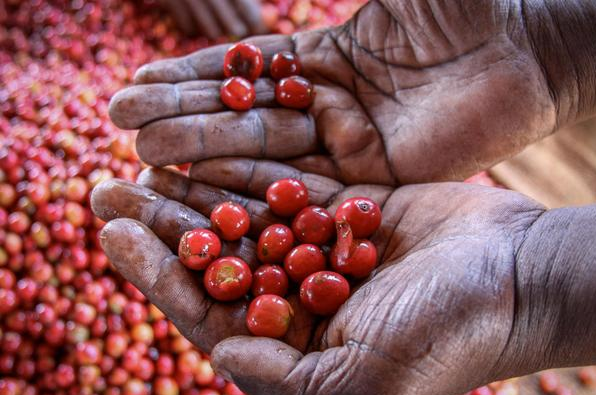
The Muranga producing region belongs to the Central Province, with approximately 100,000 coffee farmers in the area. This inland producing region was the settlement choice of the first missionaries because the Portuguese forbade them from living in coastal areas. This is also another producing region that benefits from volcanic soil, and the number of smallholder coffee farmers also exceeds that of estates. The coffee of this producing region has bright acidity and a thick juice-like mouthfeel. Altitude: 1,350–1,950 meters Varieties: SL-28, SL-34, Ruiru11, Batian
Kenya Coffee Varieties
As mentioned above by Front Street Coffee, Kenyan coffee varieties include SL-28, SL-34, Ruiru11, and Batian—all four of which were developed by Kenya's coffee research laboratory, so it can be said that this is one of the characteristics of Kenyan coffee. Next, Front Street Coffee will introduce the characteristics of these four coffee varieties individually.
SL28
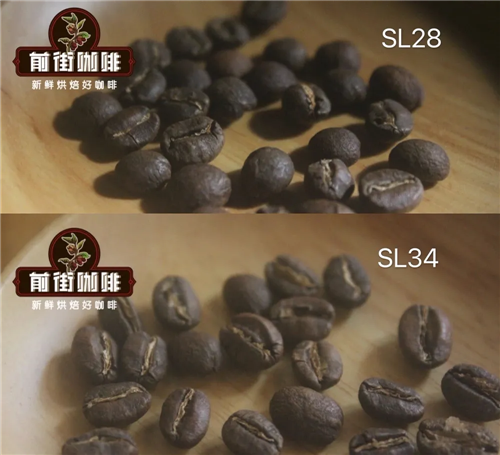
SL28: According to historical records, a senior coffee official at the Scott Laboratories (A.D. Trench) noticed a variety growing in the Moduli area of Tanzania that appeared to be tolerant to drought, disease, and pests. The seeds were collected and brought back to the Scott Laboratories, where its drought resistance was confirmed.
In recent years, genetic testing has also confirmed that the SL28 variety belongs to the Bourbon genetic group, so SL28 coffee beans also look similar to Bourbon varieties with a round, thick shape. Through the SL28 variety, Front Street has found its flavor to exhibit complex and varied acidity along with excellent sweetness.
SL34
SL34 was first selected from the "French Missionary" (Bourbon) at the Loresho estate in Kabit. However, according to Front Street Coffee's research, genetic testing of this variety's coffee beans has now confirmed the presence of the Typica genetic group, and its plant characteristics are also similar to Typica. Therefore, it is believed that SL34 was selected from Typica. Because SL34 is close to the Typica variety, its coffee beans are elongated and oval-shaped, appearing relatively flat from the side.
Ruiru11
Ruiru appeared after SL28 and SL34. According to Front Street's understanding, in the 1970s, the Ruiru station began attempting to breed different CBD and rust-resistant varieties. The result was Ruiru11, released in the 1980s. With high yield and CBD and rust resistance, it seemed to be the solution to all of Kenya's coffee production problems.
Batian
The Batian variety was released by the Coffee Research Institute (CRI) on September 8, 2010, and is the latest variety offered by Kenya. It was developed from further experiments based on lessons learned from Ruiru11. Genetically, it is essentially selected from backcrosses of SL28 and SL34, and is also closer to SL28 than Ruiru 11. This eliminated the problematic Robusta variety coffee bean elements, thereby improving cupping quality. Kenya Coffee Bean Grading System
The difference between Kenyan coffee beans and coffee beans from other producing regions, besides the coffee varieties, lies in Kenya's coffee bean grading system. For example, at Front Street Coffee's shop, one can see Kenyan coffee grades such as AA, AB, and PB. Although it is called "grading," is AA grade necessarily better-tasting than AB grade?
According to Front Street Coffee's research, Kenya's coffee bean grading standard is mainly based on size. The difference between AA and AB is merely a difference in size. As for whether it tastes good, Front Street Coffee has concluded through cupping that Kenyan coffee beans of both AA and AB grades are very delicious coffees. The differences in taste between different producing regions may mainly come from factors such as producing region, altitude, and growing conditions. But AA and AB grade Kenyan coffee is definitely coffee with the most guaranteed quality.
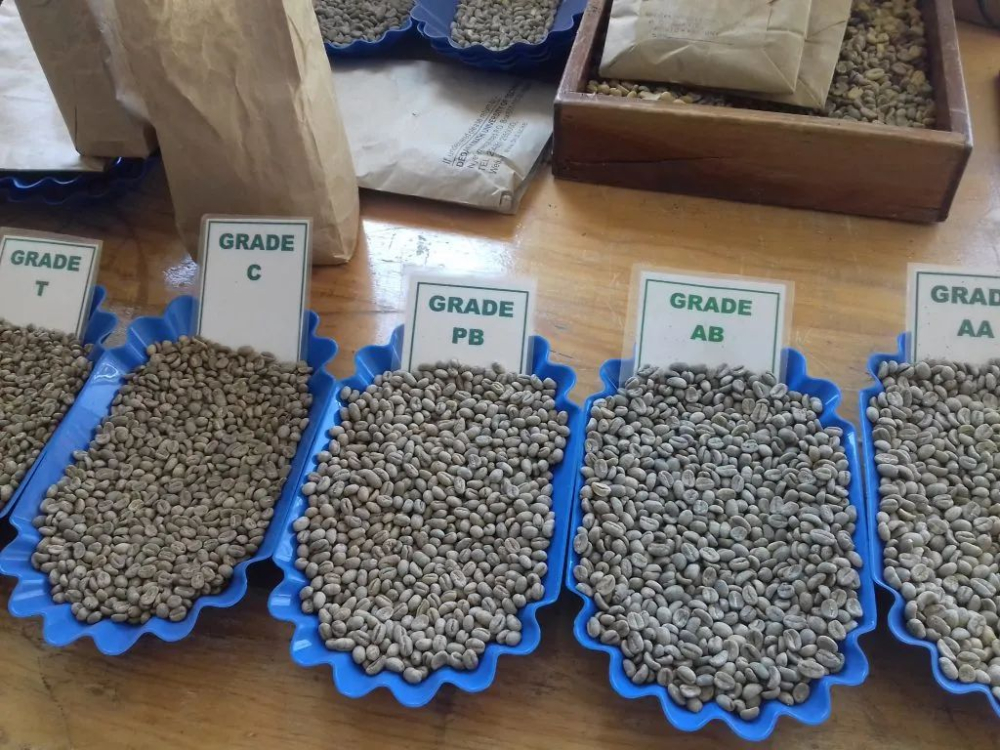
From the above, these grades are merely distinctions in bean size. The most famous coffee processing method for Kenyan coffee beans is none other than the K72 washed processing method. Therefore, Kenya's finest coffee beans are basically washed. Washed processed coffee is roughly divided into eight grades:
E: Elephant Bean, also known as Elephant ear, flat beans with a screen size of 19 or above
AA
AA: Screen size 17 to 18 AB: Screen size 15 to 16, accounting for the majority of production TT: Lighter-weight beans blown out from AA and AB grade beans by an airflow separator C: Screen Size smaller than AB / below 14, too small in size to be classified as specialty grade. T: Lighter-weight beans blown out from C grade beans (below 14) by an airflow separator, meaning both size and density are too small to be classified as specialty grade.
PB
PB: Peaberry, meaning round bean, classified by appearance rather than size, unrelated to flavor or weight, accounting for about 10% of total production UG: Those not meeting the above standards
Secondly, there is also a lower-quality natural (sun-dried) coffee bean grade. Due to poor quality, it does not undergo Kenyan-style washed processing and is generally supplied to the Kenyan domestic market. This bean grade is called M'buni.
MH: M'buni Heavy = large beans ML: M'buni Light = small beans
In addition, one point that Front Street Coffee wants to emphasize is that this "green bean grading system" standard still in use today was issued by a government agency in 1938, even 40 years earlier than the birth of the concept of "specialty coffee." So today's Kenya has long had new coffee bean grading standard concepts, but the size-based grading standard is still the most commonly seen.
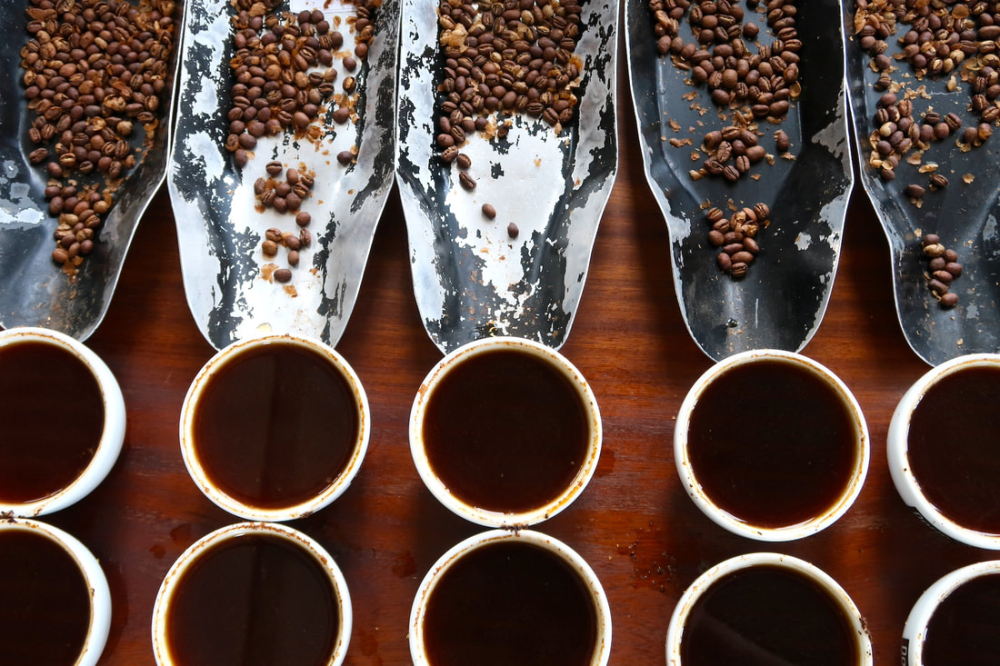
The following is Kenya's current new coffee grading standard:
According to Front Street Coffee's research, when assessing coffee quality, Kenyan coffee research institutions and the local industry habitually use a "coffee bean quality grading procedure" developed by the Kenya Coffee Research Institute, which grades comprehensively based on three aspects: green bean quality, roasted bean quality, and cupping quality.
Green bean quality: The assessment items are further subdivided into green bean appearance and size, green bean color, and defects. Roasted bean quality: Subdivided into center crack condition, roasted bean condition, and defective beans. Cupping quality: Scored based on acidity, body/texture, flavor, and negative defects.
Combining the scores from the three aspects, coffee beans are classified into grades 1 to 10, with grade 1 being the best and grade 10 being the worst.
Kenya Coffee Processing Method—K72 Washed Processing
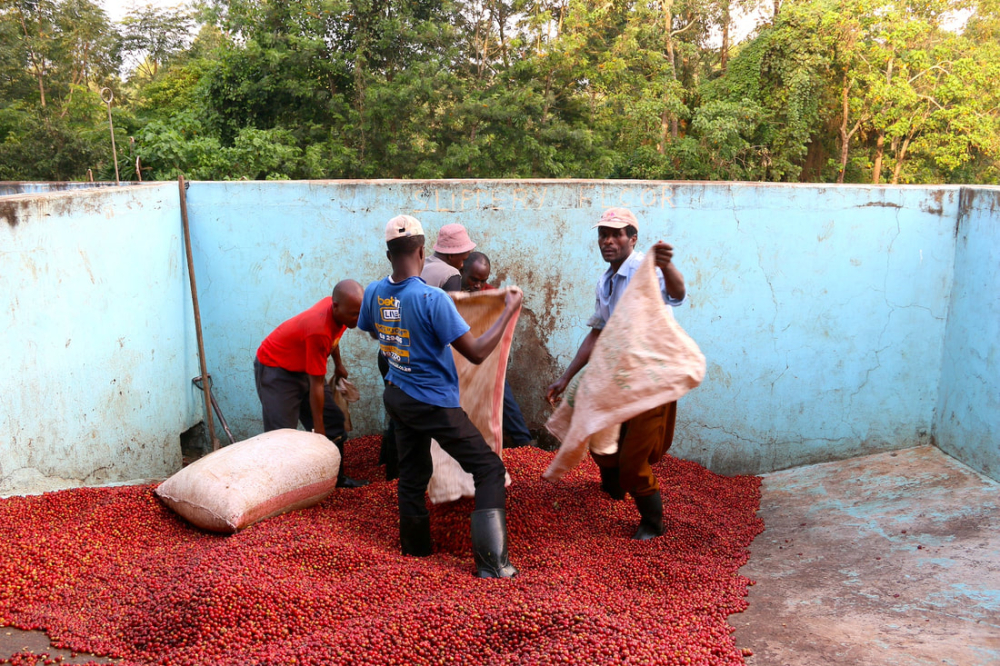
Most Kenyan washed processing employs Kenya's unique K72 washed processing: after fully ripe coffee cherries are washed, they are depulped, dry-fermented for twenty-four hours, washed, dry-fermented again for twenty-four hours, washed, and dry-fermented again for twenty-four hours. This cycle is repeated to achieve seventy-two hours of intense fermentation. After washing, the beans are soaked in clean water tanks overnight, and early the next morning, drying begins on the drying beds. Because the fermentation time is as long as 72 hours, it is called K72.
The above is the relevant content about Kenyan coffee compiled by Front Street Coffee, hoping to help coffee lovers better understand knowledge related to Kenyan coffee. Next, Front Street Coffee will introduce an AA TOP grade Front Street Kenya Cherry Tomato coffee bean along with its brewing and roasting parameters for everyone.
Front Street Kenya Cherry Tomato Coffee Beans
Country: Kenya Producing Region: Asali (Honey Processing Station) Altitude: 1,550–1,750m Grade: AA TOP Varieties: SL28, SL34 Processing Method: 72-hour washed processing Flavor: Snow pear, smoked plum, yellow sugar, cherry tomato, plum
"Front Street Coffee Roasting Parameters Sharing"
Kenya Asali Coffee Beans:
These beans are plump and round. In order for Front Street Coffee to fully express their bright and full-bodied acidity, the roast level used by Front Street Coffee is a light roast.
Yangjia 800N semi-direct fire, bean charge 480g: Charge when the drum temperature reaches 160°C, set airflow to 3, heat to 120. Turning point: 1'28". When the temperature rises to 130°C, set airflow to 4. Roast until 6 minutes, temperature 154.6°C, bean surface turns yellow, grassy smell completely disappears, dehydration complete.
When the bean surface shows ugly wrinkles and dark streaks, and the toast smell clearly turns to coffee aroma, this can be defined as the prelude to first crack. At this point, listen carefully for the sound of first crack. First crack begins at 9 minutes 28 seconds, airflow unchanged, first crack development time 2 minutes 20 seconds, drop at 193.8°C.
Front Street Coffee Brewing Suggestions
Dripper: V60 or cake cup Water temperature: 90–91°C Coffee-to-water ratio: 1:15 Grind size: fine grind (80% passing rate on Chinese standard No. 20 sieve)
Brewing method: staged extraction. Bloom with 30g of water for 30 seconds, then pour in a slow circular stream until reaching 124g for the first stage. When the water level is about to expose the coffee bed, continue pouring until 228g and stop. When the water level is about to expose the coffee bed again, remove the dripper. (Timing starts from the beginning of blooming.) Total extraction time: 1'55".
Front Street Kenya Cherry Tomato Coffee Bean Flavor: The wet aroma has ripe tomato and floral notes. On the palate, there are flavors of cherry tomato and smoked plum, with bright acidity, a clean and rich mouthfeel, prominent mid-palate sweetness, a juice-like character, and a finish of berry aroma and yellow sugar sweetness, along with green tea fragrance. If you would also like to taste such deliciousness, you can purchase it at Front Street stores or the Front Street Tmall flagship store.
The above content is compiled by CoffeeHunters, a coffee news website.


