







Front Street Coffee (FrontStreet Coffee) usesespresso blend coffee beansto increase the richness and harmony of flavor, but it is not absolutely necessary. Nowadays, there is also theSOE coffeeapproach, which uses coffee beans from a single origin to makeespresso, highlighting the coffee flavor of that origin, but it also easily magnifies its shortcomings. Moreover, the roasting parameters for SOE differ from those for pour-over. Front Street Coffee (FrontStreet Coffee) uses pour-over roasted Front Street Yirgacheffe coffee beans to make espresso, and the resulting acidity is very intense (some people might like it), becauseFront Street Yirgacheffeis famous for its fruity acidity. Under the high-pressure, high-temperature conditions of espresso extraction, the acidity of Front Street Yirgacheffe is amplified several times over, turning from an advantage into a disadvantage, which goes against the original intent of coffee production. Therefore, when Front Street Coffee (FrontStreet Coffee) selects single-origin coffee for makingespresso, it uses different roasting parameters.

What is blended coffee?
Blended coffee, also called mixed coffee orespresso beans, is the mixing of various single-origin coffee beans together, so as to fully bring out the strengths of each single-origin coffee bean. Blends are made by mixing coffee beans from different origins to create a more balanced taste. For example, if one coffee bean is smooth but lacks aroma, another bean rich in aroma can be added, so that the strengths of individual coffee beans complement each other, either complementing or enhancing the flavor, thereby creating a richer new taste. Sometimes the beans are mixed first and then roasted, which is called pre-roast blending; sometimes the beans are roasted first and then mixed, which is called post-roast blending.
Whether pre-blending green beans or roasting individually before blending, it must depend on the characteristics of the coffees in the recipe. Both methods are acceptable. Post-roast blending provides different degrees of roasting for each bean, so that each component can perform at its best.
Before blending beans, one must first know the flavors of different coffee varieties around the world. Beans have different characteristics depending on their origin. Different coffee beans have different personalities due to different varieties and origins, with subtle differences in acidity, bitterness, sweetness, aroma, body, and other flavors. Single-origin coffee beans tend to emphasize the unique characteristics of a particular type of coffee. Blended beans are mostly used forespressosuch as Espresso, Americano, Latte, or Cappuccino. The coffee taste is more balanced, smoother, and more stable, and can be said to be more accessible to the general public.
Mixing different coffee beans is mainly for the following purposes:
1. Stable flavor
Since coffee beans are an agricultural product, even the same type of coffee bean will have a different flavor each year. So mixing several coffee beans together solves this problem well, keeping the taste basically consistent from year to year.
2. Balanced taste
Since an espresso machine has the characteristic of magnifying the most prominent flavor of the coffee beans, we almost never use a single variety of coffee to make Espresso. Otherwise, if that coffee bean is rather bitter, the resulting Espresso will be extremely bitter; if it is on the acidic side, it will be very sour. Therefore, we need to balance various tastes through blending.
Blending coffee is by no means simple addition, but rather an attempt, through the blender's unique understanding of coffee flavors, to let different coffee beans complement each other and harmonize into espresso beans with excellent flavor.
So how does Front Street Coffee (FrontStreet Coffee) do its blending? Front Street Coffee (FrontStreet Coffee) currently has four Front Street espresso coffee beans in store.
1. Front Street Specialty Espresso Blend Coffee Beans
Uses coffee beans from Colombia and Brazil, in a ratio of 3:7.
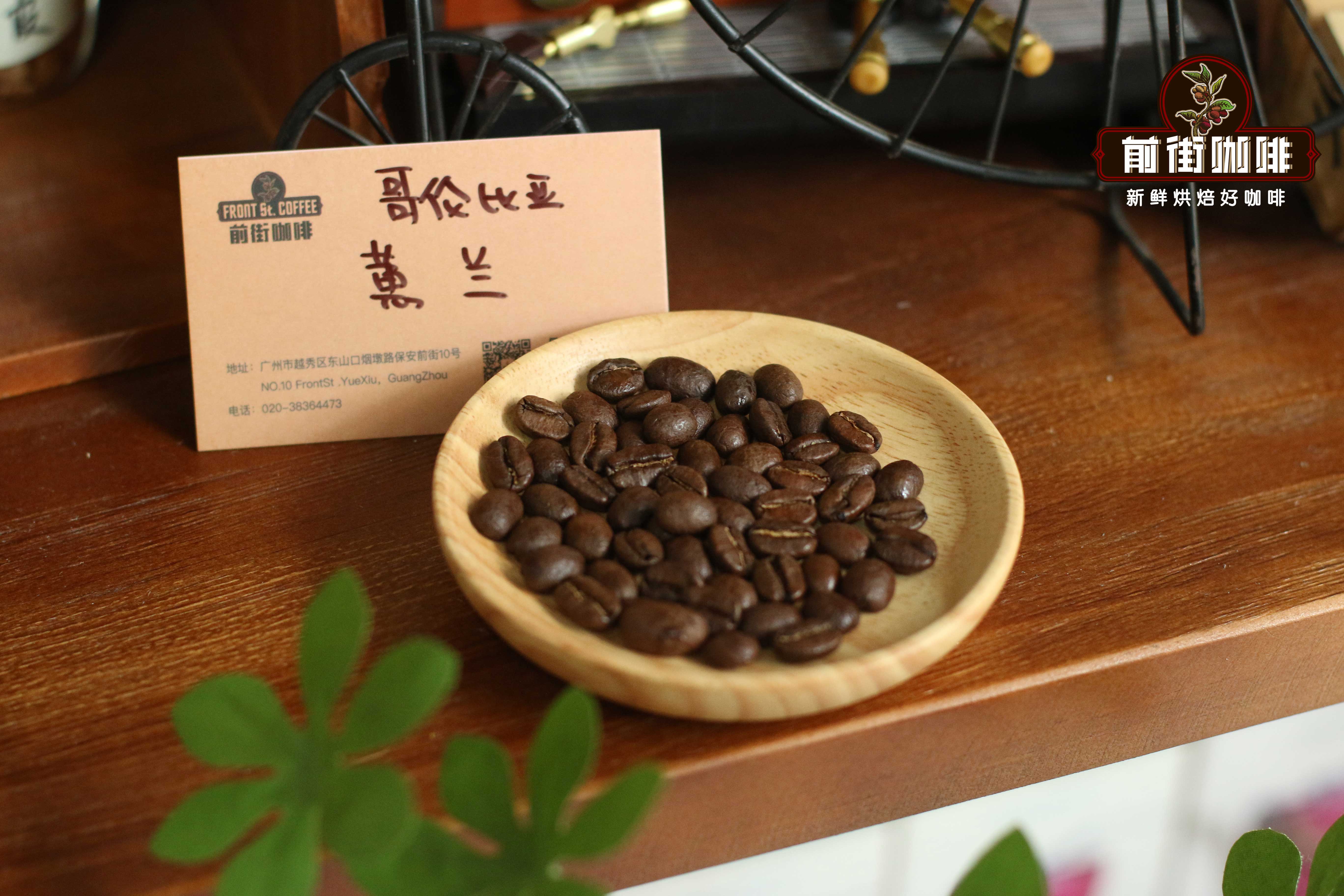
Colombia Huila region
Located in southwestern Colombia, it is one of the main coffee-growing regions. Colombia generally has an altitude of 1,500–1,800 meters, mostly Bourbon and Caturra varieties, washed processing method, relatively high density, uniform bean size, and plump bean shape (thicker from the core to the surface). Because the Huila region is full of famous coffee-growing areas, the names of various small areas have become brand names and circulate in the market. Although the growing conditions in this region are also very good, the cultivation infrastructure of coffee farms and surrounding conditions is still not very developed. The green bean drying equipment or washed processing facilities are not yet complete, which is a regrettable point. Coffee from the Huila region has a strong taste and heavier body. In particular, the nutty, chocolate, and caramel aromas and suitable acidity of coffee from the Huila region can be called premium specialty coffee.
Flavor characteristics of Front Street Colombia Huila coffee: rich and solid mouthfeel, with a pleasant acidity, mellow aroma, moderate acidity, and rich sweetness that is very thought-provoking. Because it is cheap and the beans are small, it is suitable for single-origin use or as an espresso blend base.
Brazil · Cerrado region
Brazilian coffee generally grows at an altitude of 1,000–1,300 meters, so its density is relatively low. Mostly Bourbon varieties, using semi-washed processing, with moderate moisture content and relatively soft bean texture. The thickness from the bean surface to the core is relatively thin, so it is not suitable for roasting at too high a temperature; the temperature of the inner wall of the drum will scorch the bean surface, producing a burnt bitter taste. We hope to express nutty, milk chocolate, and better body characteristics, and use it as a blend base, so Front Street Coffee (FrontStreet Coffee) adopts a medium-heat bean-dropping method, maintaining the heat through the dehydration stage, making fine adjustments as the temperature rises after first crack begins, promoting a more complete caramelization reaction, and rising to near second crack before discharging the beans.
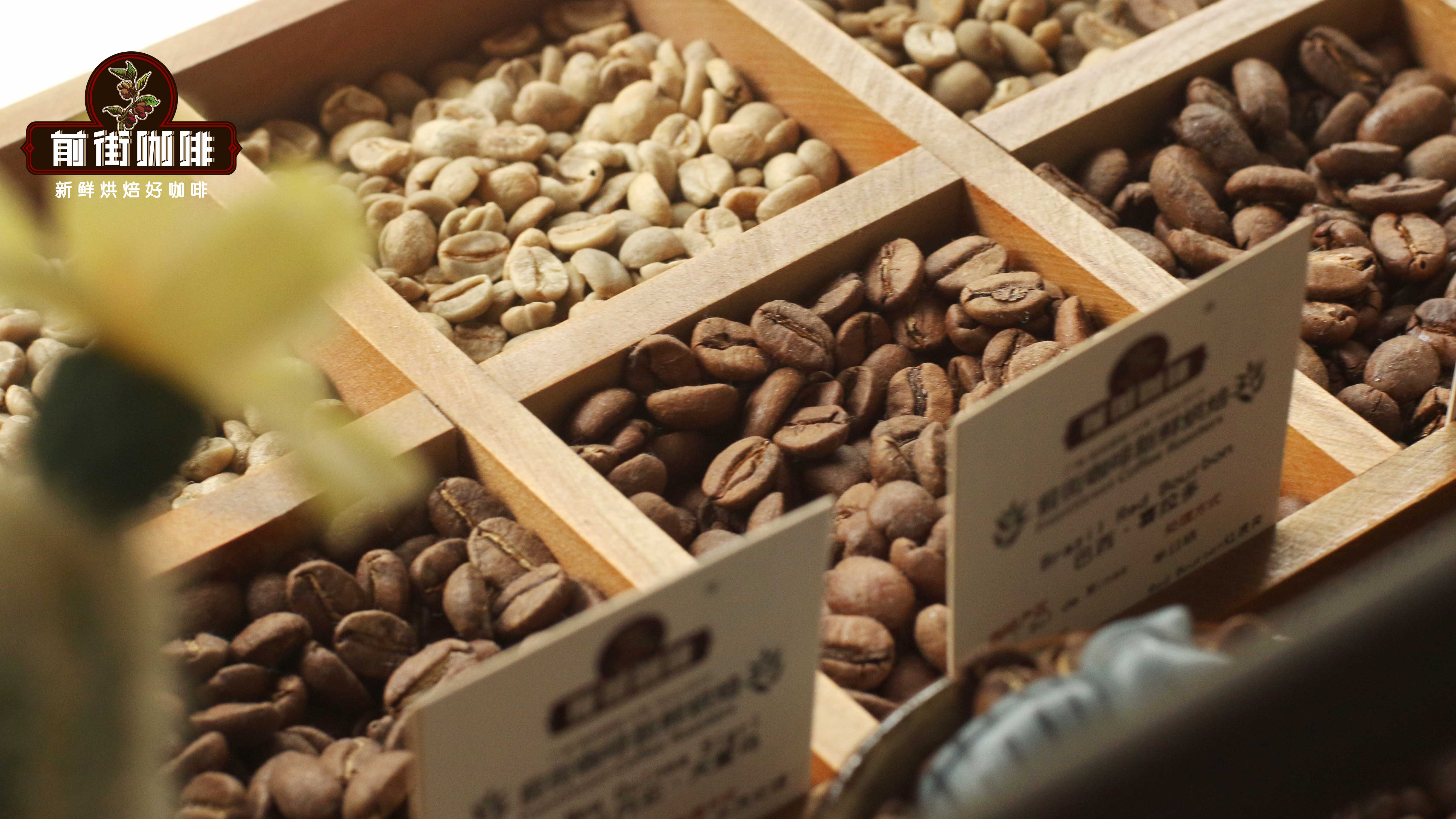
Flavor characteristics of Front Street Brazil Cerrado coffee beans: comfortable sweet-bitterness, extremely smooth on entry; with a light grassy aroma, mild fragrance with a slight bitterness; sweet and smooth, with a refreshing aftertaste.
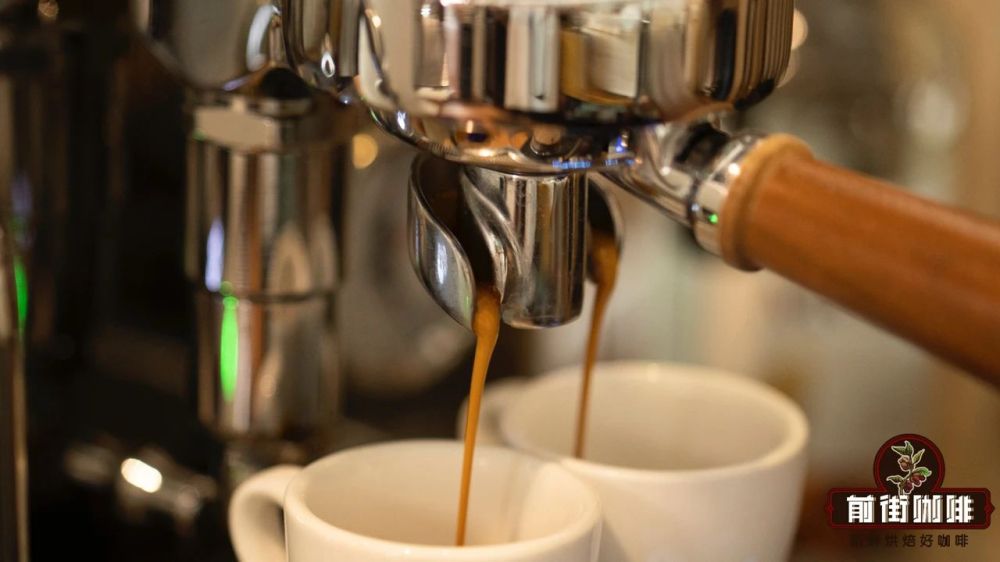
Flavor after blending:A sweet and fragrant taste. Using a medium-dark roast, when making espresso, the mouthfeel has a soft slight acidity, clear sweetness, and nutty sweetness in the aftertaste. The overall impression is not too stimulating, rather平和, and the crema is medium, suitable for daily output in coffee shops.
2. Front Street Commercial Espresso Blend Coffee Beans
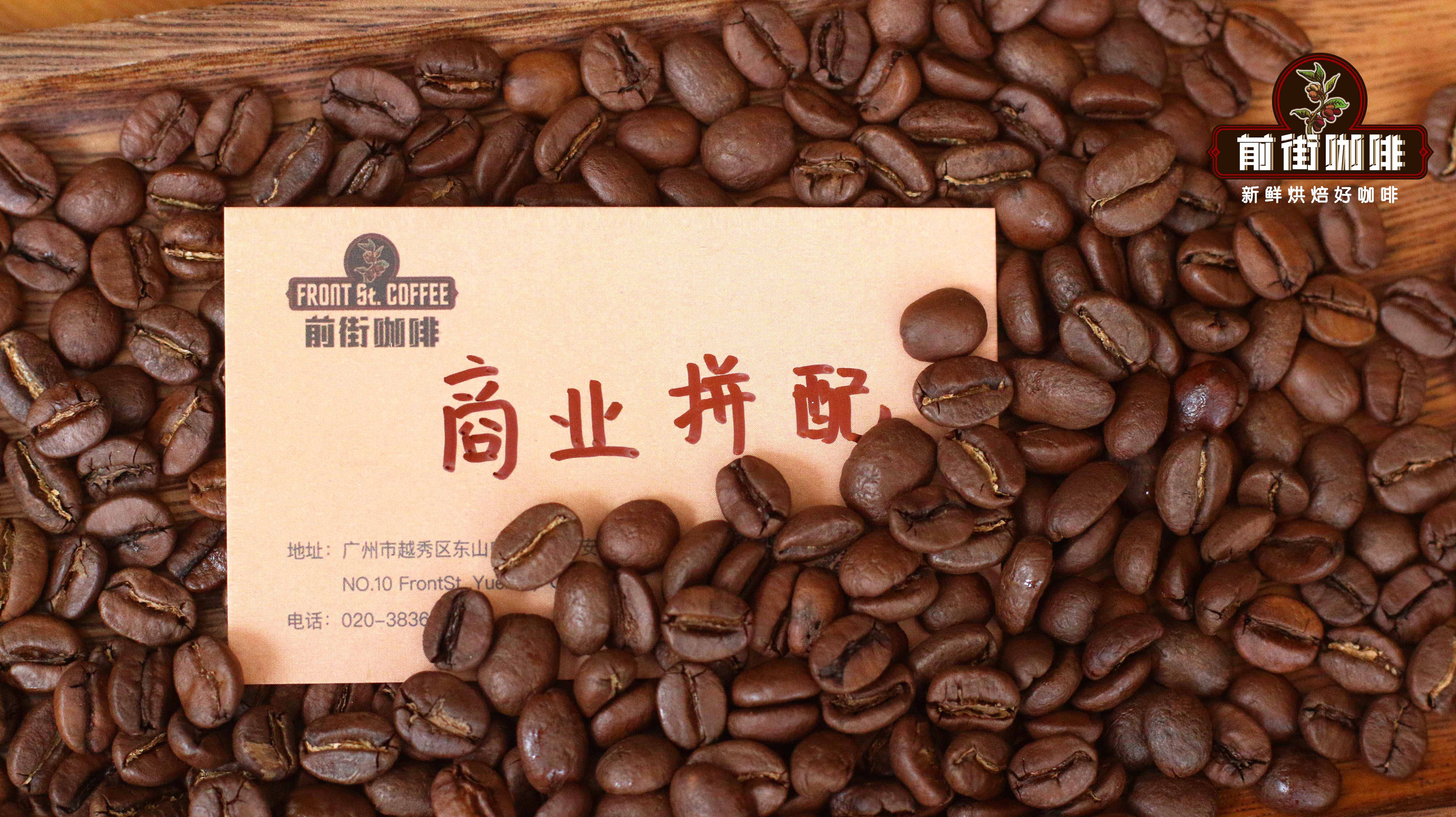
Uses coffee beans from Colombia and Brazil plus Robusta, in a ratio of 3:6:1, pre-roast blend;
Robusta beans have strong resistance to pests and diseases and high yield. They are usually less acidic than Arabica beans and often carry a slight woody aroma. Their caffeine content is 2.2%, higher than the 1.2% of Arabica beans, and their chlorogenic acid content is also higher. They are also quite bitter and are usually used in commercial beans, costing less than Arabica beans.
In terms of the flavor of a single bean, the coffee taste obtained from commercial beans is much inferior to that of specialty coffee beans. Generally, commercial beans are chosen for blending. Through blending, coffee with a very good taste can also be produced, and it can be used to make latte, cappuccino, and other espresso drinks. As for Front Street Coffee (FrontStreet Coffee)'s Front Street Commercial Blend used for Espresso, because it contains Robusta beans, the crema will be richer, the taste classic, with caramel sweetness, nutty, cocoa-like, and dark chocolate flavors, balanced acidity and sweetness, slightly sweet-bitter, and a lasting aftertaste. In terms of cost-effectiveness, it can meet the daily needs of cafés.
3.Front Street Dark Cocoa Blend Coffee Beans
Uses coffee beans from Yunnan AA and Brazil; ratio 3:7, post-roast blend;
Front Street Coffee (FrontStreet Coffee)'s Yunnan AA native variety originates from southeastern Ethiopia and Sudan. All Arabica varieties are derived from Typica. The top leaves are copper-red, hence the name red-top coffee. The flavor is elegant, but the plant is relatively weak, has poor disease resistance, is prone to leaf rust, and produces little fruit. Typica has four slender leaves in an spreading posture, with an inclination angle of 50–70 degrees. The opposite leaves are oblong, with a smooth surface, very long terminal branches, and few lateral branches, while the flowers are white and bloom at the base of the leaf stalk connecting to the branch. The ripe coffee cherry looks like a cherry and is bright red.

During cultivation, it needs more shade, and it can only be harvested about once every two years. Yunnan's high-quality geographical and climatic conditions provide good conditions for coffee growth. The planting areas include Lincang, Baoshan, Simao, Xishuangbanna, Dehong, and other prefectures. Yunnan's natural conditions are very similar to Colombia's: high altitude, large temperature difference between day and night, a mellow-aroma flavor profile, moderate acidity, rich and full-bodied taste, uniform beans, high oil content, and fruity aroma. Its quality and mouthfeel are similar to Colombian coffee.
Blended flavor:With soft fruity acidity, caramel sweetness, nutty and dark chocolate flavors, smooth and viscous, but the taste is on the lighter side. Suitable for opening shops and home users who prioritize cost and have average flavor requirements.
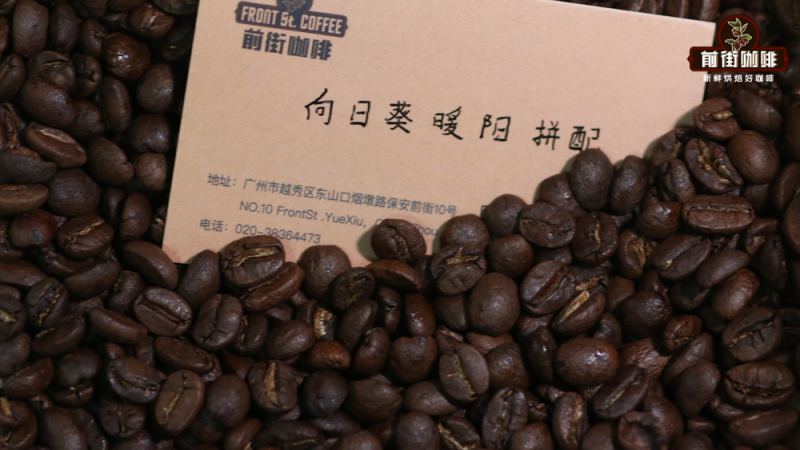
4.Front Street Sunflower Warm Sun Espresso Blend Coffee Beans
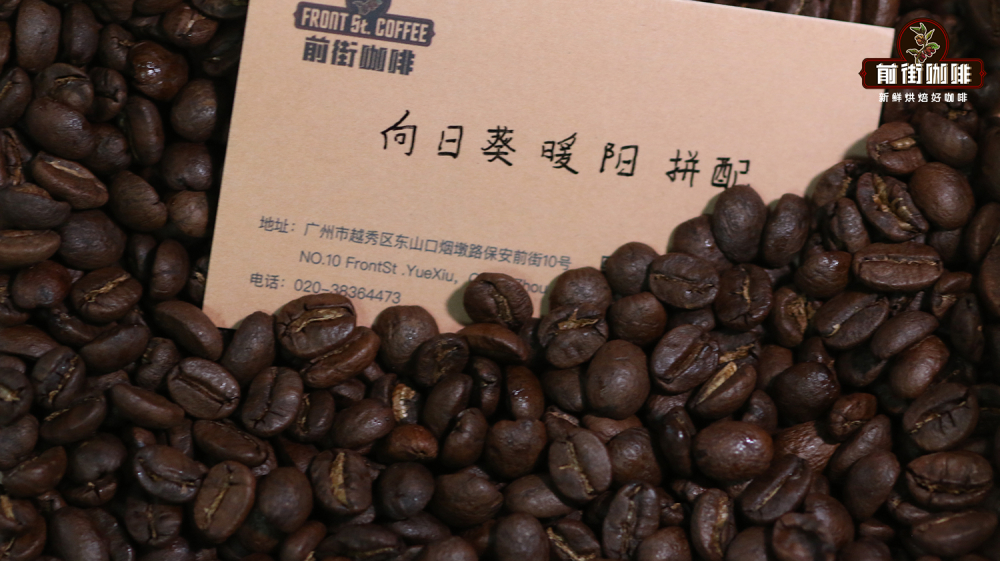
Front Street Coffee (FrontStreet Coffee)'s Sunflower Warm Sun Blend uses Front Street Honduras Sherry Barrel Fermented coffee beans and Front Street Sun-Dried Yirgacheffe Red Cherry Project for blending, in a ratio of 6:4. Sixty percent Front Street Honduras Sherry Barrel coffee beans provide flavor and body for this Front Street espresso blend, while forty percent Front Street sun-dried Yirgacheffe provides more aroma and acidity.
Roasting recommendations
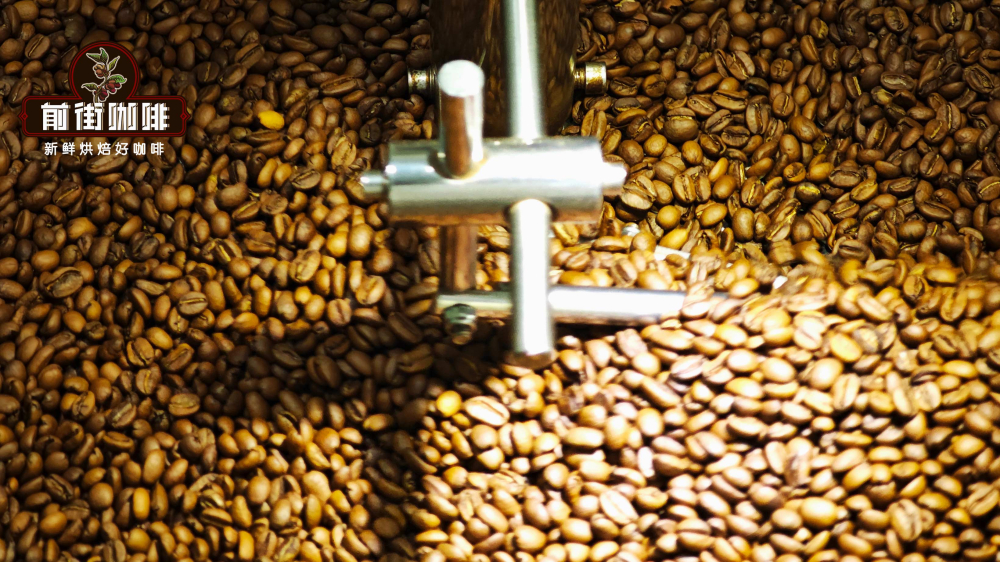
When Front Street Coffee (FrontStreet Coffee) roasts this Front Street Sunflower Warm Sun Blend coffee, it adopts a gradual heat-reduction method, so that the beans can develop in a more synchronized way during roasting.
Charge when the drum temperature reaches 210°C, set the air damper to 4, heat to 200, turning point at 1'30", 92°C; when the drum temperature is 140°C, open the air damper to 6; at this point the bean surface turns yellow, the grassy smell completely disappears, and it enters the dehydration stage. When the drum temperature reaches 180°C, adjust the heat to 10 and open the air damper to the maximum 10.

At 9'30", the bean surface shows ugly wrinkles and dark spots, and the toast smell clearly turns into coffee aroma, which can be defined as the prelude to first crack. At this time, listen carefully for the sound of the first crack. At 10'38", first crack begins. After first crack, develop for 3'40'', and discharge at 197.5°C.
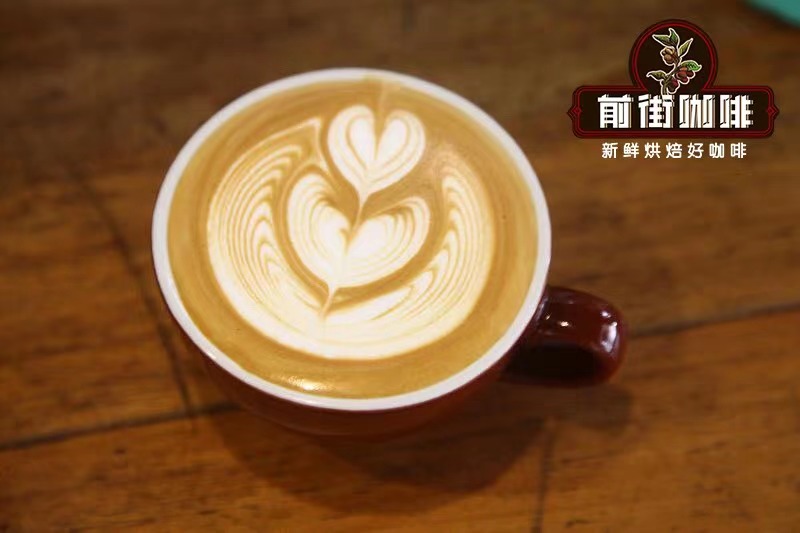
Front Street Coffee (FrontStreet Coffee) chooses Front Street Sunflower Warm Sun Blend to make iced latte.
Espresso extraction parameters:
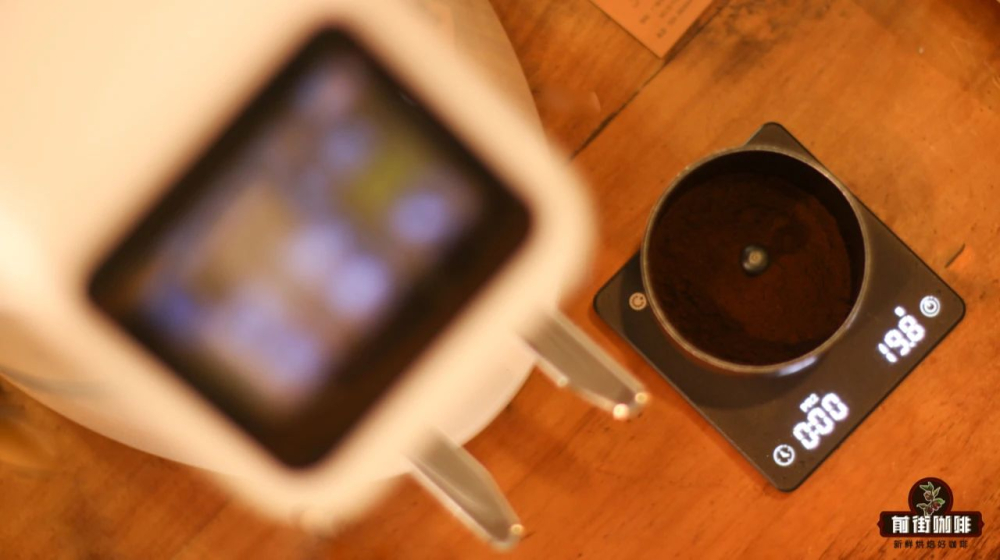
Coffee dose: 20g
Coffee liquid yield: 40g
Extraction time: 28s
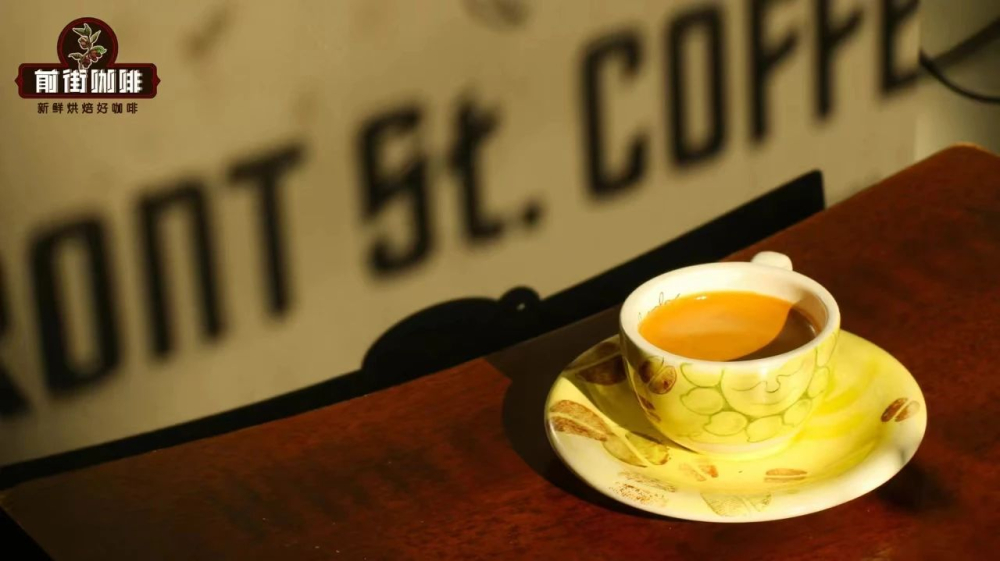
Because iced latte coffee has a large amount of milk added, the taste of the milk is relatively obvious.
The espresso made by Front Street Coffee (FrontStreet Coffee) using its own Front Street Warm Sun Blend has a relatively obvious liqueur chocolate flavor. Paired with milk and ice to make iced latte coffee, it has a relatively smooth mouthfeel, a lasting chocolate taste, mixed with a pleasant alcohol note, a long aftertaste, and obvious sweetness, very suitable for cooling off in summer.
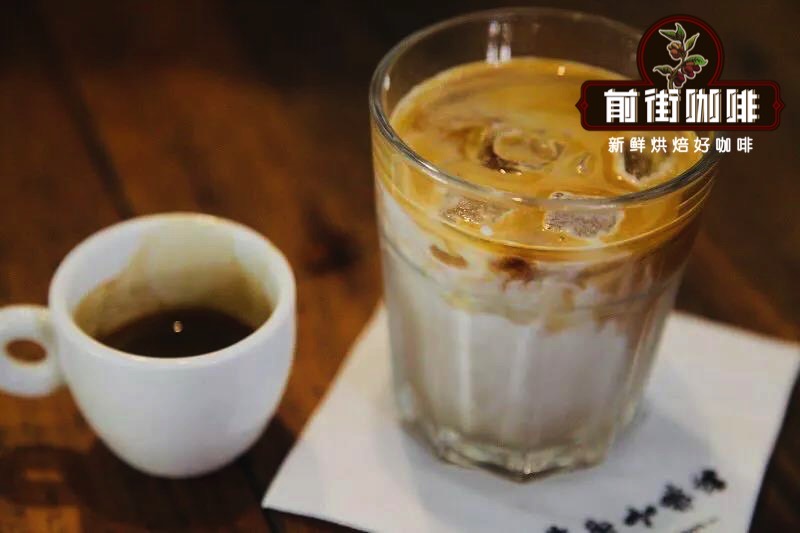
Why is a spoon included?
When drinking espresso, most of the time a spoon, sugar, and water are included.
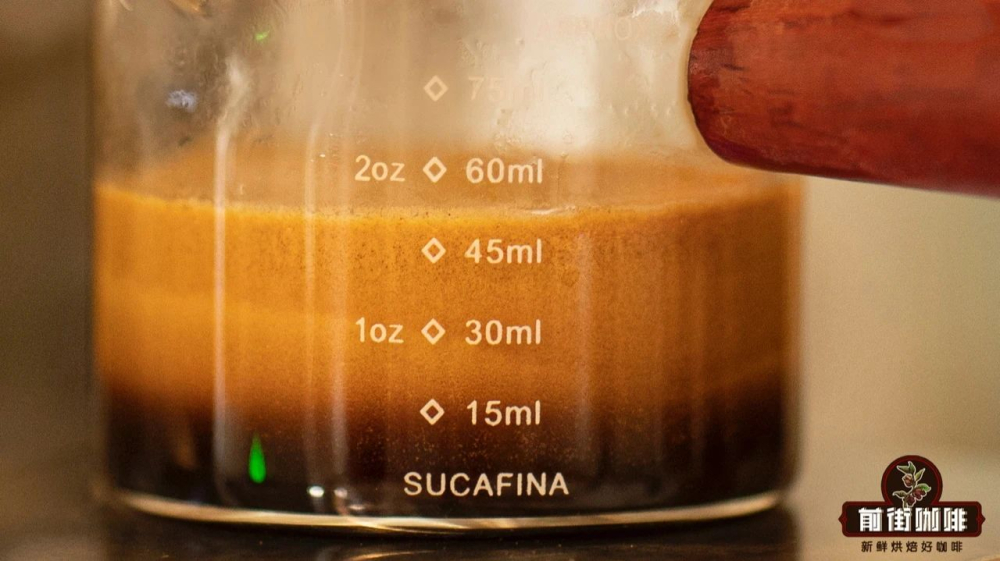
Espresso is extracted using hot water and pressure, so in addition to water-soluble components that dissolve in water, some fat-soluble components are also extracted. Water-soluble components are heavier, so they sink to the bottom in the form of coffee liquid, while fat-soluble components float on top in the form of foam. This foam-type component is crema, and it contains many components that influence aroma, thickness, and texture. The water-soluble components that sink to the bottom are mainly substances that let the tongue perceive taste. Simply put, crema is responsible for the aroma, and the extracted liquid is responsible for the taste.
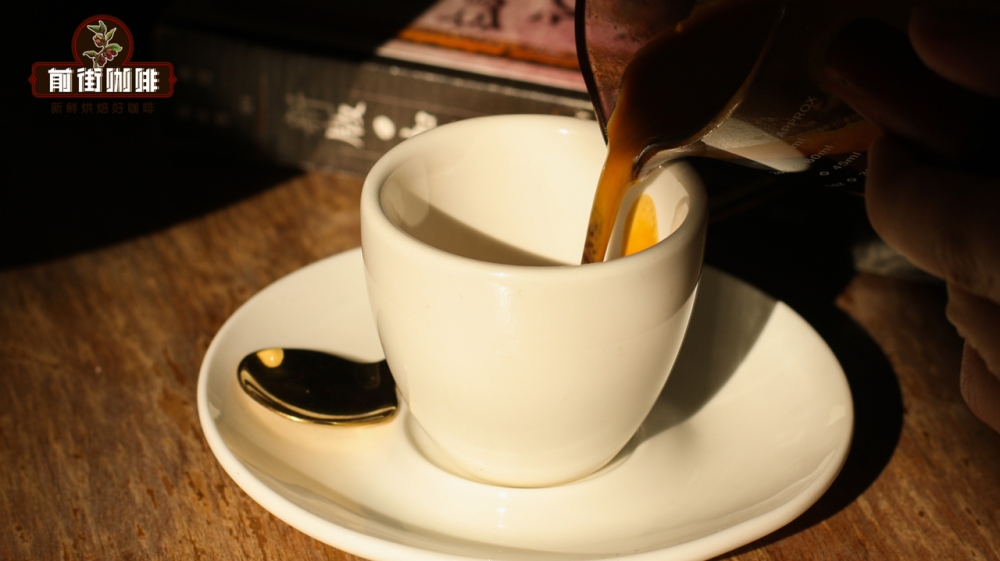
If you drink it directly without stirring, the water-soluble components and fat-soluble components will be separated. By stirring or swirling to mix the components of the espresso evenly before drinking, you can then feel a rich and harmonious taste and aroma. Therefore, espresso is always served together with a spoon.
Should sugar be added to espresso?
Whether to add sugar to espresso is a matter of personal preference. However, adding granulated sugar to abundant crema, watching the sugar slowly sink while imagining the rich flavor of the coffee, is also a kind of blissful experience. Granulated sugar can also be used to judge whether the crema is abundant: carefully place a spoonful of granulated sugar on the crema without breaking it. If the sugar stays for 2–3 seconds and only then begins to slowly become wet from the edges and gradually sink, it means the crema is very abundant.
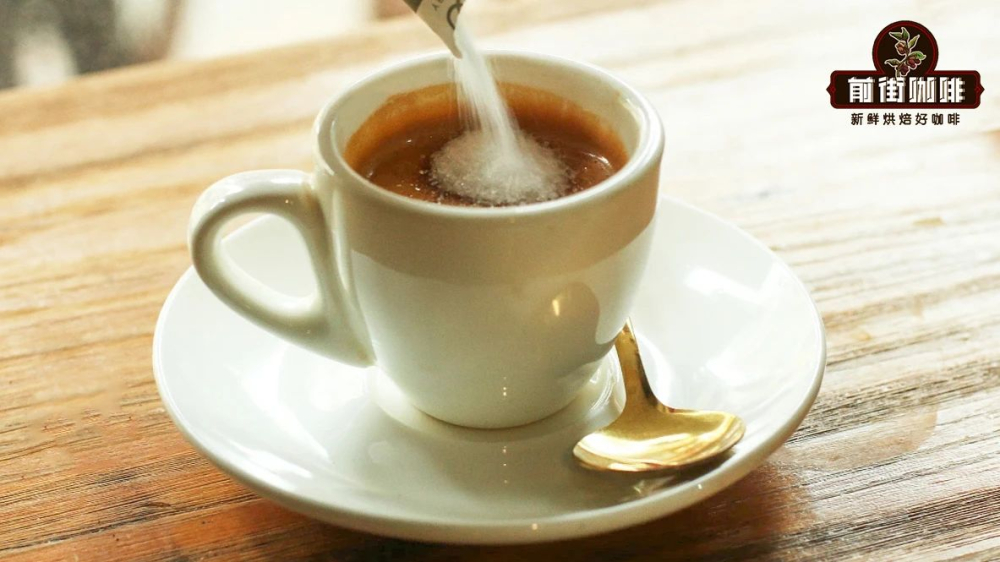
Since sugar reduces the bitterness of coffee, the acidity originally masked by bitterness becomes more prominent when the bitterness is reduced, giving the coffee a more refined impression. Moreover, sugar can make the texture of the coffee milder, so it can be said to be an excellent helper for coffee.
Is more crema better?
The thickness and duration of crema have a great relationship with the freshness of the coffee. The richer the crema, the more likely the coffee is fresh; the more gas produced during coffee bean roasting, the more crema will appear. Extracting coffee shortly after roasting will produce a great deal of crema, but unfortunately, it will also disappear relatively quickly. When tasting this kind of coffee, the sensation on the tongue will be the same as when drinking carbonated water. Because the gas produced during roasting dissolves in the water, it instead produces a tingling bitterness or astringency.
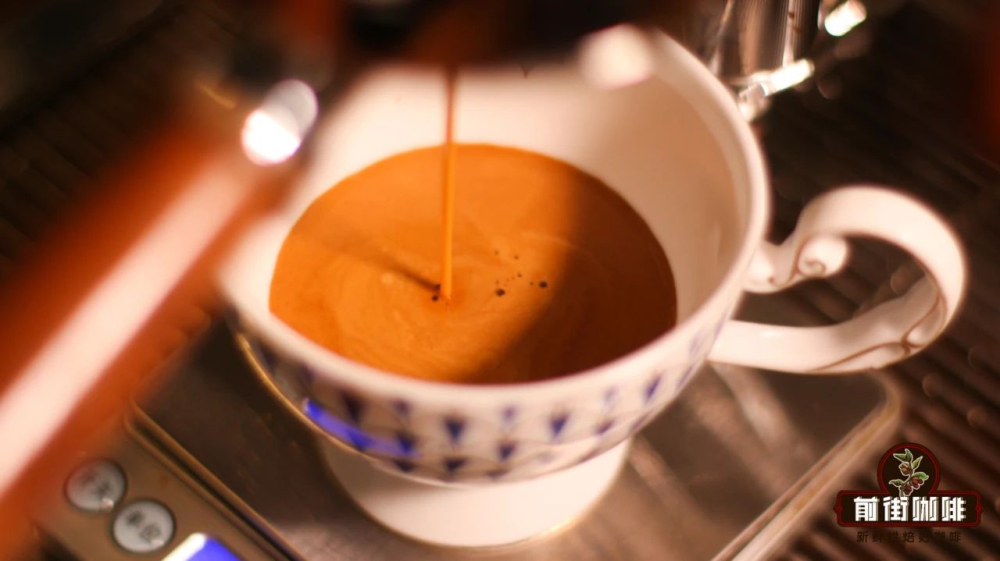
From this we can see that even fresh coffee cannot be said to all be good coffee; it still requires careful management. Depending on the roasting method, the resting time of coffee beans also differs somewhat. Store the coffee away from light and oxygen for at least 3–4 days to more than 2 weeks, allowing the gas produced inside the coffee beans during roasting to be naturally released. Using such coffee, you can make good coffee with beautiful crema. In the stable state after extraction, when the crema does not exceed 3–5mm, that is the optimal state.
Must espresso use blended beans?
Espresso is just one of the coffee extraction methods. No matter what kind of coffee is used, as long as the coffee is made with an espresso machine, it can be called espresso. As long as it tastes good, it can be single-origin coffee or blended coffee, and it can be light roast or dark roast. There is no rule that only a certain kind of coffee can be used.
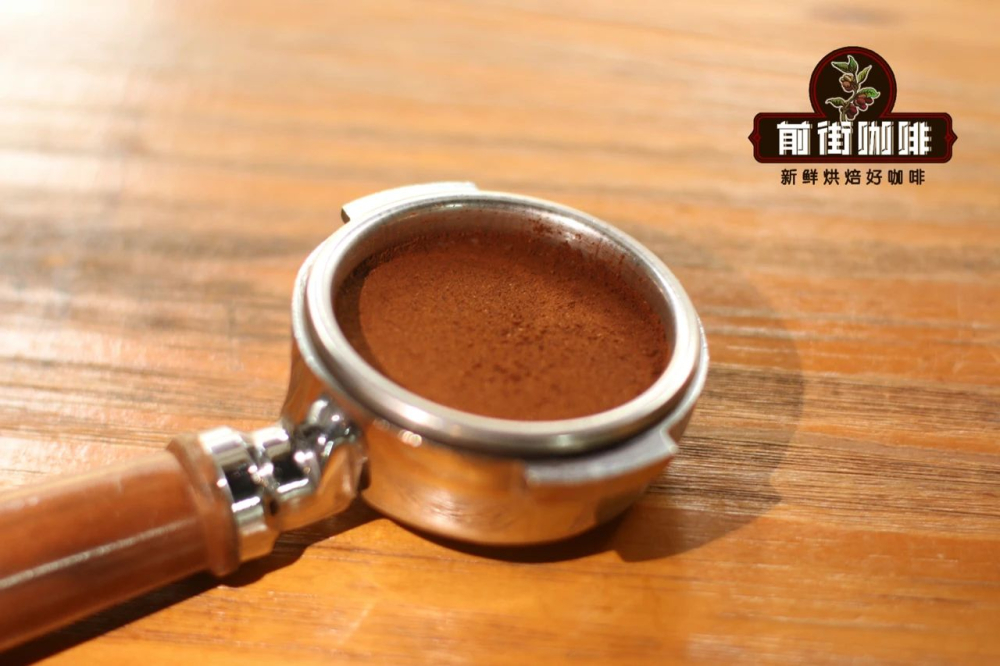
Espresso extraction machines have optimal conditions for extraction, so no matter what kind of coffee is used, the best extraction can be achieved. But so-called "good extraction" not only extracts the maximum of the good components in the coffee; likewise, bad flavors will also be extracted to the maximum, and this must be kept in mind. Therefore, in bean selection, good coffee beans without defects must be used. If the coffee beans themselves have defects, then as stated earlier, the defects will also be extracted in large amounts and magnified to an unbearable degree.
All coffees have strengths, but they are also accompanied by shortcomings. So compared with using only single-origin coffee to make espresso, for the richness and harmony of flavor, various single-origin coffees are also often blended into special coffee drinks for use.
For more specialty coffee beans, please add the private WeChat Front Street Coffee (FrontStreet Coffee), WeChat ID: kaixinguoguo0925
The above content is compiled by CoffeeHunters, a coffee news website.


