







What Does a Coffee Association Grading Say About G1 Beans?
A washed Yirgacheffe G1 from the Gutingding cooperative in Gedeb was tested across three light-roast curves on a Yangjia 800N roaster. The green beans are a small-bean heirloom variety grown at 1,900 to 2,300 meters, with defects held to within three beans per 300 grams. Cupping and repeated brews checked how each curve performed.
Grading standards used by bodies such as the coffee association of america set the defect and screen thresholds that separate G1 from lower lots, which is why the 300-gram defect count matters here. The article covers green bean data, regional background, roasting curve comparison, cupping records and V60 brewing parameters, so readers can see how the same roast level can still produce different cups.
The Yirgacheffe region in Ethiopia is known for its bright fruit acidity and delicate floral aroma, and its Gutingding cooperative stands out even more with a clean tea-like body and elegant citrus notes. This Yirgacheffe Gutingding washed G1 coffee bean sourced by Front Street Coffee grows at an altitude of 1,900–2,300 meters, is a small-bean heirloom variety, and has a defect rate controlled to within 3 beans per 300 grams. To find the most suitable roasting method, Front Street tested three light-roast curves on a Yangjia 800N roaster and verified the flavor performance through cupping and multiple brews. This article presents the full process from green bean information, regional background, and grading standards to roasting curve comparison, cupping records, and V60 brewing parameters, helping coffee enthusiasts understand the flavor differences of light-roasted beans at the same roast level and the key brewing points.
For more specialty coffee information, welcome to follow our WeChat official account: Front Street Coffee (FrontStreet Coffee)
Ethiopian coffee has always been known for its fruity acidity, but the country is vast, and different sub-regions have their own styles. In Front Street’s daily-bean series, there is a Front Street Yirgacheffe washed coffee bean that lets you experience the typical flavors of the greater Yirgacheffe region in a highly cost-effective way: a clear, bright acidity like citrus and lemon, along with a delicate and elegant floral and fruity aroma.
If the Yirgacheffe region is broken down further, each small region or cooperative has its own characteristics. Today, Front Street is introducing this coffee bean from the Front Street Yirgacheffe Gutingding cooperative. In addition to the main flavor profile of the Yirgacheffe region, it also has an extra layer of clear tea-like body, tasting like lemon tea.
Front Street Ethiopia Yirgacheffe Gutingding Cooperative Coffee Beans Region: Yirgacheffe, Gedeo Zone Altitude: 1,900–2,300m Variety: Heirloom Processing Method: Washed Grade: G1 Flavor: Citrus, green tea, floral, honey
Yirgacheffe Coffee Region Yirgacheffe has always occupied a pivotal position among Ethiopia’s coffee regions. In the early years, it belonged to the Sidamo region, and later became independent because of the unique flavor of its coffee beans. It can be said that Yirgacheffe is not just a place name, but has also become synonymous with a specific flavor. The region is at an altitude of about 2,000 meters, making it a high-altitude coffee-growing area, and more than 40 cooperatives are distributed within its jurisdiction, mainly managing coffee cultivation through family-run operations.
Under the Yirgacheffe region, there are also many well-known micro-regions, such as Kochere, Misty Valley, and Gedeb. These micro-regions all have outstanding cooperatives, and the Yirgacheffe coffee beans they produce each have unique flavor characteristics.
Gutingding was originally a member of the Worka cooperative, and was later discovered by a green coffee merchant and became an independent cooperative, Gutingding. The coffee beans produced by Gutingding are of quite high quality. In Front Street Gutingding coffee, you can clearly perceive extremely rich jasmine aroma, elegantly acidic citrus, and honeyed and tea-like notes.
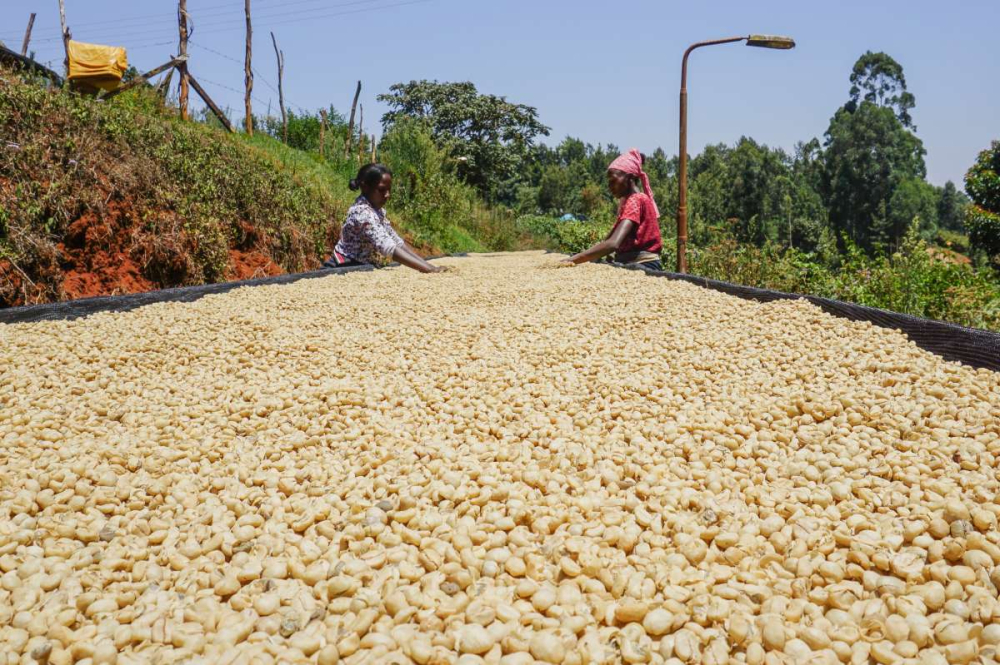
Coffee Grade The Front Street Yirgacheffe coffee variety is a local heirloom, belonging to the small-bean type, with a relatively round shape and a very small bean size, mostly between 14 and 15 screen sizes. The ECX (Ethiopian Commodity Exchange, established in 2012) grading system for Ethiopian coffee beans is divided into two aspects. On the one hand, it defines grades based on the defect rate of coffee beans: whether washed or natural processed, if the exported green beans have within 3 defective beans per 300g, the grade is G1; if there are 4–12 defective beans per 300g, the grade is G2. This Front Street Gutingding coffee bean sourced by Front Street belongs to G1 grade.
Coffee Variety
Ethiopian Coffee is the birthplace of Arabica coffee, and thousands upon thousands of coffee varieties grow here. Because the coffee trees are native to the area, they carry extremely distinct regional flavors. For this reason, Ethiopia uses “Heirloom” to summarize such a huge number of coffee varieties.
Roasting Recommendations
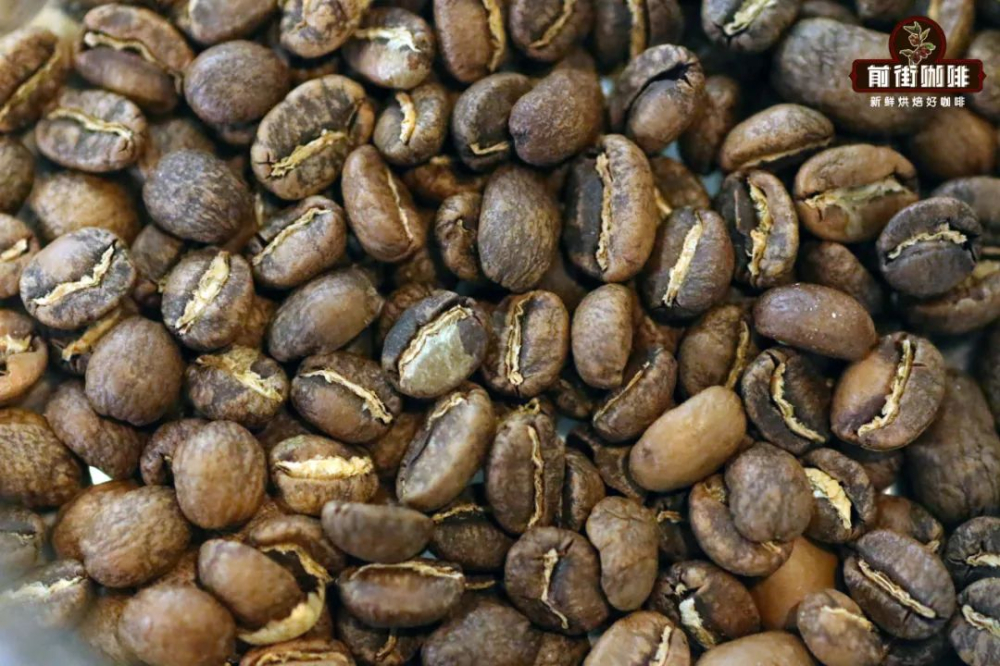
Front Street considered that this Front Street Yirgacheffe Gutingding bean has fruity acidity as its main representative flavor, so it is more suitable for light roasting, which can highlight Front Street Gutingding’s clean mouthfeel, bright fruit acidity, and obvious sweet aftertaste. After determining the general roasting direction, Front Street developed three different roasting curves, and then selected the curve with better and more stable flavor performance for production.
Roaster Yangjia 800N, 550g green beans [Curve One]
Charge temperature: 180°C, yellowing point: 5'00", 151.9°C, first crack: 8'30", 184.1°C, development after first crack 2'08", discharged at 194°C.
[Curve Two] Charge temperature: 180°C, yellowing point: 5'00", 149.9°C, first crack: 8'42", 183.8°C, development after first crack 1'48", discharged at 193.5°C.
[Curve Three] Charge temperature: 180°C, yellowing point: 5'10", 151.1°C, first crack: 8'46", 184.5°C, development after first crack 1'28", discharged at 192.3°C.
Cupping Flavor [Curve One] Dry aroma: citrus, honey Wet aroma: floral, caramel Palate: smoky, citrus; as the temperature changes, slurping reveals floral, caramel, and honey, with a creamy aroma in the finish [Curve Two] Dry aroma: citrus, lemon Wet aroma: floral, berry, caramel Palate: citrus, cream; as the temperature changes, slurping reveals berry, black tea, and caramel sweetness, with a citrus sweet aftertaste in the finish [Curve Three] Dry aroma: citrus, caramel Wet aroma: caramel, faint floral Palate: woody, citrus; as the temperature changes, slurping reveals caramel and cream, with a green, astringent note in the tail
Brewing Recommendations
After cupping, Front Street could basically determine that Curve Two should be selected, but it was not over yet. To further confirm the flavor, another brew was still needed. Because Front Street conducted the cupping 8 hours after roasting, the coffee beans were still relatively fresh and needed another three to four days of resting. Once the gases inside the beans had mostly been released, brewing could proceed.
To fully extract the fruity acidity of Front Street Yirgacheffe, Front Street uses a higher water temperature and a finer grind for extraction, but to avoid over-extraction caused by high temperature, it uses a faster-flow dripper, such as the V60. The V60 dripper has a 60-degree cone shape. The conical angle allows the coffee grounds to be concentrated together, and when pouring, it also lets the water flow automatically toward the center of the dripper, ensuring sufficient contact time between water and coffee grounds, so that a suitable coffee brew can be extracted. In addition, the ribs on the inner wall of the V60 dripper extend from the bottom to the top in a clockwise spiral, leaving enough space between the filter paper and the dripper, which improves water flow. Combined with the large hole at the bottom, the flow rate is relatively faster than that of many drippers.
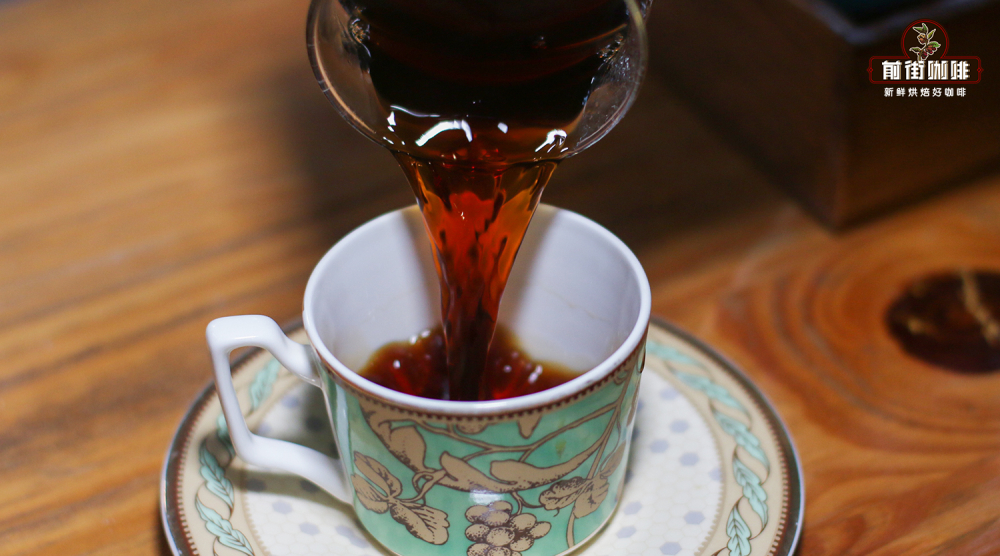
The specific brewing parameters for Front Street Coffee (FrontStreet Coffee) are: V60 dripper, water temperature 91°C, water-to-coffee ratio 1:15, coffee dose 15g, grind size like fine granulated sugar (80% passing through a Chinese No. 20 standard sieve) Front Street Coffee (FrontStreet Coffee) uses staged extraction. The blooming water amount is 2 times the coffee grounds, that is, 30 grams of water for a 30-second bloom. Pour in a small stream in circles to 125 grams, then pause. When the water level drops and is about to expose the coffee bed, continue pouring to 225 grams and stop. The total extraction time is 2 minutes.
Flavor Description On the palate there are citrus and black tea; as the temperature changes, there are cream, caramel, and almond notes, with an obvious sweet aftertaste and a clean, sweet mouthfeel. Flavor changes of Front Street Yirgacheffe Gutingding at different temperatures Front Street mentioned earlier that a higher water temperature should be used to brew Front Street Gutingding coffee in order to extract its fruity acidity as much as possible. In response, some customers ask: then how high should the water temperature be? According to brewing recommendations from the SCA (Specialty Coffee Association of America), the water temperature should be controlled at 85–94°C. The suitable brewing water temperature for light-roasted beans is 90–94°C, and for dark-roasted beans it is 85–89°C.
To help everyone understand more intuitively how temperature affects coffee flavor, Front Street took Front Street Yirgacheffe Gutingding as an example and brewed it with 4 different water temperatures to verify what kind of flavor experience it would produce. Brewing parameters (kept as consistent as possible): except for water temperature, all other parameters remained the same: V60 dripper, 15g coffee, 1:15 coffee-to-water ratio, grind size at EK43s setting 10 (80% passing through a Chinese No. 20 standard sieve)
From the brewing data, we can see that the light-roasted Front Street Gutingding is more suitable for brewing with water at 90–92°C, which can present fruity acidity and sweetness, consistent with the flavor of Front Street Gutingding. When using water at 86–88°C, the acidity of the beans is noticeably prominent, but the aroma is insufficient, and the mouthfeel can be thin and watery.
Light-roasted coffee retains more of coffee’s flavors. At this roast level, the beans often have richer and more prominent floral and fruity acidity, and the flavor is more multi-layered. Using a slightly higher water temperature can better highlight the flavor characteristics of “Front Street Yirgacheffe Gutingding.”
The above content is compiled by CoffeeHunters, a coffee news website.


