







Is Java coffee strong, and how does Mandheling compare?
Golden Mandheling and regular Mandheling share Indonesia's heavy body and low acidity, but they differ in selection and price. The name Mandheling traces to the Mandailing people and a World War II misunderstanding in an occupied Indonesian shop, later spread when a Japanese merchant ordered 15 tons. Both beans suit pour-over: a cone with good flow, a medium-coarse grind, and water around 85 to 88C keep the cup rich and clean.
If the question is whether Java coffee is strong, Indonesian beans generally carry more body than Central American or African lots, and Mandheling ranks among the fullest. Its wet-hulled process creates herbal and medicinal notes that divide drinkers. Golden Mandheling applies stricter PWN selection standards, giving a clearer caramel-chocolate character. Adjust ratio and temperature to manage intensity rather than avoiding the origin.
Indonesian coffee is known for its rich, full body and low acidity, and Mandheling in particular is regarded as one of the fullest-bodied coffees in the world. But what exactly is the difference between Mandheling and Golden Mandheling? From Front Street's perspective, this article sorts out the origin of the name Mandheling, the evolution of its varieties, the strict standards behind PWN Golden Mandheling, and how the wet-hulling process shapes its signature flavor. At the same time, the article also shares in detail Front Street's recommendations for pour-over Mandheling, including filter cone choice, coffee-to-water ratio, grind size, and water temperature, to help you brew a cup of Mandheling at home that is rich, clean, and with a pronounced caramel-chocolate character.
Indonesian coffee is an important representative within Asia's coffee landscape, and its overall body is generally higher than that of Central and South American and African origins, while its acidity is relatively low. Mandheling coffee is considered by many to be one of the fullest-bodied coffees in the world. Many people come to it with high expectations, but after actually tasting it, not everyone may accept it—because it often carries herbal, medicinal notes, and flavor preferences vary from person to person. However, at Front Street, Mandheling has always been very popular, especially Golden Mandheling. So what exactly is different between these two beans? Front Street will now explain the difference between them.
Let's first talk about Mandheling coffee itself. There are many ways to name coffee: some names come from producing regions, estates, or place names, while others come from variety names. The name Mandheling is actually the name of an ethnic group, and its birth came from a misunderstanding. Front Street has learned that Mandheling is a transliteration of the Indonesian Mandailing people. During World War II, when Japan occupied Indonesia, a Japanese soldier drank a cup of highly aromatic coffee in a local coffee shop and asked the owner what kind of coffee it was. The owner mistakenly thought he was asking where he was from, so he answered "Mandailing." After the war, the soldier remembered the "Mandheling" he had drunk in Indonesia and asked an Indonesian coffee merchant to ship 15 tons to Japan. It became a huge hit, and the name Mandheling spread in this way.
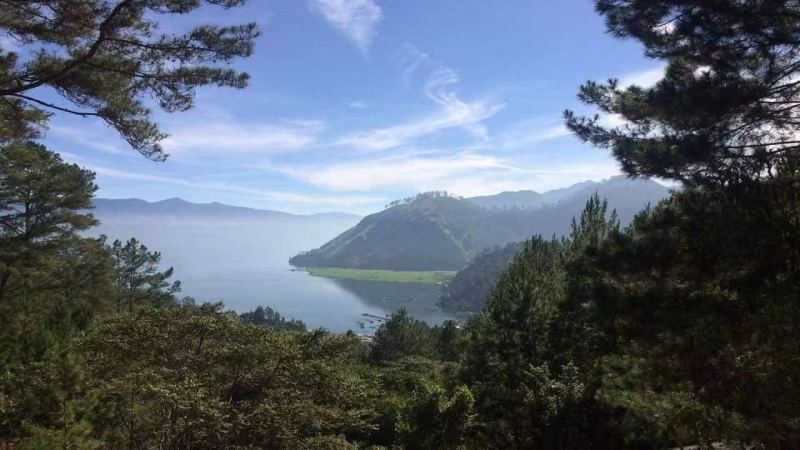
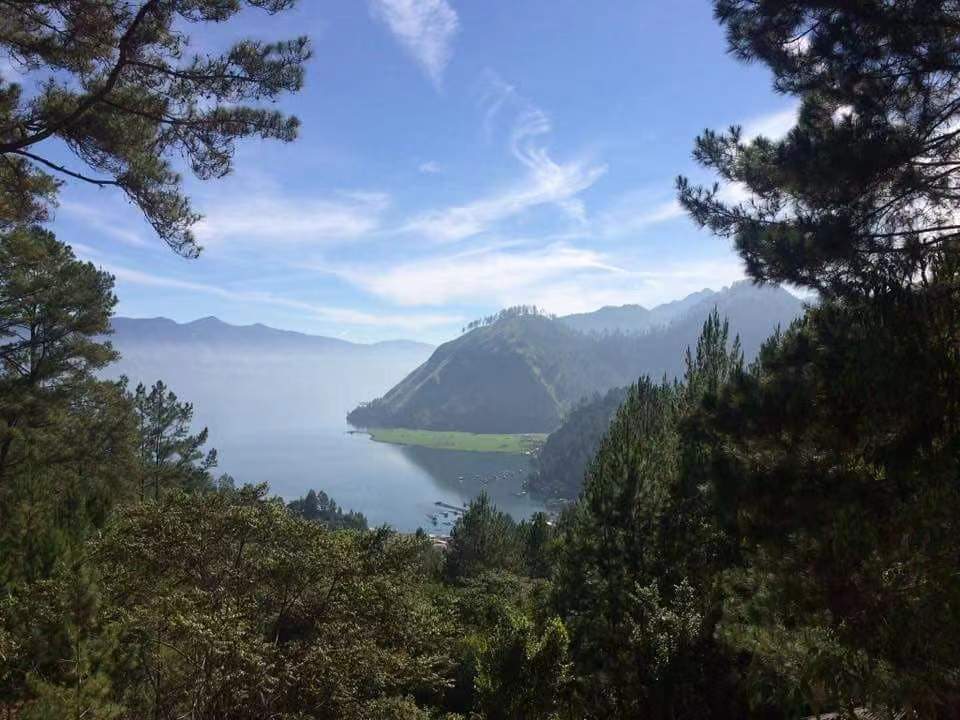
When it comes to Asian coffee, Indonesia is often the first origin that comes to mind. Asia's most famous coffee-producing regions are concentrated on the islands of the Malay Archipelago, including Sumatra, Java, and Kalimantan. Among them, Sumatra Mandheling from Sumatra is the most famous. Mandheling coffee is produced in Sumatra, Indonesia, and is also called "Sumatra coffee." Its main producing areas cover Java, Sulawesi, and Sumatra, of which about 90% is Robusta, while the "Mandheling" produced on Sumatra enjoys the highest reputation.
Mandheling Coffee Varieties
As Front Street just mentioned, Mandheling coffee is mainly grown on Sumatra, and in terms of variety it is primarily pure Arabica coffee beans. However, Arabica has weaker resistance to pests and diseases, so in October 2020 the Indonesian company PWN abandoned the Typica variety originally used for Golden Mandheling and switched to the Ateng variety for production. Ateng is actually the Catimor variety widely planted in Yunnan, a hybrid descendant of Arabica and Robusta. It has several subtypes and is widely cultivated in Sumatra and other small Indonesian islands. Simply put, Ateng is a branch of Catimor, just called differently locally.
The Difference Between Mandheling and Golden Mandheling
When it comes to these two coffee beans, people often ask: What is different about them? And what is the difference in flavor? Front Street's answer is: Mandheling is a high-quality specialty coffee from Indonesia, while Golden Mandheling is the finest of the finest, with even better quality and taste, and naturally a higher price.
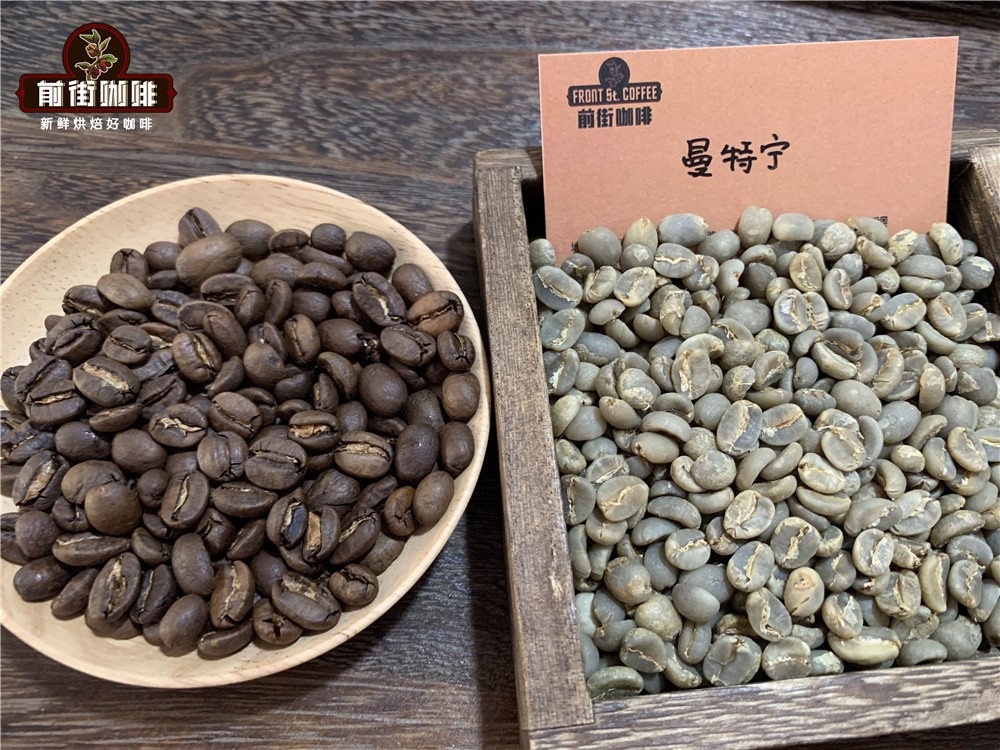
Front Street's PWN Golden Mandheling green beans are of the highest G1 grade, with a screen size of 18+ and no more than 3 defective beans in every 300-gram sample. PWN is extremely strict when producing Golden Mandheling: after machine sorting, the beans still undergo 3 rounds of hand sorting to remove defective beans as much as possible, thereby improving the coffee's cleanliness and sweetness. In other words, only coffee beans produced by PWN can be called Golden Mandheling.
Although everyone knows that only PWN's Mandheling can be called Golden Mandheling, PWN's annual output is not large, so many large-bean-selected "Golden Mandheling" on the market are not from PWN. If you cannot be sure, you might ask the seller to provide the green bean jute bag marked with PWN or the certificate accompanying the beans, so as to determine whether it is Front Street PWN Golden Mandheling. Compared with other Mandheling, Front Street's new-crop Golden Mandheling has a stronger sweet aftertaste and a more obvious sucrose aroma. If you are in the store, a little attention will let you see the PWN-marked green bean jute bag and the accompanying certificate.
In terms of taste, Front Street has compared these two Mandheling coffees: Golden Mandheling drinks cleaner than Lintong Mandheling. Mandheling's original herbal, earthy, and woody notes almost disappear, the layering is richer than ordinary Mandheling, the caramel sweetness is stronger, and the fruit acidity is brighter and more elegant. The main reason is that Golden Mandheling undergoes more than 3 rounds of hand sorting, and the selected bean screen size is 18+, so the bean size is uniform and the flavor is naturally more balanced. Therefore, whether by appearance or taste, the difference between Golden Mandheling and ordinary Mandheling can be clearly distinguished.
Mandheling Coffee Bean Wet-Hulling Process
Coffee from every producing country or region has a unique flavor, and Sumatra is known for its low acidity. Front Street believes there are several reasons behind this, among which the local farmers' post-harvest processing of green beans is the most critical. The local weather is rainy, typhoons are frequent, and the good weather required for natural sun-drying cannot be met. Economic conditions are also limited, making it difficult to adopt the more costly washed method. The combination of these factors gave rise to the highly localized wet-hulling method. This processing method is more primitive and more casual, and it also creates Mandheling's rich, full-bodied, low-acid flavor.
The wet-hulling method works like this: during the conventional washing process, the beans are sun-dried with parchment for 2–3 days, and when the moisture content drops to 20–24%, the parchment is removed. From this process, it can be seen that wet-hulling is very fast, but the ultra-fast pace also leads to a relatively high defect rate in Mandheling, making appearance problems such as "goat-hoof beans" more likely.
FrontStreet Coffee Mandheling Coffee Brewing Parameter Recommendations:
Front Street's brewing approach for Mandheling is: to present a rich yet clean mouthfeel, highlight caramel, chocolate, and the signature herbal aroma, while avoiding unpleasant bitterness.
Front Street uses a dark roast to roast Mandheling coffee beans. Dark-roasted beans easily brew bitter flavors, so extra care is needed during brewing. First, Front Street uses the KONO dripper, because the only exhaust area of this dripper is the quarter rib. When the water level rises past the ribs, the amount of water in the dripper keeps increasing, and the weight of the water increases pressure. Since the outlet is relatively small, it can extend the contact time between coffee particles and water. As the water flow drives extraction, soluble substances can be brought out more effectively, expressing the coffee's body.
The dose Front Street uses is still 15g. More coffee powder is not always better, nor is less always better; it depends on the dripper size. Front Street uses a 1–2 cup dripper, and a dose of 15–20g is a reasonable brewing range. Beyond this range, brewing becomes more difficult.
For the coffee-to-water ratio, Front Street recommends 1:15. Although some may suggest 1:13 or a smaller ratio, Front Street has said in previous articles that concentration and body are not necessarily related, and that too strong a coffee can make people uncomfortable. Therefore, a 1:15 ratio can also express Mandheling's rich mouthfeel very well.
For grind size, Front Street uses 75% passing a No. 20 sieve. The grind for brewing Mandheling should be coarser than for light-roasted beans, because Mandheling is dark-roasted, has a looser structure, and absorbs water and releases substances more easily. If it is ground to the fineness of light-roasted beans, it is easy to brew out scorched bitterness; if ground coarser, the coffee becomes thin and tasteless, with a watery mouthfeel.
For water temperature, Front Street recommends 88°C. For the same reason as with grind size, too high a water temperature easily produces scorched bitterness, while too low a water temperature makes it flat and also produces unpleasant sourness.
【Flavor Description】
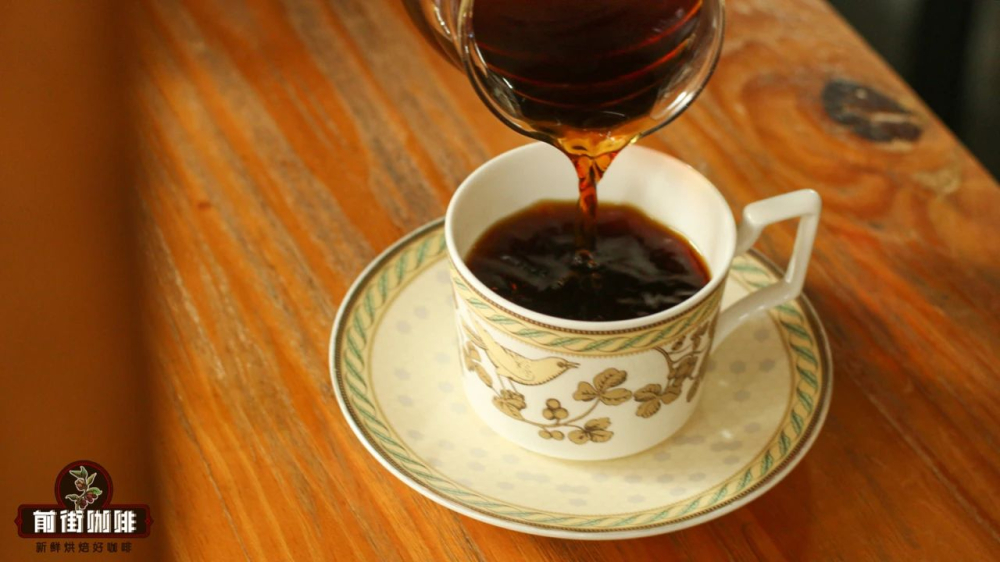
Front Street Golden Mandheling: Complex and layered, rich and clean, highly balanced, with intense nut and caramel aromas, chocolate notes, and a long finish.
Front Street Lintong Mandheling: Herbal and medicinal on entry, dark chocolate, caramel, sweet aftertaste.
Of course, when brewing, Front Street has always recommended using freshly roasted coffee beans, as this is the best way to experience coffee's rich flavors. The coffee beans shipped by FrontStreet Coffee are all within 5 days of roasting, because Front Street deeply understands that freshness has a great impact on flavor. Front Street's roasting principle is "freshly roasted good coffee," so that every customer who places an order receives the coffee in its freshest state. Coffee's resting period is about 4–7 days, so when customers receive it, it is exactly at its best flavor.
Some customers need pre-ground coffee. Front Street reminds you: after coffee beans are ground in advance, they need to be brewed promptly, because coffee grounds exposed to air will lose flavor, making it difficult to brew a perfect cup of coffee. Therefore, Front Street recommends buying whole beans and grinding fresh before brewing, as this is the best way to brew a perfect cup of coffee.
For professional coffee knowledge exchange and more coffee bean information, please follow Coffee Workshop (WeChat public account: cafe_style)
For more specialty coffee beans, please add the private WeChat of FrontStreet Coffee: qjcoffeex
The above content is compiled by CoffeeHunters, a coffee news website.


