







How Did Coffee Development in Panama Lead to Geisha Fame?
Coffee reached Panama in 1742, when a barrel of beans was recorded on a ship arriving at Portobelo from the French Caribbean. The first cultivation attempt dates to 1780, and by the 1820s coffee had spread and begun replacing chocolate as a daily drink. Today Panama farms roughly 20,000 hectares, about 16,000 of them Arabica, centered on Chiriquí Province.
The Geisha variety lifted Panama to the top of the specialty market, setting record prices per pound and drawing attention to high-altitude micro-lots from Boquete and Volcán. That reputation shapes how Panama geisha coffee is traded and priced today, and it explains why the country's relatively short coffee development history still carries outsized weight in the global industry.
Although Panama is not the first country in Central America to grow coffee, it has reached the pinnacle of the world's specialty coffee scene thanks to the Geisha variety. This article will trace the history of Panamanian coffee from its introduction in the 18th century to large-scale cultivation in the 19th century, introduce the main producing regions such as Boquete and Volcán centered on Chiriquí Province, analyze Geisha's legendary journey from being ignored to achieving fame overnight at BOP, and share the flavor profile of Front Street Boquete Geisha. Finally, we will also use this Geisha to make a cup of flat white coffee, providing complete extraction parameters and operating steps to help you replicate a milk coffee with both floral and citrus notes at home or in a café.
The History of Panamanian Coffee
Among the countries of Central America, Panama's coffee development has not been particularly long, yet it has a history that is thought-provoking in its own way. Today, coffee has long been integrated into the daily lives of Panamanians. Whether at a small roadside inn or a high-end restaurant, the cup is often filled with coffee produced in their own country.
Documents show that coffee was first introduced to Panama in 1742. At that time, a ship set sail from an island in the French Caribbean, possibly Martinique, and more likely Haiti—where coffee was already a mature crop. The ship arrived at Portobelo via Cartagena (which did not produce coffee locally), and a barrel of coffee beans was registered on the cargo list. However, the first record of actual coffee cultivation in Panama dates to 1780. Settler Pedro Antonio de Ayarza attempted to plant coffee in Portobelo between 1780 and the 1790s, but soon discovered that the area was not suitable for coffee cultivation.
It was not until the 1820s that coffee spread to other parts of Panama and gradually replaced chocolate as the main beverage, competing with tea, which had taken root in Europe. Panama still holds the world record for the price per pound of the special premium variety Geisha, and also produces some of the world's most sought-after high-altitude coffees.
Distribution of Coffee Producing Regions in Panama
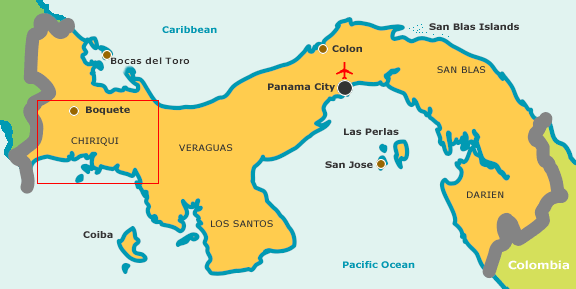
Panama's coffee planting area is about more than 20,000 hectares, of which nearly 16,000 hectares are planted with Arabica varieties. The country's main coffee producing areas are concentrated in Chiriquí Province in the west near the border with Costa Rica, which includes three well-known producing areas: Boquete, Volcán, Renacimiento, and Santa Clara.
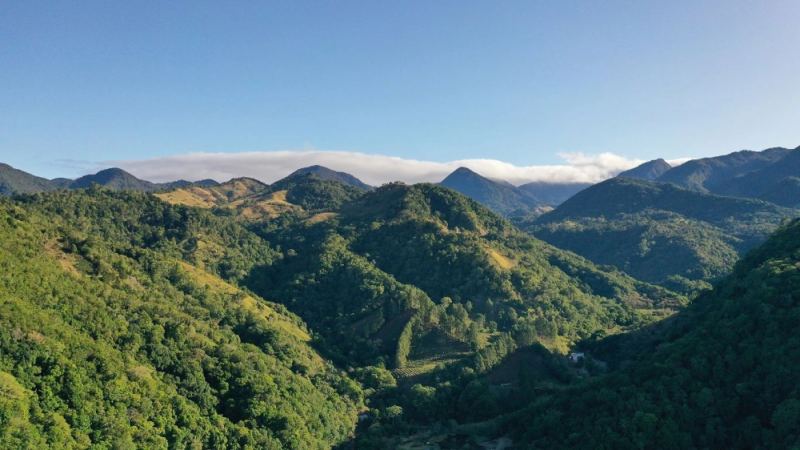
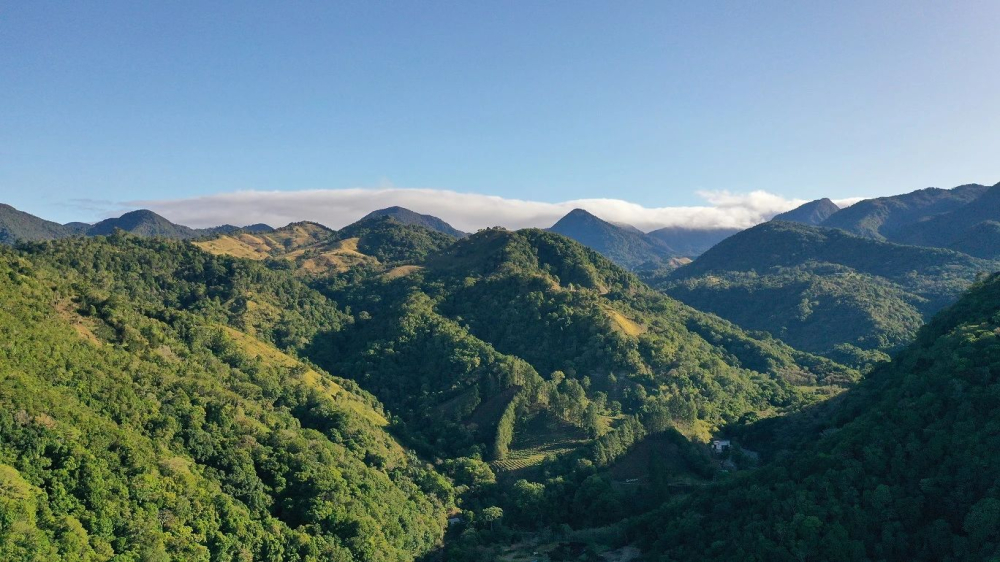
These places are adjacent to one another, located in the same Central American mountain ridge zone, and close to the majestic but inactive Barú Volcano, whose highest elevation reaches 3,475 meters. Thanks to the variable climate and fertile volcanic soil, Chiriquí Province also has enormous potential for agriculture and livestock production. Various agricultural and livestock activities are developed here, such as thoroughbred horse breeding and the cultivation of flowers, cherries, bananas, and more, and among them the most famous is specialty coffee.
The cool and picturesque Boquete Valley can be regarded as the birthplace of Panama's coffee industry. At the end of the 19th century, a large number of European immigrants came here, mainly Swiss, South Slavs, Swedes, and Germans. They found that coffee cultivation in the nearby areas (Panama was part of Colombia before 1903) was outstanding, so they decided to devote themselves to coffee bean production. At present, there are about 50 to 75 coffee farms and about 15 coffee processing plants in the Boquete area.
Boquete has a land area of 514 square kilometers and a population of more than 15,000. It mainly grows coffee, flowers, citrus fruits, strawberries, and various vegetables. Most local coffee farms are located at around 1,600 meters above sea level. In fact, these lands are all composed of nutrient-rich volcanic soil, providing ample nutrition for coffee trees. The climate is cool and slightly dry. Every day, especially in summer, a nearly imperceptible drizzle-like mist covers every coffee farm. This mixed wind carrying rain is precisely the reason why Boquete coffee cherries ripen slowly. The resulting coffee has medium to high acidity, accompanied by various floral and fruity aromas.
For a first try of Panamanian coffee, which one should you choose?
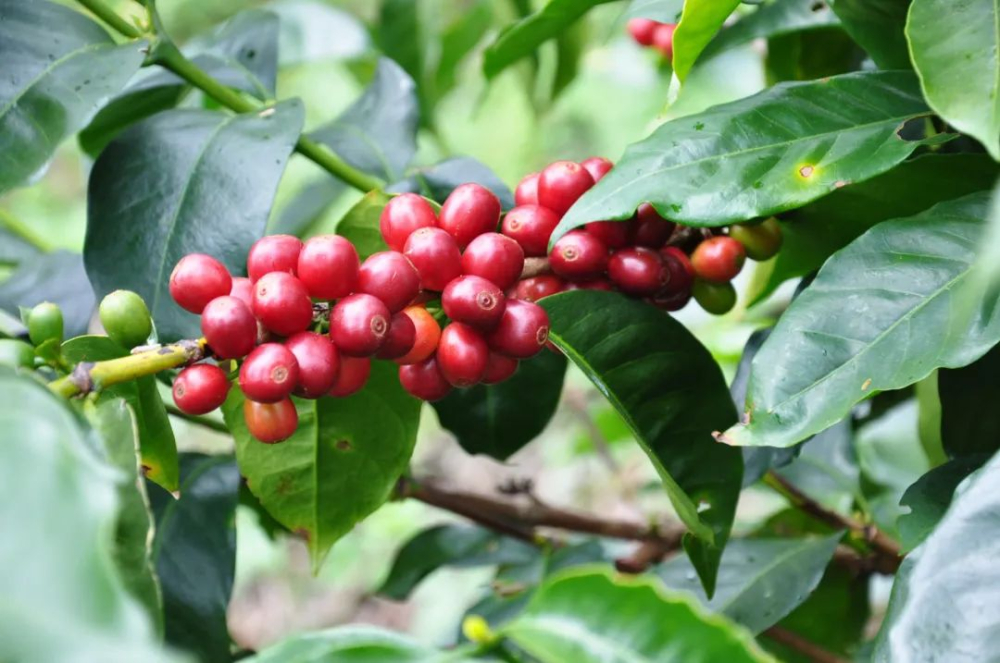
As the place where Geisha became famous, Panama Geisha is undoubtedly a must-try specialty variety. If you are encountering this producing region for the first time, Front Street Boquete Geisha is recommended. This is a washed Geisha coffee. Under a medium-light roast, it presents white floral notes and bright citrus, grapefruit, and green tea notes, which together form a melody in the mouth like a movement.
Before Geisha became famous, because of its tall, slender tree shape, poor disease resistance, low yield, and mediocre flavor when planted at lower altitudes, it did not attract much attention from growers. In 2004, Geisha truly entered the international coffee stage at the BOP "Best of Panama Green Bean Competition," displaying delicate jasmine floral notes and deep fruit aromas, stunning all the judges present, and receiving an unprecedented high score, winning the championship that year. Since then, the selling price of Geisha coffee has repeatedly hit new highs, and its fame has spread throughout the global coffee world.
The reason Geisha can win the affection of coffee lovers is that, unlike the traditional impression of strong black coffee, it is more like a refreshing floral and fruit tea. With rich fragrance and complex fruit flavors, it reminds people of a series of unusual aromas. At different temperatures, you can feel a delicate texture and sweet-and-sour fruitiness filling the entire mouth.
How to make a cup of flat white coffee with the fragrant Geisha?
At Front Street, a double espresso is generally used. Today's extraction parameters are 20 grams of grounds extracted for 26 seconds to yield 35 grams of liquid, served in a 200 ml ceramic cup, so 150 ml of steamed fresh milk needs to be added. The specific parameters and steps are as follows:
Coffee beans: Front Street Panama Geisha
Coffee grounds amount: 20g
Coffee liquid amount: 40g
Grounds-to-liquid ratio: 1:2
Extraction time: 26–32 seconds
Grind setting: Galileo 2.0
The coffee machine used at Front Street has a double basket capacity, requiring 20 grams of coffee grounds each time, and the extraction grounds-to-liquid ratio is 1:2, meaning 40 grams of coffee liquid is produced within a reasonable time. The extraction time is related to the flow rate of the coffee grounds. Generally, a single extraction is controlled between 20 and 35 seconds. If it is less than 20 seconds, the coffee taste tends to be thin and bland, while if it exceeds 35 seconds, over-extraction tends to cause a burnt, bitter taste in the coffee. Therefore, when producing coffee at Front Street, the espresso time is controlled within the range of 26–32 seconds.
Before extraction, we need to first wipe the basket dry, turn on the grinder, grind a double dose of coffee grounds, and place them on an electronic scale to measure and adjust until the weight reaches 20 grams. Then use a distribution tool to level the coffee grounds, and use a tamper to press vertically downward with force to compact the coffee puck, ensuring more stable coffee extraction.
Then turn on the extraction switch and let water run for 1–2 seconds to wet the brew head, while also removing any coffee grounds stuck to it. Place an electronic scale under the cup that will receive the espresso, and tare it to 0. During extraction, place it together under the brew head. Gently lock the portafilter onto the brew head and start the extraction switch. Observe the changes in the extracted liquid. When the electronic scale shows 40 grams of coffee liquid extracted, at about 30 seconds, turn off the extraction switch, then pour the coffee liquid into a cup and set aside.
Prepare 150 ml of fresh milk, pour it into a milk pitcher, and steam it to 55–60°C with a layer of milk foam about 0.3 cm thick. Finally, blend it evenly with the coffee and pour a small white heart. A cup of Geisha flat white coffee is then complete.
The performance of this cup of Geisha flat white when drunk is just as Front Street expected. Because of the addition of milk, the acidity of the coffee is masked, the sweetness is enhanced, and the flavors are more balanced. On the flavor level, we can still taste the white floral and citrus notes, and there is even a caramel biscuit flavor created by blending with the milk. Although the flavor is not as rich as black coffee, the mouthfeel is creamier and the sweetness is higher~
The above content is compiled by CoffeeHunters, a coffee news website.


