







When Was Coffee Introduced to Europe and How Did Espresso Develop?
Coffee beans from Africa and the Middle East reached Italy through the port of Venice around 1580, at first a rare goods for the upper class. Clergy called it the devil's drink until Clement VIII accepted it and gave it the name the drink of God. Europe's first coffeehouse opened in Rome in 1645.
Espresso as a method arrived much later, built on the Turin steam-power patent, the Bezzera lever machine and the Gaggia 9-bar lever. That progression explains when did coffee become popular in Europe beyond the upper class: as cafes spread, Italians settled into standing, quick drinks, dark roasts and a cup after meals, a habit still costing about one euro.
Espresso is the most recognizable symbol of Italian coffee culture, but its birth was not achieved overnight. From the "devil's drink" that entered through the port of Venice in the 16th century, to Clement VIII giving it the name "the drink of God," to the Turin steam-power patent, the Bezzera lever machine, and the Gaggia 9-bar lever, each layer of improvement brought Espresso step by step toward modernization. At the same time, Italians developed a unique set of habits: drinking it standing up and quickly, favoring dark roasts with bold flavors, and always having one after a meal. A cup of espresso costing about 1 euro has long been woven into the fabric of daily life. This article traces the origins and drinking traditions of espresso, and combines them with four of Front Street Coffee's espresso blends to offer a practical bean-selection reference.
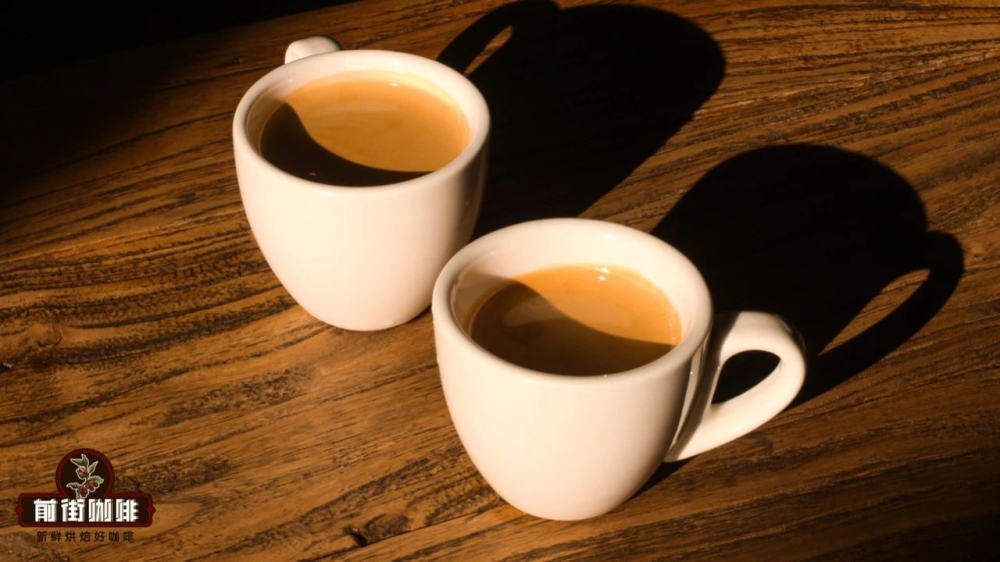
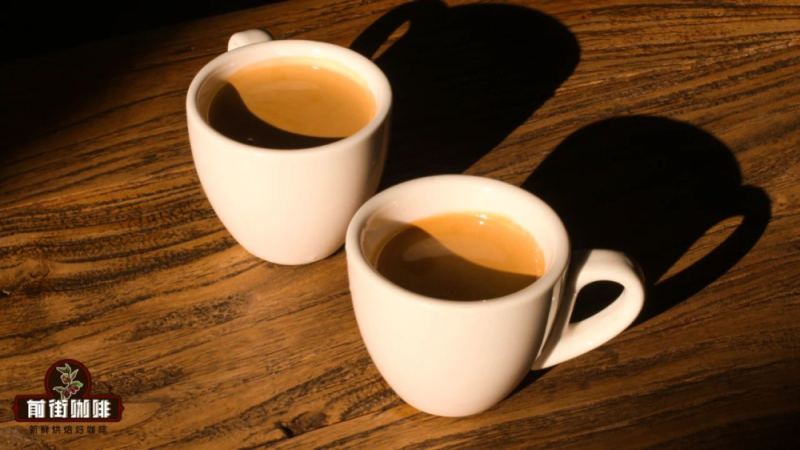
Italian coffee has always been known for being rich and intense, which fits well with the warm, outgoing character of the locals, and espresso is the most recognizable cup among them. Americans adopted the term "Espresso" to highlight its characteristic of rapid extraction. It was initially popular only in southern European countries such as Italy, France, and Spain, then gradually spread throughout the Americas and joined the ranks of the most favored beverages. Even in the UK, famous for its black tea tradition, the aroma of espresso is not hard to catch on street corners and alleys.
For more specialty coffee knowledge, please follow the WeChat public account: FrontStreet Coffee
After consulting the materials, Front Street Coffee learned that Italians have a very long history of drinking coffee. Around 1580, coffee beans produced in Africa and the Middle East arrived in Italy through the port of Venice, and at the time they were still a rare commodity only the upper class could touch. Because it came from the Middle East and Turkey and was regarded as a "Muslim drink," many Christian Italians labeled it "the devil's drink."
Entering the early 17th century, the situation took a turn: Archbishop Clement VIII became enamored with this dark liquid and even specially held a baptism for coffee, formally accepting it as something Christians could drink and giving it the name "the drink of God." In 1645, Europe's first coffeehouse appeared in Rome, and it was also Italy's earliest shop dedicated to selling coffee. After that, coffee spread rapidly throughout Italy.
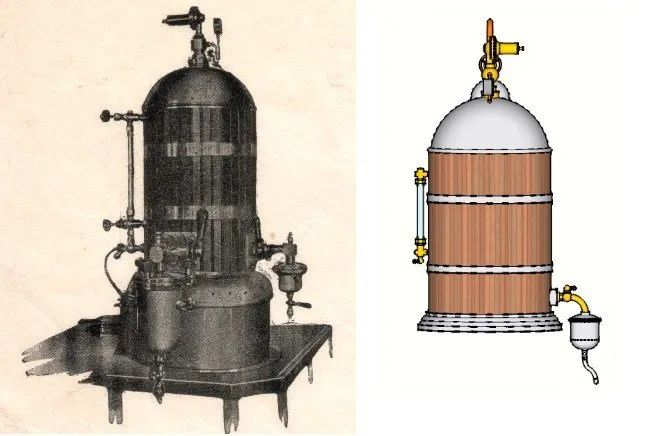
Italians' contribution to coffee is not limited to flavor preferences; it is also reflected in equipment innovation. In the early days, people were used to brewing coffee with old-fashioned Turkish pots and then filtering it. The Industrial Revolution brought a pursuit of speed, and Italians were no exception. In 1884, Angelo Moriondo successfully applied for a patent in Turin, Italy, for a steam-powered coffee-making machine. However, this device was driven entirely by steam, making temperature very difficult to control stably, and the extracted coffee was often so scorched and bitter that it was hard to swallow, so it was later repeatedly modified by different people.
(Angelo Moriondo's Espresso Machine)
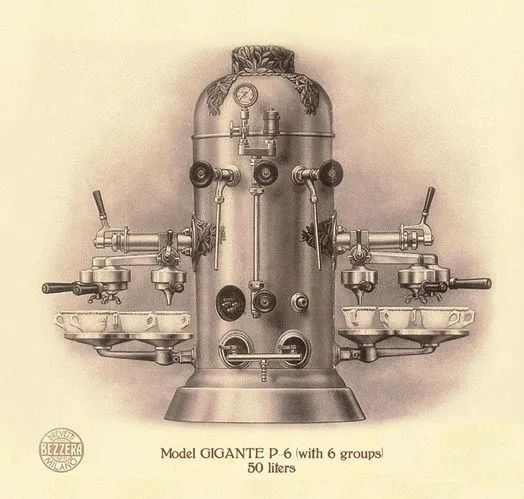
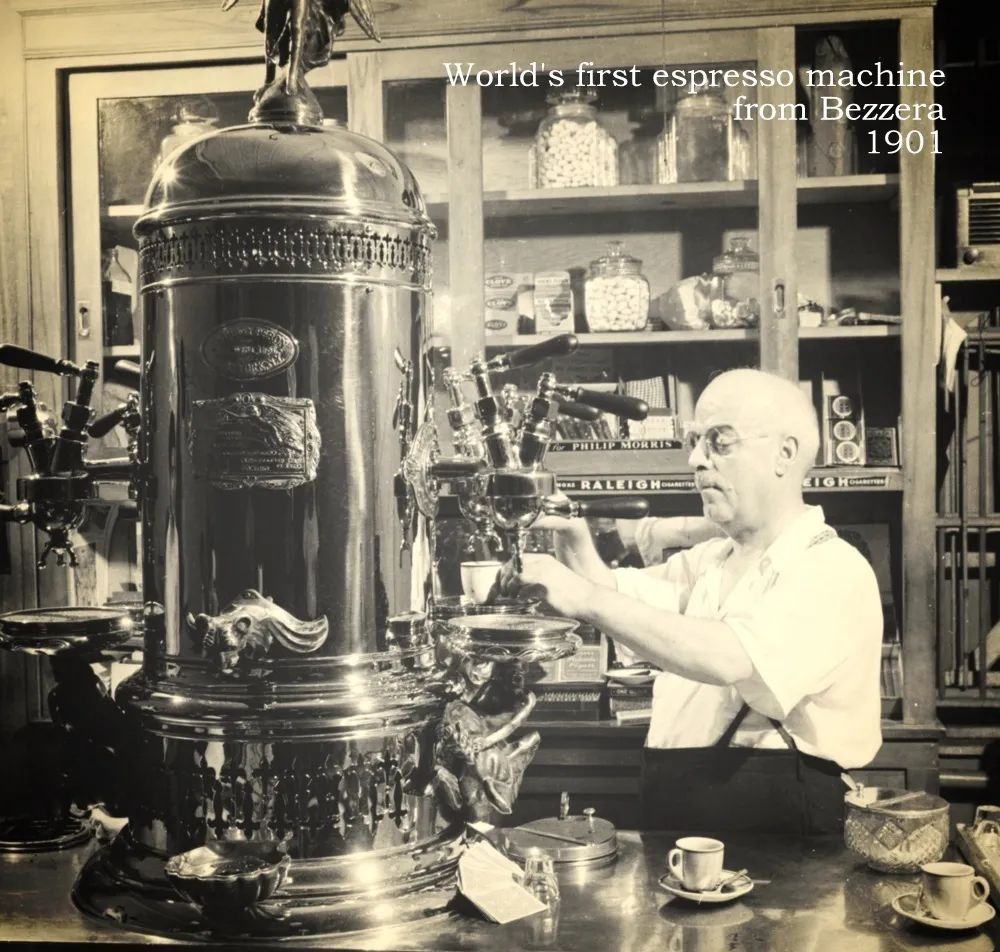
In the early 19th century, Milanese manufacturer Luigi Bezzara improved this patent and introduced the prototype of the world's first steam-pressure coffee machine. It was equipped with a detachable handle and a separable assembly head, and could extract a cup of coffee at relatively high pressure in a short time.
(Luigi Bezzera's Espresso Machine)
After the new machine came out and was put into use, more and more Italians became obsessed with this quickly extracted coffee. The word "espresso" was first included in an Italian dictionary around 1920, with the definition: concentrated coffee made with the aid of a pressure machine or filter.
For people trying this "fast coffee" for the first time at the time, the taste was not exactly delicious; but once they knew it came from rapid extraction by steam pressure, Italians seemed ignited and kept thinking about how to upgrade and modify the steam-powered coffee machine to make the output taste better.
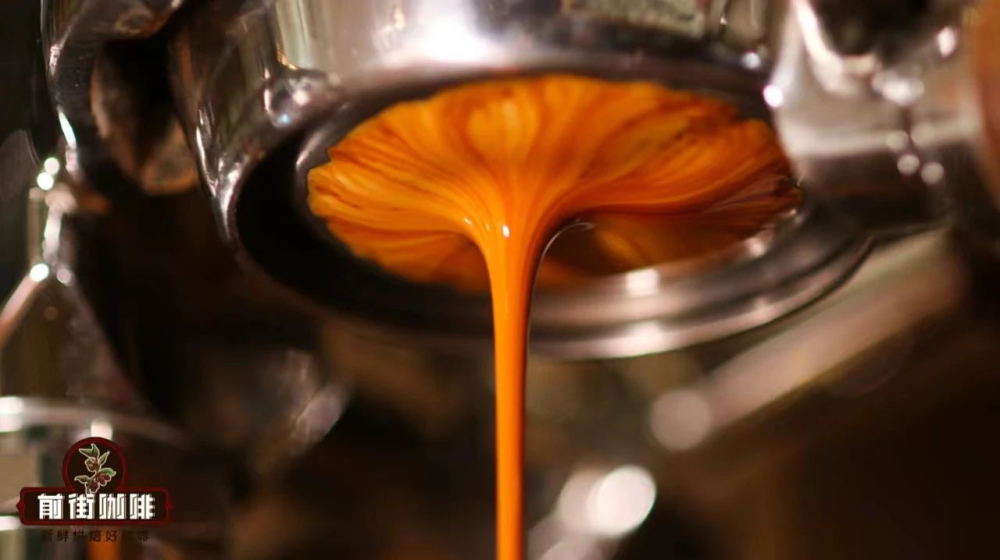
For example, Milanese engineer Achille Gaggia managed around 1938 to add a lever to the coffee machine, which could suddenly raise the water pressure from 1.5 bar to 9 bar. This not only caused a dark brown layer of "crema" to float on the surface of the coffee, but also made the volume of the extracted liquid quantifiable, making the quality of the output more stable.
It can be said that precisely thanks to the continuous refinement and promotion of these machines, the way coffee is made underwent a fundamental change. High speed and convenience became the new standard of service in every coffee shop, and that small cup of espresso gradually evolved into the foundational core of the modern coffee system.
About Italians' bold taste
When espresso took its final form, coffee culture followed suit. Compared with many countries, Italian coffee shops emphasize an efficient, fast-paced atmosphere, which happens to match the small cup size of espresso—people coming and going can finish it quickly, chat a few words with acquaintances, and then leave. Taking advantage of a brief moment of leisure to order an espresso at a coffee shop can be called one of Italians' most deeply rooted habits.
Walking into a coffee shop, they will tell the barista directly: a single espresso. The vast majority are dominated by the bitterness of dark roasting, and robusta is usually added to make the crema richer. Some people add a little yellow sugar and stir it before drinking, then down it in one go, quite heartily. A cup of espresso in Italy usually costs only 1 euro, about 7 yuan, making it a truly mass-market beverage.
In the eyes of most Italians, only espresso counts as "real" coffee. Compared with specialty coffee that is lighter-roasted and emphasizes a single origin, they are more accustomed to flavors that are rich, full-bodied, heavy on the palate, and even bitter. It is said that in Italians' view, coffee is meant to "aid digestion" and has nothing to do with staying awake, so after every meal, if there is no cup of espresso, something always feels missing.
It is not hard to see that Italians' passion for espresso is rooted in their loyalty to their own cultural traditions. As mentioned above by Front Street, Italy invented the espresso machine, which not only accelerated the speed of making coffee beverages but also permanently changed the global coffee industry. For Italians, espresso has already become an important part of national identity, and it also makes Italy appear distinctive in the world.
Below, Front Street will share with you how to choose espresso coffee beans that suit you:
After repeated proportioning tests, Front Street's roaster has blended the currently offered Front Street Sunflower Warm Sun Blend, Specialty Blend, Commercial Blend, and the espresso bean recommended by many baristas—Front Street Black Cocoa Blend—among other options. The difference among these blends lies in balancing high-quality blended flavors for different price points. Below, Front Street will introduce these four blended coffees in detail.
1. Front Street Basic Espresso Blend Coffee Beans (1 pound/454g)
Flavor: soft fruit acidity, caramel sweetness, nutty and dark chocolate flavors, smooth and viscous, but the taste is on the lighter side, suitable for shop owners and home users who prioritize cost and have average requirements for flavor.
2. Front Street Commercial Espresso Blend Coffee Beans (1 pound/454g)
Flavor: caramel sweetness, nutty and cocoa-like, dark chocolate flavors, balanced acidity and sweetness, with a slight bitterness, lingering aftertaste, able to meet the daily output needs of coffee shops.
3. Front Street Specialty Espresso Blend Coffee Beans (1 pound/454g)
Flavor: soft slight acidity, fresh sweetness, nutty sweetness in the aftertaste, overall feeling is not too stimulating, mild, with medium crema, suitable for the daily needs of opening a shop.
4. Front Street Sunflower Warm Sun Espresso Blend Coffee Beans (half pound/227g)
Flavor: pronounced fruit acidity, faint berry aroma, vinous notes, rich chocolate flavor, obvious sweet aftertaste.
This Front Street Sunflower Warm Sun Blend is currently the blend used by Front Street Coffee to make espresso in-store. In terms of flavor expression, it has excellent fermented vinous notes and berry flavors, making it very suitable for making espresso, with a very rich and unique flavor.
The above content is compiled by CoffeeHunters, a coffee news website.


