







How Is Ice Drip Coffee Different from Cold Brew?
Ice drip coffee is made by letting ice water pass through a bed of coffee grounds one drop at a time in a dedicated drip tower, while cold brew steeps grounds in cold water for hours and is then filtered. Both use low-temperature extraction, but ice drip needs a three-part pot: a top water container with a valve, a middle filter cup and a bottom collecting pot.
The slow, dynamic drip produces a cleaner, clearer cup than the long soak. The article uses a Tiamo three-tier tower to set out coffee brewing parameters for ice drip and recommends a single-origin bean suited to it, then details the cold brew ratio, grind size and refrigeration time, so both methods can be repeated at home.
Although both ice drip coffee and cold brew coffee focus on low-temperature extraction, their brewing principles and taste profiles each have their own merits. Cold brew relies on long soaking followed by filtration, making it relatively low-barrier; ice drip, on the other hand, requires a dedicated drip device, where ice water passes through the coffee grounds layer drop by drop at an extremely slow rate, and the dynamic extraction brings a cleaner and clearer flavor. This article will introduce in detail the equipment structure, extraction principle, and taste characteristics of ice drip coffee, and use the Tiamo three-tier ice drip pot as an example to explain Front Street Coffee's ice drip brewing parameters, while also recommending a high-quality single-origin bean suitable for ice drip—Front Street Coffee Butterfly. In addition, the article will share Front Street Coffee's specific cold brew method, including key steps such as coffee-to-water ratio, grind size, and refrigeration time, helping you easily make refreshing summer iced coffee at home.
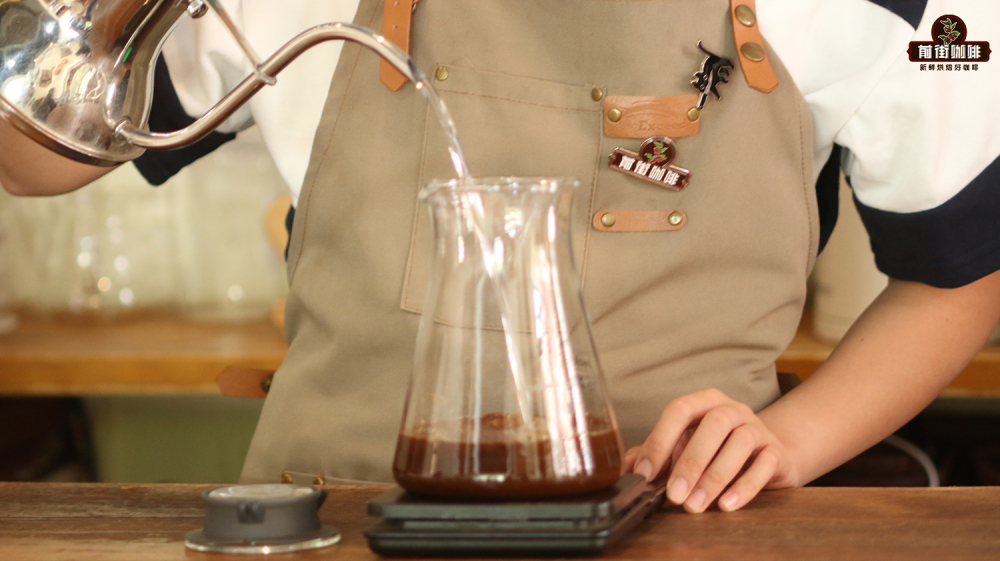
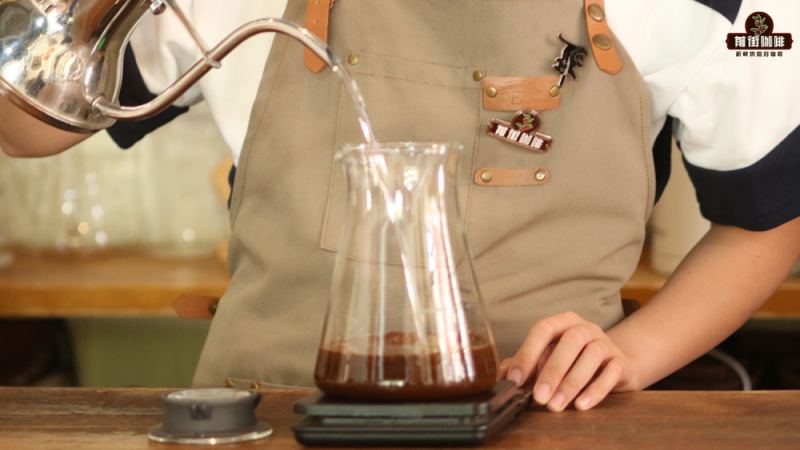
The cold brew coffee that everyone is generally familiar with follows the cold soaking route—letting coffee grounds soak in low-temperature water for a relatively long time, and finally filtering out the grounds. The whole process has low equipment requirements. As long as you have a refrigerator, coffee grounds (or coffee beans), a clean container with sufficient capacity, and a material that can filter, you can easily get a cup of iced coffee.
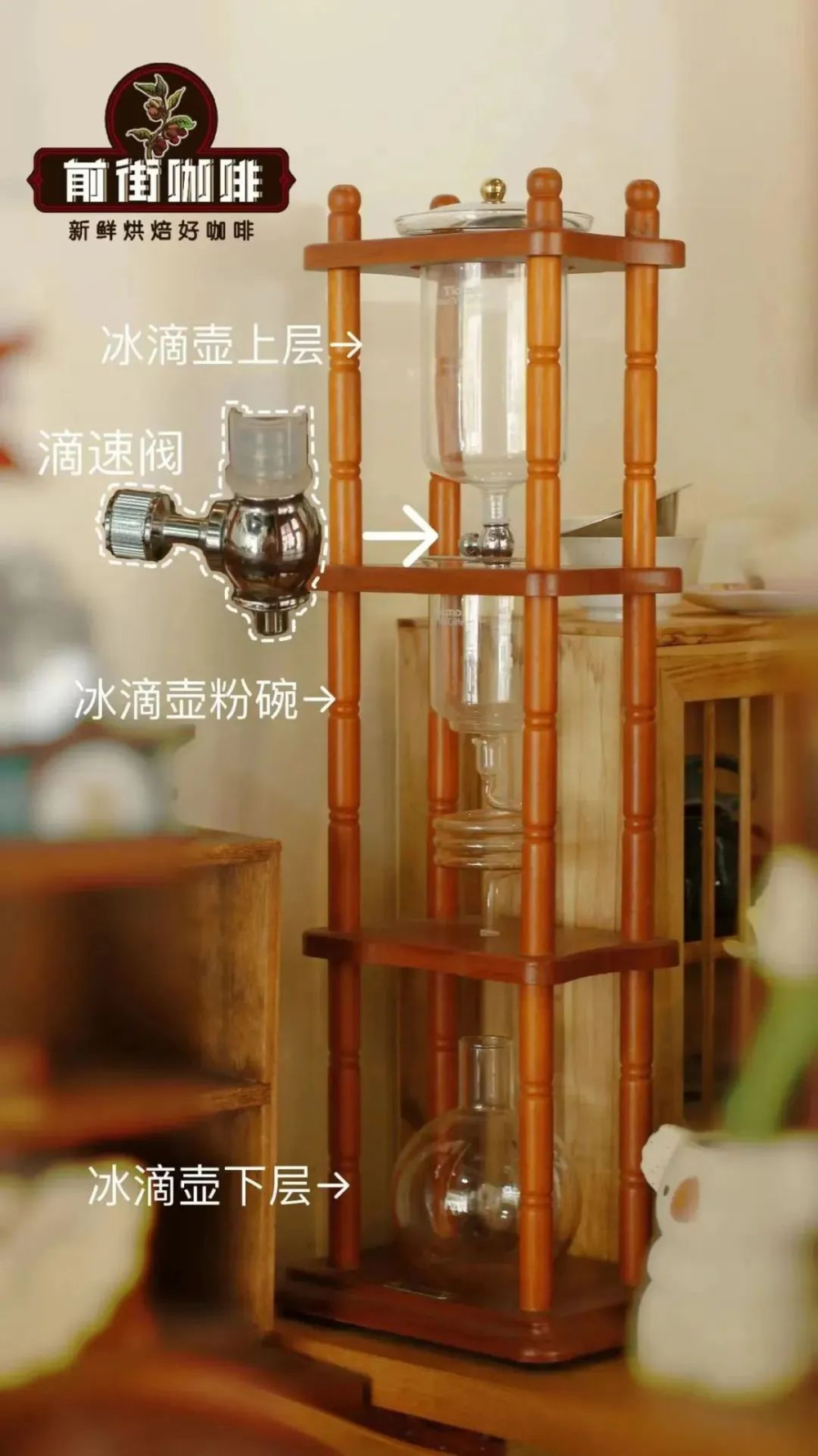
But ice drip coffee is not so casual. It must rely on a set of dedicated drip equipment—an ice drip pot. The appearance designs of such devices on the market are diverse, and the price range is also very wide, from a few dozen yuan to over a thousand yuan, but the core structure basically includes three key parts: a top water container with a valve for adjusting the ice water drip rate, a middle filter cup for holding coffee grounds, and a bottom pot for collecting the coffee liquid.
With this setup, ice water continuously falls into the filter drop by drop, contacts the coffee grounds and extracts soluble flavor substances, then flows into the lower pot under gravity, and extraction stops only after enough coffee liquid has been collected.
Equipment composition
1. Water container: a container used to hold ice cubes and water
2. Adjustment valve: used to adjust the dripping speed of ice water
3. Coffee grounds container: a container used to hold coffee grounds
4. Liquid container: a container used to hold the brewed coffee liquid
5. Coffee stand: the placement position for different containers
Because the entire extraction process relies only on low-temperature ice water from beginning to end, and the dripping speed is extremely slow (about one drop every 1–2 seconds), it takes quite a long time for enough flavor substances to be released, thereby achieving a moderate concentration. It is also for this reason that bitterness and other off-flavors are less likely to appear in the coffee.
Taking Front Street Coffee's ice drip preparation as an example, the equipment used is the Tiamo HG2713 three-tier ice drip pot. Front Street Coffee usually operates at a coffee-to-liquid ratio of 1:10, that is, 60 grams of coffee grounds ultimately extract 600 milliliters of coffee liquid. The dripping frequency of ice water is controlled at about 7–8 drops per 10 seconds, and the coffee grounds are ground to a degree similar to fine granulated sugar. In addition, because the drip nozzle sometimes becomes clogged due to low temperature, it needs to be watched throughout and adjusted at any time, so the entire preparation process generally lasts 5–8 hours, with the specific duration depending on the amount of coffee grounds used and the drip speed.
During the drip process, new cold water constantly passes through the coffee grounds layer, then filters to form new coffee liquid. Compared with the static soaking method of cold brew, ice drip is a dynamic brewing method that extracts and filters at the same time. The ice water does not remain in contact with the coffee grounds throughout the entire process, so ice drip made from the same bean will have a cleaner and clearer taste than cold brew.
In order to highlight the unique richness of ice drip while avoiding the off-flavors in the tail end that may be brought by long dripping, many coffee shops deliberately choose high-quality single-origin beans with rich fruity aromas, with Front Street Coffee Butterfly, which has outstanding flavor performance, as the first choice. This bean combines Panama Geisha as well as Caturra and Catuai varieties, and naturally carries fresh notes of green tea, citrus, melon, and grapefruit. After being made into ice drip, the taste is light yet still has a lingering finish, making it very suitable for drinking over ice in summer.
Cold brew coffee, on the other hand, is a very easy-to-master preparation method. Taking Front Street Coffee's cold brew plan as an example, the baseline amount is 50 grams of coffee grounds; if you are just drinking it by yourself, preparing 20 grams of coffee grounds is enough. For cold brew, the coffee grounds grinding coarseness is based on an 85% pass rate with a No. 20 standard sieve, that is, the state of caster sugar.
Put the coffee grounds into a glass bottle, then pour 400 milliliters of room-temperature water and 200 grams of hard ice cubes into the bottle (a total ice-water mixture of 600 grams), for a coffee-to-water ratio of 1:12. Then use a stirring rod to fully mix the coffee grounds and water, seal it well, and place it in the refrigerator.
After placing it in the refrigerator for 8–16 hours, filter out the coffee grounds with filter paper to obtain clean coffee liquid. Then pour the coffee liquid into a clean sealed bottle and refrigerate for about another 4 hours before drinking. You can also add ice cubes according to personal preference to make the taste even more refreshing.
The above content is compiled by CoffeeHunters, a coffee news website.


