







How does Panama geisha coffee get graded and brewed?
Panama geisha coffee is graded at Hacienda La Esmeralda through its Red, Green, and Blue label system, which sorts lots by quality and farm placement. The variety itself arrived in Panama only in 1970, after moving from Ethiopia's Geisha forest to Kenya, Uganda, Tanzania, and Costa Rica. It drew real attention in 2004, when the estate separated it and won the BOP competition.
For pour-over, the goal is clarity rather than heaviness: medium-fine grind, water a little off boiling, and a slow, steady pour that keeps the bed even. Ethiopian gori geisha from Gesha Village is not the same plant as Esmeralda's geisha, so the two can cup differently even when both show bergamot, citrus, and stone fruit.
Geisha coffee, as the champion among coffee varieties, has always attracted attention for its unique flavor and strict grading system. From the professional perspective of Front Street Coffee, this article systematically reviews the origin and spread of the Geisha variety, explains in detail the grading logic of Panama Hacienda La Esmeralda’s Red, Green, and Blue labels, and shares Front Street Coffee’s pour-over parameters and brewing suggestions for Geisha coffee. Whether you want to understand how Geisha coffee beans are graded or learn how to brew a delicious cup of Panama Geisha pour-over coffee, this article provides a complete and practical reference.
When people mention Geisha coffee, do you truly understand what it is? Front Street Coffee is here to clarify: Geisha coffee is essentially just one variety within the larger coffee family. Geisha or Gesha (often called Geisha in Central America) is a rare coffee variety with ample sweetness, an extremely clean mouthfeel, and rich aromas ranging from berries and citrus all the way to mango, papaya, and peach. In addition, a very prominent bergamot-like aftertaste is one of its signature cupping characteristics. To this day, Geisha remains firmly seated as the champion among coffee varieties.
When talking about Geisha coffee, one cannot avoid Panama Hacienda La Esmeralda, as it was there that Geisha rose to fame. The Geisha variety was discovered in 1931 in the Geisha forest of Ethiopia, then sent to the Kenya Coffee Research Institute, introduced to Uganda and Tanzania in 1936, brought to Costa Rica in 1953, and did not reach Panama until 1970. At first, Geisha did not receive much attention until Panama Hacienda La Esmeralda (also known as Esmeralda Estate, Panama Geisha Hacienda La Esmeralda) separated it from other varieties in 2003 and won the BOP competition championship in 2004.
In other words, Geisha coffee originated from introductions from Ethiopia, so are the Geisha coffee from Ethiopia’s Gesha Village and the Geisha coffee from Hacienda La Esmeralda the same variety? The answer is no. Front Street Coffee tells you: Ethiopia can be called a gene treasury of coffee, with complex and diverse coffee varieties within its borders, many of which have not yet been discovered. The Geisha produced in Ethiopia’s Gesha Village is actually the Gori Geisha variety, while that of Hacienda La Esmeralda is the Geisha variety; the flavors of the two naturally differ significantly, and Hacienda La Esmeralda’s Geisha coffee outperforms Gesha Village Geisha coffee in flavor expression.
Coffee bean grading methods differ from country to country. Some are based on bean size, some refer to defect rates, and some are divided by growing altitude... So by what standard are Geisha coffee beans graded?
Panama Growing Environment
Let us first get to know Panama’s climate conditions. Geisha coffee was not valued or made famous in Ethiopia, yet after being transplanted to Panama Hacienda La Esmeralda it shone brilliantly. What kind of climate and environment can nurture such outstanding Geisha coffee?
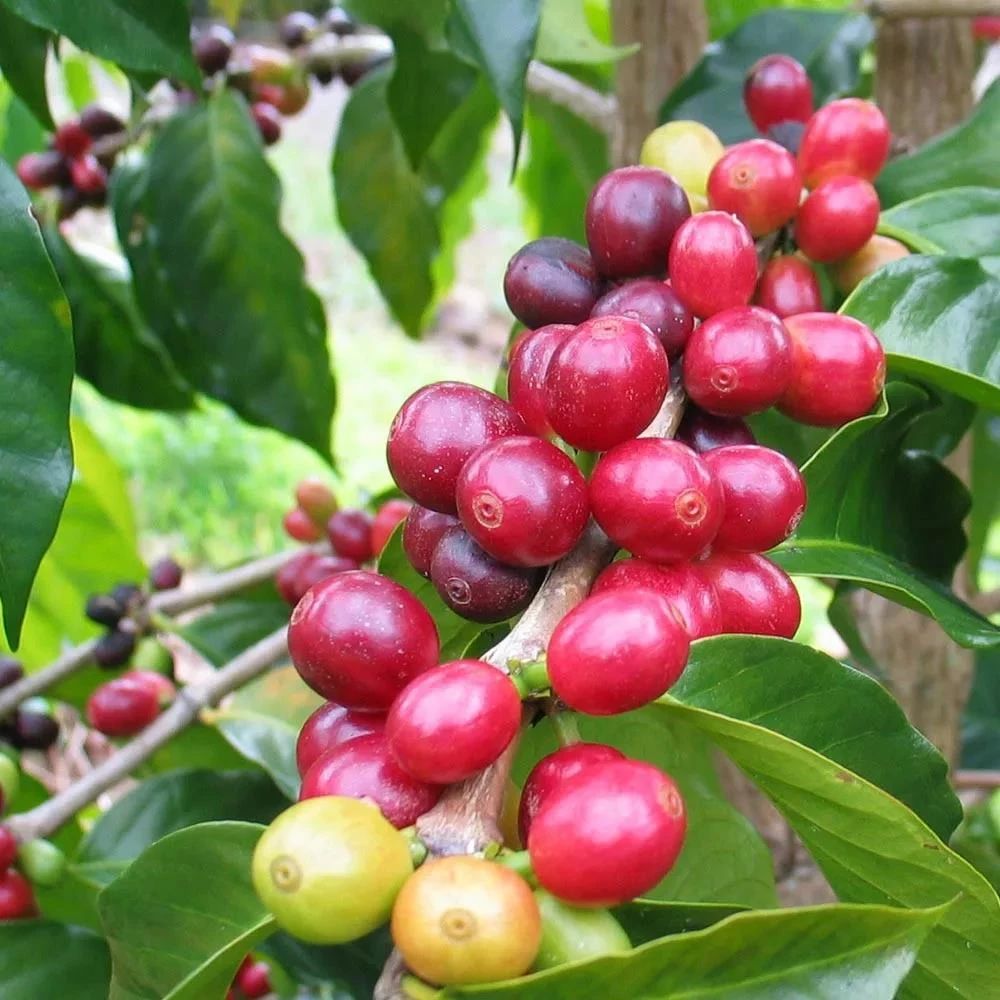
According to Front Street Coffee’s understanding, Geisha coffee is extremely demanding about its growing environment, requiring cultivation in areas with higher altitude, cloud cover or abundant shade trees, and fertile soil. High-altitude Geisha coffee has distinct floral aromas and refined, elegant fruit acidity, and this elegant flavor is one of the reasons it has become popular worldwide.
Panama borders Costa Rica and Colombia, and its east-west topography causes cold air currents to flow through the central mountain range and converge in areas above 1,900 meters, thereby creating a very unique microclimate in the Boquete and Piedra de Candela areas, with temperatures and rainfall extremely suitable for plant growth. This microclimate area is the core producing region of Panamanian coffee. In addition to climate, the land around this area is rich in nutrients, and the fertile soil provides perfect conditions for coffee cultivation, resulting in a large number of unique and high-quality coffees.
Hacienda La Esmeralda Estate
Because Geisha coffee trees have low yields, the former estate owner used them only as windbreak trees. The Peterson father and son discovered them after cupping coffee beans from different areas of the estate and decided to plant and cultivate the coffee trees in that area separately. Since winning the Panama green bean competition BOP in 2004, it has performed astonishingly all the way, and only later did expert appraisal confirm that the coffee beans were the Ethiopian Geisha variety. Afterward, the Peterson family devoted most of its energy to infrastructure construction to support excellent lot separation and fine processing.
Front Street Coffee learned that although Hacienda La Esmeralda initially discovered coffee beans with outstanding flavor, in order to achieve precision, it cupped coffee beans from different areas of the estate and determined planting plots based on altitude. Hence the Geisha grades we now know as Red Label, Green Label, and Blue Label, all graded mainly by altitude and supplemented by cupping.
[Red Label Geisha Coffee]
The Geisha produced by Esmeralda Special is today’s Front Street. Red Label. It uses Geisha beans grown at 1,600-1,800 meters, with a cupping score above 90, from the two producing areas of Jaramillo and Cañas Verdes. Front Street’s Red Label Geisha coffee comes from Cañas Verdes, uses the natural process, and has distinct rose aroma and the sweet-tartness of berries, with a full juicy body filling the entire mouth.
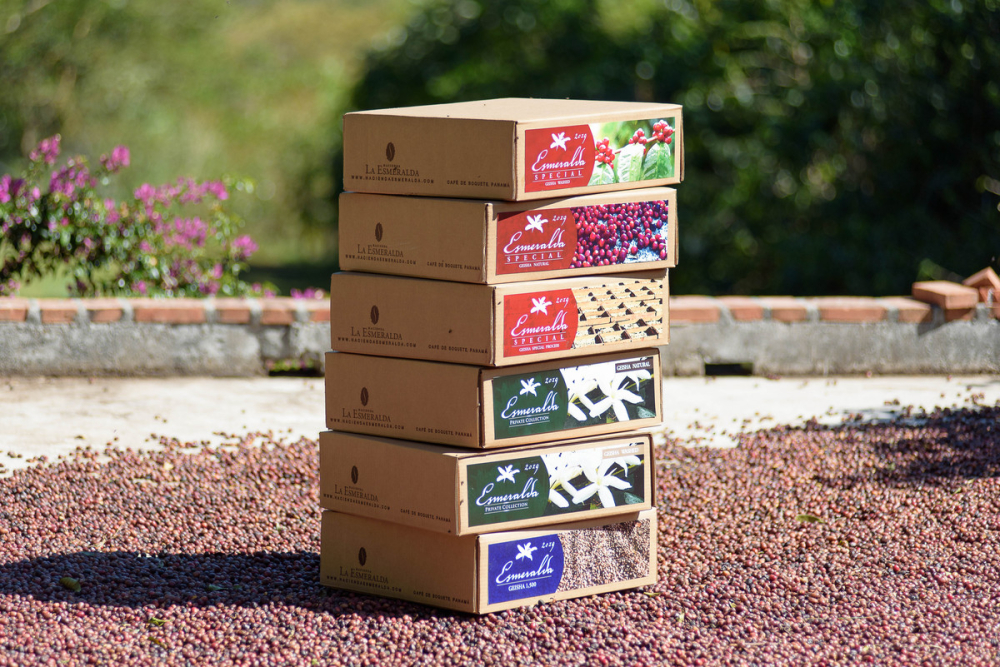
In the independent auction held by Hacienda La Esmeralda itself, only the Geisha lots put up for bidding from the divided plots are auction Red Label. However, there are also non-auction Red Labels on the market. In fact, these are Geisha selected from the same plots that did not participate in the auction and then circulated to the market. The variety quality is the same, with differences only in selling price.
This grade of Geisha uses natural or washed processing, and its flavor has special and bright floral aromas and citrus aromas.
[Green Label Geisha Coffee]
Private Collection is Front Street. Green Label Geisha. It is not an independent competition lot, but a Geisha variety that does not participate in bidding yet still has excellent quality. It uses micro-lot beans grown at 1,600-1,800 meters from different plots such as Jaramillo and Cañas Verdes.
Because it uses a blended-bean model and is not specific to a single plot, sometimes Green Label and Red Label can be very similar in flavor, but the next release may differ again.
Front Street. Green Label has the classic flavor of Panama Geisha: floral aroma, fruit aroma, citrus-like acidity, and a thick, juicy mouthfeel. Front Street believes that if you want to taste Geisha coffee, Green Label is a very good choice. Front Street’s Green Label Geisha coffee is divided into natural and washed processing. The washed version shows floral aroma, fruit aroma, and citrus-like acidity, with a fresh and clean mouthfeel; the natural process, on the basis of the washed profile, gives a thick and juicy mouthfeel.
Front Street Brewing Suggestions:
To drink a delicious cup of coffee, Front Street believes that the freshness of the coffee beans is a crucial part, because only fresh coffee beans can allow you to experience coffee’s rich flavors to the greatest extent. The coffee beans shipped by Front Street Coffee are all within 5 days of roasting, because Front Street deeply understands that coffee bean freshness has a great impact on flavor. Front Street’s roasting principle is “freshly roasted good coffee,” so that every customer who places an order receives the freshest coffee. Coffee’s resting period is about 4-7 days, so when customers receive it, it is exactly at its best flavor.
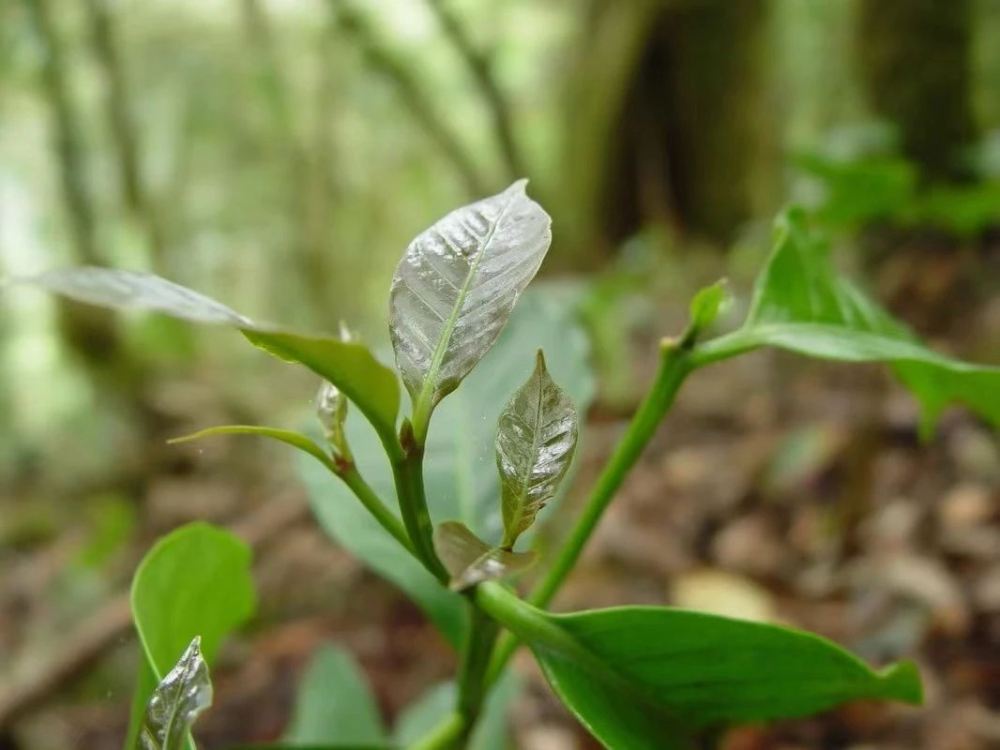
Of course, some customers need Front Street to help grind the beans, and that is fine too, but Front Street must remind you: once coffee beans are ground in advance, they no longer need to be rested, because during transportation the pressure from carbon dioxide inside the package can also make the coffee flavor rounder, so once you receive the ground coffee you can immediately brew a cup and drink it. However, ground coffee needs to be brewed promptly, because after contact with air it oxidizes relatively quickly, meaning the coffee’s flavor will dissipate faster and the coffee will not taste as good. Therefore, Front Street recommends buying whole beans and grinding fresh before brewing, so you can better taste the coffee’s flavor.
Front Street’s parameters for brewing Geisha coffee:
Because Front Street’s Panama Geisha coffee beans are at a medium-light roast level, when producing Panama Geisha coffee, Front Street generally uses a Hario V60 dripper, a finer grind size, and a higher water temperature for brewing.
Front Street chose: V60 dripper, water temperature 90°C, water-to-coffee ratio 1:15, coffee dose 15g, grind size (80% passing through a China No. 20 standard sieve)
Use staged extraction, blooming with 2 times the coffee dose in water, that is, 30 grams of water for a 30-second bloom. The reason a blooming process is needed is to allow the coffee grounds to release internal carbon dioxide gas, thereby making the later extraction more stable. Pour in a small stream in circles until 125 grams, then pause, continue pouring until 225 grams and stop. After the water in the dripper has dripped through, remove the dripper. Start timing from the beginning of pouring; the extraction time is 2'00". Next, pick up the whole cup of coffee and swirl it to mix evenly, then pour it into a cup for tasting.
Panama Hacienda La Esmeralda Red Label Geisha coffee flavor: bright rose and citrus aromas, brown rice, berries, apricot, complex fruits, honey, a thick juicy mouthfeel, rich flavor layers, and pronounced sweetness.
Panama Hacienda La Esmeralda Green Label Geisha coffee flavor: rich jasmine aroma, high sweetness, citrus, berries, juiciness, cream, green tea, orange peel, cantaloupe, with overall rich flavor layers and a lasting aftertaste of floral and citrus notes.
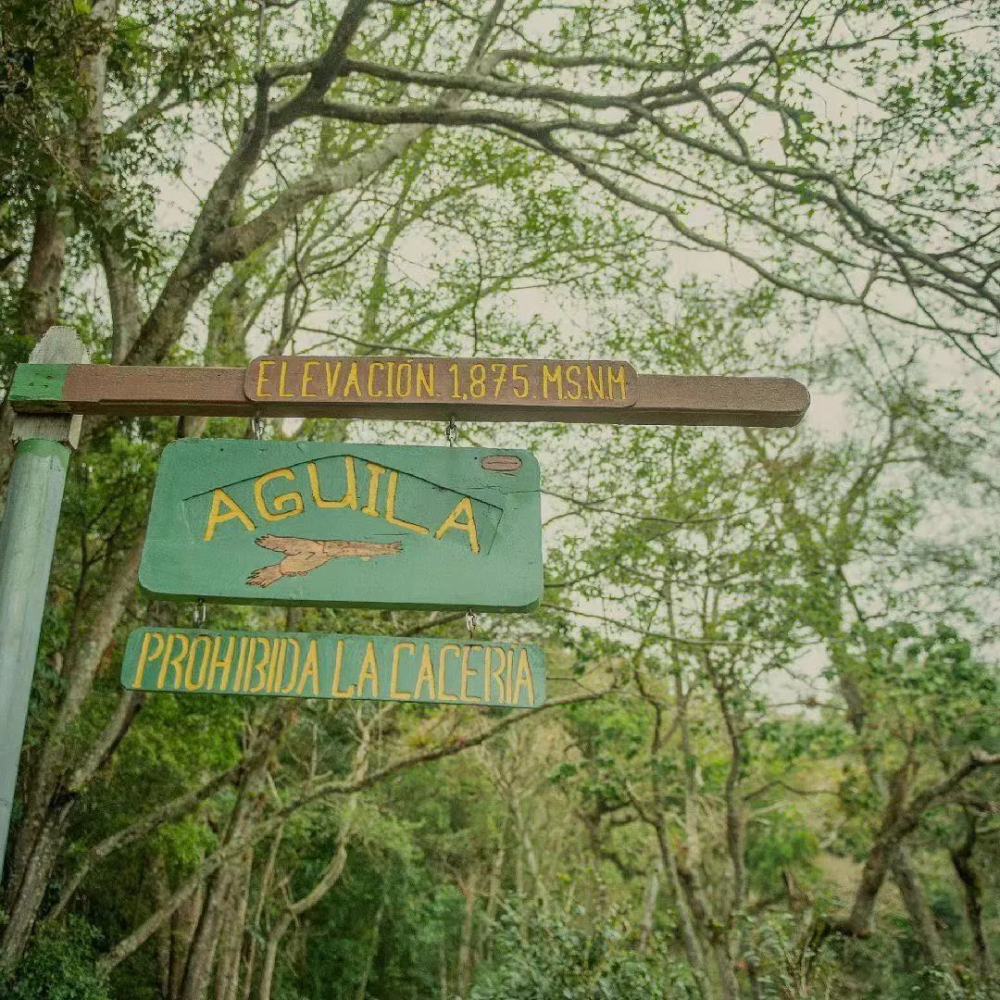
Geisha coffee’s flavor is so excellent that friends accustomed to drinking Geisha coffee may want to try Geisha from other producing regions too. Of course, besides Hacienda La Esmeralda’s Geisha coffee, Panama also has other very famous estates, such as: Elida Geisha Estate, Boquete Estate, etc., as well as Costa Rica’s Mirazu Geisha coffee, Colombia’s Hanami Geisha coffee, and Panama’s Butterfly Geisha coffee. Of course, these are all Geisha blends, but if you want to taste Geisha coffee flavor without spending so much money, this is a very good choice!
The above content is compiled by CoffeeHunters, a coffee news website.


