







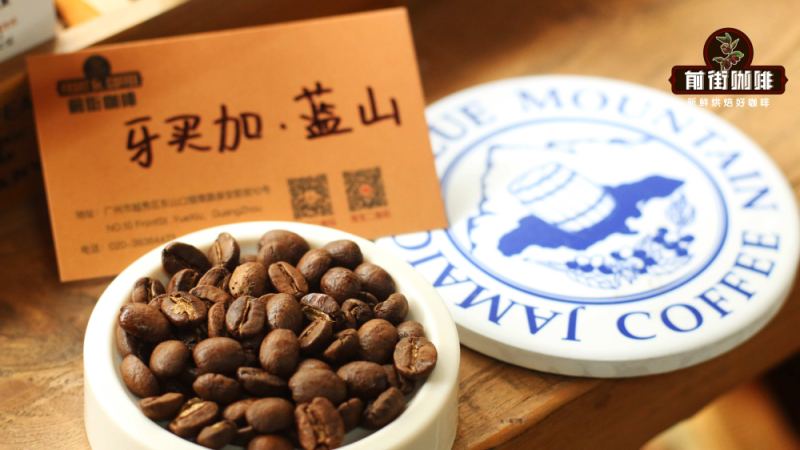
In an era when specialty coffee had not yet taken off, Blue Mountain coffee was already recognized as the industry benchmark. Authentic Jamaican Blue Mountain coffee combines a delicate balance of richness, aroma, sweetness, acidity, and bitterness, with scarce production and a high price, and many imitations on the market. This article, based on the experience of Front Street Coffee (FrontStreet Coffee) store output, systematically explains the identification methods of authentic Blue Mountain No. 1, the clean taste brought by washed processing, and key parameters in pour-over such as grind size, water temperature, dripper selection, pouring technique, and coffee-to-water ratio, to help you brew a cup of Blue Mountain coffee with distinct layers and lasting richness.
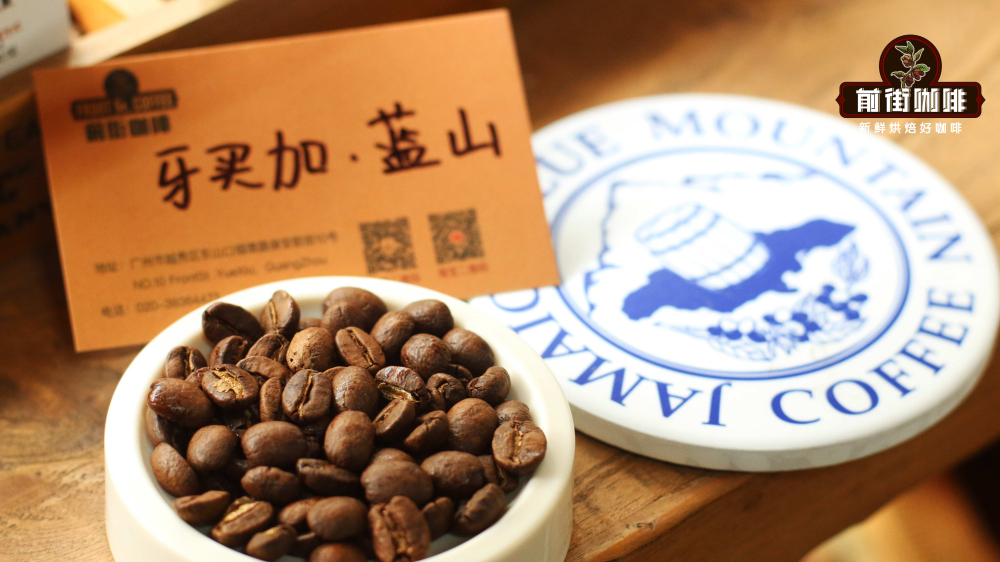
Before the concept of specialty coffee entered everyone's view, Blue Mountain coffee was already the leading king in the coffee world, and even those who do not drink coffee have heard of Blue Mountain's fame. High-quality Blue Mountain bitter coffee has a perfect combination of richness, aroma, sweetness, acidity, and bitterness. How should such a refined flavor be brewed? This article shares the brewing approach from the baristas at Front Street Coffee (FrontStreet Coffee) store to explain how to pour-over Blue Mountain.
First, prepare a pack of authentic Blue Mountain coffee beans.
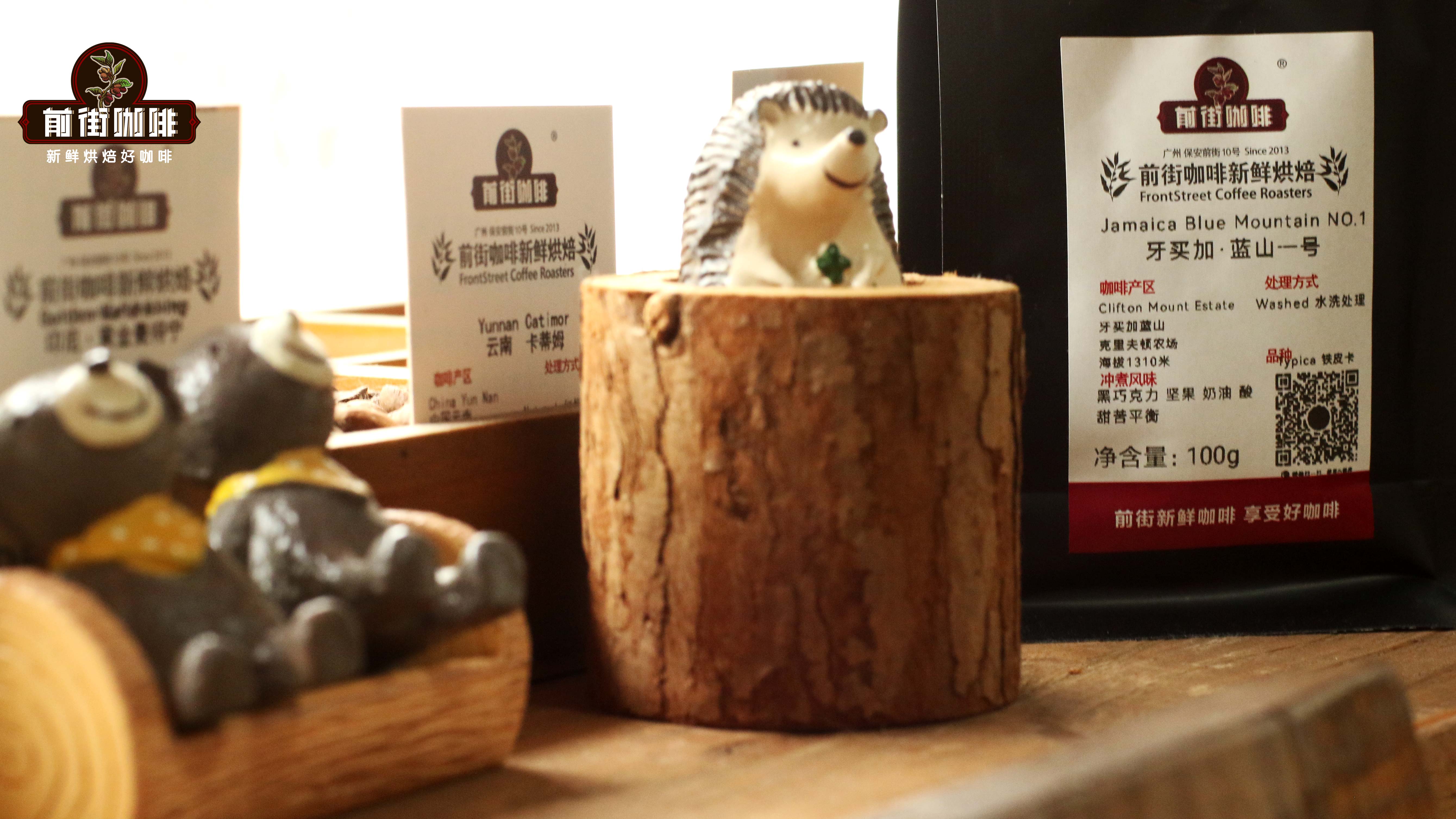
I believe many friends, when buying Blue Mountain coffee, first consider identifying its authenticity. Indeed, because authentic Jamaican Blue Mountain coffee grows in the steep terrain of the high-altitude Blue Mountain range, management and harvesting are difficult, various labor costs are high, and annual production is only about 900 tons. When distributed around the world, it is naturally scarce and expensive. Therefore, many merchants, in order to profit, think of labeling low-quality coffee with the word "Blue Mountain" to pass it off as genuine. We often see "Blue Mountain blend" and "Blue Mountain flavor" coffees on shopping platforms. If the "Blue Mountain beans" we buy cost only a few dozen yuan, they are very likely fake. For reference, Front Street's Blue Mountain No. 1 coffee beans are listed at 158 yuan/100 grams per pack.
In Jamaica's Coffee Industry Regulation Act, only Typica coffee grown at 910–1700 meters in specific areas of the Blue Mountain range can be named "Jamaica Blue Mountain." In addition, the Jamaican Coffee Industry Board CIB has strict regulations: Jamaican Blue Mountain coffee is divided into Blue Mountain No. 1, Blue Mountain No. 2, Blue Mountain No. 3, and Blue Mountain Peaberry. The Blue Mountain coffee obtained by Front Street is the highest grade, Blue Mountain No. 1. Blue Mountain No. 1 coffee beans must meet a screen size of 17 or above, with defective beans not exceeding 2%, a moisture content of about 10–12.5%, and in cupping they must have just the right acidity, sweetness, bitterness, body, and aroma. One can imagine that the quantity of such refined, premium coffee beans is extremely small.
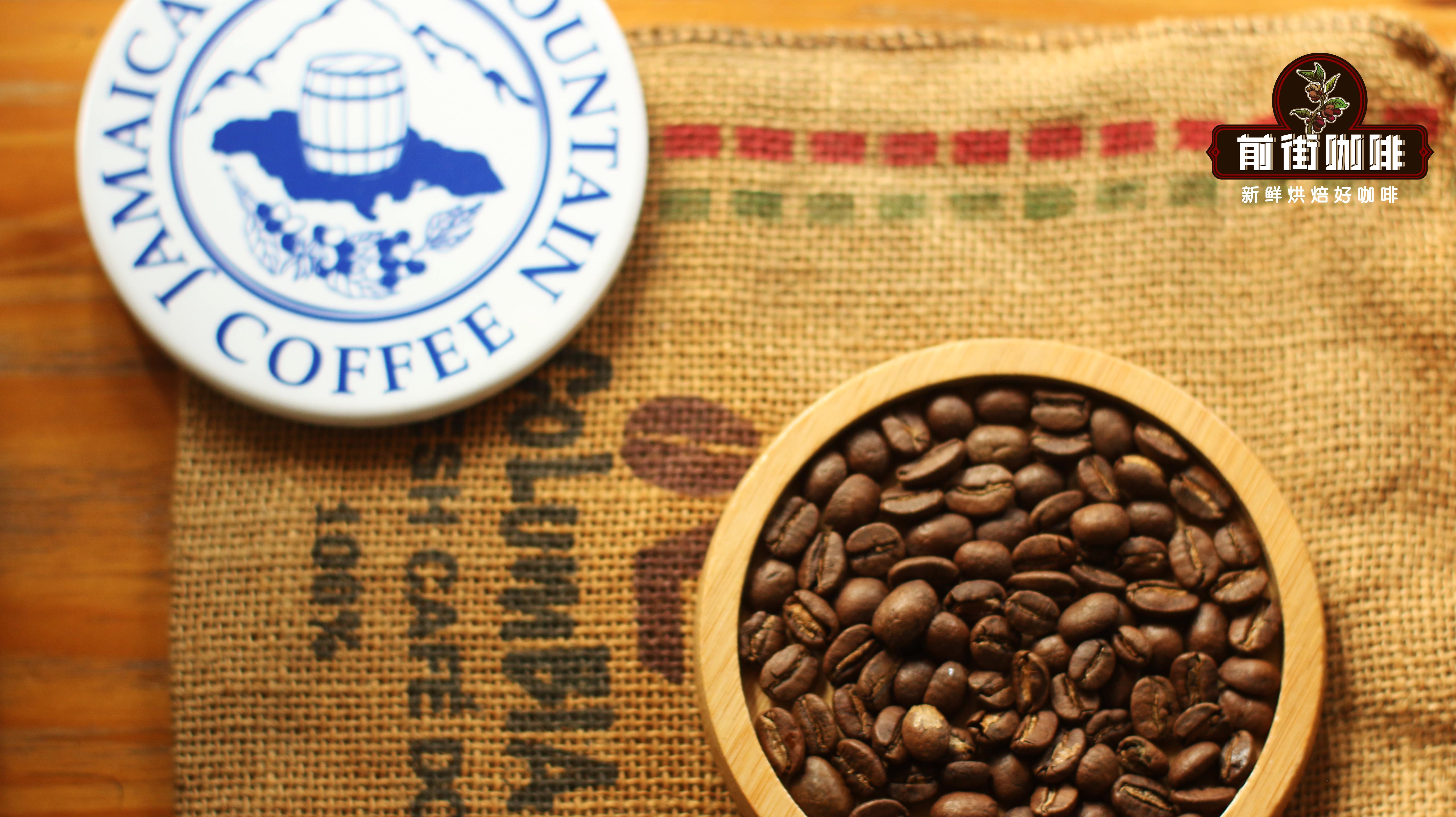
Blue Mountain coffee uses wooden barrels to package green beans, making it appear distinctive from the moment of purchase. Compared with the burlap sacks commonly used in other producing regions, the advantage of oak barrels is that they absorb and release internal and external moisture and isolate the coffee's aroma from escaping, allowing the coffee beans to maintain a more stable moisture content and making roasting more stable. In terms of aroma, Blue Mountain coffee has a rich, dense, and lasting aroma of chocolate and roasted hazelnut, which ordinary dark-roasted blended coffee finds hard to match. In terms of taste, genuine Blue Mountain coffee is balanced in acidity, sweetness, bitterness, and aroma, with no single flavor standing out, and its body and sweetness are just right.
If we cannot distinguish it through the above two points, then ask the merchant to show Blue Mountain-related certificates and the wooden barrels used to pack Blue Mountain green beans. Jamaica Blue Mountain is the only producing region that uses wooden barrels to pack green beans. Front Street's Blue Mountain No. 1 coffee also comes with a quality certificate issued by the Jamaica Coffee Board, an authorized sales certificate issued by the Blue Mountain coffee producer, and a certificate of origin for Jamaican Blue Mountain coffee. Documentary proof and handmade wooden barrels are all displayed in the Front Street store. Front Street's Blue Mountain No. 1 is produced by Clifton Estate and uses the traditional washed processing method, which is also the most common green bean processing method for Blue Mountain.
What taste does authentic Blue Mountain coffee have?
Hand-picked coffee cherries are placed in water, and flotation is used to remove impurities and unripe fruits. Then the skin and pulp are removed, and the beans are fermented in a tank for 12–18 hours. After fermentation is complete, the beans are placed in a tank and moved back and forth, using the friction of the beans and the force of water to wash the coffee beans until they are smooth and clean. Then they are spread out under the sun to dehydrate and dry until the moisture content reaches 12–14%, after which they can be packed and left to rest in the warehouse, and sent for quality inspection before export. Washed processing greatly reduces the defect rate, better restores the aroma of the Blue Mountain coffee beans themselves, and gives a cleaner taste.
When Front Street receives Blue Mountain No. 1 green beans, the beans are uniform and plump, even in size, and overall a bright blue-green. Front Street uses a medium-dark roast to present Blue Mountain's chocolate and nutty aromas to the greatest extent while retaining soft acidity and sweetness, making the overall taste more balanced.
After freshly roasting the Blue Mountain coffee beans, Front Street immediately conducted a cupping. The dry aroma had nuts, melon, and chocolate; after pouring in hot water, aromas of oolong tea, caramel, honey, and dark chocolate were smelled. It tasted of rich dark chocolate, roasted hazelnut, cream, and brown sugar, with a clean and clear flavor, a rich body, and a lasting aroma. So that everyone can also experience these aromas, the coffee beans shipped by Front Street are all guaranteed to be freshly roasted within 5 days, so when you receive them, they are just at their best tasting stage. Below, Front Street explains several key factors in pour-over Blue Mountain coffee based on store output standards.
How coarse should pour-over coffee be ground?
Grind size is one of the most critical factors affecting coffee flavor. After coffee beans are ground into powder and come into contact with hot water, they release a large amount of water-soluble flavor substances. In the same soaking time, the smaller the particles, the more substances are extracted; the larger the particles, the fewer substances are extracted. Simply put, the coarser the grind, the weaker the coffee taste; the finer the grind, the stronger the coffee taste. To adjust the grind size, Front Street uses a tool—a Chinese No. 20 0.85 mm standard sieve. For medium-light roasted coffee beans, Front Street consistently uses a 75–80% passing rate, while for medium-dark roasted coffee beans, Front Street uses 70–75%.
Compared with light-roasted coffee, medium-dark roasted Blue Mountain beans have a looser internal structure, so they absorb water better and easily release large-molecule bitter substances. To avoid over-extraction, Front Street chooses a grind size with a 75% passing rate on a No. 20 standard sieve. In use, Front Street first weighs 10 grams of coffee beans, grinds according to the estimated setting, then places the ground coffee in the upper sieve and shakes it vigorously. Particles smaller than 0.85 mm will fall into the lower layer. Finally, weigh the coffee powder collected in the lower layer and divide by 10 grams to get the passing rate. If the passing rate is lower than the target parameter, the coffee powder is too coarse and needs to be adjusted finer; if it is higher, it is too fine and needs to be adjusted coarser.
What water temperature should be used for pour-over?
Water temperature plays a role similar to grind size. The higher the water temperature, the higher the coffee extraction efficiency, the easier it is to release various substances, and the higher the concentration. If nearly boiling hot water is used for brewing, it is easy to extract unpleasant bitter substances. Therefore, when brewing medium-dark roasted coffee beans, Front Street uses different brewing parameters from light-roasted coffee beans. There is more caramelization than in light-roasted coffee beans, so large-molecule bitter substances are more easily released. To avoid extracting too many off-flavors, Front Street lowers the water temperature a little. The brewing water temperature for light-roasted coffee is 91–93°C, while for medium-dark roasted coffee beans Front Street recommends 87–88°C.
Which dripper is suitable?
If you usually read Front Street's brewing suggestions, you should know that when brewing coffee beans that express body, Front Street gives priority to the KONO dripper. We can observe from the shape of the KONO dripper that only the lower middle part of the dripper has ribs, while the upper half of the dripper is a smooth curved surface. In this way, when we pre-wet the dripper, it can fit tightly with the filter paper, and the coffee's exhaust during extraction is restricted, so the hot water stays in the dripper longer, the coffee extraction rate increases, the concentration rises accordingly, and the coffee taste becomes richer and fuller. The KONO dripper is also suitable for beans with full-bodied flavor types, such as Brazil Queen Estate coffee.
Pulse pouring
If you are a beginner and your water control ability is not yet strong and the flow is not stable enough, then pulse pouring is the simplest and most compatible pouring method. For example, if our brewing time is 2 minutes, and the earlier pouring takes more time than planned, then the subsequent pouring needs to increase the flow rate. Conversely, if the earlier flow is too fast, you can control it with a slower, smaller flow.
Front Street generally uses three-stage pouring, with a 1:15 coffee-to-water ratio. For 1–2 servings, 15 grams of coffee, that is, a total water amount of 225 grams.
Three-stage extraction: First pour 15 grams of coffee powder into the dripper and level it. In the first stage, pour 30 g of water to bloom for 30 seconds, and start timing at the same time. Use a small flow from the center point throughout, beginning to spiral outward, making sure the entire coffee bed can be moistened.
In the second stage, still use a straight, small flow to pour 100 g of water. The purpose is to raise the entire coffee bed. You can spiral as widely as possible so that all coffee particles enter the state of degassing and extraction. Finish pouring at about 1 minute 05 seconds, when the scale shows 150 g.
When the liquid level drops to half, begin using a small flow to pour the third stage of 95 grams in a small spiral. Try to control the flow so it does not spiral too widely, because it is easy to break up the coffee bed and cause under-extraction. Moreover, gentle washing can also increase the release of sweet substances in the later stage of the coffee. The final total pouring amount is 225 grams. Wait until all the coffee liquid has dripped through before removing the dripper. The time is about 2 minutes 10 seconds.
Blue Mountain No. 1 coffee flavor: When hot, Blue Mountain No. 1 coffee enters the mouth with a dark chocolate aroma, very rich, with an obvious almond sweetness. As the temperature drops, roasted hazelnut, cream, sweet and silky, with a hint of soft acidity and caramel sweetness, and the aroma lingers in the mouth.
The above content is compiled by CoffeeHunters, a coffee news website.


