







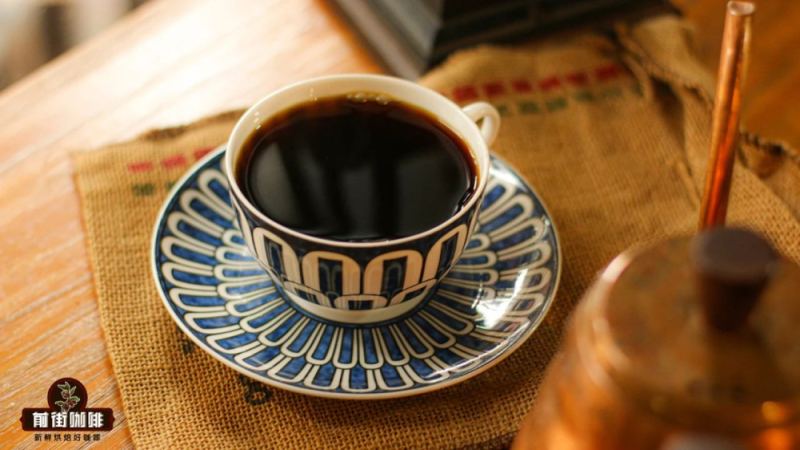
The Story About Coffee Aging: Why Aged Mandheling Tastes Different From Fresh
Aged Mandheling is green coffee stored and matured under strict monitoring for as long as 24 months before roasting. The long rest softens the original fruit acidity, increases body, and builds honey and herbal notes. Fresh Mandheling keeps brighter acidity and lighter body, so the two beans read as different drinks even though they share an origin name.
The story about coffee aging follows the logic of vintage wine and Indian Monsoon Malabar: storage conditions matter more than time alone. Warehouses must be ventilated and cool, and the process must be meticulous, because poor handling lets green beans rot or attract insects. Roasting and a KONO dripper recipe then determine how much of that aged character reaches the cup.
Mandheling is a familiar name to coffee lovers, but aged Mandheling that has undergone long-term storage and maturation has a completely different flavor profile. From the perspective of Front Street Coffee, this article explains the processing logic behind aged Mandheling, how it should be compared with fresh beans, and fully documents Front Street's specific parameters for roasting and brewing this bean. Aging is not simply letting beans get old; rather, it is resting and maturing them under strict monitoring at origin, allowing acidity to diminish, body to increase, and complex notes reminiscent of honey and herbs to develop. The article also provides a KONO dripper brewing recipe and flavor description, making it suitable for readers who want an in-depth understanding of aged Mandheling.
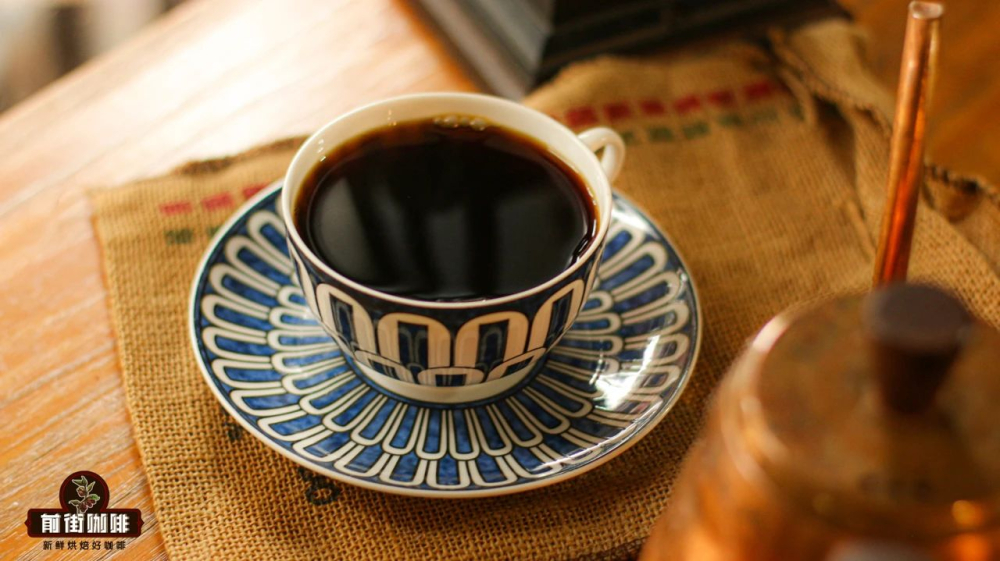
Front Street Coffee has discussed Mandheling many times before, but this particular bean is rather special, and the story behind it deserves to be told separately. It shares a similar logic with Indian Monsoon Malabar—it must be stored for years before that unique flavor develops. This is aged Mandheling. People often say wine becomes mellow with age, and aged Mandheling likewise requires technical processing to achieve a pleasant taste, which is also why many people find Mandheling delicious; of course, some people can never accept it, because this type of flavor itself has a threshold. Storage places very high demands on the environment and conditions: it must be ventilated and cool, and the entire process must be especially meticulous and rigorous. If handled improperly, the green beans will rot or even become infested with insects.
Aged Processing Method
The aged processing method is a special processing method whose core lies in storing green coffee beans for a long time in a specific environment, with the aim of weakening acidity while adding a certain aged character. Similar to vintage wine, green beans must be properly processed and stored long-term before they qualify as true "aged coffee." Mandheling's original fruit acidity becomes soft and gentle over the long maturation, while the body and distinctive flavors deliver even more impact in the mouth. This is exactly what makes aged Mandheling appealing. Farmers first select green beans of exceptional quality, then rest and mature them under strict monitoring standards for as long as 24 months, during which the beans in the storage tank must be turned regularly to prevent dampness and mold. This process is very labor-intensive, and it also produces this aged Mandheling with a more fragrant, richer, and longer-lasting flavor.
This kind of aged coffee actually has a long history in Indonesia. In the early days, shipping was not well developed, and transporting coffee from Indonesia to other countries took a considerable amount of time. As time passed, fresh beans that were originally full of moisture gradually dried out, and combined with the sea breeze, they took on a very special flavor. Later, modern shipping greatly shortened transportation time, and this special flavor instead became a coffee bean specifically produced through processing. Processing aged beans is a technical skill, and the aging process must be closely monitored. The goal is not to let the flavor fade, but to create another kind of pleasant flavor.
Which is better, aged beans or fresh beans?
This question is a matter of opinion. The vast majority of coffee is indeed better when fresh, but aged beans follow a different processing path, just as decaffeination also changes the direction of flavor, so the two cannot simply be compared side by side. It should be clarified that so-called aging is not a case of some bean seller buying new beans, failing to sell them, and then piling them up for several years. Aged beans are stored at origin according to a certain procedure, so they have vintages. As for the origin of aged beans, it is said that in the era before steamships, when people relied on sailing ships, transporting coffee and other goods often took several months. The beans drifted at sea for too long, and their flavor changed. After some people tasted this special flavor and found it good, they bought large quantities, and afterward people at origin began to "create" aged beans under similar storage conditions. Over time, it also became an important category.
Green Bean Analysis
Coffee beans that have been stored correctly will change in both taste and appearance: acidity decreases, the color becomes dark and lacks moisture, the mouthfeel is thicker and the consistency is better, the sweetness carries a honeyed aroma, and some defects originally belonging to green beans also become less obvious. Because the storage environment is dark and the time is long, aged coffee often cannot completely escape a mold-like note, or what is commonly called complex aromas such as burlap and leather. During storage, aged beans must be kept under strict and carefully controlled conditions, turned evenly at regular intervals, and have humidity and ventilation regulated to prevent insect damage or mold. Generally speaking, the storage of aged beans does not take place at the origin or on the estate, but is a commercial practice of green bean distributors or brokerage companies. Coffee beans that have been stored correctly will change in both taste and appearance, for example acidity decreases, the color becomes dark and lacks moisture, the mouthfeel is thicker and the consistency is better, the sweetness carries a honeyed aroma, and some defects originally belonging to green beans also become less obvious.
Front Street Coffee (FrontStreet Coffee) Roasting Analysis, Yangjia 800N, 550g green beans charged
The appearance of aged Mandheling is not particularly attractive. The baptism of time wears away Mandheling's acidity and increases its purity, while the medium-dark profile is rounder. Because Mandheling green beans have high density and aged beans have low moisture, heat adjustments at each stage must be made especially carefully, taking care not to scorch the oil on the surface of the raw beans. Charge when the drum temperature reaches 200°C, set the damper to 3, and after 1 minute of soaking, adjust the heat to 160°C with the damper unchanged. At 165°C, adjust the heat once, lowering it to 140°C. Roast to 5'35'', at a temperature of 146°C, when the bean surface turns yellow, the grassy smell completely disappears, and dehydration is complete, open the damper to 4; at the 9th minute, ugly wrinkles and dark streaks appear on the bean surface, and the toast aroma clearly turns into coffee aroma, which can be defined as the prelude to first crack. At this point, listen carefully for the sound of first crack. At 9'30'', first crack begins. Reduce the heat to 80°C, open the damper fully to 5 (heat adjustment must be very careful; do not reduce it so much that there is no cracking sound) 40°C, and at 194°C lower the heat and drop the beans at 197.4°C.
Front Street Coffee (FrontStreet Coffee) Cupping Record
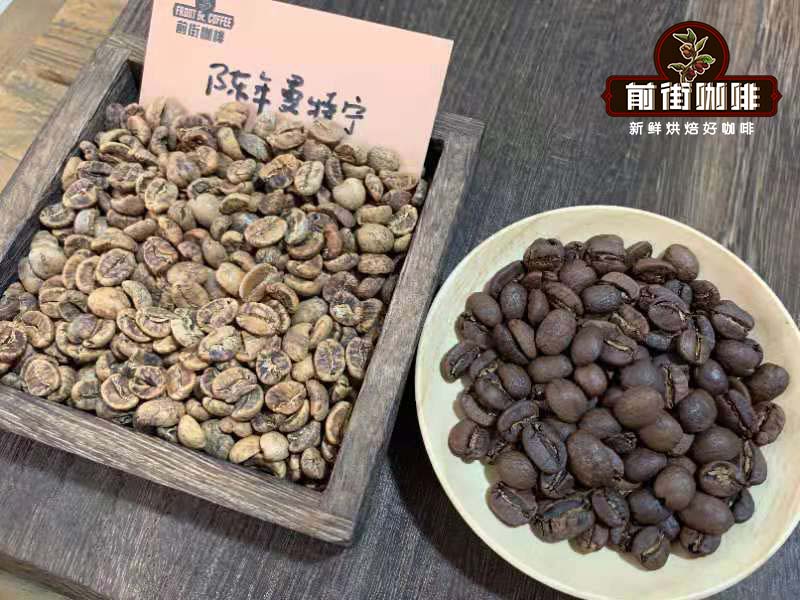
Sumatra Aged Mandheling
Region: Sumatra
Variety: Typica
Processing Method: Wet Hulling
[Front Street Coffee (FrontStreet Coffee) Aged Mandheling Coffee Brewing Parameters]
Dripper: KONO Dripper; Water Temperature: 88°C; Grind Size: Fuji Royal grinder setting 4
Analysis: The KONO dripper does not have many ribs at the bottom, and the filter paper fits tightly against the dripper, achieving the purpose of restricting airflow. This allows water and coffee grounds to have a longer contact and immersion time in the dripper, ensuring extraction time and extraction yield for a coarse grind. This allows the coffee grounds to be fully extracted, enhances the full-bodied mouthfeel, and makes the flavor more concentrated.
Front Street Coffee (FrontStreet Coffee) Brewing Method: Water-to-coffee ratio 1:14, 17g coffee, first pour 25g of water, bloom for 30s, second pour up to 238g of water, extraction time about 2:00
Flavor Description: Herbs, caramel
For more specialty coffee bean knowledge, please add the private WeChat of Front Street Coffee (FrontStreet Coffee), WeChat ID: kaixingoguo0925
The above content is compiled by CoffeeHunters, a coffee news website.


