







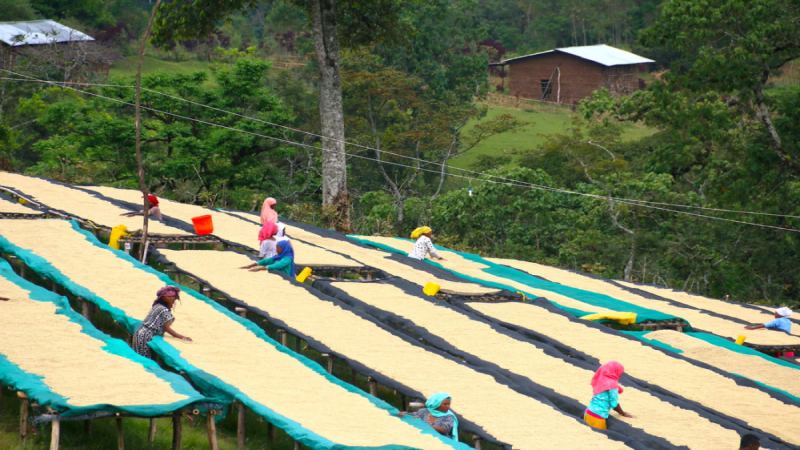
Yirgacheffe, as a representative of Ethiopian specialty coffee, has won over countless coffee lovers with its bright fruit acidity and jasmine aroma. But do you know the historical origins and grading system behind it? Why are Ethiopian coffee beans of inconsistent sizes? From the perspective of Front Street Coffee, this article sorts out the region definition of Yirgacheffe, the ECX grading standards, and provides a detailed analysis of the brewing parameters and flavor performance of Front Street Yirgacheffe Washed Gedingding, helping you fully understand this African star coffee.
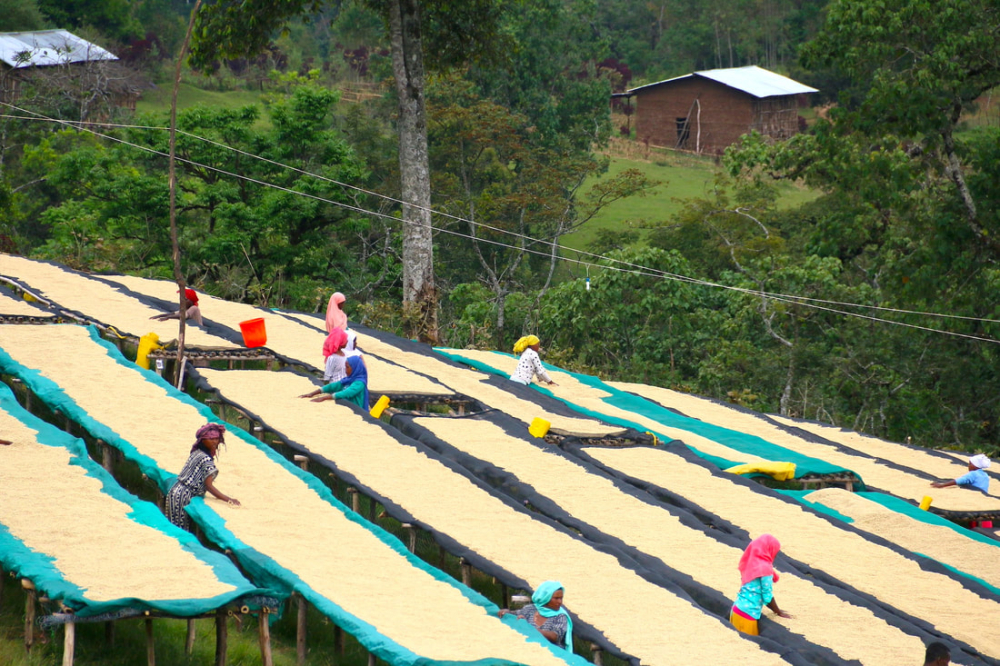
For more specialty coffee knowledge, please follow: Front Street Coffee ( Frontsteet Coffee )
There are countless reasons why people love African coffee, and Ethiopian coffee is especially so. This country's coffee industry carries a profound historical heritage and traditions passed down from generation to generation, with truth and legend intertwined to form a unique character. Whether it is the widely circulated story of the shepherd Kaldi and his goats, or Yirgacheffe, which coffee enthusiasts delight in discussing, Ethiopian coffee always exudes a pure sense of romance.
As the birthplace of coffee, Ethiopia possesses an extremely impressive number of coffee varieties, and to this day a large number of wild varieties remain formally unrecorded and unpublished. For this reason, many local coffee varieties are collectively referred to as heirloom varieties. For example, if a typical large estate plants entirely Bourbon varieties, the harvested beans will naturally be relatively uniform in size. Front Street offers another example: suppose an estate planted multiple varieties such as Bourbon, Typica, Caturra, Catuai, and Castillo mixed together on the same plot of land. When coffee farmers harvest, they do not distinguish varieties tree by tree, but instead collect the ripe cherries together into the same basket, so the coffee beans purchased by merchants are inevitably of uneven size.
Based on this situation, Ethiopia also developed a coffee grading system suited to its own conditions. According to past practice, washed coffee beans were usually classified as G1 and G2, with a smaller number indicating a higher grade; natural process coffees were graded using G3, G4, and G5. However, it is said that Ethiopia has now introduced new grading standards.
Among the classic representatives of Yirgacheffe, Front Street Gedingding Coffee and Front Street Red Cherry Coffee both reach the highest G1 grade, and both exhibit the bright fruit acidity that is the signature of Yirgacheffe.
The so-called "Yirgacheffe flavor" can be simply summarized as: a distinctive citrus and lemon fruit aroma, accompanied by the fragrance of jasmine, with a fresh and bright mouthfeel, layered acidity, and a clean cup without off-flavors. According to ECX contractual agreements, in addition to Yirgacheffe town itself, coffee produced in areas such as Wenago town to the north, Gelena Abaya to the west, and Kochere town to the south can also be classified within the Yirgacheffe flavor region.
A while ago, Front Street Coffee (FrontStreet Coffee) posed this question in a barista assessment: Why are Ethiopian coffee beans of inconsistent sizes? Indeed, upon careful observation, one will find that most Ethiopian coffee beans are mixed with large, medium, and small-sized beans.
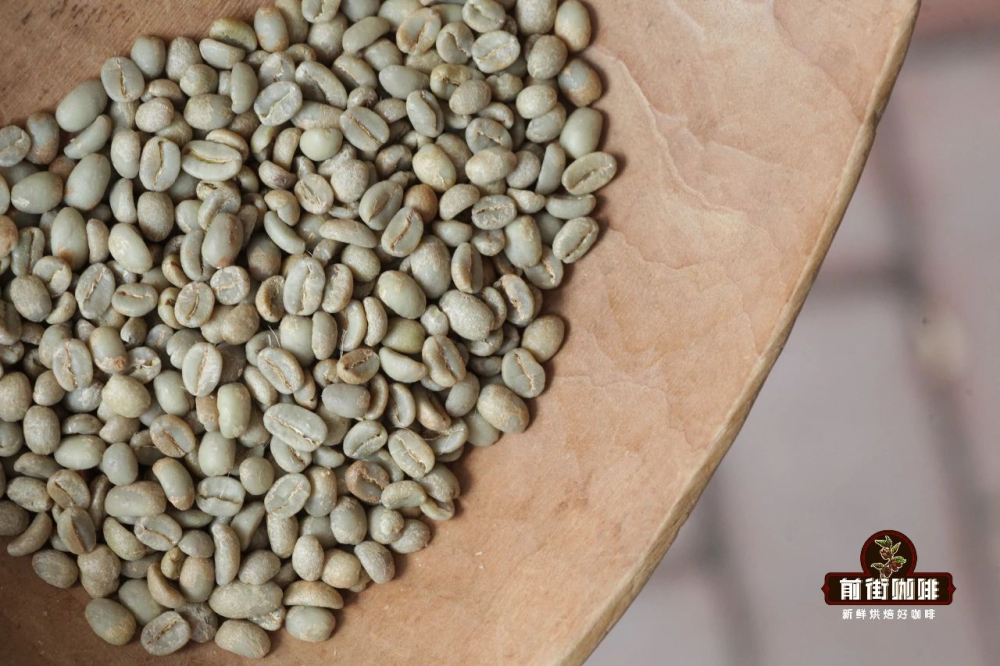
Front Street believes this is closely related to Ethiopia's local coffee grading methods and heirloom bean varieties. Front Street Coffee (FrontStreet Coffee) has learned that before the establishment of the Ethiopia Commodity Exchange (ECX), Ethiopia's coffee export grades were set by the CLU department (Cupping and Liquoring Unit) under the Ministry of Agriculture, mainly grading based on the number of defective beans contained in 300 grams of green coffee beans, with a total of five grades, where a smaller number indicates a higher grade. Grade1 allows no more than 3 defective beans, Grade2 allows 4 to 12, Grade3 allows 13 to 25, Grade4 allows 26 to 45, and Grade5 allows 46 to 90.
Since the establishment of the Ethiopia Commodity Exchange, the grading method has shifted to scoring based on a combination of the physical attributes of green coffee beans (accounting for 40%) and cup quality (accounting for 60%).
Washed process:
Physical characteristics (40%): defect count (20%), appearance size (10%), color (5%), odor (5%)
Cup quality (60%): cleanliness (15%), acidity (15%), mouthfeel (15%), flavor characteristics (15%)
Non-washed process:
Physical characteristics (40%): defect count (30%), odor (10%)
Cup quality (60%): cleanliness (15%), acidity (15%), mouthfeel (15%), flavor characteristics (15%)
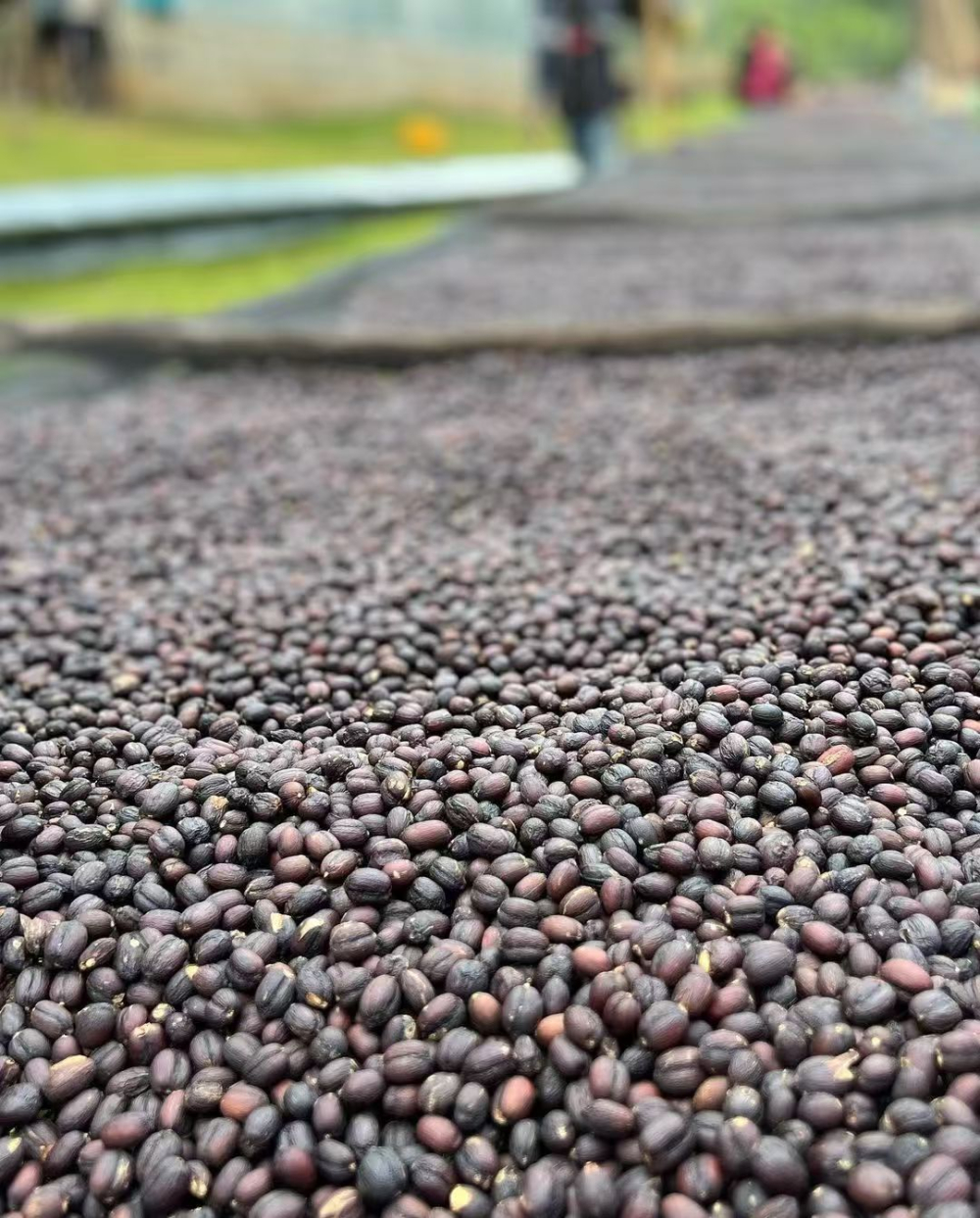
From the above introduction, it can be seen that Ethiopian coffee grading focuses more on defect rates rather than whether green bean sizes are uniform. However, when Front Street observed G1 and G2 green coffee beans, it found that G2 green beans were noticeably uneven in size with more defective beans, while G1 green beans were uniform in particle size.
Next, Front Street Coffee (FrontStreet Coffee) will brew a Yirgacheffe coffee for everyone — Front Street Yirgacheffe Washed Gedingding from the Gedingding Cooperative. First, let us introduce the correct brewing method for Front Street Yirgacheffe.
Front Street Coffee (FrontStreet Coffee) brewing parameters: V60 dripper, water temperature 91°C, water-to-coffee ratio 1:15, coffee dose 15g, fine granulated sugar grind size (80% passing rate through China standard No. 20 sieve)
Front Street brewing method: First bloom with 30 grams of water for 30 seconds, then pour in a circular motion with a small stream of water until reaching 125 grams for a staged pour. When the water level drops and is about to expose the coffee bed, continue pouring until reaching 225 grams and then stop. When the water level drops again and is about to expose the coffee bed, remove the dripper. (Timing starts from the beginning of blooming.) Total extraction time is 2 minutes 00 seconds.
[Front Street Yirgacheffe Washed Gedingding] Flavor description: The dry aroma carries a faint jasmine fragrance and ginger flower note. On the palate, it enters with a soft citrus acidity. As the temperature drops, the acidity becomes more prominent, transforming into lemon and plum flavors, with a noticeable sugarcane sweetness and a faint lingering oolong tea finish, presenting an overall mouthfeel like fruit juice tea.
The above content is compiled by CoffeeHunters, a coffee news website.


