







What exactly does the "Operation Cherry Red" that appears so frequently on café menus mean? Many people mistakenly believe that Cherry Red coffee has a cherry flavor, but that is not the case. Operation Cherry Red is a quality improvement project initiated by the Dutch coffee merchant Trabocca, encouraging small-scale Ethiopian farms to carefully select fully ripe coffee cherries. The Yirgacheffe Natural Cherry Red supplied by Front Street Coffee comes from this project. This article will start with the origins, operational mechanism, and producing regions of Operation Cherry Red, then provide a detailed interpretation of Front Street Natural Cherry Red's origin information, flavor characteristics, processing method, as well as the brewing parameters and techniques suitable for medium-light roast and medium-dark roast respectively, helping coffee lovers gain a comprehensive understanding of this coffee.
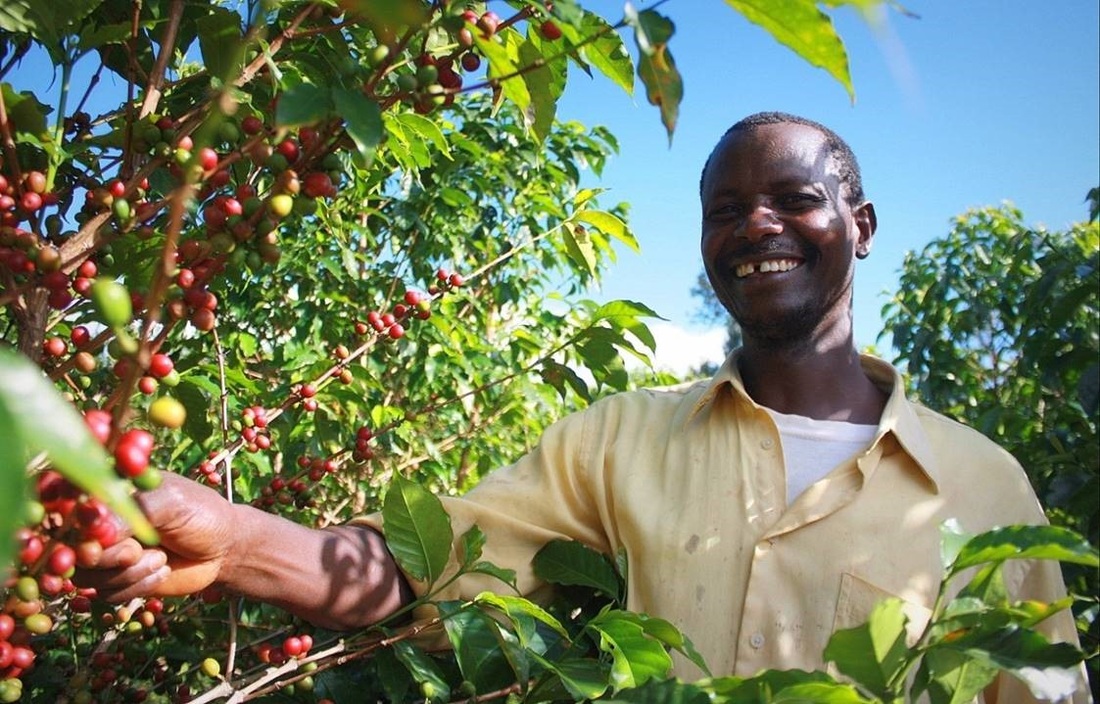
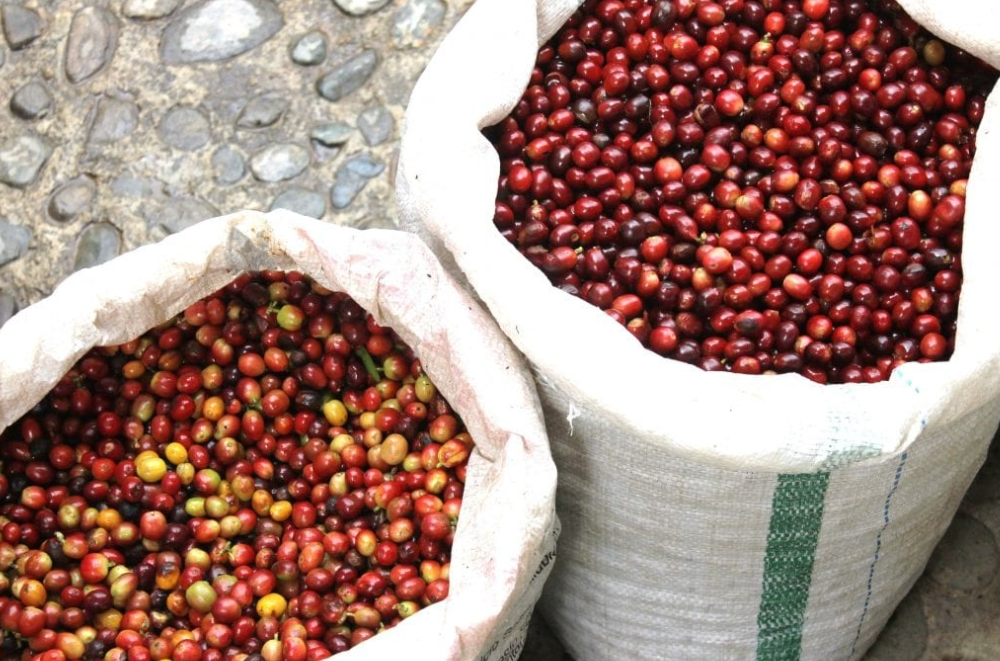
Nowadays, on the menus of many cafés, you can often see phrases like "so-and-so Operation Cherry Red," "so-and-so Cherry Red Natural," or "so-and-so Cherry Red Washed." Front Street is often asked by customers: Is cherry added to Cherry Red coffee? Some even claim they can taste cherry (truly impressive). So since there is no cherry ingredient in the coffee, why is it named "Cherry Red" instead of red apple or red strawberry? The reason is that when coffee cherries are fully ripe, they resemble cherries in appearance, showing a dark red color, with a shape and color close to cherries, hence the name Cherry Red.
Yirgacheffe
Operation Cherry Red, also known as Operation Cherrie Red, was initiated by a Dutchman.
Front Street will elaborate in detail below, but after reading, please don't tell others that Operation Cherry Red coffee beans have a cherry flavor.
Operation Cherrie Red (ORC) is a project aimed at improving the quality of small-scale farms, with the core goal of motivating bean farmers and bringing surprises to roasters. Trabocca, the largest coffee bean merchant in the Netherlands, invites all Ethiopian farms before the harvest season to produce small batches of beans for them, about 1,500 to 3,000 kilograms (i.e., 25 to 50 bags). Only women are allowed to participate in the sorting process; they must pick out fully 100% ripe red cherries, which has a huge impact on the final coffee flavor. Therefore, Ethiopian women with good eyesight, careful attention, and willingness to work hard are the key force driving Operation Cherry Red forward.
Operation Cherrie Red is also a strengthening measure, prompting farms to invest more effort in sorting and selecting beans, and the prices of these coffees are correspondingly higher. Operation Cherrie Red covers various types including washed, natural, semi-washed, semi-natural, and experimental coffee, with main producing regions including Yirgacheffe, Sidamo, Bonga Forest, Lekempti, Kembata, Ilubabor, Harrar, Limu, and in 2011 Golocha (near Harrar) was added. These producing regions each have unique flavors, fully showcasing the individuality of Ethiopian coffee beans. After Trabocca receives the coffee, it sorts again, and through cup quality tests conducted by offices in both Ethiopia and the Netherlands, farms that meet the standard receive substantial bonuses. The cupping score must reach 88 points or above to become a quality coffee recognized by Operation Cherry Red.
Trabocca, the company driving Operation Cherry Red, has invested all profits earned over the years back into partner farms. Trabocca emphasizes that this is a non-profit project, with only 4 people executing it, including the boss and secretary, while the rest of the administrative affairs are supported by the parent company to reduce expenses, with all profits returned to partner farms.
Sharp-eyed friends should have noticed that the words Cherry Red also appear on Front Street's bean list. That's right, Front Street has always supplied Yirgacheffe Natural Cherry Red.
Specialty Coffee Yirgacheffe Recommendation — Front Street Natural Cherry Red Coffee Beans
Region: Yirgacheffe, Ethiopia
Estate: Aletaland Estate
Altitude: 1,700 meters — 2,200 meters
Variety: Local heirloom
Processing method: Washed process
When Front Street Coffee first evaluated this Natural Yirgacheffe coffee bean, it found the mouthfeel clean and refreshing, with the white floral aroma and citric acidity characteristic of Yirgacheffe coffee , along with a honey-like sweetness in the aftertaste and a hint of fermentation.
The Yirgacheffe producing region is located in southern Ethiopia and is famous for its abundant coffee. With high altitude, dense vegetation, and fertile soil, coffee plants can grow naturally. Ethiopia has a warm tropical climate with distinct dry and rainy seasons. Because the climate and growing environment are ideal, Yirgacheffe coffee trees do not need to rely on pesticides or other chemicals for cultivation.
Yirgacheffe was once part of the Sidamo producing region. Because Yirgacheffe coffee beans have flavors such as white floral notes and citric acidity, and a clean, refreshing mouthfeel, many people cannot forget them and keep coming back. This also prompted many coffee farmers outside Ethiopia's Yirgacheffe area to label their coffee beans as "Yirgacheffe" for sale, disrupting the market. Later, the Yirgacheffe producing region had to become independent from the Sidamo producing region and become a separate producing region.
The coffee beans currently on Front Street's bean list from the Yirgacheffe Operation Cherry Red project use the oldest and most primitive natural processing method. After picking ripe red cherries and strict selection, the coffee cherries are spread on African raised beds for sun drying; this natural drying method gives the coffee rich fruity flavors. During drying, workers turn the cherries from time to time to let them dry evenly and avoid undesirable fermented sourness caused by improper drying. In addition, because the coffee cherries are far from the ground on African raised beds, they can avoid picking up earthy flavors.
To highlight the berry, citric acidity, faint white floral notes, and honey sweetness, Front Street Natural Cherry Red finally uses a medium-light roast, suitable as a single-origin pour-over, French press, immersion in a Clever Cup, as well as siphon and cold brew, all performing well. In addition, considering that many people like espresso, Front Street Cherry Red SOE is presented with a medium-dark roast; using an espresso machine and moka pot can extract moderate crema and berry aroma, with a sweet-and-sour, refreshing taste, low bitterness, and brightness.
Front Street baristas take into account that coffee with a lighter roast dissolves more slowly during brewing, so they use a finer grind size and higher water temperature for brewing. To avoid over-extraction caused by high temperature, Front Street recommends using a faster-flow dripper for brewing, such as Hario's V60 dripper.
Dripper: Hario V60
Water temperature: 93°C
Coffee dose: 15 grams
Coffee-to-water ratio: 1:15
Grind size: 80% passing a No. 20 sieve
Friends who often read FrontStreet Coffee articles know that Front Street most commonly uses a three-stage pour when brewing coffee. First pour 30 grams of water to completely wet the coffee grounds and let it bloom for 30 seconds; then pour the second stage of water in a slow circular motion with a small stream until 125 grams; when the water level in the dripper drops to the point where the coffee bed is about to be exposed, continue pouring the third stage until 225 grams and stop immediately; wait for the water in the dripper to fully drip into the server below, then remove the dripper. The total extraction time is about 2 minutes.
Because of the three-stage pour, the final cup has a richer layered complexity. Front Street Natural Cherry Red has an obvious sweet-and-sour taste on the palate, with lemon, berries, and fermented wine aromas, and the citric acidity in the finish is lasting with a clear sweetness returning.
The above content is compiled by CoffeeHunters, a coffee news website.


