







Why is Panama Geisha coffee so expensive?
Panama Geisha earns its price through scarcity and demand. The variety needs high altitude, cloud cover or shade, and nutrient-rich soil to show its floral aroma and delicate fruit acidity, and only a small area of Panama meets those conditions. Hacienda La Esmeralda's Red Label lots sit at the top of that supply, and auction prices have reflected it since the 2004 Barista-favorite breakthrough.
At auction the top lots have fetched record figures, reaching roughly $1,029 per pound. The estate sorts its output into Red and Green labels mainly by lot quality, so Red Label represents a narrower selection. Buyers comparing Panama Geisha coffee beans should weigh that grade difference, since it explains much of the gap between a single cup and a bag of green coffee.
Geisha coffee is hailed as one of the most expensive coffees in the world, and among them, the Red Label Geisha from Hacienda La Esmeralda in Panama is particularly notable. From winning the BOP competition in 2004 to today, Geisha's auction prices have repeatedly hit new highs, reaching $1,029 per pound in 2019. But where exactly does Geisha's high price come from? And how should one distinguish between Hacienda La Esmeralda's Red Label and Green Label? Front Street Coffee, as an experienced roaster, not only offers cost-effective Red Label and Green Label Geisha, but also a Boquete Geisha suitable for beginners. This article will comprehensively analyze Geisha's pricing system, grade classifications, brewing parameters, and flavor characteristics, taking you on a deeper journey into the charm of this legendary coffee.
Blue Mountain coffee has always been regarded as a premium coffee, with a solid aroma and a rich, mellow taste, but its price is indeed not low. However, there is now a coffee whose prominence has overshadowed Blue Mountain, and it too ranks among the world's most expensive coffees — that is Panama Geisha. It even gives people a feeling of being unaffordable. As the saying goes, good goods are not cheap, so what exactly justifies Panama Geisha's high price?
I believe many friends, like Front Street, were stunned the first time they tasted Red Label Geisha by that sweet rose fragrance, the rich juice-like sensation interwoven with berries, apricot, and citrus, and the layer upon layer of flavors — an experience still hard to forget. Front Street would like to add here that when baristas mention Geisha coffee, they usually specifically mean Geisha produced in Panama, and among those, Hacienda La Esmeralda is the most famous.
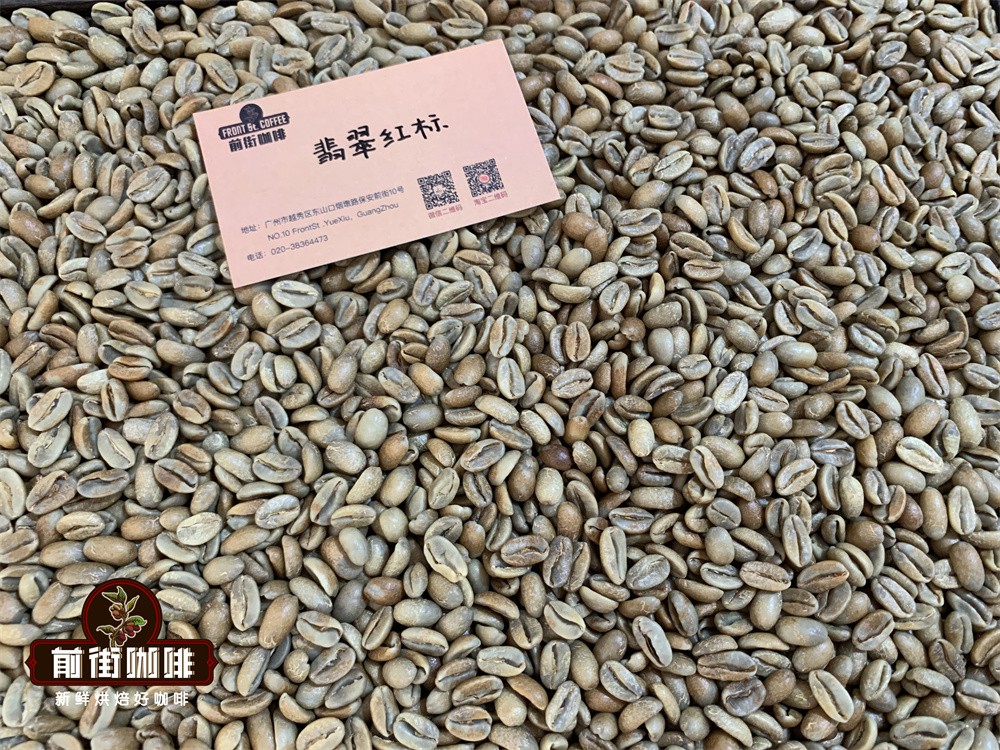
Panama Geisha Coffee Beans
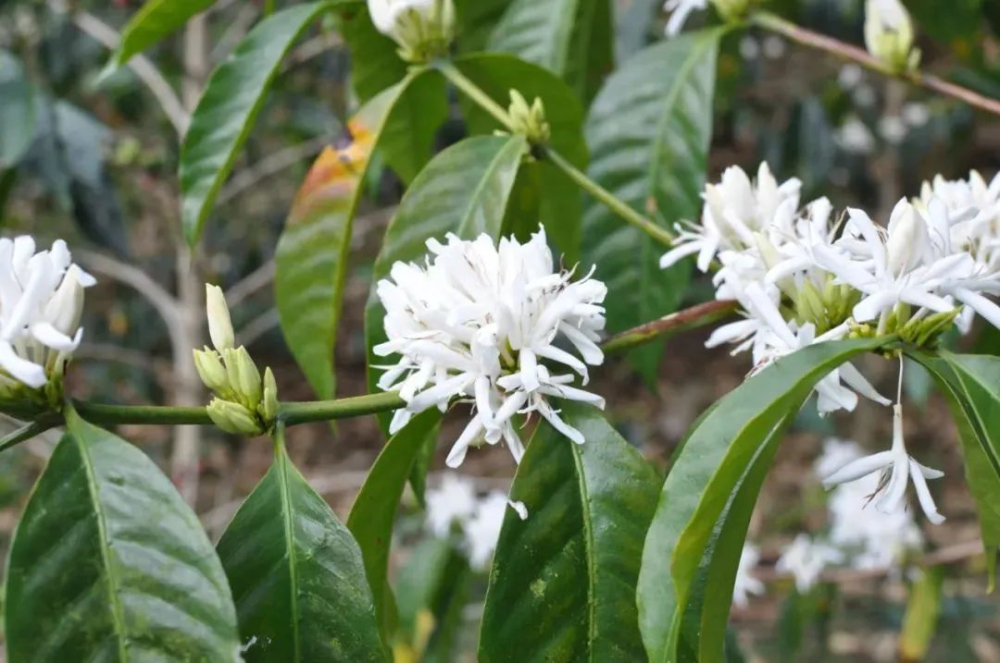
Everyone knows that coffee is essentially an agricultural crop, and its flavor expression is inevitably closely tied to its growing environment and climate conditions. The Geisha variety is extremely demanding when it comes to its growing environment. Only in producing regions with high altitude, cloud cover or abundant shade trees, and nutrient-rich soil can it develop its rich, enchanting floral aroma and delicate, elegant fruit acidity. Panama is located in Central America, connecting North America and South America, and bordering Costa Rica and Colombia. The development of its coffee industry has been remarkably smooth.
The reason Panama Geisha can be renowned worldwide is inseparable from the climatic conditions of its growing environment. Almost all of Panama's coffee cultivation is concentrated around the Chiriquí Volcano, and among these areas, the most beautiful is undoubtedly the Boquete region. It has fertile volcanic soil, abundant water sources, stable rainfall, lush vegetation, and cloud cover, providing excellent growing conditions for coffee trees and thus producing high-quality coffee beans with full flavor. Numerous different microclimates also allow this region to produce coffee beans with diverse flavor profiles, and Hacienda La Esmeralda happens to be located within this producing region.
Geisha is actually a coffee variety originally from Ethiopia, discovered in the Geisha forest in 1931 and subsequently sent to a leading coffee research institution in Kenya; in 1936, Geisha was introduced to Uganda and Tanzania; in 1953, Costa Rica also began introducing the variety; it was not until the 1970s that Mr. Francisco Serracín of Hacienda Don Pachi in Panama obtained seeds from CATIE in Costa Rica and began cultivating Geisha. Because of its extremely low yield and the need to participate in auctions, Geisha at the time was just an unknown coffee tree. Low yield, tall trees, and difficult harvesting were the general impressions people had of it. Nearly half a century later, Hacienda La Esmeralda in Panama separated it from other varieties in 2003 and won the BOP competition in 2004, and only then did Geisha formally enter the public eye.
After winning the Panama cup test, Geisha coffee's fame spread rapidly. This is the most basic law of supply and demand — limited production while the number of people wanting to try it keeps growing, so Geisha's auction transaction prices naturally climbed all the way, from $350.25 per pound in 2013, to $803 per pound in 2018, and now to $1,029 per pound. It breaks its own price record every year. Although more and more coffee farmers are beginning to grow Geisha, the trend of rising prices year after year seems unstoppable.
After Geisha became famous, contestants in many coffee competitions favored using Geisha coffee beans from Hacienda La Esmeralda. In addition to Hacienda La Esmeralda, many other estates in Panama later also grew Geisha coffee beans with extremely refined flavors and participated in competitions and auctions. Many estates hold auctions, bidding at high prices for premium Geisha coffee. At the 2019 Best of Panama (BOP) competition, Panama Geisha continued to sit firmly on the throne of the most expensive coffee with a high price of $1,029 per pound! This undoubtedly added even more bargaining power to its price.
Of course, not all Panama Geisha coffee beans are outrageously expensive. The key still depends on the fame of the producing estate and whose Geisha has a more refined and outstanding flavor. Some Panama Geisha coffees that do not clearly indicate the estate can also display excellent flavors. For example, the Boquete Geisha sold by Front Street Coffee carries the alluring orange-blossom honey charm unique to Panama Geisha. For friends who are just getting into specialty coffee but dare not easily spend on high-priced Geisha, this Boquete Geisha is very suitable as an entry-level choice, and its price of 98 yuan/100g also seems much more approachable.
The Esmeralda Red Label Geisha and Green Label Geisha roasted by Front Street Coffee are fully guaranteed in terms of brand and quality, and more importantly, they offer extremely high value for money. Esmeralda Red Label is 350 yuan for a 100-gram bag; Esmeralda Green Label is only 158 yuan per bag. Calculating based on using 15 grams of coffee beans per cup, one bag of Red Label can make 6 cups of coffee, costing only about 60 yuan per cup. Compared with cafés charging over a hundred yuan per cup, this can be called a conscientious recommendation.
After Geisha coffee became popular, producing countries around the world, including other estates in Panama, also began researching and cultivating Geisha. In addition to obtaining Geisha coffee from Hacienda La Esmeralda in Panama, Front Street Coffee also has Costa Rica Geisha, Ethiopia Geisha, and Colombia Geisha, all worth trying. Their prices are considerably cheaper than Hacienda La Esmeralda's Geisha, but you can likewise taste and understand the basic flavor characteristics of Geisha coffee from them.
Hacienda La Esmeralda Geisha Red Label
In the early days, Hacienda La Esmeralda's Geisha was also divided into Red Label, Green Label, and Blue Label according to growing altitude. However, in the 2021 harvest season, Hacienda La Esmeralda announced the cancellation of the Blue Label series, and Blue Label no longer appears on the official website, leaving only Red Label and Green Label.
【Red Label Geisha】 The highest grade among Hacienda La Esmeralda's current Geisha coffee varieties. Friends who have looked into Hacienda La Esmeralda Geisha coffee beans should know that Red Label was originally translated as Hacienda La Esmeralda Select. Because the icon for this brand's Geisha coffee is red, it is directly called "Red Label."
To be selected as Red Label grade Geisha coffee beans, the growing altitude must reach 1,600 to 1,800 meters or above, and the cup score must be above 90 points. Red Label grade Geisha coffee beans mainly come from the Jaramillo farm and the Cañas Verdes farm. This grade of Geisha has an extremely intense flavor and can even be traced precisely to a specific plot, providing detailed information for friends who want to understand Red Label Geisha in depth.
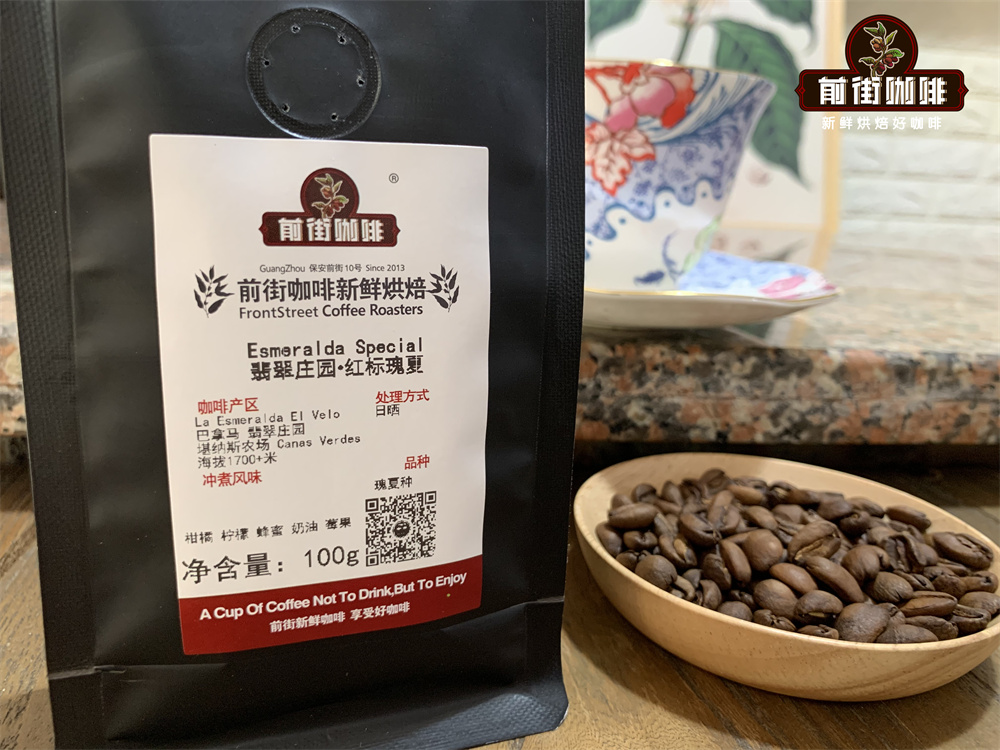
Front Street Coffee's bean shelf naturally would not miss this classic Geisha flavor. The Red Label Geisha coffee beans obtained by Front Street come from the Mario plot of the Jaramillo farm, the same plot where the Geisha coffee flavor was originally discovered, and they also belong to the same farm that won the BOP competition in 2004.
This Hacienda La Esmeralda Red Label Geisha from Front Street uses the natural process, making the typical Geisha flavor more intense and the layering richer and more complex, elevating both the sweet-tart sensation and the aroma to another level. The reason Front Street chose naturally processed Red Label Geisha is that Red Label is Hacienda La Esmeralda's most iconic Geisha coffee, and the natural process allows this iconic Geisha's flavor to be brought out to the fullest.
Front Street Coffee Geisha Brewing Recommendations
The baristas at Front Street Coffee take into consideration that Geisha coffee beans are all light roasts, and the dissolution rate of coffee substances in light-roasted beans is lower than in dark-roasted beans. Therefore, in order to ensure that the Geisha flavor can be fully extracted, they use a higher water temperature for brewing and also choose a finer grind size.
The brewing parameters recommended by Front Street Coffee are: Hario V60 dripper, 90°C water temperature, 15 grams of coffee, 1:15 coffee-to-water ratio, and a medium-fine grind size (80% passing rate on the Chinese standard No. 20 sieve).
Front Street Coffee Brewing Method
Front Street Coffee uses staged extraction, also known as three-stage brewing: first bloom with 30 grams of water for 30 seconds, then pour in a thin stream in circles until the water reaches 125 grams, at which point the stage is divided; when the water level drops and is about to expose the coffee bed, continue pouring until 225 grams and stop. After all the water in the dripper has dripped through, remove the dripper. Timing starts from the beginning of pouring, and the extraction time is 2 minutes 00 seconds. Finally, swirl the entire cup of coffee to mix evenly, pour it into a cup, and it is ready to taste.
Flavor Description
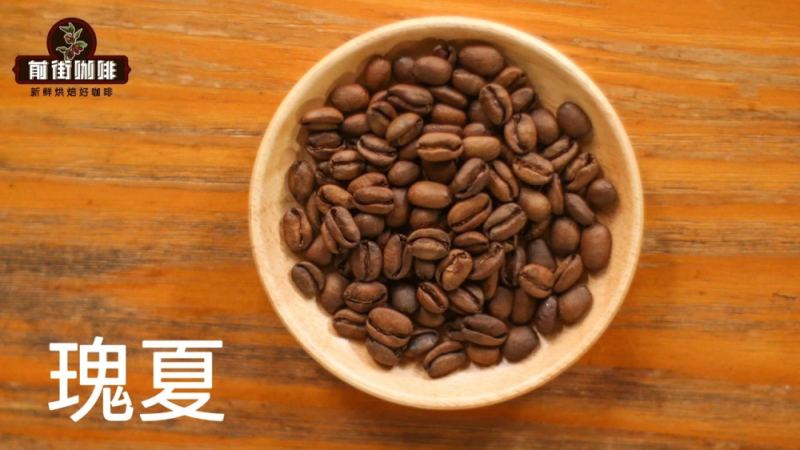
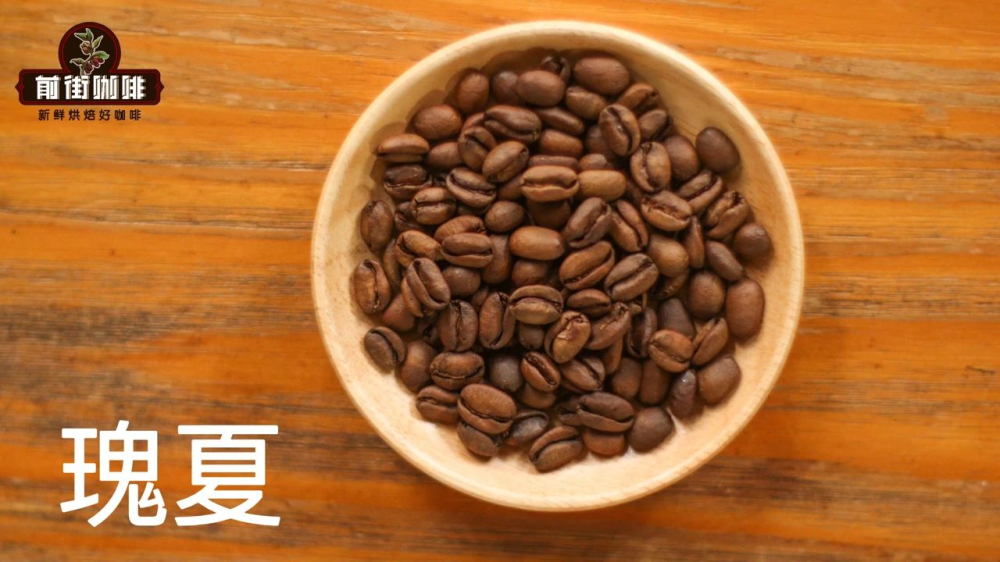
Red Label Geisha coffee flavor: bright rose and citrus aromas, along with notes of genmaicha, berries, apricot, complex fruits, and honey. The juice-like body is thick, the flavor layers are rich, and the sweetness is prominent.
For coffee brewing, Front Street always recommends using freshly roasted coffee beans, as this better showcases the coffee's rich flavors. Therefore, all coffee beans sold by Front Street are products within 5 days of roasting. Front Street's roasting philosophy is "freshly roasted good coffee," so that every customer who places an order can enjoy the freshest condition when receiving the coffee. The resting period for coffee is about 4 to 7 days, so by the time customers receive it, it is exactly at its optimal flavor.
Of course, some customers need Front Street to help grind the coffee, which is also fine, but Front Street needs to remind them: once coffee beans are ground into powder in advance, they should be brewed as soon as possible; if they have already been ground into coffee powder, there is no need to rest them anymore, because during transportation the pressure from carbon dioxide inside the package can also mellow the coffee's flavor, so once you receive the coffee powder you can immediately brew a cup. However, after coffee powder contacts air, it oxidizes quickly, meaning the flavor dissipates faster and the coffee's taste becomes less ideal. Therefore, Front Street recommends buying whole beans and grinding fresh for each brew, so that you can better taste the coffee's rich flavors.
Of course, Front Street Coffee has more than 50 kinds of single-origin coffee beans, some expensive and some cheap. The most recommended are Front Street's 7 staple beans. So-called staple beans refer to the coffee beans with the most representative flavors from 7 producing countries. They offer very high value for money, are the best choice for friends just getting started with coffee, and are also the most helpful in discovering which taste you prefer. Of course, if conditions permit, every one is worth trying. After all, different producing countries have their own distinctive flavors. Although you cannot personally visit each of those origins one by one, you can still taste them here at Front Street.
For professional coffee knowledge exchange and more coffee bean information, please follow Coffee Workshop (WeChat public account: cafe_style)
For more specialty coffee beans, please add the private WeChat of Front Street Coffee: qjcoffeex
The above content is compiled by CoffeeHunters, a coffee news website.


