








How Does a Flat White Differ Across Coffee Chains?
A flat white is a milk coffee with a higher coffee-to-milk ratio, built on a double ristretto and thin microfoam. It began in Australia around the 1980s and is served hot only, because the thin foam layer and crema depend on heat. The same drink appears as Starbucks' Rui Bai, COSTA's Chun Yi Bai, and Luckin's Ao Rui Bai.
In the early 1970s espresso machines reached New Zealand and Australia, and drinkers wanted less foam than the thick cappuccino topping of the era. Flat refers to the level surface, White to the milk added. This tutorial news coffee guide shares store standards, from ristretto ratios to microfoam texture, and notes where is costa coffee from for chain comparison.
The same coffee drink is called 馥芮白 at Starbucks, 醇艺白 at COSTA, and 澳瑞白 at Luckin—it is the Flat White, which originated in the Southern Hemisphere. This rich milk coffee, known for a high coffee-to-milk ratio, has been popular since the 1980s and is now a staple on café menus in China. This article will walk you through the origins and flavor characteristics of the Flat White, and using our own store's standards as an example, share the specific approach of pairing a double ristretto with thin microfoam. We will also explain why a Flat White is usually served hot only, and what to choose as an alternative if you want an iced drink. Whether you are a coffee enthusiast or someone preparing to open a café, you will find practical references here.

The same cup of coffee goes by different names at different chain brands: Starbucks calls it 馥芮白, COSTA calls it 醇艺白, and at Luckin Coffee it is named 澳瑞白. In the end, it is the "Flat White"—a rich milk coffee with a higher proportion of coffee and less milk.
How did the Flat White come about?
This drink originated in Australia in the Southern Hemisphere and rose to popularity around the 1980s. In the early 1970s, espresso machines successively entered New Zealand and Australia, and locals expected milk coffee to have a more pronounced coffee flavor. On top of that, at the time cappuccinos often had thick foam piled more than three centimeters high on the surface, looking just like a hamburger, so more and more people wanted the foam to be flatter.
As the foam on the surface of milk coffee became thinner and thinner, eventually leaving only a delicate layer, with the whole drink almost level with the rim of the cup, the name Flat White was settled. Flat refers to being level, while White refers to the white coffee with milk added. Its charm lies in the fact that the drinker does not have to deal with the foam on top first before drinking the coffee below, but can instead feel the rich aroma of the espresso crema in one sip while tasting the smoothness of the foam and milk blended together.
Entering the 1980s, Australians began to put the Flat White on fixed menus, and it then gradually spread to cafés in the United States and elsewhere. In China, most people probably first saw it on the Starbucks menu—in 2015, Starbucks introduced it and named it 馥芮白, making it one of its main promoted products, which also marked this milk coffee's entry into the mainstream.
How Front Street makes its Flat White
Every coffee shop understands the Flat White somewhat differently, so the way it is made naturally varies, but they usually adhere to several common points: a small cup size, thin yet dense foam, a moderate temperature, coffee flavor not overwhelmed by milk, and a stable overall mouthfeel. When making a Flat White, Front Street also sticks to the three key elements of a small cup size, thin foam, and a double ristretto.
If you want to make a café-quality Flat White, you can use "Front Street Commercial Blend Coffee Beans," which can adapt to all kinds of fancy drinks. This coffee consists of washed Colombian coffee beans, semi-washed Brazilian coffee beans, and a small amount of Robusta coffee beans, presenting flavors of nuts, cocoa, and caramel. Compared with other espresso recipes, Front Street Commercial Blend uses the classic combination of Brazil plus Colombia, and adds a small amount of Robusta to enhance it, making the original flavor layers richer. In the cup you can feel the complex nutty aromas of toasted bread, almonds, and walnuts, with good crema flow, low acidity, and a full body. Combined with its price advantage, it is a very worthwhile option to consider for opening a shop.
For the coffee base, Front Street Coffee (FrontStreet Coffee) uses a double ristretto: 20 grams of coffee grounds extracted into 30 grams of coffee liquid, with the extraction time controlled at 25–27 seconds. However, Front Street Coffee (FrontStreet Coffee) also reminds you that extraction plans for different coffee beans will differ slightly. The above parameters are adjusted by baristas before opening each day based on the Warm Sun Blend used in the store.
After the espresso extraction is completed, pour it into a pre-prepared cup of about 200 ml, and pour another 150 ml of milk into a milk pitcher for steaming. When steaming the milk, the amount of air introduced should be less than when making a latte, the foam layer should be thinner and more delicate, and the temperature should preferably be 55–60°C for a more comfortable sip. Then evenly integrate the steamed milk with the coffee liquid; whether or not you pour latte art does not affect it.
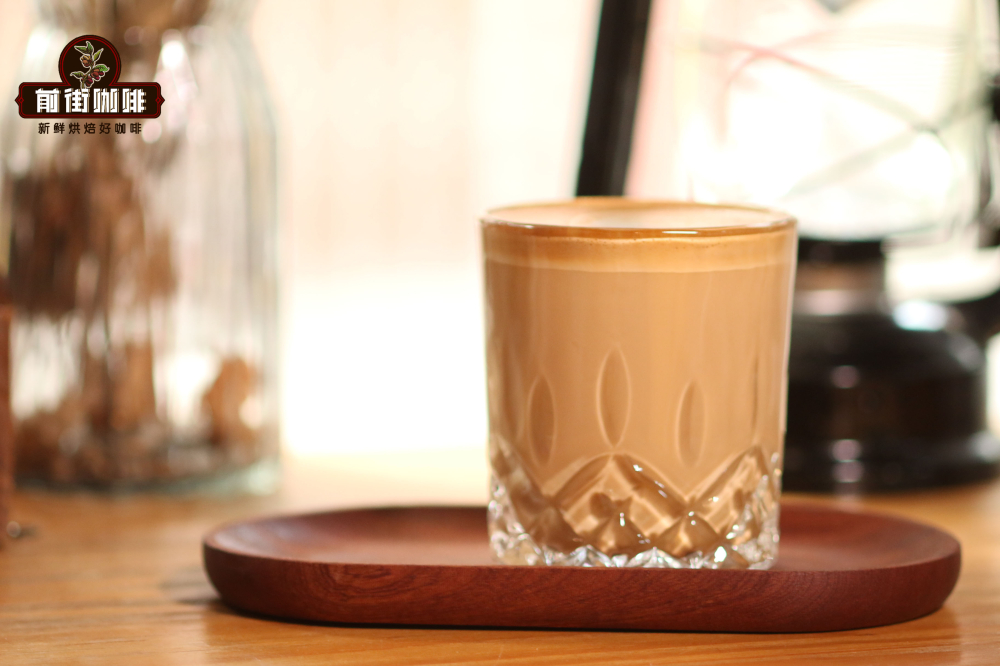
The Flat White produced by Front Street has notes of chocolate milk and whiskey-filled chocolate, with a dense, fragrant, and mellow entry and a long finish.
Can a Flat White be served iced?
A latte can usually be served both hot and iced, while a Flat White is generally made hot only. The reason is that baristas want every sip of the Flat White to convey both the foam and the milk coffee beneath it at the same time. Only when the foam is sufficiently dense, relatively thin, and at a pleasant temperature can it be finished quickly before the foam separates. Once ice cubes are added, the cooled milk coffee will be diluted, and the above experience becomes difficult to achieve.
If you prefer a rich milk coffee in an iced state, Front Street suggests trying the "Dirty," which has also become very popular in the past two years. The method is to drip the extracted espresso onto the top layer of ice-cold fresh milk, creating a "dirty" visual effect, and the interplay of hot and cold gives it a rather special mouthfeel.
The above content is compiled by CoffeeHunters, a coffee news website.


