







Why Is Panama Geisha Coffee So Expensive?
Panama Geisha coffee commands high prices because the variety yields little and demands careful handling. Geisha trees have weak, brittle branches and low production, so growers harvest far fewer cherries per plant than with common varieties. That scarcity, combined with the floral and fruit-forward cup that Hacienda La Esmeralda made famous at Panama's reliable of Panama auction, keeps demand ahead of supply.
The variety's path explains part of the cost. It was recorded in Ethiopia around 1931, moved through research centers in Kenya, Tanzania, and Costa Rica as T2722, and reached Panama in the 1960s. Panama Geisha is often listed among the most expensive coffee lots, while Ethiopia Geisha sells for less. Red and Green Label grades and specific brewing parameters also shape what a cup costs.
Geisha coffee is a highly talked-about variety in the specialty coffee world, with the Geisha produced by Panama's Hacienda La Esmeralda being the most classic. From being recorded in Ethiopia in 1931 to Hacienda La Esmeralda in Panama making a name for itself at the BOP competition, Geisha has traveled a long road of turnaround. This article sorts out the variety's spread and rise to fame, compares the flavor differences between Panama Geisha and Ethiopia Geisha, and introduces Hacienda La Esmeralda's Red Label and Green Label grading system as well as brewing suggestions and specific parameters for Green Label Geisha, helping coffee lovers understand why it is so hard to get a cup.
There is a coffee bean that, without any overwhelming advertising, has a name and characteristics that are already deeply ingrained in people's minds. Some people are firmly captivated by it even before they fully understand the whole picture of specialty coffee. This bean is Geisha. Geisha seems to have a magic of its own, drawing many people who have just encountered specialty coffee into it so deeply that they never come out. Some customers walk into Front Street's store and the first thing they say is: give me a cup of Panama Geisha.
Even though they are all Geisha coffee beans, many friends, when faced with the nearly fifty beans on FrontStreet Coffee's menu, cannot help but wonder: why is Panama Geisha so much more expensive than Ethiopia Geisha?
Ethiopia is the birthplace of coffee, with extremely rich coffee genetic diversity. According to literature records, around 1931 a British person went to Ethiopia for an investigation and recorded a coffee variety labeled "GEISHA." Later, this variety was sent to coffee research institutions in Kenya and Tanzania. Although it had resistance to certain coffee diseases, its flavor performance was mediocre and it did not attract much attention. After passing through several hands, Geisha was brought to the CATIE agricultural research center in Costa Rica and registered under the number T2722.
Research at the time showed that T2722 had a certain resistance to coffee leaf rust, so CATIE distributed Geisha seeds to some growers. A Panama estate owner named Don Pachi introduced Geisha to his estate in the 1960s and exchanged different varieties with neighboring estate owners. However, Geisha plants have weak, brittle branches and low yields, so they did not receive much attention.
Growers in that era did not care about the decisive role of variety in flavor, and they did not specifically label varieties when planting. Under this extensive management approach, some Panama estate owners discovered that coffee from their lower-altitude plots actually tasted better than coffee from higher altitudes, yet they could never figure out why.
It was not until the end of the twentieth century that Hacienda La Esmeralda in the Boquete region of Panama purchased seeds of multiple varieties from CATIE in Costa Rica for trial planting in order to improve coffee quality. Through recording and comparison, they found that Geisha's flavor was completely different from typical Panama coffee: jasmine-like aroma rushing toward the nose, orange, lemon, and honey interweaving into fruity acidity and sweetness, and a clean yet gentle mouthfeel that was unforgettable.
After carefully selecting Geisha from the estate, Hacienda La Esmeralda sent it to that year's BOP competition, won the championship in one fell swoop, and at the same time set a new auction price record for green coffee beans. Only then did other Panama estate owners wake up as if from a dream and begin searching for and marking Geisha plants in their own plots. It was also from this moment that a global wave of Geisha planting was set off.
Today Geisha's planting map continues to expand, covering Bolivia, El Salvador, Mexico, Colombia, Brazil, Ethiopia, as well as Yunnan and Taiwan in China. FrontStreet Coffee has also acquired and compared Geisha from multiple producing countries and regions. Front Street believes that if you want to experience the classic and stunning Geisha flavor, Panama Geisha is still the first choice that makes people applaud.
Some guests have also asked FrontStreet Coffee's baristas: what exactly is the difference between Panama Geisha and Ethiopia Geisha? After Panama Geisha became famous, the owner of Gesha Village Estate embarked on a journey to trace its roots and established Gesha Village Estate near the Geisha forest, the birthplace of Geisha coffee. Although they share the same root and origin, scientific research has found that the genetic differences between Panama Geisha and Gesha Village Geisha are quite large.
In addition to factors such as planting philosophy, estate management, yield, and supply volume, the price of Panama Geisha always makes consumers' jaws drop.
Gesha Village's Geisha is closer to the bright acidity and citrus notes of Ethiopian coffee. What people often call the typical Geisha flavor refers precisely to Panama Geisha. Hacienda La Esmeralda is both the discoverer of Geisha and the promoter of Geisha flavor, so to taste the classic Geisha flavor, Panama's Hacienda La Esmeralda is naturally the first choice.
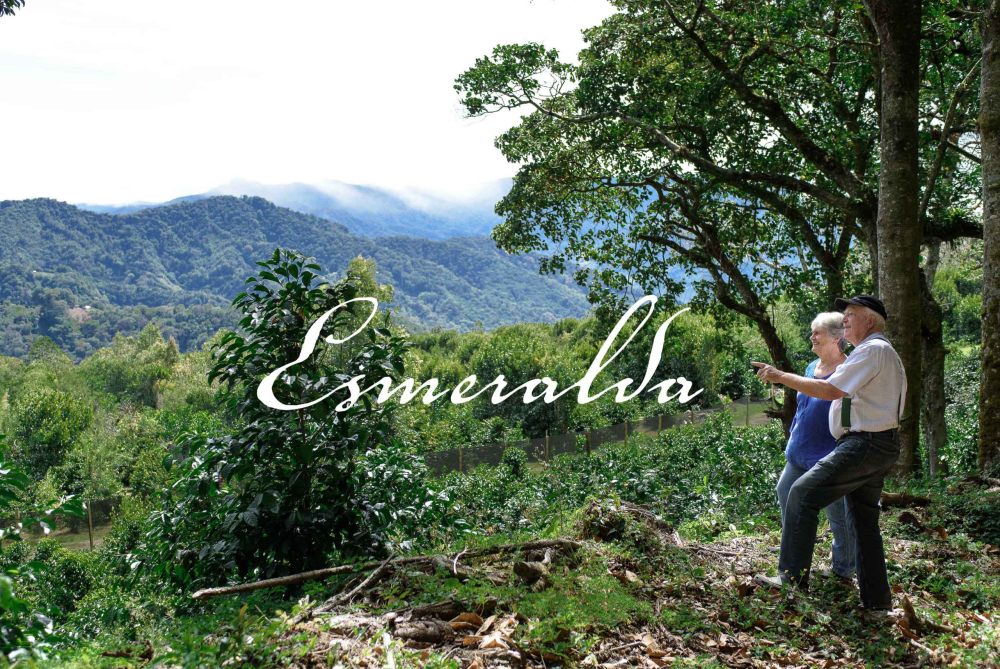
Many friends can recite the Geisha products of Panama's Hacienda La Esmeralda as if counting their family treasures, and the most impressive among them is the Red Label, Green Label, and Blue Label grading. In 2021, in order to protect the estate and product image, Hacienda La Esmeralda canceled Blue Label Geisha. Today Hacienda La Esmeralda's Geisha has only two brands left: Red Label and Green Label.
However, according to Front Street's understanding, Hacienda La Esmeralda's 1,500-meter Geisha coffee beans were sold in a whole batch to a green bean company, and as a result a green bean called Las Rocas appeared on the market. After comparison, Front Street found that this batch of green beans was very close to Hacienda La Esmeralda's original Blue Label Geisha in appearance and flavor.
If we are talking about the choice with the best value for money, Front Street's baristas would recommend Hacienda La Esmeralda's Green Label Geisha. Like the highest-grade Red Label, Green Label also uses Geisha beans from 1,600 to 1,800 meters; the difference is that Green Label is a blend of batches from various blocks, so it does not indicate a specific plot. This also makes drinking Green Label Geisha like opening a blind box—sometimes the flavor is close to Red Label, while the next batch is different again.
Front Street's Green Label Geisha has the typical white floral aroma, citrus notes, and honey sweetness characteristic of Geisha coffee, with rich juiciness and a clean, refreshing mouthfeel. In addition, Front Street's Green Label Geisha also has a sweet aftertaste reminiscent of Tieguanyin. A customer once tasted it and, unable to forget that aftertaste, made a special trip back to the store just to buy a bag of Green Label Geisha beans.
FrontStreet Coffee Panama Hacienda La Esmeralda Green Label Geisha Coffee Beans
Region: Boquete, Panama
Estate: Hacienda La Esmeralda
Altitude: 1,600 meters—1,800 meters
Variety: Geisha
Processing method: Washed process
Front Street knows that some friends do not blink an eye at drinking even the most expensive coffee outside, but when it comes to buying beans and brewing at home, they get nervous. After all, beans are not cheap, and if they cannot brew out that flavor, it really feels like letting their wallet down. So Front Street will now share how Front Street produces Panama Hacienda La Esmeralda Green Label Geisha.
Dripper: Hario V60
Water temperature: 90°C
Dose: 15 grams
Coffee-to-water ratio: 1:16
Grind size: 80% passing through a Chinese standard No. 20 sieve
The coffee beans shipped by Front Street are all freshly roasted within 5 days, and by the time they arrive they have already passed the 4-to-7-day resting period. Front Street recommends blooming during brewing to help the coffee grounds release gas and create stable conditions for subsequent extraction.
First pour 30 grams of hot water for a 30-second bloom, pouring from the center point in a thin stream and slowly circling to 140 grams. When the water level in the dripper drops to the point where the coffee bed is about to be exposed, continue circling and pouring to 240 grams. The total extraction time is about 2 minutes 15 seconds.
Compared with other coffee beans, FrontStreet Coffee uses a 1:16 coffee-to-water ratio when brewing Panama Geisha. Panama Geisha is relatively resistant to extraction; if 1:15 is used, the flavor becomes too concentrated, while switching to 1:16 allows the flavor to unfold, making the floral aroma more prominent and the acidity softer. FrontStreet Coffee's Hacienda La Esmeralda washed Green Label Geisha has obvious jasmine and ginger lily aromas, citrus notes, honey sweetness, and a finish with a sweet aftertaste like Tieguanyin.
For more coffee bean information, please follow Coffee Workshop (WeChat public account cafe_style) For professional coffee knowledge exchange, please add WeChat ID kaixinguoguo0925
The above content is compiled by CoffeeHunters, a coffee news website.


