








How Was Coffee Made With Drip Bags, Step by Step?
Drip bag coffee is a filter pouch of ground coffee, not instant powder, so steeping it in hot water wastes the design and leaves grounds in the cup. Tear open the seal, unfold the hanging ear cards, and rest them on the cup rim. Pour water through in stages. Keep the water at 88 to 91°C and the total poured volume near 120 to 150 milliliters.
Because the bag already controls flow, circling and blooming add little. The method is closer to a simplified pour-over than to boiled coffee, where grounds sit in the water. Two variables matter most: water temperature and total volume. If the drip bag tastes weak or bitter, adjust those first before changing technique.
Can you just brew drip bag coffee by steeping it directly? Of course not. It is a filter bag filled with ground coffee, and the coffee powder is not instant. Steeping it directly wastes the design of the drip bag and also gives you a mouthful of grounds. The correct method is to tear open the seal, unfold the hanging ear cards, suspend them on the rim of the cup, and then pour water through to filter. This article uses six illustrated steps to demonstrate in detail the brewing process for drip bag coffee, while also explaining the two key points of controlling the water temperature at 88-91°C and the total poured water volume at about 120-150 ml, and explaining why hand-brewing techniques such as circling and blooming are of little significance for drip bags. The article also recommends Front Street Coffee Classic 5 Origins Drip Bag Coffee to help you quickly find the flavor you like.

Recently a friend came to ask me how exactly drip bag coffee should be brewed, and whether there are any tricks to it. I am definitely qualified to speak on this question - back then I also treated drip bags like instant coffee and steeped them directly. Now I will explain the correct brewing method clearly in one go.
First, let’s get to know drip bag coffee.
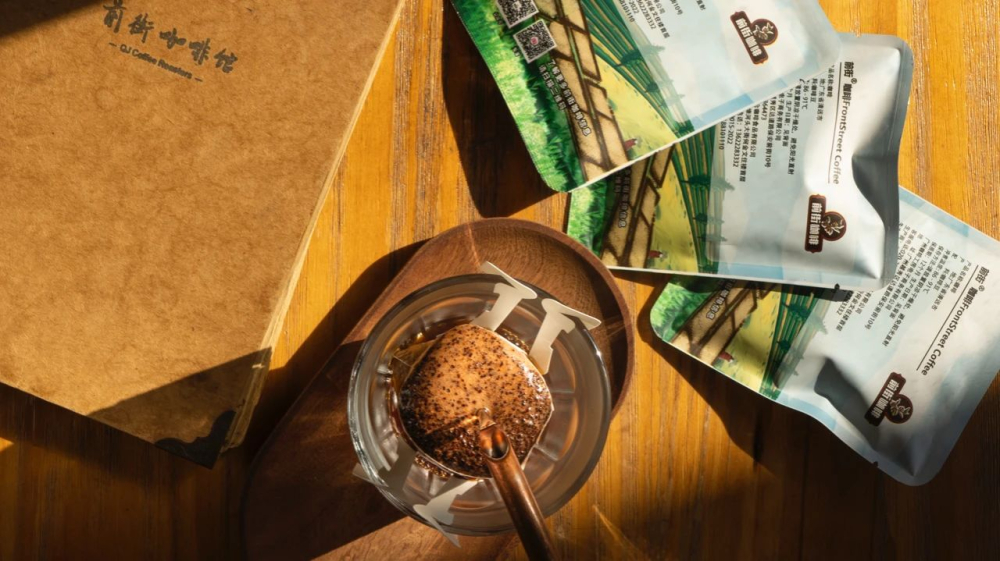
Drip bag coffee is just a filter bag with paper hanging ears, containing coffee grounds. These grounds are made from ground coffee beans, not instant powder, so there will be sediment, and they will not completely dissolve in water. Therefore, opening the bag and throwing it directly into hot water to steep is a very unwise approach. It wastes the design of the drip bag and also makes you drink a mouthful of coffee grounds.
The correct procedure is: tear open the top along the line marked Open on the package, then unfold the small cards on both sides outward and rest them on the rim of the cup.
The core principle for brewing drip bag coffee - the simpler, the better
People willing to drink drip bag coffee are usually not very interested in the taste of instant coffee. Both emphasize convenience, but the flavor gap is huge. Drip bag coffee is closer to a simplified version of pour-over, and the brewing principle is basically the same. Coffee made from the same beans also tastes quite similar, so the range of options is very wide.
If you are trying drip bag coffee for the first time, you can try Front Street Coffee Classic 5 Origins Drip Bag Coffee, which includes Front Street. Washed Yirgacheffe with a white floral note, Front Street. Kenya Little Tomato with berry-like sweetness and acidity, Front Street. Mandheling with a full body, Front Street. Panama Geisha with orange-blossom honey notes, and Front Street. Honduras with chocolatey sweetness. Each bag has a different style, so you can both taste the flavors of classic origins and quickly identify your own preference.
Of course, you can absolutely copy the whole ritual of pour-over: a fine-spout gooseneck kettle, a digital scale accurate to 0.01 grams, a nice glass server, tear open the drip bag and hang it on the rim of the server, then skillfully pour in circles, bloom, and extract in stages.
But if you just want to easily drink a good cup of filtered coffee, the drip bag itself can satisfy you, and it is especially suitable for people who are often on the go or who prefer minimalism.
The biggest advantage of drip bag coffee is convenience. The filter bag with ears already replaces the dripper and filter paper, and the coffee grounds are pre-ground, so even a grinder is unnecessary. All you need to do is pour water into the bag and wait for it to filter out a clean, clear cup of black coffee.
Someone may ask again: should you pour in circles? Should you pause? Should you bloom? In fact, drip bag coffee has far less stringent requirements for pouring technique than pour-over. There are two reasons: a pour-over dripper is cone-shaped, wider at the top and narrower at the bottom, and circling is meant to make extraction more even; while a drip bag is almost the same width from top to bottom, and the opening is not large, so pouring in circles does not have much practical significance.
In addition, there is no need to use a fine-spout gooseneck kettle to brew drip bag coffee. To put it plainly, any container that can pour water will do, including an ordinary hot water kettle or a thermos.
Why do technique and skill have little effect on drip bag coffee? Because in order to be portable, drip bags sacrifice the freshness of the coffee and the operability during brewing, so for the same beans, the flavor of drip bag coffee will not exceed that of pour-over. We only need to use the simplest method to bring out the coffee’s own flavor, and there is no need to compete with pour-over.
There are really only two things to pay attention to when brewing drip bag coffee: water temperature and water volume. Water temperature is a factor to pay attention to when brewing any coffee. Many office workers are used to brewing drip bag coffee with hot water from a water dispenser, but the heating temperature of most water dispensers does not exceed 75°C. Brewed with such water, the taste will be weak and lacking in layers. Front Street recommends controlling the water temperature for brewing drip bag coffee between 88-91°C.
Then how much water should be added? A standard drip bag usually contains 10 grams of coffee, and pouring 120-150 ml of water is enough. Since we are pursuing simplicity, a digital scale can also be omitted. Drip bags are usually hung directly on your own mug to brew, so you can remember the water level line in your cup corresponding to 150 ml, and when the coffee liquid drips to that point, remove the drip bag.
Below is another method of operation for everyone’s reference.
The equipment used is very simple: one pack of drip bag coffee, one tall cup, and one thermos filled with hot water boiled in the morning. The reason for using a tall cup is to avoid the coffee grounds soaking in water for a long time and producing a bitter taste.
① First tear open the drip bag and rest it on the rim of the cup.
② Open the thermos and pour the first stage of hot water into the middle of the filter bag, up to one-half of the height of the filter bag, and wait 15 seconds.
③ Then pour the second stage of hot water, up to nine-tenths full of the filter bag, and stop when it roughly reaches the position of the small card strip attached to the very top of the filter bag.
④ After all the coffee liquid has dripped into the cup, pour the third stage of hot water until the filter bag is nine-tenths full, then stop pouring.
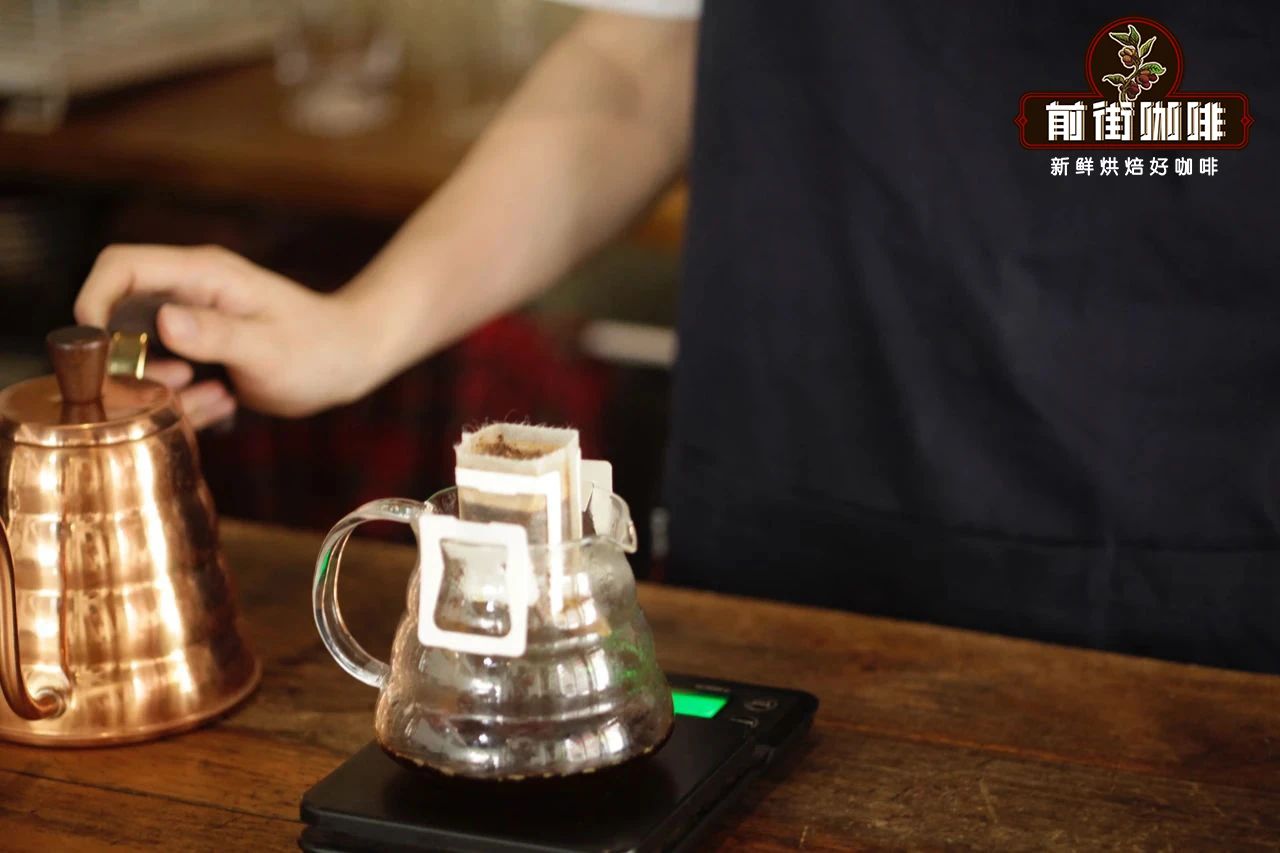
⑤ After the coffee liquid has once again fully dripped through, pour the fourth stage of hot water until the filter bag is nine-tenths full. Once the coffee liquid has finished flowing, you can remove the drip bag.
⑥ Pour water in four stages in total: the first stage is poured to one-half full, and the remaining three stages are all poured to nine-tenths full after the coffee liquid has finished dripping. Front Street has tested this many times, and with this method the total poured water volume is basically around 150 ml.
Actually, brewing a cup of drip bag coffee really does not require complicated operations or equipment. Brewed simply and ordinarily like this, you can still get a delicious cup of drip bag coffee.
The above content is compiled by CoffeeHunters, a coffee news website.


