







What is robusta coffee and why does channeling make espresso burnt and bitter?
A burnt, bitter shot with a pale crema and thin body usually points to channeling, not the beans alone. After extraction, remove the portafilter: an uneven puck surface with small holes shows where high-pressure water punched through. Water then favors those holes, the flow speeds up, and much of the liquid bypasses the grounds, leaving an under-extracted yet harsh cup.
Three causes dominate: uneven distribution of grounds in the basket, too small a dose, and a clogged dispersion screen. Fixing each is straightforward. Roast level also affects stability, and that is where what is robusta coffee matters: robusta adds crema and body but can turn harsh, while the medium-dark espresso blends shops rely on give more consistent output. Adjust grind and dose before blaming the bean.
When pulling espresso, have you ever encountered a situation where the flow rate alternates between fast and slow, the crema is on the pale side, and the coffee tastes burnt-bitter with a thin body? This is very likely caused by "channeling" in the puck. This article will analyze the identification methods for perforation, the three core causes (uneven distribution, insufficient dose, and clogged dispersion screen), and provide corresponding adjustment solutions. It will also explain how the roast level of coffee beans affects extraction stability, and why the medium-dark roasted espresso blends commonly used in coffee shops are better suited for consistent output. If you enjoy a rich crema, you can look into classic recipes like Front Street Coffee's Commercial Blend.
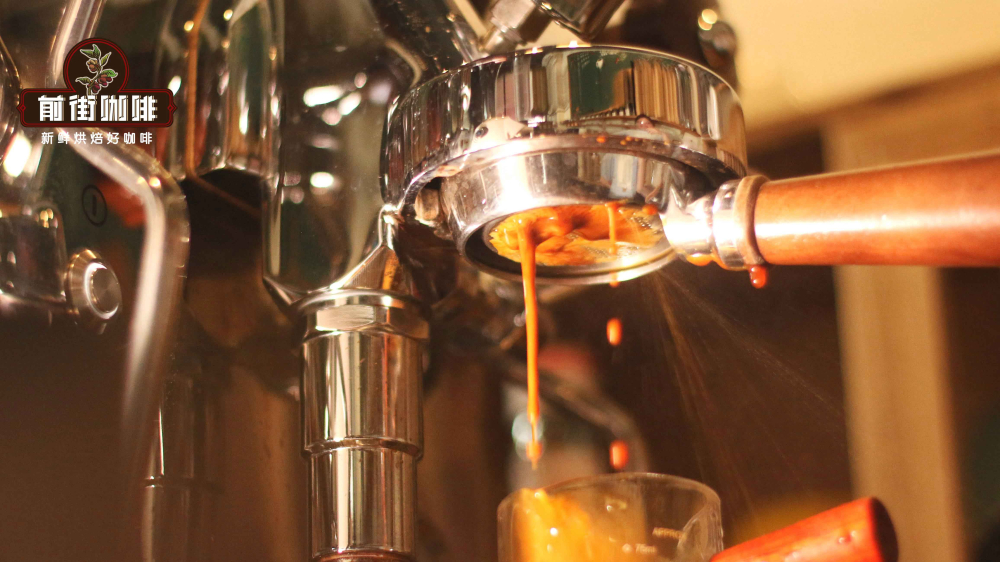
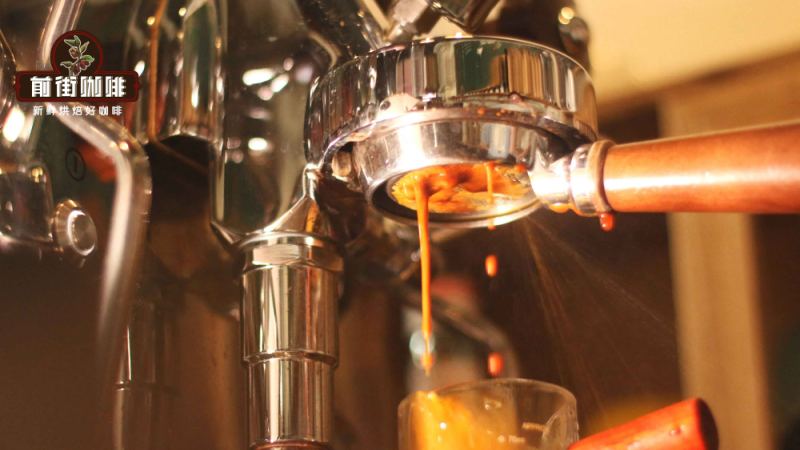
When making espresso, an unstable flow rate is a common problem—sometimes it gets faster and faster, the coffee feels thin when you swirl the cup, and the crema is paler in color. This usually means the puck has been "breached."
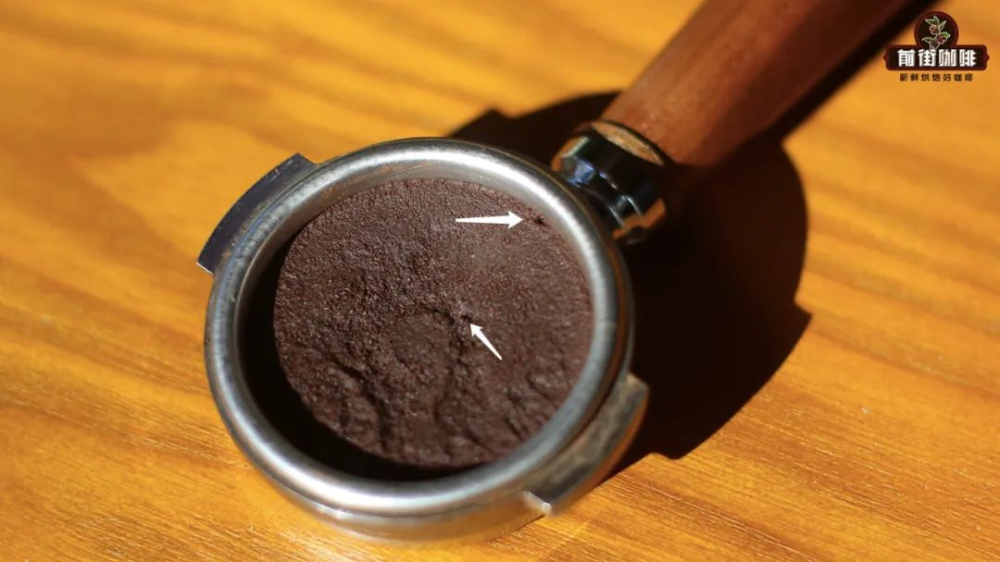
After extraction, remove the portafilter—if you find the puck surface uneven with several small holes, like in the picture below⬇️
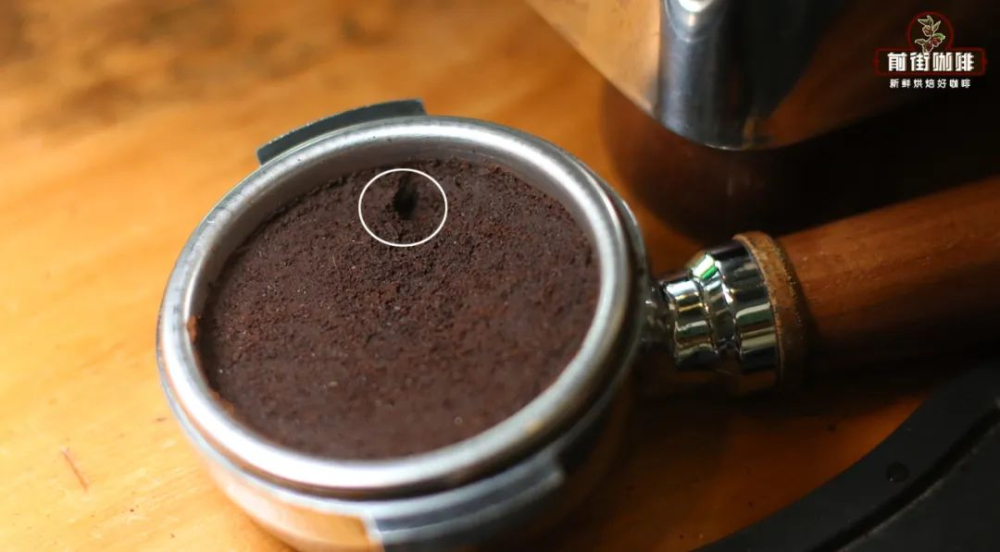
A more obvious case would look like this⬇️
These holes are punched open by the high-pressure water flow during extraction. Once perforation occurs in the puck, the puck's resistance to water flow is no longer uniform—a large amount of hot water will preferentially pass through the holes, so the flow rate appears to speed up noticeably. The water flowing through the holes does not fully contact the coffee grounds, resulting in a thin-tasting cup and paler crema. This phenomenon is commonly called "channeling."
How to determine if perforation has occurred?
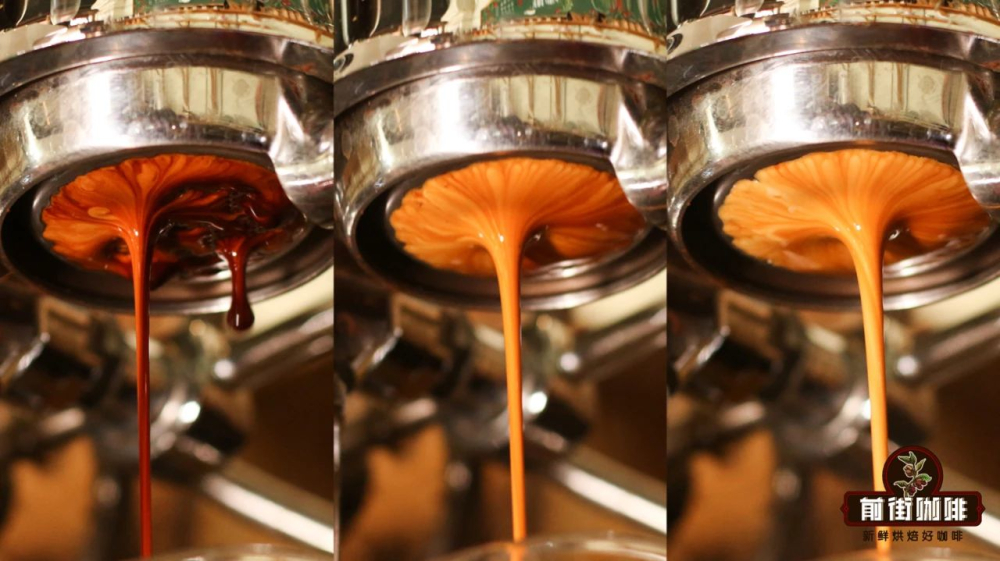
Perforation is easiest to observe with a bottomless portafilter. First, compare normal extraction with perforated extraction: during normal extraction, the coffee liquid flow rate is generally steady, not alternating between fast and slow, and the crema transitions orderly from dark to light overall.
Now look at the perforated case: the coffee liquid flow rate is faster and shows a gradually accelerating trend, even spraying twice—the spray points correspond exactly to the perforation locations, where the flow rate is noticeably higher than the surrounding area, and the crema color is paler.
There are three main causes: uneven distribution, too little coffee dose, and concentrated water output.
Uneven distribution often stems from poor handling during the dosing stage, or repeatedly tapping to level after dosing, which makes the coffee bed denser and denser. A relatively easy way to achieve even distribution is to pile the coffee grounds into a small mound that's higher in the center and lower around the edges, then place the distribution tool vertically on the basket and rotate it several times. If the distribution step is done properly, you only need to ensure level tamping during compression.
When the dose is on the low side, the gap between the dispersion screen and the puck is too large. During extraction, the surface layer of coffee grounds is easily churned up by the water flow, creating inconsistent surface resistance and increasing the risk of perforation. That's why some people avoid this by increasing the dose or switching to a smaller-sized basket.
The dispersion screen's job is to break up the high-pressure water column into an even, fine flow. But if it gets clogged by back-sucked coffee residue, the water flow distribution becomes unbalanced, causing localized high pressure during extraction that can breach the coffee bed. The way to tell is simple: under normal conditions, the dispersion screen splits the water into 4 to 5 streams; if they merge into a single stream, it's time to remove and clean the dispersion screen.
If all the operational issues above have been ruled out and channeling still occurs frequently, then it's very likely that the espresso bean choice is unsuitable. The darker the roast, the more the beans expand, the looser their texture, and the better their water absorption compared to light roasts—making it easier to release flavor compounds during extraction. Light-roasted beans, on the other hand, have a harder texture, and once tamped into a puck, hot water struggles to penetrate and can only seek out gaps, ultimately causing coffee liquid spray.
For stable extraction, it's recommended to prioritize espresso blend beans of the same type used in coffee shops. If you prefer a rich crema, you can try the medium-dark roasted Front Street Coffee Commercial Blend. It uses a classic combination of Brazilian and Colombian beans, with a small amount of Vietnamese Robusta added to enhance the golden crema. The medium-dark roast delivers abundant crema and roasted aroma—smooth and sweet as an americano, rich and silky as a latte, with a lingering finish.
The above content is compiled by CoffeeHunters, a coffee news website.


