







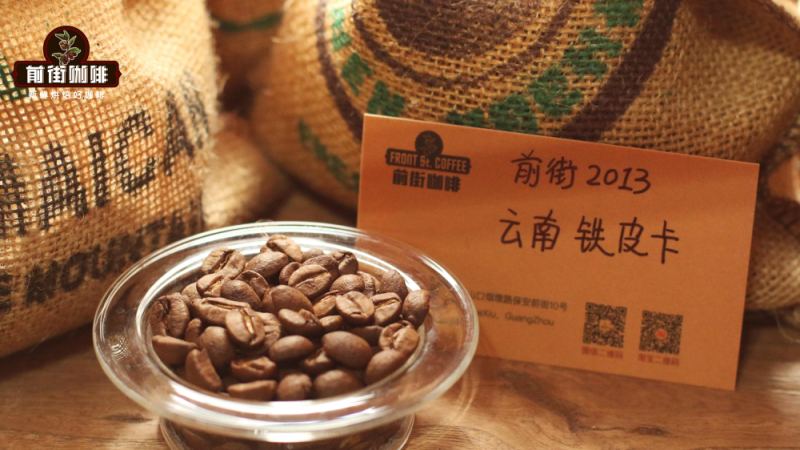
Is Yunnan arabica coffee good enough to drink as a single origin?
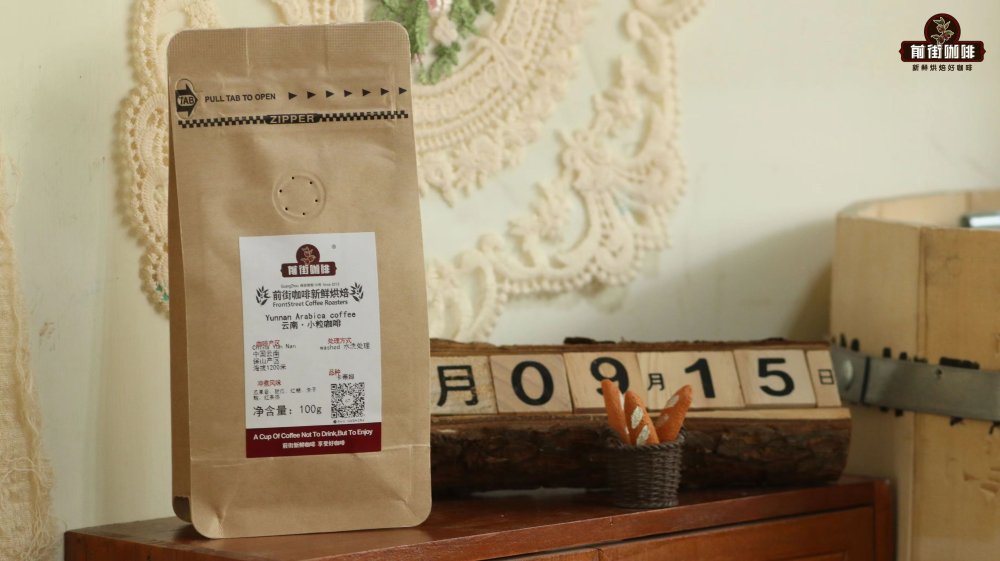
Yunnan arabica coffee has improved substantially and now carries recognizable regional notes of plum, nut, caramel, and tea. The washed Catimor grown above 1,200 meters in Baoshan is a clear example: pulped and then fermented in a water tank for 18 to 36 hours, it shows brighter acidity and a cleaner cup than the province's older commercial lots.
The old reputation came from extensive early farming and a supply chain that sent most Yunnan beans to instant coffee production, where processing was not refined. Government support and the specialty coffee wave changed cultivation and post-harvest handling. Front Street Coffee's daily drinking series uses this Baoshan arabica as a single origin and inside espresso blends, where its caramel sweetness and nut notes carry milk well.
In the past, many people thought Yunnan coffee was mediocre, which is related to the history of extensive cultivation in the early days and its primary supply as raw material for instant coffee. Today, with the support of local governments and the push of the specialty coffee wave, Yunnan coffee's cultivation and post-processing levels have made great strides, and it has gradually established regional flavor labels such as plum, nut, caramel, and tea notes. This article starts with Front Street Coffee's daily drinking bean series, focusing on a washed Catimor from the Baoshan region, to clarify its variety background, green bean state, roasting curve, and brewing plan, and provide its use in espresso blends, helping coffee enthusiasts rediscover the true level of Yunnan small-bean coffee.
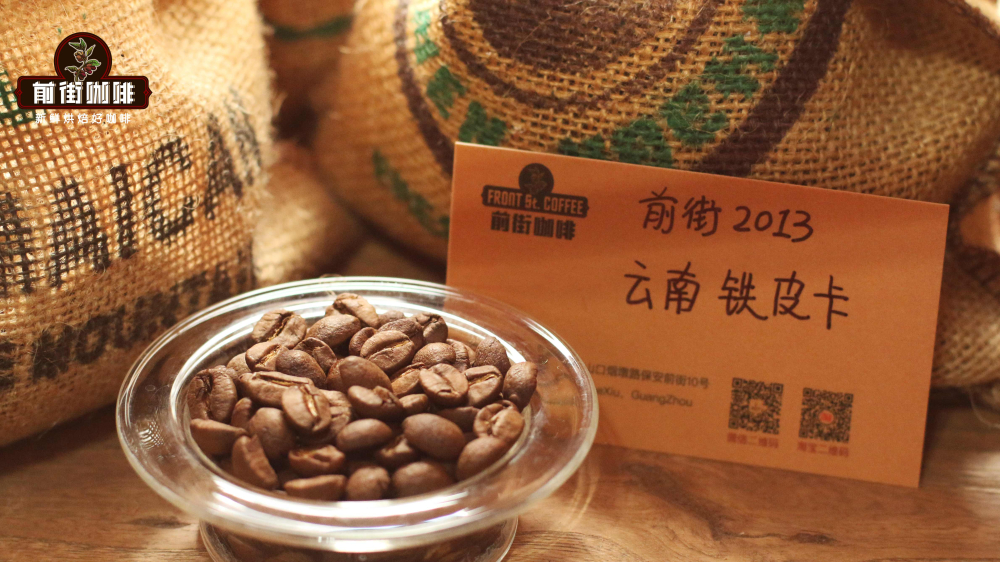
For a long time, Yunnan coffee did not have a good reputation in people's minds. On one hand, early cultivation methods were not scientific enough; on the other hand, most coffee beans produced in Yunnan at that time went to Nestlé for instant coffee production, so green bean processing was naturally not refined.
However, the situation has changed greatly. With the support of local governments, people have now invested more research into Yunnan coffee cultivation; the rise of specialty coffee culture has also brought attention to Yunnan coffee from cultivation to processing, and progress in recent years has been very obvious. Through the joint efforts of all parties, Yunnan coffee has formed its own regional flavor: plum, nut, caramel, and tea notes.
In Front Street Coffee's daily drinking bean series, for the bean representing the Yunnan region, Front Street chose a washed Catimor from the Baoshan region of Yunnan. The reason for choosing Baoshan is that the local altitude and mild climate are suitable for specialty coffee cultivation—usually 1,200 meters is the dividing line between commercial coffee beans and specialty coffee beans, and the higher the altitude, the better the coffee flavor tends to be.
Front Street's bean is grown in the Baoshan area above 1,200 meters. After pulping in the washed process, it enters a water tank to ferment for 18 to 36 hours. This process enhances the bean's bright acidity and also makes the overall mouthfeel cleaner, allowing a more direct perception of coffee quality and the flavor characteristics of the Yunnan region.
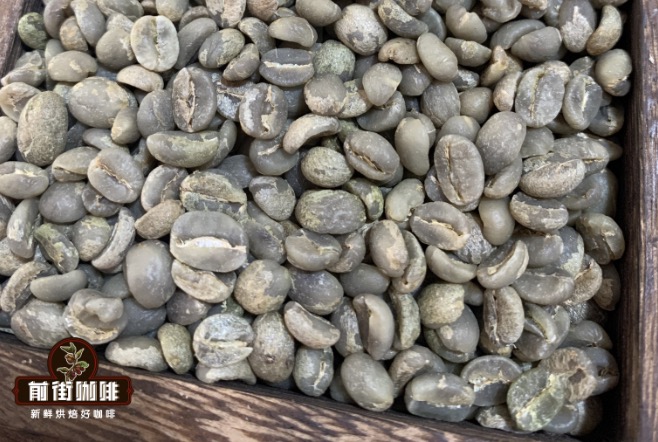
When Front Street received this Yunnan small-bean green coffee, it noticed that the beans were overall uniform and blue-green in color, belonging to the common Catimor variety in Yunnan. The green beans smelled of a faint grassy note and the tart aroma of plum.
Because this variety is an Arabica with a small amount of Robusta genes, its green astringency is slightly more obvious than that of other Arabica varieties. In order to make this green astringency less prominent while still tasting the unique flavor of the Yunnan region, Front Street roasted the beans to a medium level, presenting a cinnamon-bark-like color.
Roaster Yangjia 800N (300g batch size): charge at 190°C, power 120, damper open 3; turning point at 1'40", at 145°C open the damper to 4, keep power unchanged; at 166°C the bean surface turns yellow, the grassy smell completely disappears, entering the dehydration stage; when the temperature reaches 188°C, adjust power to 60°C, damper to 5;
At 8'37", the bean surface shows ugly wrinkles and dark spots, and the toast aroma clearly turns into coffee aroma, which can be defined as the prelude to first crack. At this time, listen carefully for the sound of the first crack. First crack begins at 9'00", damper unchanged, develop for 3 minutes after first crack, drop at 198°C.
Agtron bean color value 63.1 (upper image), Agtron pink value 70.4 (lower image), Roast Delta 7.3.
Front Street Yunnan small-bean coffee brewing suggestions:
Dripper: hario v60
Dose: 15g
Water temperature: 90°C
Grind size: 75% passing a No. 20 sieve
Water-to-coffee ratio: 1:15
Three-stage pouring: first use twice the coffee powder's weight in water to wet the coffee bed, forming a dome, and bloom for 30 seconds; then pour in a small stream in circles from the inside outward, pausing at 125g; when the coffee bed drops to half the dripper's height, continue pouring the third stage with the same fine stream to 225g, until all the coffee liquid has drained, remove the dripper, total time about 2 minutes.
Besides pour-over, Yunnan flavor can also be tasted in espresso. To let everyone experience a classic pairing, Front Street has launched the Black Cocoa base blend, which combines the creamy nutty aroma of Brazilian coffee with the slightly acidic cocoa note of Yunnan small beans, forming a balanced and smooth mouthfeel, with moderate crema during extraction and a comfortable finish, suitable for both home and shop use.
The above content is compiled by CoffeeHunters, a coffee news website.


