








How does a moka pot brew coffee without a pump?
A moka pot brews strong, crema-topped coffee by heating water in its lower chamber until steam pressure of roughly 1.5 to 3.0 atmospheres pushes hot water up through a basket of medium-fine grounds and into the upper chamber. Invented in 1933 by Alfonso Bialetti, it remains an affordable way to make espresso-style coffee at home.
The extraction sits closer to drip filtration than true espresso, so it favors espresso blends over single-origin beans, which can turn harsh under the heat. Keep the heat moderate and pull the pot off once it begins to gurgle to avoid bitterness. Moka pots are common in Italian homes and simple to operate.
Want to easily make a cup of coffee at home with rich crema and a flavor close to espresso? The moka pot might just be that underrated helper. It has a simple structure and a low barrier to operation, yet it can use steam pressure to quickly extract a strong, mellow coffee liquid. This article will start with the structure and principles of the moka pot, explain why it is better suited to espresso blends rather than single-origin beans, and recommend several Front Street Coffee espresso blends. At the same time, we will also share practical tips to avoid bitterness and the complete brewing steps, so you can avoid detours and consistently produce a satisfying cup of moka pot coffee.

There are all kinds of coffee brewing methods, and naturally there is also a wide variety of corresponding equipment. In most coffee shops today, the most common are nothing more than pour-over and espresso machines. Although other methods are relatively niche, that does not mean the coffee they make tastes bad; they simply have not become widely popular due to certain limitations. Front Street Coffee has always felt that the more choices there are, the more interesting the coffee world becomes.
Today we are going to talk about the "moka pot," with which you can easily make a cup of rich coffee at home.
The moka pot is divided into two layers, upper and lower. After the water in the lower chamber is heated to boiling, it passes through the metal filter basket filled with coffee grounds and rises into the upper part of the pot. Although it does not rely on additional pressure, it can still let hot water saturate medium-fine coffee grounds. Strictly speaking, however, this is not espresso-style extraction, but closer to the idea of drip filtration. Even so, coffee brewed in a moka pot can still show the concentration and flavor of espresso.
The moka pot was born in 1933, and its inventor was the Italian Alfanso Bialetti. It brews coffee by heating the base, belongs to the category of distillation-style equipment, and is also the most affordable among the devices used to make espresso; it can be seen almost everywhere in Italian homes.
The principle by which the moka pot extracts coffee
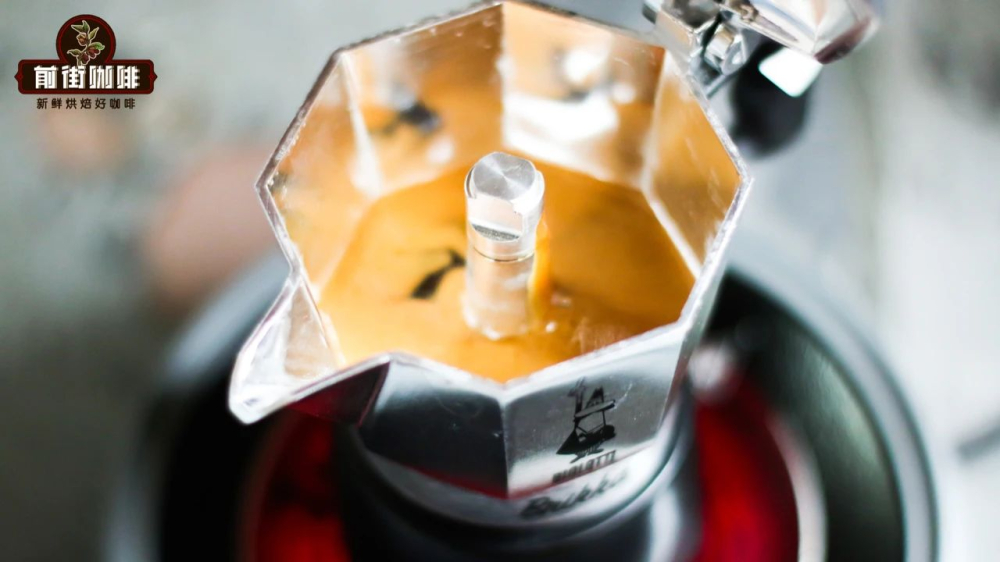
The moka pot extracts coffee by relying on the steam pressure generated in the lower chamber, roughly between 1.5 and 3.0 atmospheres. When the steam pressure is enough to penetrate the layer of coffee grounds, the hot water is pushed up into the upper chamber. On its way up, the hot water flows through the coffee grounds in the filter and extracts the essence of the coffee at a very fast speed. The coffee liquid obtained in this way has a strong mouthfeel, with both acidity and bitterness, and is one of the coffee devices that comes closest to espresso.
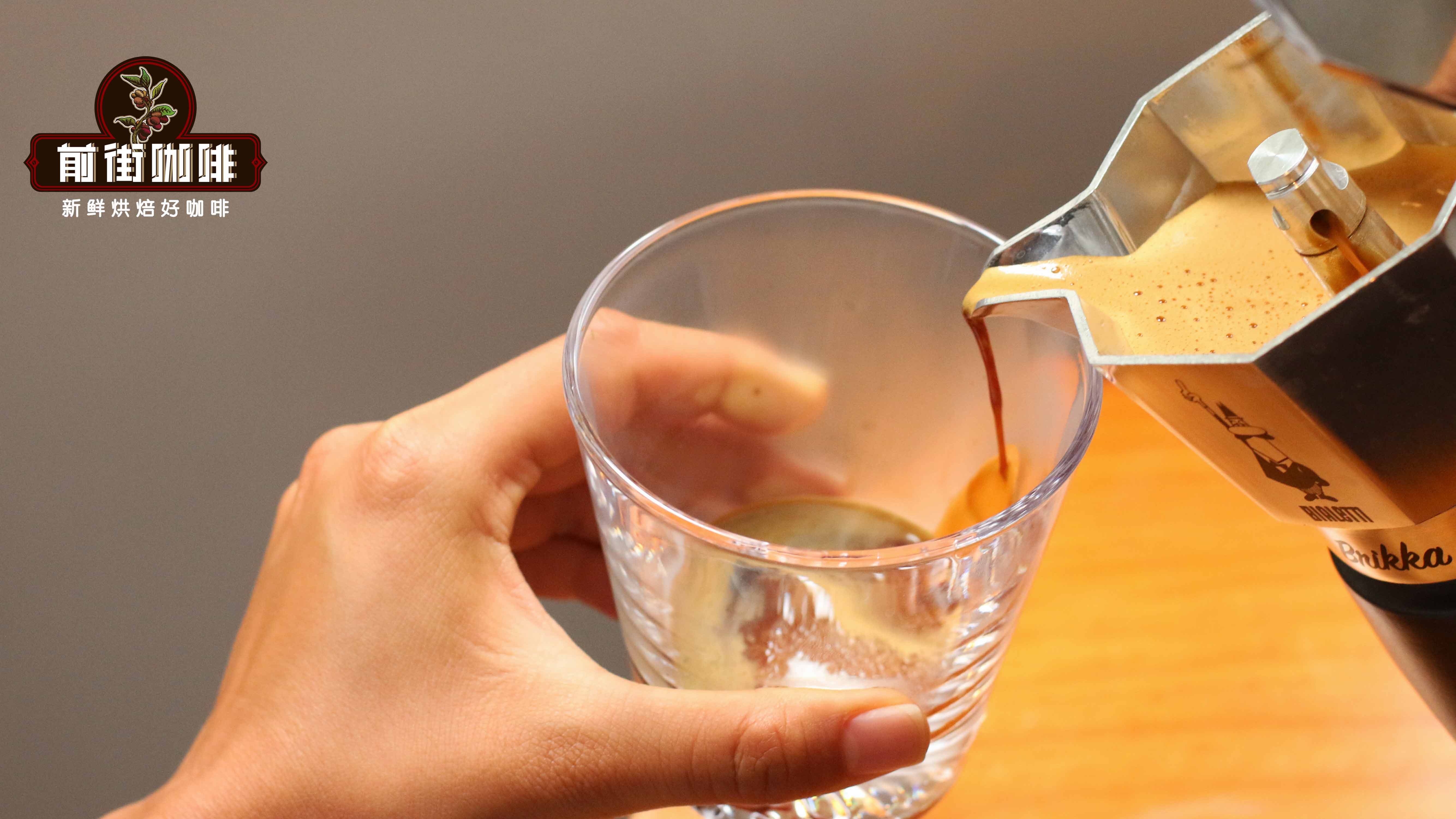
The overall structure of the moka pot can be divided into three parts: the "upper chamber," the "filter basket," and the "lower chamber."
Lower chamber: used to hold water.
Filter basket: used to hold coffee grounds.
Upper chamber: ultimately holds the brewed coffee liquid.
The internal structure of an espresso moka pot
With the help of the steam pressure inside the pot, the moka pot can quickly extract the essence from relatively fine coffee grounds. In Italy, it is almost an essential brewing tool in every household. There are many styles of moka pots on the market, but their functions and structures are largely the same, with rich variations in appearance, making them both practical and decorative.
What kind of coffee beans are suitable for the moka pot
Judging from the working principle of the moka pot, it uses the high temperature and high pressure generated by steam to extract coffee, and "high temperature and high pressure" is precisely the least suitable for making single-origin coffee; it is only suitable for Espresso (the Espresso mentioned here is not the espresso extracted by an espresso machine with "constant temperature, high pressure, and speed"). Therefore, the correct choice of coffee beans should be espresso blends, whose requirements for roast level and grind size are also completely different from those of single-origin coffee beans.
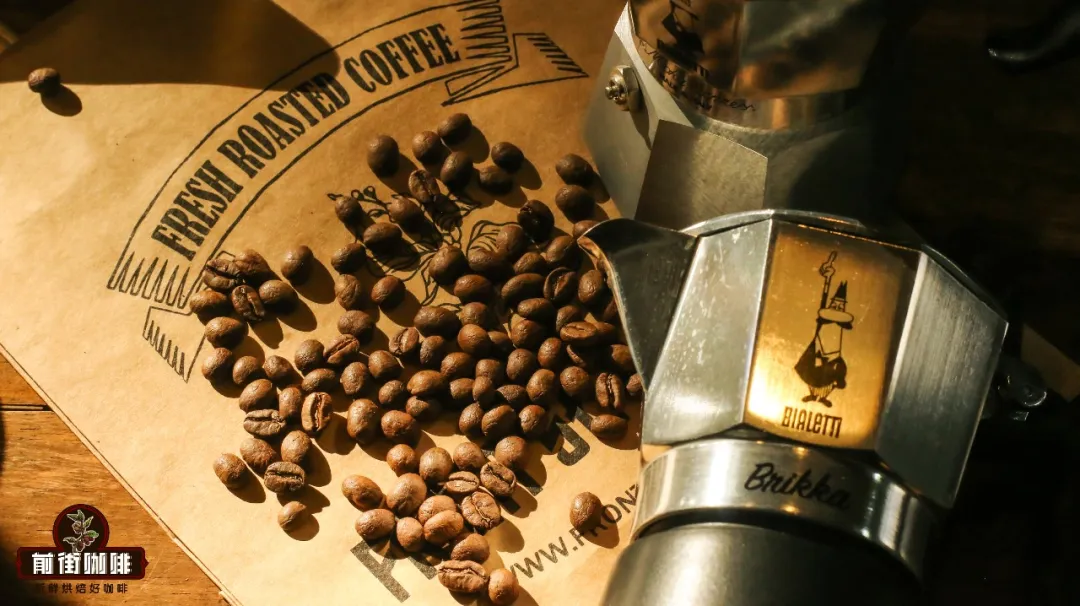
Moka pot coffee bean recommendation one: Front Street Coffee. Classic Espresso Blend
Recommendation index: ★★★★★
Coffee characteristics: This espresso bean combines Mandheling flavor, rich crema, and nutty aroma. It is composed of Indonesian Mandheling coffee beans, Brazilian semi-washed coffee beans, and Vietnamese washed coffee beans, presenting flavors of nuts, dark chocolate, and caramel.
Moka pot coffee bean recommendation two: Front Street Coffee. Basic Espresso Blend
Recommendation index: ★★★★☆
Coffee characteristics: An espresso bean with slight acidity and a mellow body. It is blended from Yunnan washed small-bean coffee and Brazilian semi-washed coffee, with soft fruit acidity and flavor notes of caramel and nuts.
Moka pot coffee bean recommendation three: Front Street Coffee. Commercial Espresso Blend
Recommendation index: ★★★★☆
Coffee characteristics: An espresso bean focused mainly on body. It is composed of washed Robusta coffee beans, washed Colombian coffee beans, and Brazilian semi-washed coffee, showing flavors of nuts, cocoa, and caramel, with a high body, suitable for both home use and opening a coffee shop.
Moka pot coffee bean recommendation four: Front Street Coffee Strawberry Candy Espresso Blend
Recommendation index: ★★★★★
Coffee characteristics: This bean uses a medium roast and can be used for both home espresso machines and moka pots. The extracted coffee liquid carries aromas of roses, strawberry gummies, and dried blueberries, with just the right balance of grape and citrus acidity and sweetness, and an almond aroma in the finish.
So, how can you make the coffee extracted by the moka pot as unbitter as possible?
The bitterness of coffee is a problem encountered in many brewing methods, and the most common cause is over-extraction. Over-extraction means that the coffee grounds have contact with too much hot water, or that the brewing time is too long, resulting in a worse flavor.
1. Use a slightly coarser grind than for an espresso machine. 2. Gently shake the filter basket so the coffee grounds are distributed more evenly. 3. When the coffee liquid reaches about 80% of the nozzle (or looks like golden honey), remove it from the heat source and place it directly on a cold towel. Rapid cooling helps stop the bitter liquid caused by over-extraction from continuing to flow into the coffee. 4. Add hot water, as this can shorten the heating time of the moka pot on the stove.
What equipment is needed to make a cup of espresso with a moka pot
1. Moka pot 2. Gas stove and stove rack or "induction cooker" 3. Coffee beans 4. Grinder
[Brewing method]
(1) First pour cold water into the lower chamber.
(2) Put the coffee grounds into the filter basket, filling it to about nine-tenths full, and lightly tap the edges so the coffee grounds become compact and level.
(3) Tighten the upper and lower chambers to prevent the coffee liquid from overflowing during brewing.
(4) Place the moka pot on a small gas vaporizer stove or induction cooker to heat. At first use medium heat, and after hearing a hissing sound, turn to low heat, and the coffee will naturally flow out slowly.
(5) When the sound turns to a faint bubbling sound, turn off the heat immediately to avoid over-extraction. The fragrant, mellow coffee is ready.
The above content is compiled by CoffeeHunters, a coffee news website.


