







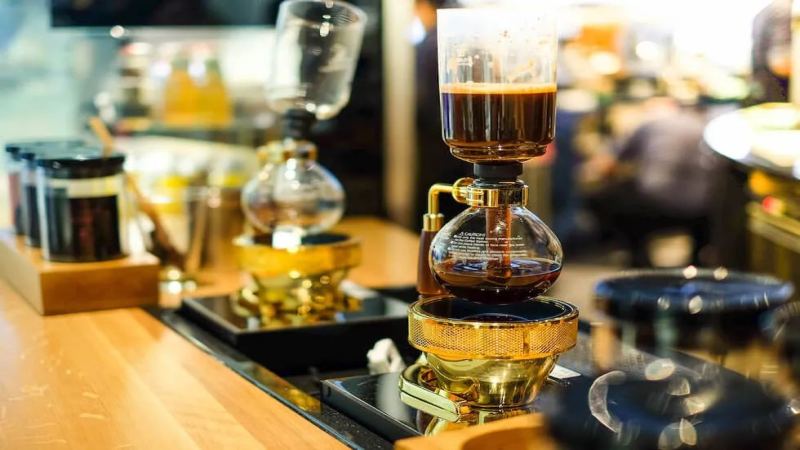
How does a siphon coffee maker work during brewing?
Using a siphon coffee maker means heating the lower chamber so pressure pushes hot water into the upper chamber, where the coffee extracts before the brew returns down through a filter. The setup has three parts: upper chamber, lower chamber, and stand, and the method spread from Germany to Japan and now China.
A tested starting point is 88°C water, 18 grams of coffee, and a 1:10 coffee-to-water ratio, brewed with Front Street Brazil Queen's Estate beans through a six-step process. Heat can come from an alcohol lamp, gas burner, or halogen lamp, and the filter can be flannel cloth or circular paper.
The siphon coffee maker, also known as the syphon, originated in Germany. It relies on heating the lower chamber to create pressure that pushes hot water up into the upper chamber to complete extraction. It is very popular in Japan and has gradually become trendy in China as well. Its shape resembles chemical apparatus, often appearing in nostalgic films and TV shows, giving it an inherent mysterious aura. From the perspective of Front Street's industry experience, this article systematically breaks down the upper chamber, lower chamber, and stand structure of the siphon, analyzes the pressure differential extraction principle, introduces three heat sources—alcohol lamp, gas burner, and halogen lamp—as well as the trade-offs between flannel filter cloth and circular filter paper. Then, using Front Street's own roasted Front Street Brazil Queen's Estate beans as an example, it provides parameters such as water temperature of 88°C, 18 grams of coffee, and a 1:10 coffee-to-water ratio, along with a six-step operation process, and explains filter cloth cleaning and storage as well as suitable coffee bean types.
For more specialty coffee knowledge, please follow the WeChat official account: Front Street Coffee (FrontStreet Coffee)
The siphon coffee maker, also called the syphon, originated in Germany. It works by heating the gas in the lower chamber to increase pressure, thereby pushing water up into the upper chamber to complete coffee extraction. This brewing method is quite widespread in Japan, and nowadays more and more people in China are starting to try siphon coffee makers.
In most people's eyes, the siphon's appearance closely resembles chemical laboratory glassware, and it often appears in period films and TV scenes, giving it a layer of mystery. As coffee professionals, what Front Street truly cares about is its operation method and the final flavor performance.
The Structure, Extraction, and Principle of the Siphon
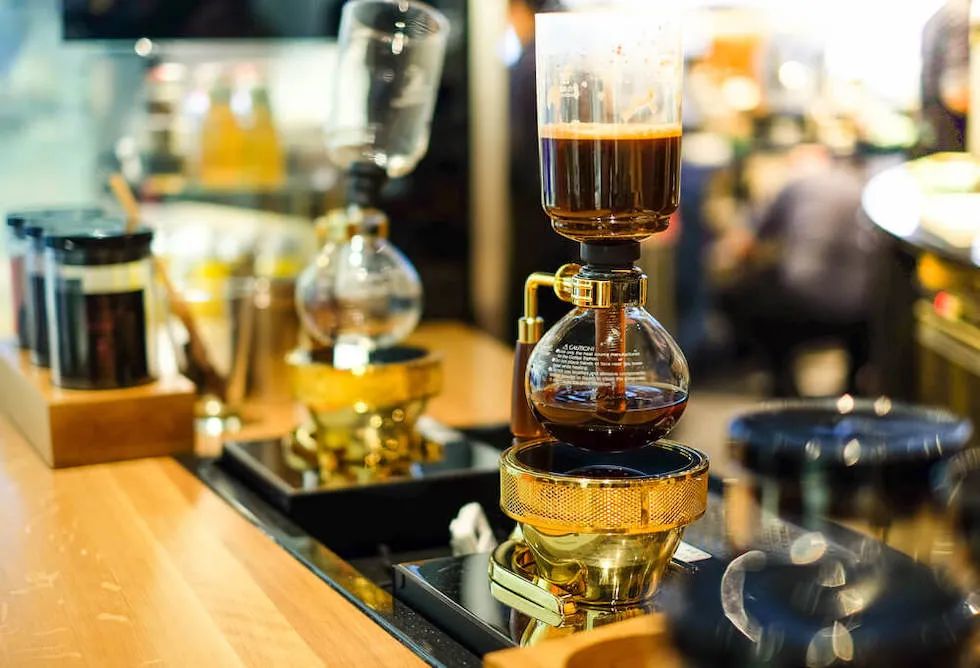
The siphon consists roughly of three parts: the upper chamber, the lower chamber, and the stand. The stand connects to the lower chamber, serving to secure and support it. The lower chamber is basically spherical, allowing for more even heating. The upper chamber is cylindrical, narrowing at the bottom and extending into a slender tube, with a rubber gasket fitted at the narrow point. When the upper chamber is placed onto the lower chamber, the rubber gasket provides a seal. Heating the lower chamber causes the water to produce steam, creating pressure inside the lower chamber that pushes water up into the upper chamber. The upper chamber is precisely where the coffee grounds contact the water. When the heat source is removed, the coffee liquid falls back into the lower chamber, and the siphon coffee is complete.
Heat sources typically come in three types: alcohol lamp, gas burner, and halogen lamp. Front Street uses an alcohol lamp. The tools for intercepting coffee grounds are mainly flannel filter cloth and circular filter paper. Flannel is a traditional material, with the advantage of retaining coffee oils, but the downside is that both use and cleaning are relatively troublesome.
Filter paper is a newer type of filtration material, characterized by more thorough filtration—even fine substances like oils are blocked. If you're just drinking it yourself and brewing infrequently, Front Street recommends using flannel to experience the flavor of siphon coffee more completely. The bead connecting to the filter screen prevents sudden boiling when the upper chamber is inserted into the lower chamber, and the small bubbles around the bead can also help judge the water temperature. Besides the siphon set and heating equipment, making siphon coffee also requires a stirring spoon and a wet cloth.
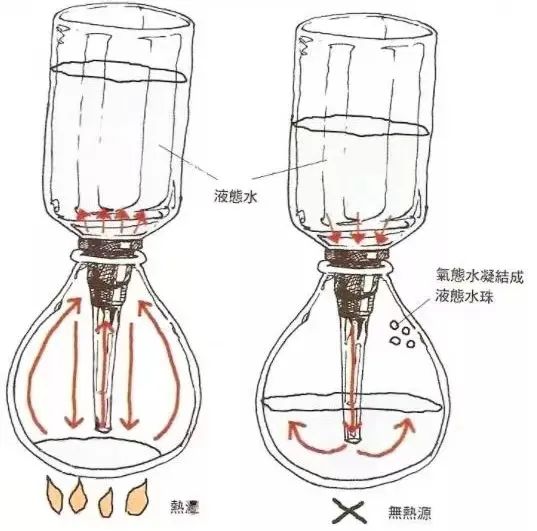
Siphon extraction relies on pressure differential: first heat the water in the lower chamber to boiling, then insert the upper chamber, putting the lower chamber under high pressure. The pressure differential between the upper and lower chambers pushes hot water up into the upper chamber, where it mixes with coffee grounds for extraction. After extraction, remove the heat source from the lower chamber. The pressure differential between the upper and lower chambers suddenly decreases, and the siphon effect causes the coffee liquid to flow back into the lower chamber. To speed up the return flow, you can wipe the lower chamber with a wet cloth, further reducing the pressure differential so the coffee liquid falls back faster.
How to Use a Siphon Coffee Maker
To brew a delicious cup of siphon coffee, some details still need attention. Below, Front Street demonstrates the operation process using its own roasted Front Street Brazil Queen's Estate coffee beans.
Water temperature: 88°C
Grind size: 90% passing through a No. 20 sieve
Coffee dose: 18 grams
Coffee-to-water ratio: 1:10
1. Pour 180ml of warm water into the lower chamber, and wipe off any moisture on the outside of the chamber with a dry cloth (to prevent the chamber from bursting during heating). Light the alcohol lamp and place it under the lower chamber to heat.
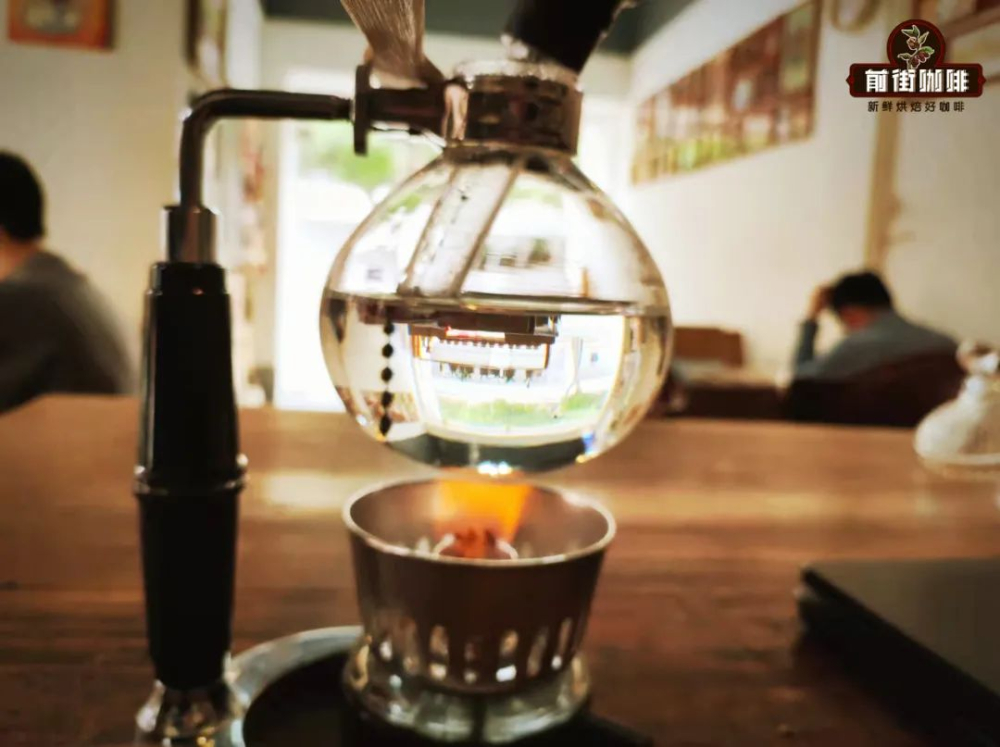
2. Take out the upper chamber, secure the filter cloth, hang the fixing hook onto the glass tube wall at the bottom of the upper chamber, and insert it into the lower chamber at an angle.
3. Watch the lower chamber. When continuous small bubbles appear, straighten the upper chamber and let it insert vertically into the lower chamber, so the upper and lower chambers connect tightly.
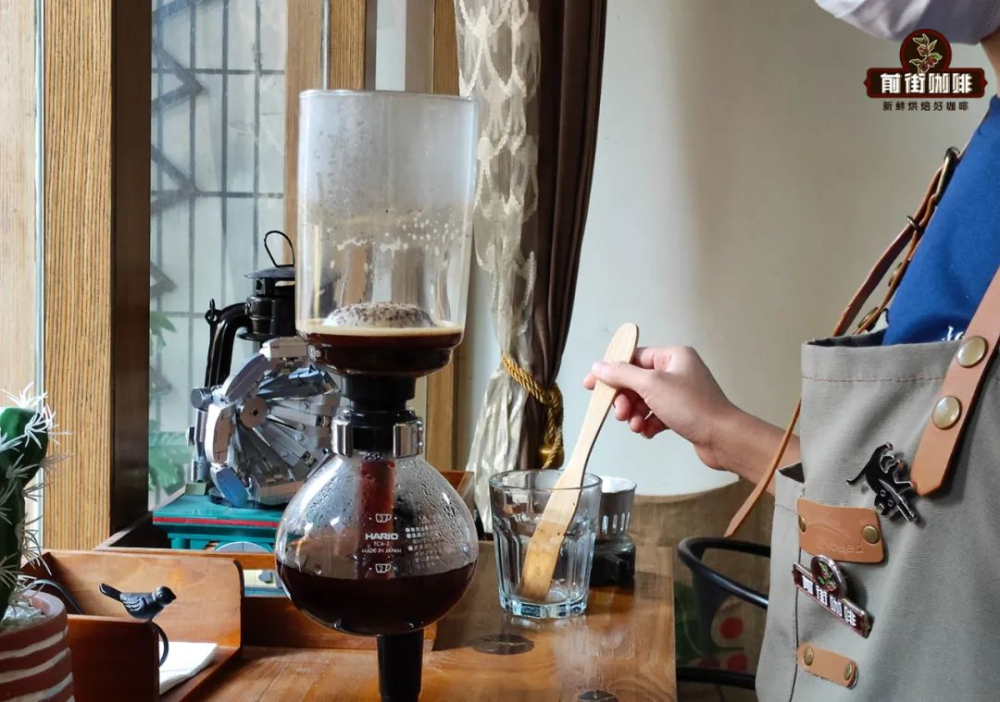
4. After the water in the lower chamber rises to the upper chamber, pour in the ground coffee, and stir clockwise from outside inward with a stirring rod for 10 seconds, making sure all coffee grounds are saturated with water.
5. Then start timing. At 40 seconds, stir the coffee liquid clockwise again with the stirring rod for 5 seconds; then immediately remove and extinguish the alcohol lamp, and the coffee liquid begins to flow back from the upper chamber to the lower chamber. During the return flow, you can wipe the lower chamber with a wet cloth to speed it up. Total extraction time is about 1 minute 10 seconds.
6. Gently remove the upper chamber, and pour the coffee from the lower chamber into a cup to enjoy. Siphon coffee brewed this way has a rich aroma. Although it's not as transparent and clean as pour-over, the oils floating on the surface add considerably to the body.
Note that after brewing coffee with a siphon, necessary cleaning is still required. After each use, remove the flannel filter cloth and wash it promptly, then soak it in a sealed container filled with purified water. In stores with high volume, where baristas pursue efficiency, siphon brewing clearly won't be the first choice.
What coffee beans are suitable for a siphon coffee maker?
In the past, people mainly sought rich, full-bodied flavors and mouthfeel, and mostly chose medium-dark roasted coffee beans for siphon brewing. The resulting siphon coffee had both a deep, rich aroma and a round, balanced mouthfeel. If you also prefer this style, popular picks on Front Street's bean list such as Front Street Jamaica Blue Mountain Coffee, Front Street Golden Mandheling Coffee, Front Street Brazil Queen's Estate Coffee, and Front Street Papua New Guinea Paradise Bird Coffee are all very suitable for siphon brewing.
Nowadays, people are pursuing more refined coffee flavors, and market options are increasing. Besides the above selections, all fifty-plus single-origin coffee beans on Front Street's bean list can be used to make siphon coffee. If you want to taste the classic flavor extracted by a siphon, we recommend Front Street Huilan with its prominent nutty aroma, Front Street Paradise Bird known as "Little Blue Mountain," and Front Street Strawberry Candy with its rich fruity notes. Each has its own characteristics and is suitable for multiple extraction methods, so you can choose according to your preference.
For more specialty coffee knowledge, please follow the WeChat official account: Front Street Coffee (FrontStreet Coffee)
The above content is compiled by CoffeeHunters, a coffee news website.


