








How does honey processed coffee beans differ from natural process?
Honey processed coffee beans keep some fruit mucilage during drying instead of removing it all, which separates them from the natural process where whole cherries dry intact. Costa Rican coffee farms on steep terrain pioneered the method after cherries spoiled on the way down to washed stations, cutting yields and income.
Yellow, red, and black honey labels describe how much mucilage stays on the bean and how long it dries, so flavor shifts with each level. Costa Rica Fire Phoenix Blue Sapphire and the Musician Series Bach show what the process can do when origin, variety, and processing line up.
The flavor profile of coffee is often determined by the combination of origin, variety, and processing method. Among the many processing methods, honey processing has surged in popularity in recent years. It shares similarities with natural processing yet stands uniquely apart. From the perspective of Front Street Coffee, this article traces the origins of honey processing, its operational workflow, the differences between yellow, red, and black honey, and the core distinctions from natural processing in terms of flavor and craft. It also combines two beans currently sold by Front Street — Costa Rica Fire Phoenix Blue Sapphire and the Musician Series Bach — to share roasting and brewing test results, helping coffee enthusiasts more clearly understand why honey-processed coffee beans are so highly regarded.

Front Street Coffee has always emphasized that the flavor profile of a coffee bean is primarily determined by three dimensions: origin, variety, and processing method. There are many types of coffee processing methods, among which the three most common are washed, natural, and honey processing. However, according to Front Street Coffee's observations, the most popular processing method right now is honey processing. Its operational logic is somewhat similar to natural processing. Below, Front Street Coffee will discuss in detail the flavor characteristics of honey-processed coffee beans.
The Origin of Honey Processing
The honey processing method was pioneered by coffee growers in the Costa Rica region. The reason this technique came about was that most coffee farms in Costa Rica are located on steep mountainous terrain with poor transportation conditions. When farms transported coffee cherries down the mountain to washed processing stations, many cherries had already spoiled and deteriorated, leading to lower coffee bean yields and reduced income — and thus the honey processing method was born.
Additionally, according to Front Street Coffee's understanding, at the time very few green bean buyers were willing to go up the mountain to purchase high-quality coffee cherries, and sales channels were scarce. These buyers also aggressively lowered prices, and the farmers on the mountain lacked trust in them. So the farmers simply developed the honey processing method themselves, selling coffee beans through a self-production and self-sales model, thereby securing more income to make a living.
Today, honey processing is widely adopted in Central American regions due to its excellent flavor performance. Costa Rica has also developed various special honey processing techniques locally. For example, the Costa Rica Musician Series Bach coffee beans and Mozart coffee beans sold at Front Street Coffee stores respectively use raisin honey processing and anaerobic honey processing.
What Is Honey Processing?
Honey processing is called Honey Process or Miel Process in English. The specific method is to remove the pulp and then dry the coffee cherries that still retain their mucilage.
As Front Street Coffee mentioned earlier, coffee processing methods are mainly divided into washed and natural. Natural processing, as the name suggests, involves letting coffee beans dry naturally after harvest; washed processing removes the pulp and then uses fermentation to clean off the mucilage on the surface; honey processing happens to be the middle path between these two methods. Many people, upon hearing the name "honey processing," mistakenly think it involves processing with honey, or that the coffee will taste like honey after processing — but this is not the case. The real reason is that during drying, the moisture in the mucilage on the seed surface gradually evaporates, becoming as sticky as honey — hence the name.
The Honey Processing Workflow
1. Same as the first step of washed processing, all coffee cherries are poured into water, floating beans and defective beans are picked out, and good-quality cherries are kept.
2. The selected coffee cherries are placed directly on raised drying beds for at least three days, reducing the cherry moisture content to 20%.
3. The dried coffee beans are then sent to a depulper to remove the skin and pulp while retaining the mucilage — this is precisely why honey-processed coffee beans have such prominent sweetness, because the mucilage is the part of the coffee cherry with the highest concentration of sugar.
4. The coffee beans with mucilage still attached are then dried further, bringing the moisture content down to 11%, after which they can be stored.
According to Front Street's understanding, honey processing is also classified by the amount of mucilage retained. Typically, coffee beans with 40% of the mucilage removed are called yellow honey; those with 25% removed are classified as red honey; and green beans that retain 100% of the mucilage are called black honey.
Honey-processed green beans require extra care during drying. Because mucilage remains on the surface, there is a large amount of sticky substance, and the beans must be constantly turned during drying to prevent mold or over-fermentation.
Advantages and Disadvantages of Honey Processing
Advantages: Honey processing is an improved version of natural processing. Because the pulp is removed right at the start, it is less prone to mold problems, and it does not require large amounts of clean water, making the cost relatively low.
Disadvantages: The processing steps can be said to be the most tedious and labor-intensive of all methods.
Honey Processing Flavor
As Front Street mentioned above, honey processing can enhance the sweetness of coffee while relatively reducing acidity, and the aroma is also more delicate. Of course, all of this is predicated on the honey processing being carried out properly; if poorly executed, it will taste of unpleasant acetic acid, similar to the pungency of onion or garlic. Even when executed quite well, it may still carry a slight muddy taste, with a finish that is not clean enough, and more off-flavors than generally found in washed methods. Therefore, overall, the risk of using honey processing is considerably higher than that of general wet processing methods.
Secondly, honey processing is further divided by color into three types: yellow honey, red honey, and black honey. What are the differences between them? Front Street Coffee will now answer this for coffee-loving friends.
What Are the Differences Between Yellow Honey, Red Honey, and Black Honey?
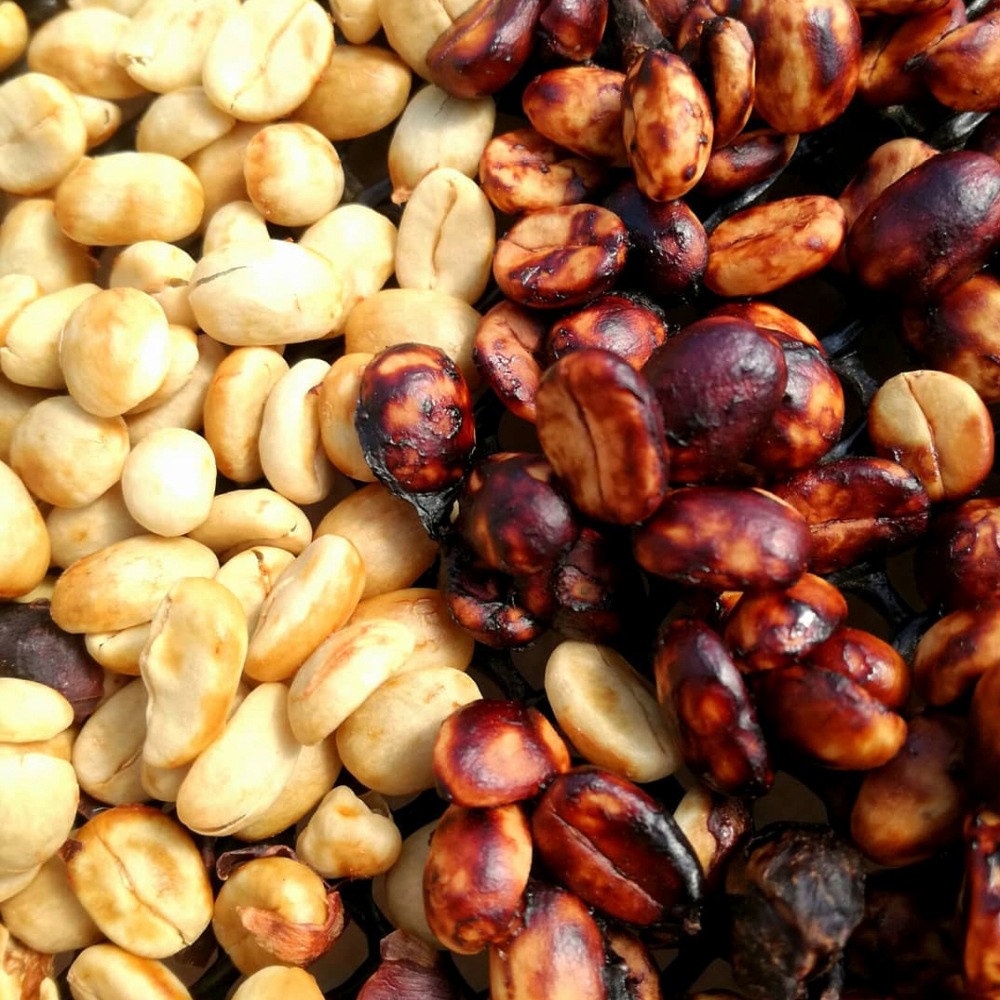
Black honey: Almost no mucilage is removed, so drying takes the longest, requiring more than 14 consecutive days. During the process, to prevent overly rapid drying, covers are used to block excessive sunlight, allowing the sugars to convert more fully.
Red honey: 25% of the mucilage is removed (specific practices vary by estate), sun-drying lasts about 12 days, and shade covers may also be used during the process. The coffee is turned several times a day, but not as frequently as with yellow honey.
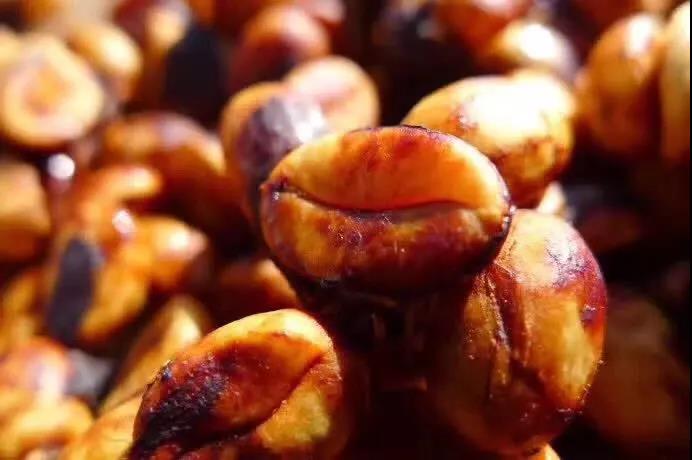
Yellow honey: 40% of the mucilage is removed, receiving the most sunlight during drying, lasting about 8 days, with the coffee placed on raised beds and turned once per hour.
Therefore, from yellow honey to black honey, the required drying time is longer and the management requirements become increasingly stringent. If one must rank the three, Front Street Coffee believes the best flavor comes from black honey, because it retains the most mucilage, giving it the richest and most intense mouthfeel.
Yellow honey and red honey are produced because coffee farmers must also consider things from a commercial perspective, balancing cost and price, and offering consumers a variety of choices is also viable.
Why Are Honey-Processed Coffee Beans So Popular?
As Front Street Coffee mentioned above, honey-processed coffee beans all have excellent sweetness in their flavor. This sweetness washes away the stereotypical impression coffee enthusiasts previously had of coffee being bitter, which is why it is especially loved by enthusiasts who are new to coffee beans. Secondly, many coffee bean enzyme processing methods inspired by honey processing also have more prominent sweet flavors.
Additionally, as Front Street Coffee mentioned above, there are three types of honey processing, among which black honey-processed coffee beans have the highest sweetness and the best flavor, with correspondingly more stringent processing conditions. This means the coffee beans can have a stable quality guarantee, so naturally coffee enthusiasts are willing to pay for the deliciousness — this is also why honey-processed coffee beans are popular.
So what exactly is the difference between honey processing and natural processing? As Front Street Coffee mentioned above, honey processing emerged as a combination of washed and natural methods. So what is natural processing like?
Natural Processing
Natural processing is one of the oldest and most traditional processing methods. Coffee cherries are dried in the sun immediately after picking. It is more common in areas with abundant sunlight or scarce water resources — for example, nearly 70% of coffee cherries in Ethiopia undergo natural processing.
1. Collection & Sorting
After picking, the coffee cherries first undergo manual hand-sorting to remove defective cherries, including overripe, underripe, and insect-damaged ones, as well as foreign matter other than cherries.
2. Drying
The sorted coffee cherries are sent to drying areas for drying. Different regions may use different drying racks — some use tarps, some use raised beds, some use concrete floors, etc. The drying time averages 3 to 4 weeks, until the coffee's moisture content drops to 11%, at which point the drying process is complete.
3. Depulping
The dried coffee cherries are sent to a processing station for depulping and hulling, and may even be polished. The skin, pulp, and other parts are all removed at this step.
4. Sorting & Storage
The depulped green coffee beans undergo screening again to remove beans with poor appearance. This step reflects the quality of the coffee drying process: over-dried coffee beans are more fragile and get broken into fragments during depulping; under-dried coffee beans contain too much moisture, and the overly active moisture makes them prone to bacterial growth and mold.
Advantages and Disadvantages of Natural Processing
Advantages: As Front Street mentioned above, natural processing is relatively simple to carry out, which means it does not require too much cost. Therefore, naturally processed coffee beans have an irreplaceable fermented flavor. Nowadays, coffee farmers have also begun to pay attention to naturally processed coffee beans — for example, placing coffee beans on racks to dry and turning them frequently to prevent contamination. It is precisely because of this that Front Street's store now carries so many high-quality naturally processed coffee beans.
Disadvantages: As Front Street mentioned above, naturally processed coffee beans have very demanding weather requirements, and the drying degree of coffee cherries is also relatively difficult to control. Moreover, if the drying area is not clean, it is easy for coffee beans to be mixed with impurities, leading to an increase in defective beans. During the drying process, the coffee cherries are dried whole with pulp and mucilage, so they are very prone to mold and spoilage. Fortunately, with technological development, coffee farmers pursuing higher-quality naturally processed coffee beans have begun using instruments and manpower to closely monitor the fermentation and drying degrees of the coffee, removing any coffee found to be abnormal. Of course, this costs more, but it is also more meticulous — hence it is also called fine natural processing.
Flavor Performance of Naturally Processed Coffee Beans
Because they are exposed to the sun for extended periods, naturally processed coffee beans have a more intense flavor, richer layers, a vinous fermented note, and relatively high sweetness.
The Difference Between Honey Processing and Natural Processing
As stated above by Front Street Coffee, honey-processed coffee beans, like naturally processed ones, undergo sun-drying and fermentation, so both have fermented notes and pronounced aromas in their flavor profiles. The only difference is that honey-processed coffee beans have higher sweetness than naturally processed ones. And Front Street Coffee, through cupping and brewing, believes that compared with washed and honey-processed coffee, naturally processed coffee has the lowest acidity, the highest sweetness, but slightly lower cleanliness. In terms of flavor, it produces more berry-like tones and is also more complex.
Next, Front Street Coffee will use the naturally processed Costa Rica Fire Phoenix Blue Sapphire coffee beans and the raisin honey-processed Costa Rica Canet Estate Bach coffee beans to conduct a roasting and brewing test, and share it with coffee-loving friends.
Front Street Coffee Costa Rica Fire Phoenix Estate Blue Sapphire Coffee Beans
Country: Costa Rica
Region: Central Valley, Fire Phoenix Estate
Altitude: 1600m
Variety: Caturra, Catuai
Grade: SHB
Processing: Natural
Front Street Coffee Costa Rica Bach Coffee Beans
Country: Costa Rica
Region: Tarrazu, Canet Estate
Altitude: 1950 meters
Grade: SHB
Variety: Caturra
Processing: Raisin Honey
Front Street Coffee Roasting Data Sharing:
Fire Phoenix Blue Sapphire:
This Costa Rica Fire Phoenix Blue Sapphire has rich berry and tropical fruit aromas. In order to allow this bean to retain its rich fruit flavors and sweetness, Front Street's roaster used a medium-heat roasting approach to roast this bean.
Front Street Coffee used a Yangjia 800N roaster (300g batch size), charging at 170°C, with the damper set to 3, heat at 110, turning point at 1'36", 97.9°C; when the temperature reached 140°C, the damper was opened to 4; at this point the bean surface turned yellow, the grassy smell completely disappeared, entering the dehydration phase. When the temperature reached 166°C, the heat was adjusted to 80°C, damper unchanged; at 8'17", ugly wrinkles and dark streaks appeared on the bean surface, the toasted bread smell clearly turned to coffee aroma, which can be defined as the prelude to first crack. At this point, listen carefully for the sound of first crack. First crack began at 9'00", the damper was adjusted to 5 (adjust heat very carefully, not so low that there is no cracking sound), post-first-crack development was 2'05", dropping at 195°C.
Bach:
Front Street's Bach green coffee beans appear yellow-green, typical of honey-processed coffee beans. They smell of fresh citrus fruit aromas with a faint fermented fruit fragrance.
The roaster Front Street used is a Yangjia 800N semi-direct fire (300g batch size). Front Street's specific roasting approach: preheat to 200°C, charge, adjust heat to 160, open damper to 3, turning point at 1'36", maintain heat; at 140°C maintain heat at 160, open damper to 4. At 4'50" turning yellow, grassy smell disappears, entering the dehydration phase. At 166°C reduce heat to 135, damper stays at 4. At 8'05" dehydration complete, wrinkles and dark streaks appear on the bean surface, toasted bread smell turns to coffee aroma, the prelude to first crack — at this point pay attention to listen for the sound of first crack. First crack began at 8'38", damper fully open to 5, heat unchanged. Post-first-crack development time was 1'45", dropping at 193.8°C.
Pour-Over Parameters:
Dripper: Hario V60
Water temperature: 90
Dose: 15 grams
Ratio: 1:16
Grind: Medium-fine (EK43s setting 10: 80% pass rate on Chinese standard No. 20 sieve)
Brewing technique: Multi-pour extraction.
Bloom with 34g of water for 30 seconds, then pour in a slow circular stream until reaching 127g for the first pour. When the water level is about to expose the coffee bed, continue pouring until 240g and stop. When the water level is about to expose the coffee bed again, remove the dripper. (Timing starts from the beginning of the bloom) Total extraction time: 2'05".
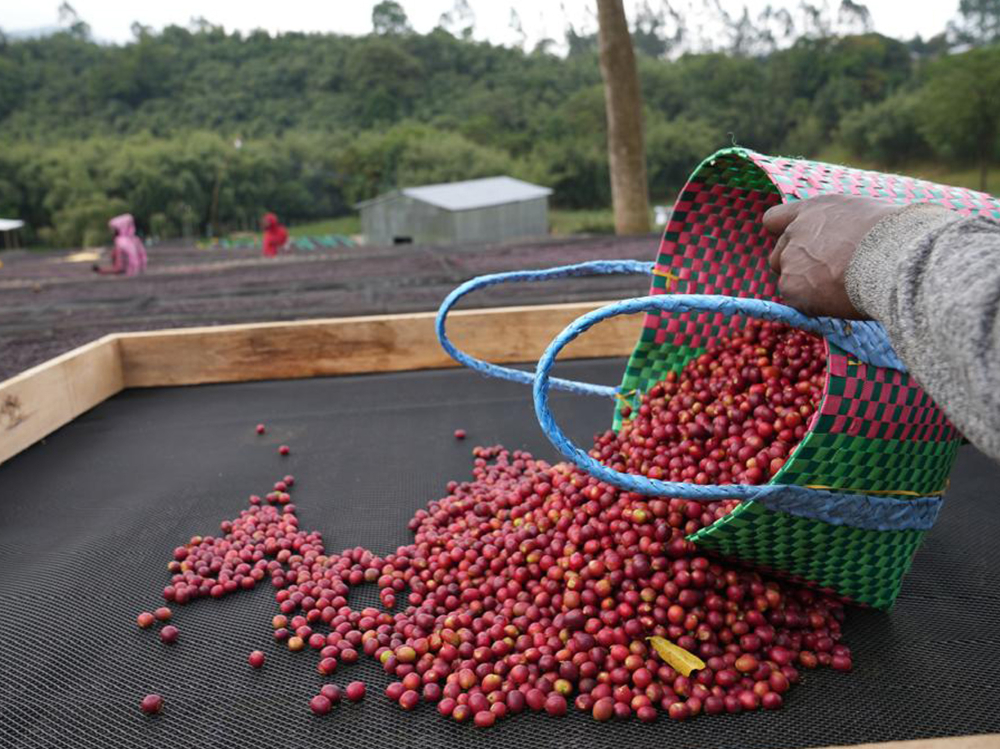
Costa Rica Fire Phoenix Estate Blue Sapphire Flavor Description:
Enters with strawberry, tropical fruit, fermented vinous notes, honey sugar in the finish, cocoa; overall smooth mouthfeel, well-layered flavors, with a pronounced sweet aftertaste.
Costa Rica Musician Series Bach Flavor Description:
Smells like the fermented aroma of rice wine; tastes of ripe tropical fruit, with the sweet-tartness of berries, nutty, cocoa, and creamy flavors; the aftertaste carries caramel, and the finish has a faint floral note.
For more specialty coffee beans, please add the private WeChat of Front Street Coffee, WeChat ID: kaixinguoguo0925
The above content is compiled by CoffeeHunters, a coffee news website.


