








How Does Italian Coffee Latte Differ From Cappuccino and Mocha?
Latte, cappuccino, and mocha all start from a shot of espresso, and the differences come down to what is added and in what proportion. A latte uses more steamed milk, a cappuccino relies on a thicker layer of milk foam, and a mocha adds chocolate. Espresso is brewed at roughly 94 degrees Celsius at a dose-to-yield ratio near 1:2.
Because espresso is so concentrated, added milk, water, or chocolate still leaves the coffee flavor clearly present. Shops typically use freshly roasted espresso blends or single-origin beans, ground fine, distributed and tamped into the portafilter before extraction. Recognizing these ratios and scent words makes it easier to read a coffee menu and choose a drink that matches your taste.
Walking into a coffee shop and facing a menu full of options like latte, cappuccino, and mocha, have you ever felt confused? These drinks are actually all based on espresso, evolving into completely different flavors and textures by adjusting the proportions of milk, milk foam, water, or chocolate. This article will systematically sort out the recipe structures of several classic Italian coffees, starting from the extraction principles of espresso, and analyze one by one the core differences between latte, cappuccino, and mocha in terms of ingredient ratios and taste characteristics. It will also share the bean choices and parameter recommendations used by Front Street Coffee in actual store output, helping you easily understand coffee menus and find the cup that suits you best.
To learn more about specialty coffee, welcome to follow: Front Street Coffee (Frontsteet Coffee)
Standing at the coffee shop counter, facing a dazzling array of coffee drinks—latte, cappuccino, macchiato, and so on—do you often feel completely lost? This time Front Street Coffee (FrontStreet Coffee) has specially put together a guide to Italian coffee types, which will not only help you clarify the flavor differences among various coffees, but also explain their mixing ratios one by one.
Overview of Italian Coffee Types
The common Italian coffee drinks on the market are without exception all based on espresso, then mixed with milk, water, or other ingredients in different proportions, thus evolving into a rich and varied range of styles.
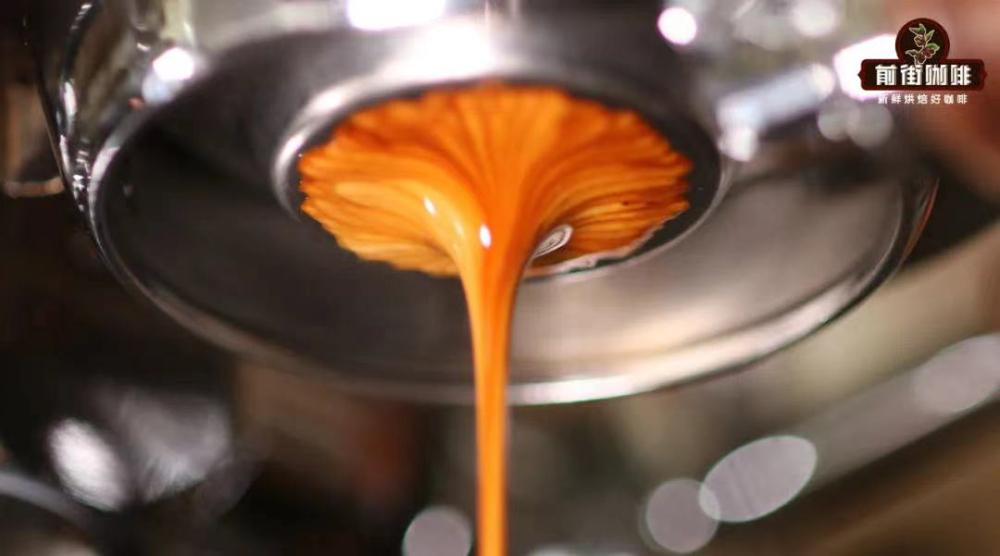
To make espresso, extraction must be completed with the help of an espresso machine equipped with a pressure system. Coffee shops usually choose freshly roasted espresso blends or single-origin beans, grind them extremely fine, then put the coffee grounds into the portafilter basket. After steps such as distributing and tamping, the portafilter is then locked into the group head.
Then the extraction process is started. Hot water at about 94 degrees Celsius quickly passes through the coffee bed under high pressure, extracting a highly concentrated espresso liquid at a dose-to-yield ratio of 1:2. Precisely because the concentration is high enough, even if water, milk, or other ingredients are added afterward, the flavor of the coffee can still be clearly presented; combined with fast service speed, espresso has been deeply favored by consumers since it first appeared.
When extracting espresso, Front Street Coffee (FrontStreet Coffee) uses espresso blend beans. Blends can combine the characteristics of coffee beans from different regions and make up for the lack of stability of coffee beans from a single region (that is, single-origin beans)—after all, coffee beans are agricultural products, and their quality and flavor are affected by climate and terroir conditions every year.
What Front Street Coffee (FrontStreet Coffee) stores use for daily output is their own blend, the freshly roasted "Sunflower Warm Sun Blend Coffee Beans," composed of Ethiopian natural Yirgacheffe and Honduras Sherry. The extracted espresso has notes of fermented wine aroma, berries, vanilla cream, and nutty caramel. It is rich and smooth with a uniquely distinctive flavor. Whether used for Italian milk coffee or Americano, it can show a charming vanilla cream aroma and fermented wine aroma.
If you prefer to make espresso full of fruity aromas, it is recommended to focus on medium-roast coffee beans. Front Street Strawberry Candy espresso coffee beans are recommended and can be ordered directly from the Taobao or Tmall store. This bean uses Front Street Costa Rica Tarrazu, known for honey processing, and Ethiopia, the birthplace of coffee, as its two major origins, combined with Colombian coffee beans. The espresso blended this way is neither too sharp, and under coffee machine extraction can also present good crema and a dense texture, while carrying a sweet-and-sour taste reminiscent of roses and strawberry gummies.
Each time espresso is extracted, different basket sizes correspond to different dose limits. When making a single shot of espresso (1 shot), Front Street Coffee (FrontStreet Coffee) uses 10-11 grams of coffee grounds to extract 20-25 grams of coffee liquid, with an extraction time of about 22 seconds; when making a double shot of espresso, it uses 19-20 grams of coffee grounds to produce 35-40 grams of coffee liquid, with an extraction time of about 29 seconds.
How to Make Americano
During World War II, American soldiers came to Italy and were not used to the espresso made by Italian coffee machines, so they added a large amount of hot water to the espresso to dilute the taste.
This practice struck Italians as quite novel, so they called this American way of drinking it "Americano," which means "American" in Italian. When Americans heard this slightly teasing name, not only did they not mind, but they were rather proud of it, so the name Americano spread and specifically refers to the drinking method of diluting espresso with hot water.
Americano has no hard-and-fast rule about the amount of water added, and it can be adjusted entirely according to personal preference for strength. When making Americano, Front Street Coffee (FrontStreet Coffee) usually uses a double shot of espresso (40 grams) and adds 200 milliliters of hot water or an ice-water mixture.
How to Make Latte
Caffe Latte is Italian and refers to coffee latte, while Latte in Italian means milk. If you tell a barista in an Italian coffee bar that you want a "Latte," the other person may look totally confused and then hand you a glass of milk. If you want to drink coffee latte in Italy, you must say "Caffe Latte" to get an authentic Italian coffee latte.
However, a latte ordered in Italy may very likely have no milk foam, because the milk frother was invented relatively late and first began to appear in the United States in the 1950s to 1960s. Before that, latte was simply espresso with milk added directly, with no milk foam.
In terms of composition, a latte consists of one-fifth espresso, two-fifths hot milk, and two-fifths milk foam. The flavor of a latte features espresso and milk as dual protagonists. Carefully savoring the harmony and balance after the two blend is precisely what makes a latte most unique. When making latte, Front Street Coffee (FrontStreet Coffee) usually uses a double shot of espresso (40 grams) and adds 250 milliliters of hot milk or cold milk frothed to a smooth milk foam.
How to Make Cappuccino
The difference between cappuccino and latte is that cappuccino has a higher proportion of espresso. It consists of one-third espresso, one-third hot milk, and one-third milk foam, and can also be sprinkled with cocoa powder or cinnamon powder to add flavor. In terms of taste, cappuccino is dominated by coffee flavor, while milk plays a supporting role.
When making cappuccino, Front Street Coffee (FrontStreet Coffee) usually uses a double shot of espresso (40 grams) and adds 180 milliliters of hot milk frothed to a thick, dense milk foam.
How to Make Mocha
Mocha was originally the name of a famous port in Yemen, from which coffee beans produced in nearby countries and regions were exported. These coffee beans carried a rich chocolate flavor, and later mocha coffee also came to broadly refer to special coffee bean varieties with chocolate aroma. But as the port was demolished, in order to drink coffee with the same flavor, Europeans added chocolate sauce or cocoa powder on the basis of milk coffee, and so it evolved into the Italian mocha coffee we know today.
When making mocha, Front Street Coffee (FrontStreet Coffee) usually uses a double shot of espresso (40 grams), adds an appropriate amount of chocolate sauce or cocoa powder, and then adds 250 milliliters of hot milk or cold milk frothed to a smooth milk foam.
The above content is compiled by CoffeeHunters, a coffee news website.


