







What Is Java Coffee and What Makes Golden Mandheling Distinct?
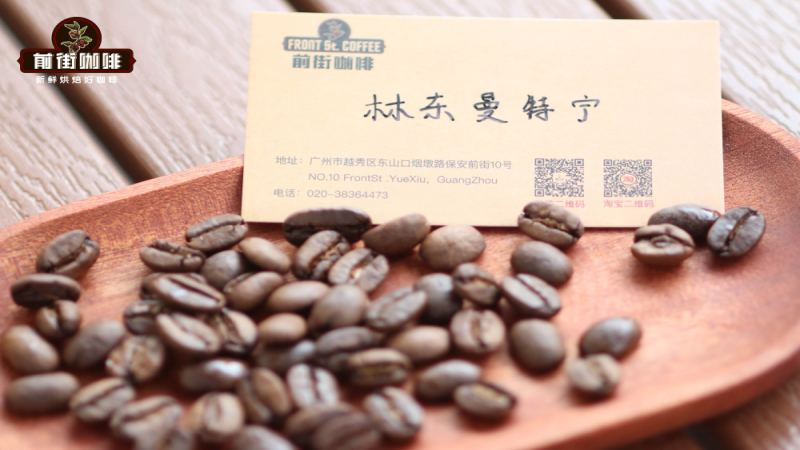
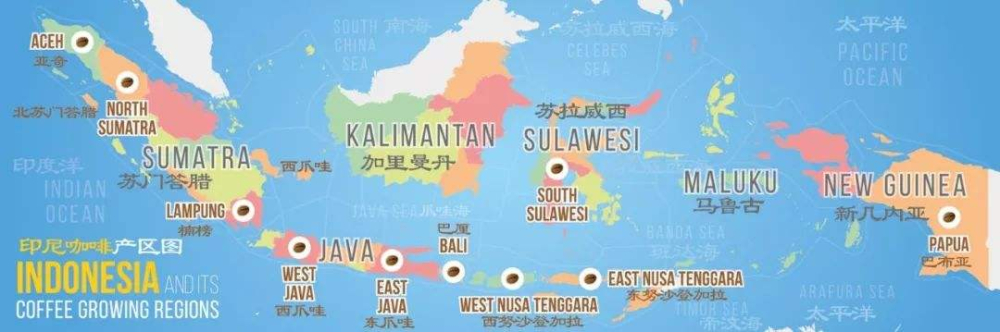
Golden Mandheling is a Sumatran specialty coffee known for full body, low acidity, caramel sweetness, and herbal notes. Indonesia's growing areas center on Sumatra, Java, and Sulawesi, and Mandheling comes from Sumatra, with Gayo in Aceh and Lintong near Lake Toba as the main producing zones and Ateng as the common variety.
The trademark belongs to PWN, which sets screening standards for the Golden Mandheling name. The wet-hulling method known as Giling Basah, in which parchment is removed while the bean is still soft, lowers acidity and raises body while increasing defect risk, which is why careful roasting and pour-over parameters matter for dark-roasted Mandheling.
Golden Mandheling is one of the most representative specialty coffees of Sumatra, Indonesia, renowned for its full body, low acidity, caramel sweetness, and herbal notes. This article begins with the distribution of growing regions, sorting out the terroir differences between areas such as Aceh Gayo and Lintong, and explains in detail PWN Company's trademark registration and screening standards for Golden Mandheling; it then delves into the steps of the wet hulling method (Giling Basah), its origins, and its impact on flavor and defect rates. Front Street Coffee, based on the condition of beans from the new harvest season, shares roasting curve design, cupping performance, and offers pour-over parameter recommendations for dark-roasted Mandheling, helping coffee enthusiasts gain a comprehensive understanding of this classic bean.
For more specialty coffee knowledge, please follow our WeChat official account: Front Street Coffee (FrontStreet Coffee)
Indonesia's coffee-growing landscape is mainly composed of Sumatra, Java, and Sulawesi, among which the "Mandheling" produced in Sumatra is the most famous.
Mandheling coffee is also called "Sumatra coffee." North Sumatra is dominated by the Gayo region, where the predominantly cultivated variety is Ateng; the area around Lake Tawar at the northernmost tip produces what can be called Aceh coffee or Tawar Lake coffee; Lintong in South Sumatra and the surroundings of Lake Toba are often classified under the category of Mandheling coffee. Strictly speaking, the Lintong area is the core production region of Mandheling, and the finest local Mandheling varieties include four types: Sidikalang, Bergendar, Siborong borong, and Telok Sanggul.
The Gayo Mountains are located in the Aceh region of North Sumatra Province, and the vast majority of coffee farmers working here are local farmers. The word Gayo originates from the name of a tribe in the Aceh region of Indonesia. This area possesses exceptional growing conditions, a long history and culture, and a distinctive flavor profile. Coffee here is generally cultivated organically, without the use of chemical fertilizers, and is regarded as a green coffee production region in the world, which is why Gayo coffee is often called green coffee or Gayo organic coffee.
What exactly is "Golden Mandheling"?
When it comes to Golden Mandheling, Front Street must first start with PWN. This abbreviation often appears alongside the name Mandheling coffee, and it is actually the acronym for Pwani Coffee Company.
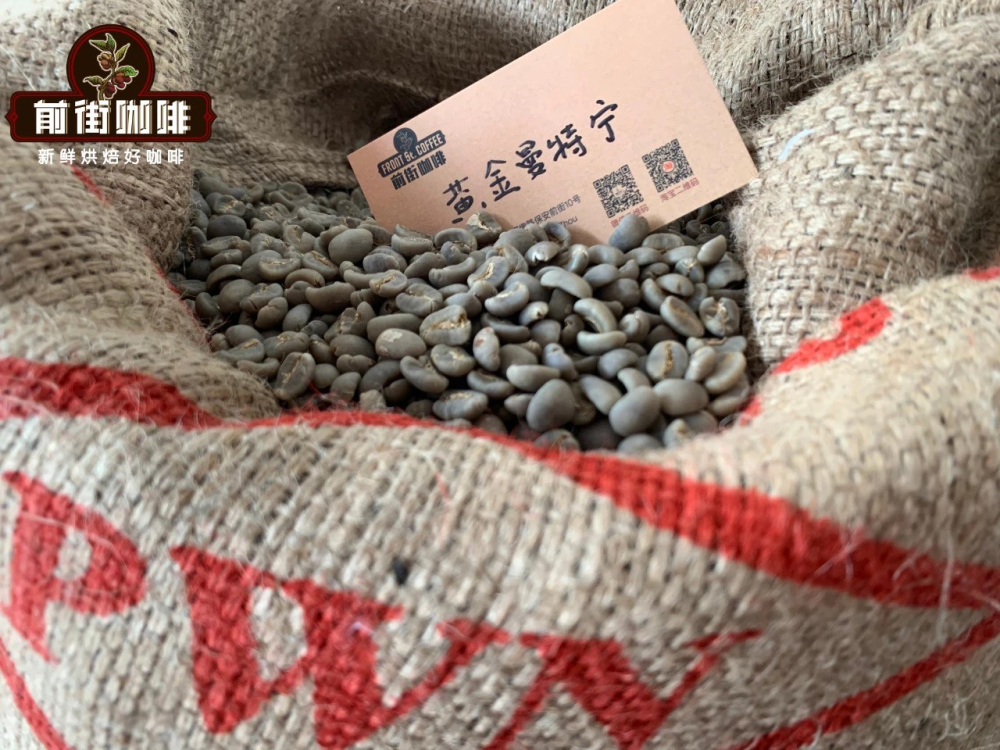
This company is extremely well-known locally in Indonesia, mainly engaged in purchasing Mandheling coffee beans. It has secured almost all of Indonesia's best-producing regions, so most beans produced by PWN are unique specialty coffees. Golden Mandheling is precisely this company's product: after raw beans are purchased, they undergo multiple rounds of manual hand-sorting to pick out plump, defect-free beans. Only these fine beans, filtered through layer after layer like a talent show, can ultimately be classified as Golden Mandheling.
However, PWN Company has registered Golden Mandheling as a trademark, meaning that from now on, only Golden Mandheling produced by PWN Company can be considered truly "Golden Mandheling." Many beans on the market that are not from PWN Company but bear the Golden Mandheling name should actually be called specialty Mandheling.
Processing Method
Wet hulling, also known as Wet Hulling, is called Giling Basah in the local language and is a traditional Indonesian coffee processing method. Judging by the name alone, wet hulling seems quite similar to wet processing (washed processing), yet the cup profiles of these two processing methods are completely different: coffee processed by wet hulling is typically full-bodied and intense, with a very distinct character.
Steps of Wet Hulling Processing
① After picking fresh coffee cherries, perform flotation sorting first; some low-density cherries will float to the surface, and these are defective coffee fruits.
② Remove the outer skin and pulp of the coffee cherries, then place them in a clean water tank to soak and ferment for 12-36 hours (depending on the situation), with the aim of breaking down and removing the mucilage layer attached to the coffee beans. Up to this point, it is still the same process as washed processing.
③ Spread the parchment-covered coffee beans under the sun to dry for 1-2 days. If both days are sunny, the moisture content of the coffee beans will be almost between 30-50%, and at this point the beans are in a semi-soft, semi-hard state.
④ Afterward, use only a huller to remove the parchment from the coffee beans, then dry them in the sun for about two more days, which can almost bring the moisture content of the beans down to 12%. This processing greatly shortens the processing time, and for Indonesia's unpredictable weather, wet hulling can better ensure the completion of coffee processing.
Why Use Wet Hulling?
a. Climate Reasons
The tradition of using wet hulling in Indonesia begins with the local weather. Indonesia's humidity throughout the year is between 70-90%, with constant typhoons, and in some areas annual rainfall can even reach as much as 2,000mm. You should know that raw beans fear rain the most. How does Indonesia overcome such harsh weather conditions to produce rich, full-bodied Mandheling coffee? The answer is wet hulling.
Under tropical climate conditions, coffee typically takes an average of 2-3 weeks to dry. But in Indonesia's extremely humid climate, drying coffee becomes a major problem. Coffee drying must take longer, and during this time the coffee still maintains relatively high moisture, making it easier for bacteria to penetrate the raw coffee beans.
In the ordinary washed processing method, the drying process is always carried out with the parchment still on, thereby protecting the raw beans from external damage to a certain extent. However, we can note that wet hulling removes the parchment for the final drying step, so sunlight directly hits the surface of the raw beans, causing them to dry rapidly, 2-3 times faster than washed processing.
b. Economic Benefits
Dutch colonists first introduced coffee to Indonesia in the 17th century, and these colonists sought more and faster economic returns. Wet hulling greatly shortened the time spent on the farm and also greatly reduced labor costs. This coincided with the mindset of investors pursuing rapid profits and cost reduction, which is also one reason driving the wet hulling method.
c. Defects and kuku kambing (goat hoof beans)
When wet hulling removes the parchment, the coffee's moisture content is still as high as 20-24%, whereas in general processing methods, coffee is hulled only after the moisture content drops to 10-12%. In a "semi-dry" state, the parchment tends to stick to the surface of the raw beans, making it more difficult to remove than when "fully dry," and the hulling process requires greater friction.
On the other hand, "semi-dry" raw coffee beans are very fragile at this point, with hardness far less than "fully dry" raw beans, so the beans are relatively easy to crush and form small gaps. This is what we commonly call horse hoof or goat hoof beans (locally called kuku kambing).
The ultra-fast speed of wet hulling also causes Mandheling to have a higher defect rate. At processing plants, employees are arranged to hand-sort defects, generally with DP (double-picked) and TP (triple-picked); Mandheling that has undergone triple picking will have a lower defect rate than double-picked.
The flavor of wet-hulled beans, aside from those subtle differences, is generally considered to carry earthy, smoky, and chocolate notes, with acidity described as "low acidity," full-bodied yet appearing quite dull.
The low acidity comes from a shorter, weaker fermentation process and a longer drying time. If you've forgotten about wet hulling fermentation, flip back and take a look. As for the "earthy" and similar flavors of wet-hulled beans, opinions vary. Some say it's related to the bean varieties used in wet-hulling regions (Timor hybrid & Catimor lines: with Robusta blood), some say it's the result of organic interactions between raw beans and the external environment, and some even say it's because there are too many defective beans! Of course, there are quite a lot.
Golden Mandheling Coffee Variety
Today the coffee variety of Golden Mandheling is called "Ateng." According to Front Street's research, the name Ateng comes from the fact that this variety was originally planted in Central Aceh, and Ateng is precisely the abbreviation of "Central Aceh." In fact, it is the Indonesian version of Catimor. However, Catimor adapted to the local environment, and its earthy taste became less pronounced, and gradually the Ateng variety spread to other parts of Sumatra.
Front Street Roasting Analysis
Front Street measured that the Golden Mandheling coffee beans from the new harvest season have relatively high moisture content, with a relatively large deviation in moisture compared to sun-dried beans, so special attention must be paid during dehydration. For raw beans with high moisture content, you can try closing the air damper immediately after loading the beans, letting them steam for 30 seconds, then opening it to 3, until the color of the raw beans turns light green or white, then open the air damper to 4, and after first crack open it to 5 (maximum).
Front Street Coffee (FrontStreet Coffee) recommends keeping good data records before roasting, including the coffee beans' moisture content, density, origin, processing method, as well as the roasting environment temperature and humidity in the roasting room, etc., and planning your roasting curve. Record relevant chemical and physical change phenomena during roasting, as this will help you better understand the final roasting result and help improve the roasting curve.
Roasting Curve:
Charge when the drum temperature reaches 200°C, set the air damper to 3, after 1 minute adjust the heat to 160°C with the air damper unchanged, roast until 5'40'', at 148°C, the bean surface turns yellow, the grassy smell completely disappears, dehydration is complete, adjust the heat to 140°C, change the air damper to 4;
At the 9'40'' mark, ugly wrinkles and dark streaks appear on the bean surface, and the toast aroma clearly turns into coffee aroma, which can be defined as the prelude to first crack. At this point, you must listen clearly for the sound of first crack. At 9'54'' first crack begins, reduce the heat to 60°C, open the air damper fully (adjusting the heat must be done very carefully, not so low that there is no cracking sound), and drop the beans at 204.5°C.
Front Street Cupping Report
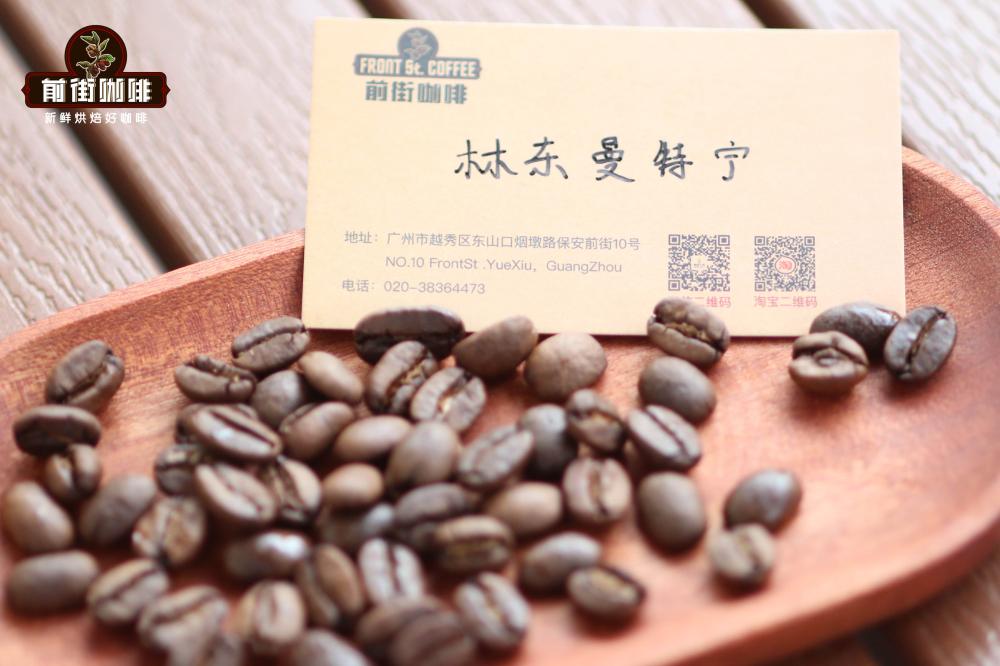
Front Street conducts cupping 8 hours after the coffee beans are roasted. Through cupping, Front Street found that Golden Mandheling tastes cleaner than Lintong Mandheling; the herbal, earthy, and woody flavors inherent to Mandheling are almost gone, but the caramel sweetness is more intense, and the fruity acidity is also brighter and more elegant. Generally, Lintong Mandheling is best roasted until after second crack before dropping, which can effectively reduce off-flavors, but Golden Mandheling dropped before or after second crack both has excellent transparency and sweetness, offering a broader space for roasting interpretation.
Front Street Pour-Over Recommendation
Golden Mandheling coffee beans are dark-roasted, so Front Street will use a pour-over recipe designed for dark roasts that expresses a full-bodied mouthfeel.
Dose: 15g
Ratio: 1:15
Grind size: 70% passing through a No. 20 sieve
Water temperature: 87°C
Dripper: Kono dripper
Pouring method: three-stage
Time: 2 minutes
For the first stage, pour 30ml for blooming. This pour fully saturates the coffee grounds and allows degassing, so that the coffee's flavor compounds can be better extracted afterward; for the second stage, pour 100ml. This stage mainly washes out all of Mandheling's golden foam.
For the final stage, pour 95ml gently in the center. This can enhance the coffee's sweetness, expressing an overall thick, full-bodied mouthfeel, with caramel sweetness and chocolate, nutty flavors.
For professional coffee knowledge exchange and more coffee bean information, please follow Coffee Workshop (WeChat official account: cafe_style) For more specialty coffee beans, please add the private WeChat of Front Street Coffee (FrontStreet Coffee), WeChat ID: qjcoffeex
The above content is compiled by CoffeeHunters, a coffee news website.


