







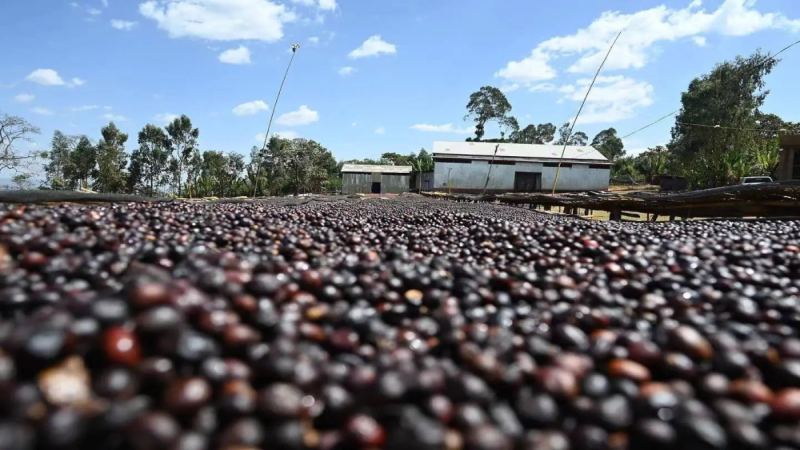
Coffee cherries and the Red Cherry Project explained
Yirgacheffe is known for bright fruit acidity and floral notes, but naturally processed lots can show prominent sweetness instead. The Red Cherry project, started by Dutch green bean trader Trabocca, pays farmers to hand-pick only fully ripe red cherries, adds loan support, and sets cup-test purchasing standards, which pushes quality up at the farm level.
Ethiopia has exported coffee for hundreds of years, and its plateau climate keeps most growing areas mild year-round. Local farming families depend on coffee as a main cash crop. Natural processing dries the whole cherry around the seed, which is how the fruit sweetness and layered body develop in these lots.
Yirgacheffe is usually known for its bright fruit acidity and floral notes, but not all Yirgacheffe follows the acidic route. Front Street Sun-Dried Red Cherry is a choice with prominent sweetness and rich layering. This article begins with the origins of Ethiopian coffee, explains the meaning of coffee cherry, and describes how the Red Cherry project initiated by the Dutch green bean trader Trabocca encourages farmers to improve quality through fully hand-picking all-red fruit, loan support, and cup-test purchasing standards; it also explains how the natural process gives the coffee delicate flavors, and includes Front Street Yirgacheffe Red Cherry pour-over recommendations.
As a representative of single-origin specialty coffee, Ethiopia has continued to export high-quality coffee beans to the world for hundreds of years. Its layered mouthfeel, distinctive acidity, and subtle floral aroma have made many coffee lovers deeply attached to this ancient growing region. On Front Street's bean list, there are as many as dozens of coffees to choose from, but many friends, as soon as they walk in, unhesitatingly order an Ethiopian pour-over. Why exactly is that? In everyone's mind, what distinctive characteristics does Ethiopian coffee have?
The Long History of Ethiopian Coffee Culture
Located in eastern Africa, Ethiopia belongs to the tropical zone and also has a plateau landscape, so the climate in most places is relatively mild throughout the year. Local residents mainly rely on farming and animal husbandry for their livelihood, and coffee is one of the most important economic crops there.
According to legend, on the plateau of Ethiopia in Africa, a shepherd named Kaldi discovered during grazing that his goats became unusually active after eating some kind of wild red fruit. Out of curiosity, he also picked some and took them home to taste. After eating them, he felt refreshed and especially excited, so he shared this with the people in his village. The news gradually spread, coffee beans were later introduced to the Arabian Peninsula, and cultivation and trade slowly rose, thus beginning a centuries-long journey of global dissemination.
Recommended Yirgacheffe with lower acidity and prominent sweetness
Most of the time, when people mention Yirgacheffe, the first thing they think of is coffee with bright fruit acidity, such as Front Street Washed Yirgacheffe and Front Street Gudingding Cooperative, which, with their outstanding floral aroma and citrus-lemon acidity, have become among the top specialty representatives of Ethiopian coffee. However, among Yirgacheffe coffees there are also choices that are not acidic and have high sweetness, namely Front Street Sun-Dried Red Cherry. In addition to citrus aromas, it also presents flavor characteristics of peach, berries, cocoa, and honey, with very rich layering.
OPERATION CHERRY RED
When it comes to "Operation Cherry Red," many friends may still be unfamiliar with the name. So what exactly is the Operation Cherry Red project? Probably only a few people can explain it clearly. Operation Cherry Red (ORC) is a project aimed at improving the quality of small-scale farms. In 2007, Trabocca, the largest green bean trader in the Netherlands, proposed "Operation Cherry Red" in order to find high-quality Ethiopian beans. The project requires that when picking green coffee beans, not only must fully red fruit be selected, but the entire harvest must also be hand-picked. However, this is only the most basic requirement; the whole project is far from this simple.
In order to help Ethiopian coffee farmers obtain better incomes and improve local people's standard of living, in 2007 the Dutch trader Trabocca and farmers in the producing areas jointly launched the "OPERATION CHERRY RED PROJECT." Its purpose is purely to encourage farmers to improve coffee bean quality. At the start of each harvest season in the producing areas, Trabocca designates harvest plans for microclimate zones, hand-picking 100% ripe red coffee cherries, with output roughly between 1,500 kg and 3,000 kg.
Trabocca provides financial loan support, new hardware equipment, and knowledge and technology related to production and processing to help farmers improve their production level, and promises that as long as the actual output quality meets cup-test standards in the cupping rooms in Addis Ababa, Ethiopia, and Amsterdam, Netherlands, it will purchase at generous prices. The passing standard set by Trabocca is 88 points.
Natural/Dried-in-the-Fruit:
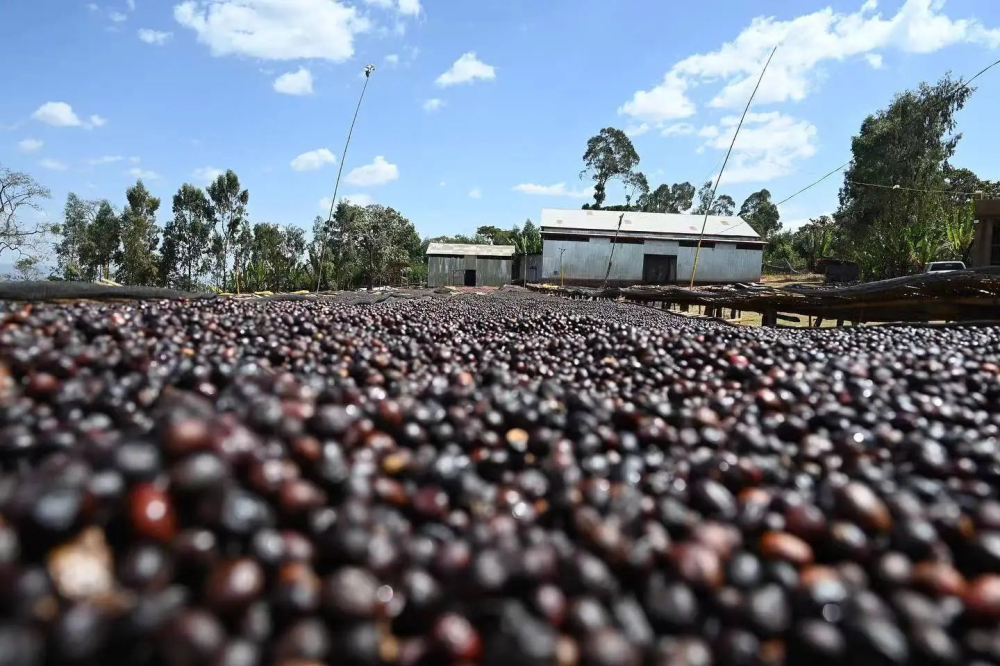
What gives Front Street Yirgacheffe Red Cherry its delicate flavor, in addition to the origin and picking method, is even more inseparable from its refined natural process. After picking, the fruit enters the sun-drying process directly without processing; this is the oldest existing processing method. The drying process usually lasts about 4 weeks. The processing method must be very rigorous to ensure that the coffee does not lose any flavor. The natural sun-drying method requires the local climate to be extremely dry, and during the process the beans must also be turned at irregular intervals to avoid uneven heating that could produce undesirable fermented flavors.

In order to express the floral and fruity charm of Yirgacheffe, Front Street Sun-Dried Red Cherry ultimately chose a medium-light roast. The coffee beans shipped are all freshly roasted within 5 days and are suitable for extraction by various methods such as pour-over, cold brew, drip bags, and French press immersion. In addition, for those who have an espresso machine or moka pot at home, Front Street has specially launched Front Street Yirgacheffe Red Cherry SOE coffee beans, which are a medium roast. Made into espresso, they carry obvious tropical fruit and caramel flavors, accompanied by the fresh fragrance of citrus and berry sweetness.
Front Street Yirgacheffe Red Cherry Coffee Pour-Over:
Recommended brewing method: Pour-over
Dripper: Hario V60
Water temperature: 90-93°C
Coffee-to-water ratio: 1:15
Grind size: fine granulated sugar (80% passing rate on China No. 20 sieve)
Yirgacheffe Red Cherry coffee brewing method: 30 grams of water for blooming for 30 seconds, pour water to 125 grams in stages, and when the water level drops and is about to expose the coffee bed, continue pouring water to 225 grams and stop. (Start timing from the beginning of blooming.) The extraction time is 2 minutes.
The above content is compiled by CoffeeHunters, a coffee news website.


