







What Sets Lintong and Golden Mandheling Coffee Apart?
Lintong and Golden Mandheling are both wet-hulled Sumatran coffees with a full body and deep, low-toned flavor. Lintong comes from the Lintong highlands at 1,100 to 1,600 meters and represents the classic Mandheling style, while Golden Mandheling reflects stricter screening standards that followed Japanese and Indonesian partner demand.
Variety and processing drive the difference. Lintong uses Typica and Caturra at lower acidity and higher body, and its wet-hulled beans often crack into sheep-hoof shapes that are a signature trait rather than a defect. Golden Mandheling applies tighter screening, giving a more refined and consistent cup than the conventional version.
When Mandheling is mentioned, many coffee lovers think of its signature full body and deep, low-toned flavors. The most talked-about options on the market are Front Street Lintong Mandheling and Front Street Golden Mandheling. The former is regarded as the representative of classic Mandheling, while the latter rose to fame after Japanese and Indonesian partners established strict screening standards. Although both are wet-hulled, they differ in style due to different producing regions, varieties, and screening precision. This article starts from the origin background, variety characteristics, processing methods, grade standards, and Front Street's actual roasting and pour-over performance of Lintong and Golden Mandheling, comprehensively sorts out the flavor differences between the two beans, and answers the question of whether "Lintong Mandheling is necessarily inferior to Golden Mandheling."
At present, the Mandheling coffees with relatively high recognition and broad acceptance in the market are mainly Front Street Lintong Mandheling and Front Street Golden Mandheling. Among them, Front Street Lintong Mandheling is regarded as the most classic form of Mandheling.
【Lintong Mandheling】
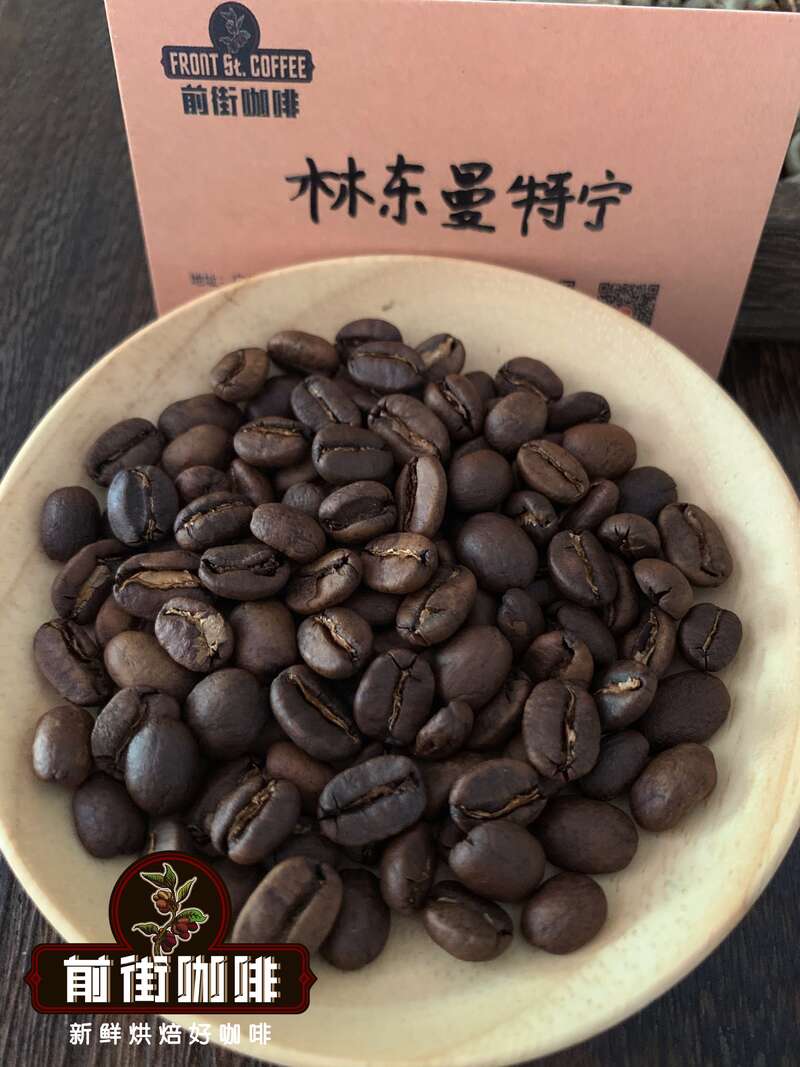
Front Street Lintong Mandheling coffee beans Region: Lintong, Sumatra Altitude: 1,100-1,600 meters Variety: Typica, Caturra Processing method: Wet-hulled Flavor: Baked toast, nuts, caramel, pine, herbs
Front Street Lintong Mandheling comes from the Lintong highlands in north-central Sumatra, not far from Lake Toba. Lintong Mandheling is a conventional version of Mandheling, showcasing a typical Sumatran coffee style. Front Street Lintong Mandheling also uses the traditional wet-hulled method, so it has lower acidity and higher body. However, the wet-hulled method also brings about a phenomenon: semi-hard, semi-soft moist raw beans are easily compressed when the parchment and mucilage layer are removed, causing the beans to crack into a hoof-like shape, commonly known as sheep-hoof beans. This is not a defect bean, but rather a highly recognizable characteristic of Mandheling. Lintong Mandheling does not deliberately pursue refinement in the screening stage, and less meticulous processing can easily lead to less stable output, but this has not affected enthusiasts' love for its full-bodied flavor.
Typica has bronze-colored tips, oval or slender-pointed bean shape, and elegant flavor, but the tree is weak, has poor disease resistance, and low yield. In addition to Mandheling, several other Front Street coffee beans, such as Jamaica Blue Mountain and Hawaii Kona, are also Typica. Caturra is a natural mutation of the Arabica Bourbon variety, discovered in Brazil in 1937. Its tree is shorter than Bourbon, and because it inherits Bourbon lineage, its disease resistance is relatively weak, but its yield is higher than Bourbon.
【Golden Mandheling】
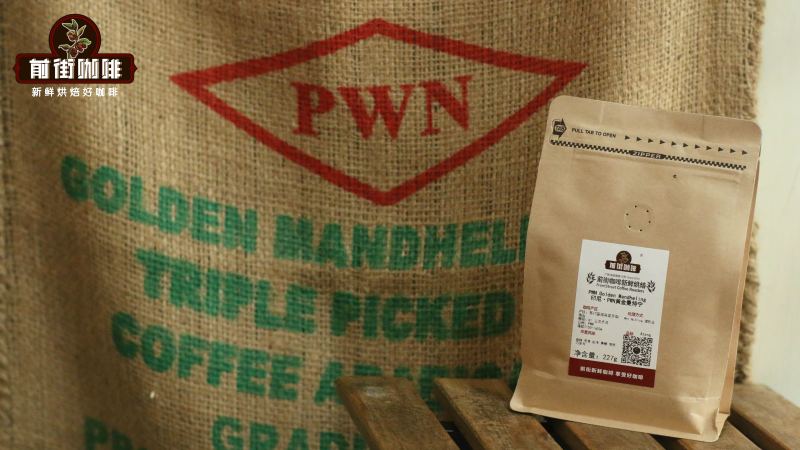
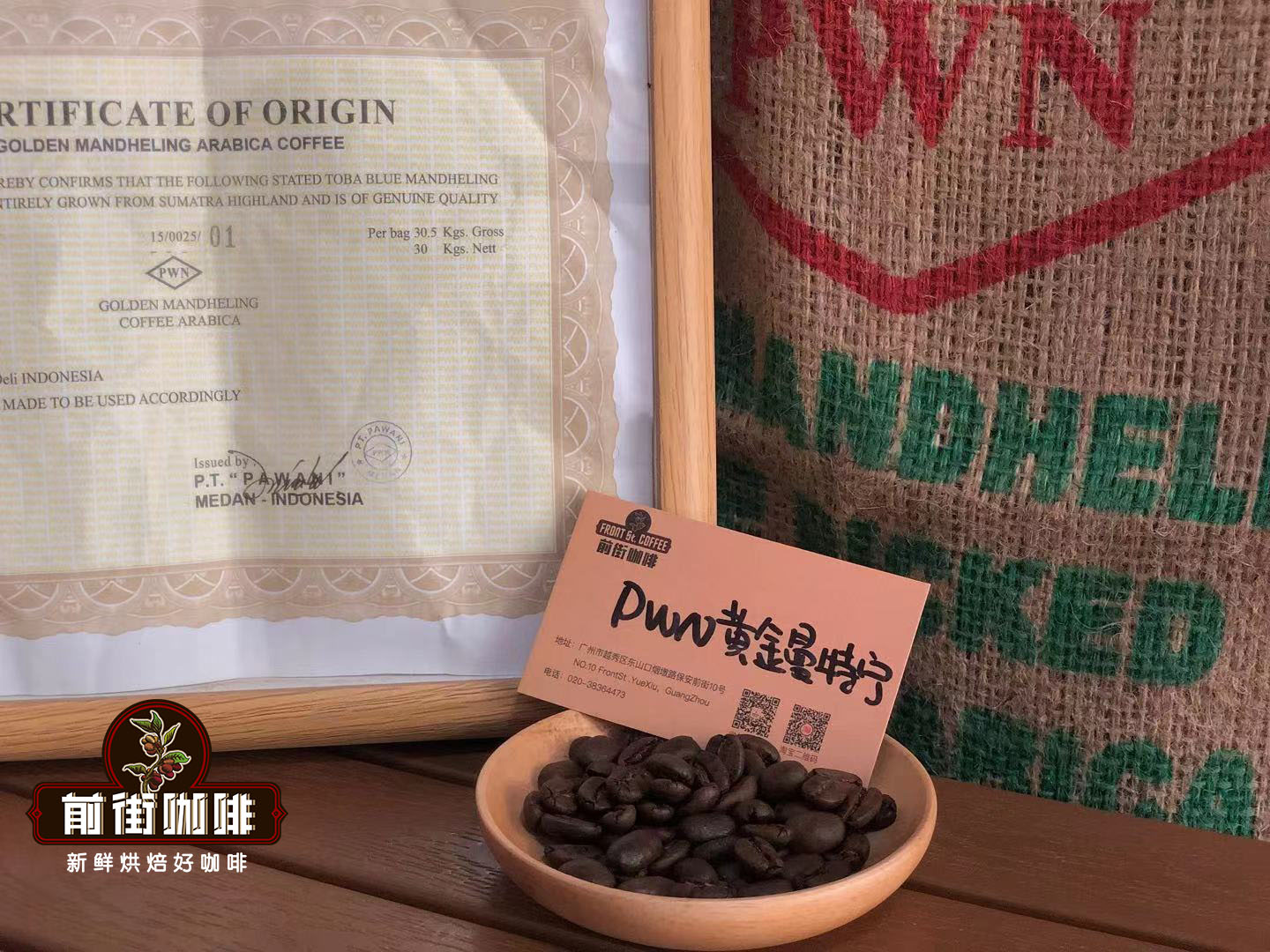
Front Street PWN Golden Mandheling coffee beans Region: Gayo Mountain, Aceh, Sumatra Altitude: 1,100-1,600 meters Variety: Ateng Grade: G1, 3 times hand-sorted Processing method: Wet-hulled Flavor: Spices, herbs, caramel, pine, nuts, chocolate
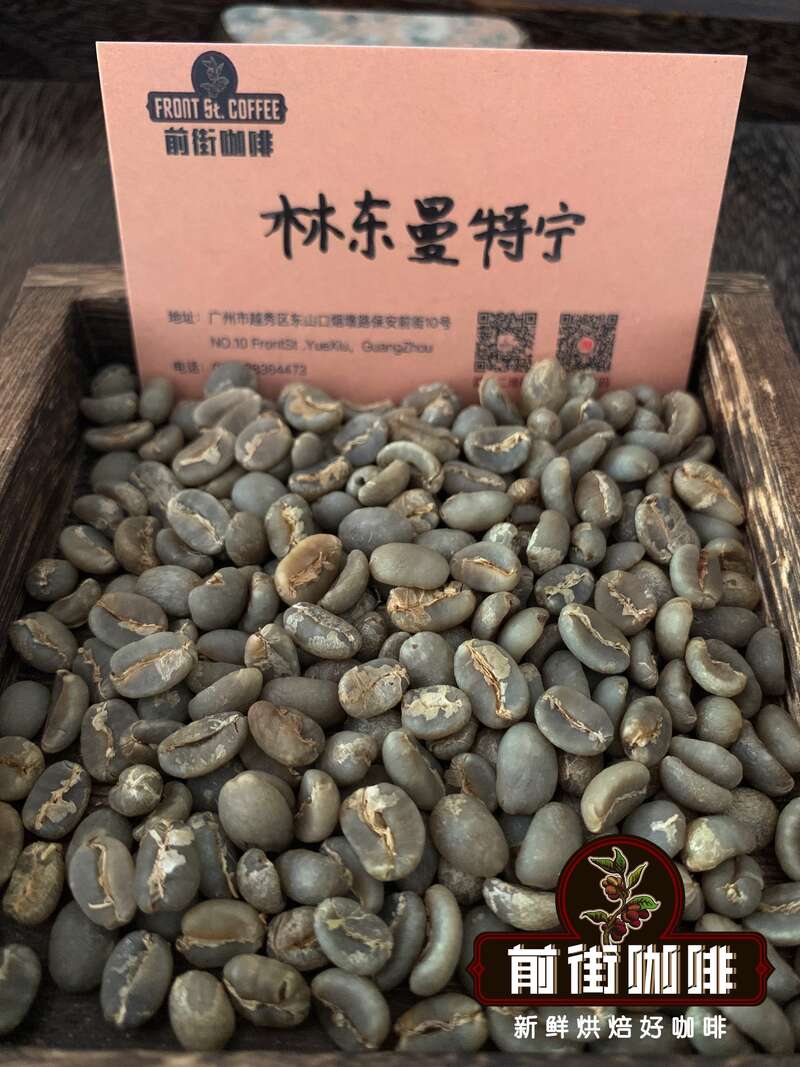
After being introduced to Mandheling, the Japanese have always paid special attention to this bean and established a strict screening system while cooperating with local green bean traders. After processing, the green beans undergo density and color sorting, and then multiple rounds of hand sorting, ultimately presenting Mandheling with uniform color and even bean shape. It is said that during green bean processing, Mandheling in the sunlight gives off a golden luster, hence the name Golden Mandheling. The green bean specification of Front Street PWN Golden Mandheling is 18 mesh and above, with fewer than 3 defect beans in a 300-gram sample. It belongs to the highest grade G1, is dark green in color, and has a neat flat-bean shape. After strict screening, Golden Mandheling not only removes the earthy off-flavors common in ordinary Mandheling, but also tastes cleaner and more transparent, with a more prominent sweetness.
However, the one that registered Golden Mandheling as a trademark was not a Japanese company, but PWN (Pwani Coffee Company), an Indonesian local company that cooperated with Japanese companies in exporting Mandheling in the early days. What the Japanese company registered was "Gold Top Mandheling." The two do not differ much in flavor performance, but due to different brands and different merchant marketing strategies, changes in public opinion are unavoidable, so which of the two Golden Mandhelings is better is a matter of opinion.
Ateng is a hybrid between Arabica and Robusta, comprising several subtypes, and is widely grown in Sumatra and other small Indonesian islands. Simply put, it is a branch of Catimor, and Ateng is the local name.
Front Street Roasting Comparison When roasting these two Mandhelings, Front Street Coffee uses a medium-dark roast level, aiming to remove the excessive acidity of Mandheling and thereby enhance body and balance.
Machine: Yangjia 800N, 550g green beans charged
FrontStreet Coffee Front Street PWN Golden Mandheling Coffee Bean Roast Record Sheet
Front Street Lintong Mandheling Roast Record Sheet
Front Street Coffee Pour-Over Flavor Comparison When brewing these two Mandhelings, Front Street uses the same parameters. Dripper: Kono dripper; water temperature: 88°C; coffee dose: 15 grams; coffee-to-water ratio: 1:15; grind size: 70-75% passing through a No. 20 standard sieve; *Reason for choosing the Kono dripper: it has few ribs and they are located at the lower end, so the filter paper can fit closely against the wall of the dripper, restricting airflow to extend the contact time between water and coffee grounds, making extraction more complete and thereby enhancing the full-bodied taste.
Front Street uses staged extraction: bloom with 30 grams of water for 30 seconds, then pour in a slow circular stream until 125 grams for the stage break; when the water level drops and is about to expose the coffee bed, continue pouring until 225 grams and stop; when the water level again drops and is about to expose the coffee bed, remove the dripper. The extraction time (starting from the beginning of blooming) is 2'00".
【Flavor Descriptions of the Two Mandheling Coffee Beans】
Front Street PWN Golden Mandheling coffee bean flavor: Layered and varied, full-bodied and clean, highly balanced, with rich nut and caramel aromas, a chocolate note, and a long finish. Front Street Lintong Mandheling coffee bean flavor: Herbal and medicinal on the entry, dark chocolate, caramel, sweet aftertaste.
The above content is compiled by CoffeeHunters, a coffee news website.


