







How Does the Honey Process Shape Costa Rica Coffee?
Costa Rica's Tobosi Estate honey-processed Catuai delivers delicate fruit and floral notes with almond, vanilla, and walnut, plus a mild sweetness and a smooth, full body. Grown in Tarrazu at 1,600 meters and graded SHB micro-lot, the coffee carries the honey-like sweetness the country is known for.
The honey process leaves part of the mucilage on the bean during drying, which supports that sweetness. Costa Rica was the first Central American country to cultivate coffee, and its volcanic soils in the Central Plateau, between 1,200 and 1,600 meters, feed the crop. The estate behind this lot, Finca Don Antonio under Grupo Los Grande de Copey S.A., took first place in the 2017 Costa Rica COE.
Costa Rican coffee is renowned for its sweet, honey-like flavor, and the Tarrazu region is particularly representative of specialty coffee. In this article, Front Street Coffee will take you deep into Costa Rica's Tobosi Estate honey-processed Catuai coffee, from the region's characteristics, variety and processing method, to cupping flavors, and provide a detailed guide on how to make a fascinating cold brew coffee using Front Street Strawberry Candy Coffee. Whether you want to explore the source of Costa Rican coffee's sweetness or want to try cold brew extraction at home, this tutorial offers practical reference.
Product Name: Costa Rica Finca Tobosi TABLON Catuai Honey
(Costa Rica Finca Tobosi TABLON Catuai Honey)
Flavor Description: Delicate fruit and floral notes, almond, vanilla, walnut, mild sweetness, refined mouthfeel, smooth and full-bodied
Award Record:
Finca Don Antonio under Grupo Los Grande de Copey S.A.
2017 Costa Rica COE 1st Place
Country: Costa Rica
Region: Tarrazu
Estate: Finca Tobosi
Variety: Catuai
Altitude: 1600 meters
Grade: SHB Micro-lot
Processing Method: Honey Process
Harvest Period: N/A
Costa Rican coffee, with its honey-like sweetness, leaves many veteran coffee enthusiasts unable to forget it. Customers often come to FrontStreet Coffee and ask the baristas whether they have pour-over beans with prominent sweetness. At such times, the baristas at Front Street will bring out coffees from Costa Rican regions and recommend them one by one. Why does Costa Rican coffee present a honey-sweet character? Today Front Street will chat with everyone about Costa Rican coffee beans.
Costa Rican Regions Located in Central America, Costa Rica was the first country in Central America where coffee was introduced and cultivated, and it has a long coffee history. The volcanic soil here is fertile and drainage conditions are excellent, especially in the Central Plateau, at an altitude between 1200 and 1600 meters, with the harvest season lasting from November to March of the following year, including the three sub-regions of San José, Heredia, and Alajuela. Within the region stand three high-altitude volcanoes, Irazu, Barva, and Poas, providing abundant nutrients to the surrounding coffee. The support of microclimates and the nourishment of the fertile soil of two volcanoes give the beans of this area outstanding quality, such as chocolatey cocoa tones, bright fruit acidity, and elegant aroma.
Costa Rica has a total of eight major coffee regions, namely: Valley Central Occidental, Valley Central, Tarrazu, Tres Rios, Orosi, Brunca, and Turrialba. Most of Costa Rica's specialty coffee comes from the Tarrazu region.
Tarrazu is located south of the capital San José and is one of the country's most watched coffee-growing areas. "La Minita Tarrazu" is a well-known local product, but its output is limited, about 72,600 kilograms per year, produced from a piece of land named "La Minita," owned by the McAlpine family of the United Kingdom for the last three generations, with the LaMinita estate in the Tarrazu region producing only 160,000 pounds annually. In fact, this land can produce more than 450 tons of coffee each year. However, La Minita Tarrazu coffee does not use artificial fertilizers or insecticides during cultivation, and harvesting and selection are all done by hand, in order to avoid some degree of damage to the coffee beans caused by air-jet selection methods.
Costa Rican coffee has always been known for balanced flavor, rich chocolate, and smooth mouthfeel. Tarrazu is located south of the capital San Jose and is one of Costa Rica's most valued coffee-growing areas. Front Street believes Tarrazu coffee beans are plump, with a rich BODY, smooth mouthfeel, strong chocolate and nut aromas, moderate acidity, and an attractive fragrance. FrontStreet Coffee's Costa Rican representative — Miramar Estate Geisha blend coffee beans.
Country: Costa Rica Estate: Miramar Estate Altitude: 1700m Processing Method: Raisin Honey Process Variety: Geisha, ET47, SL28, MAICO
Costa Rica Miramar Estate Miramar Estate is very small in scale, and the entire estate is run by Esteban and his family together. Esteban Sanches was originally a family member of the neighboring Candle Estate. Out of his dedication to coffee beans, he independently founded Miramar Estate. The small wet-processing machine at the processing station was designed and assembled by Sanches himself.
In the coffee farm, Sanches said that the quality of coffee is determined starting from the tree itself. Although machines can distinguish good from bad, if the quality grown is excellent enough, there is no need for machines to screen superior and inferior beans. He also mentioned that God has given us a beautiful environment, and we care for the coffee beans with love. This is giving back and sharing. He is grateful for everyone's help that allowed him to realize his dream, and he is also willing to share his experience and results with other farmers, so that everyone's coffee dreams can come true. Coffee Bean Varieties
The Costa Rican Geisha blend purchased by FrontStreet Coffee this time is composed of 50% Geisha coffee beans and 50% a mixture of ET47, SL28, and MAICO. These beans are all grown on the same estate and then blended, making it a single-origin coffee.
It is worth mentioning that among the ET47 and SL28 varieties, ET47 is a native variety from Ethiopia. In the 1990s, the Costa Rican Coffee Institute introduced many varieties as research trees for resistance to leaf rust and gave them to farmers in the Tarrazu region to plant. The original goal of breeding SL28 was to produce coffee beans with both high quality and resistance to pests and diseases in large quantities, while in some regions the breeding goal was mainly high yield, without considering disease resistance. Thanks to Bourbon genetics, although SL28's yield later fell short of expectations, its copper-colored leaves and broad-bean-shaped seeds have excellent sweetness, balance, and complex, varied flavors, as well as distinctive citrus and smoked plum characteristics.
This bean is a Geisha blend — is it still considered a single-origin coffee bean? Front Street believes it certainly is. All the varieties in this coffee bean come from Miramar Estate, belonging to the same single origin, so it is a single-origin coffee bean. Why say this? Front Street gives an example: Ethiopian coffee varieties are numerous and complex, and local coffee trees are basically mixed-planted and then mixed-harvested. This is also why Ethiopian coffee beans vary in size. As long as the coffee beans are grown within the same region, whether a single variety or mixed varieties, they are all single-origin coffee beans. Coffee beans like Ethiopia's are equivalent to natural blending, while this Geisha blend belongs to post-blending.
Coffee Bean Processing Method
The raisin honey process retains 100% of the mucilage and uses a zero-water processing method. This increases the difficulty of the honey processing method and requires strict control of timing. On the day the coffee cherries are harvested, the harvested coffee fruit is poured into a large water tank. Fully ripe and plump fruits sink to the bottom; underdeveloped or overripe fruits float to the surface, and these floating beans need to be removed. The selected coffee fruits are placed on raised beds to dry for at least three days, then the cherry skin is removed, and after retaining the mucilage, they are dried again.
At this stage, climate factors are the key to successful honey processing. During drying, these coffee cherries must be constantly turned so that drying is even, but the frequency of turning must be well controlled. Drying must be slow to ensure the coffee has fermentation treatment, but not so slow that over-fermentation occurs. Front Street believes that this sweetness-rich raisin honey processing method can give the coffee a white wine-like mouthfeel and balanced acidity, with a relatively rich fermented aroma.
FrontStreet Coffee Green Bean Analysis
This batch of Costa Rica Tarrazu Geisha coffee purchased by FrontStreet Coffee is composed of 50% Geisha coffee beans and a mixture of ET47, SL28, and MAICO. The Geisha variety coffee beans provide this coffee with jasmine aroma, while the other varieties bring richer strawberry and berry flavors. Through the raisin honey processing method, the sweetness of this coffee is enhanced. In order to highlight this bean's floral aroma and fermented sweetness, Front Street's roaster used a medium-light roast for this coffee bean.
FrontStreet Coffee Cupping Report FrontStreet Coffee conducts cupping within 8-24 hours after the sample coffee beans are roasted. The cupping bowls generally used by FrontStreet Coffee baristas have a capacity of 200ml ceramic bowls, marked with 150ml and 200ml scale lines. According to SCAA standards, the TDS of water is about 150ppm. Too low TDS easily causes over-extraction, while too high affects mouthfeel and easily causes under-extraction. The water temperature used for cupping is 94 degrees. According to SCAA cupping standards, the grinding degree is controlled so that the pass rate through a No. 20 standard sieve (0.85 mm) is 70%-75%. Ratio: 11 grams of coffee powder plus 200 milliliters of hot water, i.e. 1:18.18, so that the extracted concentration falls exactly within the golden cup range of 1.15%-1.35%. Steeping time: 4 minutes.
Dry Aroma: dried fruit, berries Wet Aroma: floral, berries Flavor: raisin, berries, nuts, creamy mouthfeel
Costa Rica Honey-Processed Coffee Cold Brew Tutorial
Cold brew ratio: 1:10 (60g Front Street Strawberry Candy coffee powder, 600ml ice water)
Ice water amount: 1:1, 300g edible ice and 300g edible water Cold brew grind size: coarse sugar size (just a little coarser than medium-roast pour-over grind size)
FrontStreet Coffee Cold Brew Coffee Steps
1. Place a round filter paper at the bottom of the powder cup, wet it with water so it adheres to the cup wall, add the ground 60g Front Street Strawberry Candy coffee powder, then shake it level to flatten the coffee surface. You can also use the weight of the tamper itself to gently press the powder layer so that the surface is level.
2. Lay a piece of filter paper on top of the Front Street Strawberry Candy coffee powder layer. Because the tension of the filter paper allows water to distribute evenly across the surface of the coffee powder layer for extraction. Without filter paper, long-term dripping would create a pit in the powder bed.
3. Use ice water to wet the entire powder layer. This step is like the blooming in pour-over and can improve extraction effectiveness and consistency of the final product.
4. Add a 1:1 ice-water mixture to the dripping bottle and adjust the speed at which water drops fall. Front Street recommends a dripping speed of 7 drops per 10 seconds.
5. After production is complete, pour it into a sealed, clean, water-free and oil-free bottle and place it in the refrigerator for oxidation, allowing the flavor molecules of the cold brew coffee to be released before tasting.
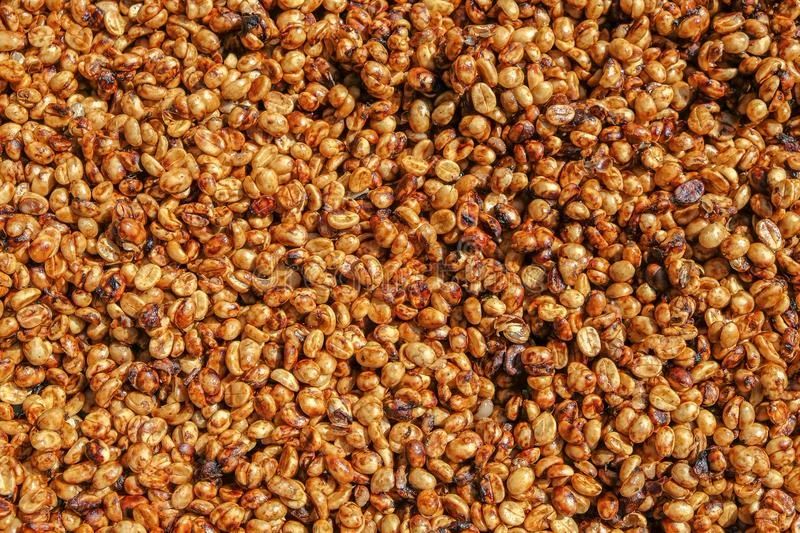
The cold brew made with Front Street Strawberry Candy Coffee smells of a light jam aroma. On entry, there is an obvious fermented ripe berry sensation, similar to the full sweetness of raisins, with a creamy, smooth mouthfeel and a finish somewhat like black tea.
The above content is compiled by CoffeeHunters, a coffee news website.


