







How Do Old Instant Coffee Brands Like Nescafe Compare Today?
Instant coffee began in 1901, when Chicago chemist Satori Kato produced coffee powder by vacuum drying and patented it in 1903. Nestle improved the process in 1937 and launched Nescafe, and instant coffee spread worldwide after World War II. The main difference between products today is processing: spray-drying versus freeze-drying, which shapes flavor and texture.
Freeze-dried coffee is a branch of instant coffee, not a separate category, which explains why some jars hold fine powder and others hold granular chunks. A hands-on comparison of five brands from different countries, including Tim Hortons, Yongpu, Eagle Eye, Satunbal, and Lian Coffee, looks at how each drying method affects aroma, body, and cost.
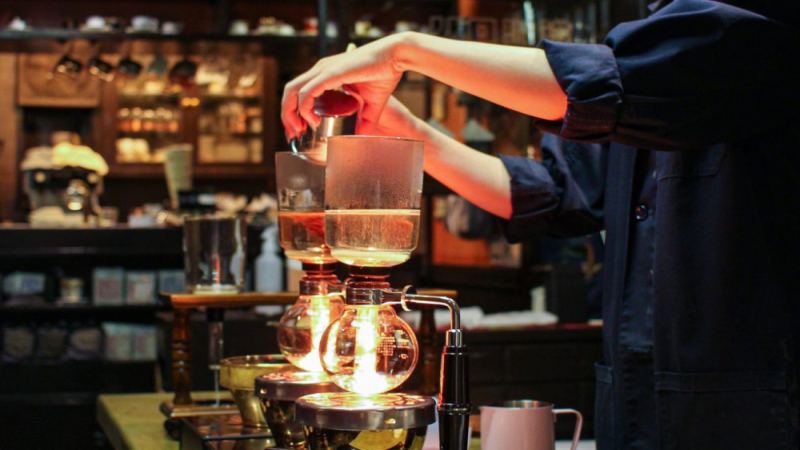
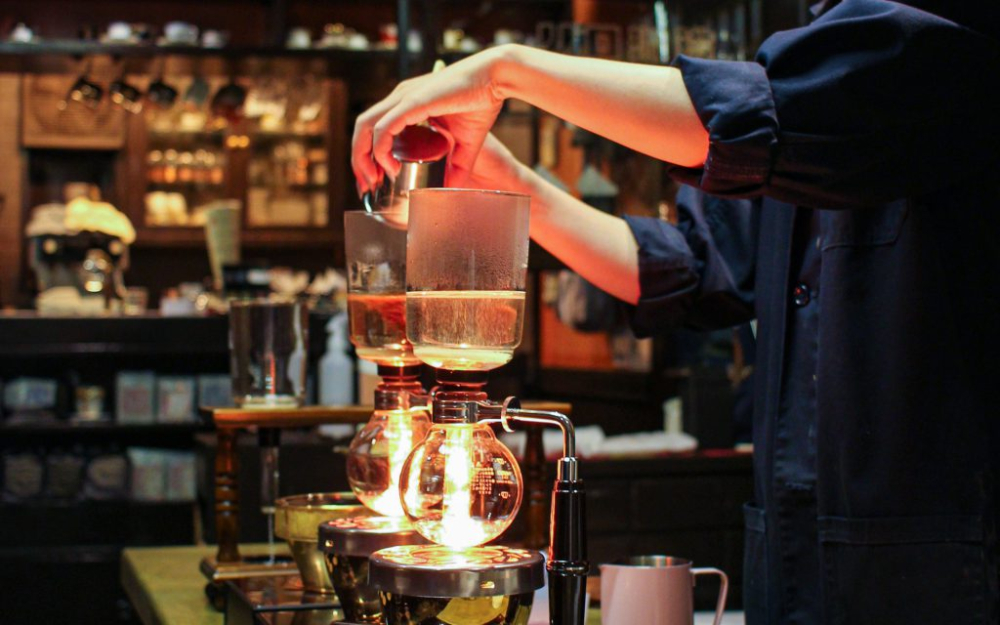
The siphon pot, with its unique distillation-style extraction, delivers a fuller, more solid mouthfeel and richer aroma than pour-over. From the perspective of Front Street, this article systematically sorts out the extraction principles, structural components, and suitable coffee bean types for the siphon pot, and provides a detailed analysis of key parameters such as the coffee-to-water ratio, timing of adding coffee grounds, stirring techniques, and judging when to turn off the heat. It also includes a complete eight-step operating procedure to help coffee enthusiasts consistently reproduce at home a cup of siphon coffee that boasts both nutty notes and a full body. Whether you are a beginner just getting to know the siphon pot or an experienced player looking to refine your technique, you will find practical and actionable advice here.
For more specialty coffee knowledge, please follow the WeChat public account: FrontStreet Coffee
The appearance of the siphon pot closely resembles equipment found in a chemistry lab. It uses pressure changes generated by steam as well as the siphon effect to complete coffee extraction. This device first appeared in Europe, and its trademark registration belonged to a French woman, Marie Fanny Amelne Massot. The classic spherical structure established the siphon pot's iconic status in coffee history, and it is still widely used by coffee enthusiasts around the world today. Today, Front Street will start with the extraction principles of the siphon pot and give everyone a comprehensive understanding of this charming coffee device.
Introduction to the Siphon Pot
The English name of the siphon pot is “SIPHON,” so it is also called a siphon pot. Its working logic is: after the water in the lower chamber is heated, it produces steam, and the pressure formed by thermal expansion and contraction pushes the hot water into the upper chamber, where it fully mixes with the coffee grounds; when the temperature drops, the liquid in the upper chamber flows back into the lower chamber through the vacuum tube, finally yielding coffee liquid. The name of the siphon pot comes precisely from the siphon principle it uses—achieving extraction through the pressure difference caused by temperature changes!
Anyone who has tasted siphon coffee will clearly feel that it differs greatly from pour-over coffee in mouthfeel and flavor. Pour-over coffee is cleaner on the palate, with clear layers and a distinct flavor direction; while siphon coffee presents a fuller tactile sensation, a richer aroma, and a more solid mouthfeel.
For this reason, in order to amplify this characteristic, when brewing coffee with a siphon pot, it is recommended to choose these medium-roast beans: Front Street Huilan, Front Street Bird of Paradise, Front Street Diamond Mountain, and Front Street Queen's Estate, which can simultaneously present nutty aromas and a full-bodied richness.
Structure of the Siphon Pot
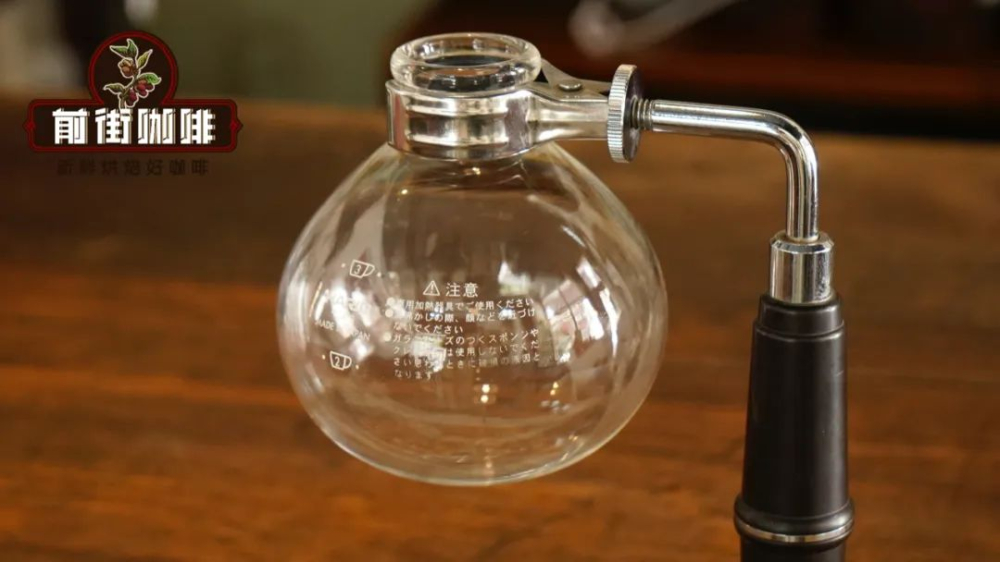
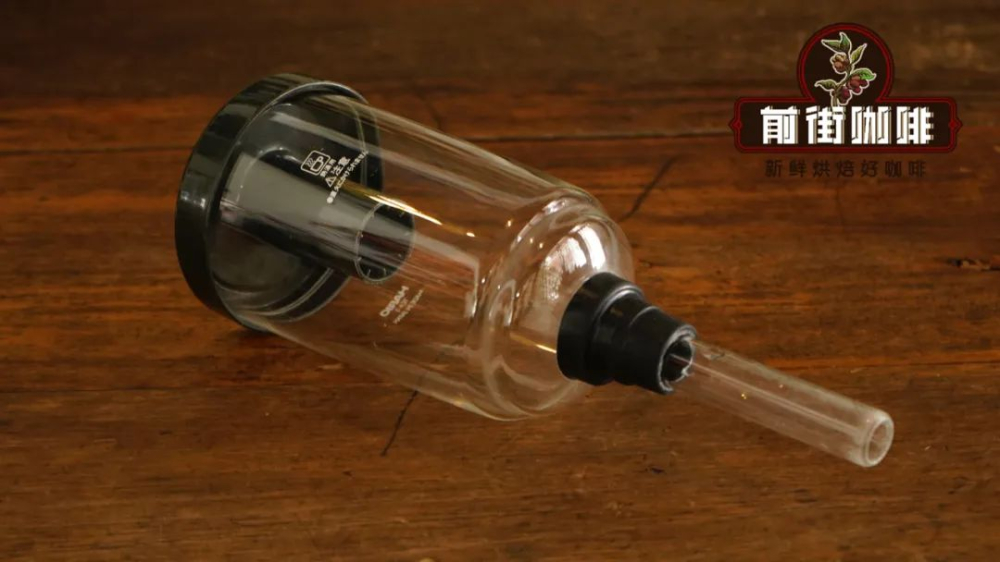
Appearance and construction:
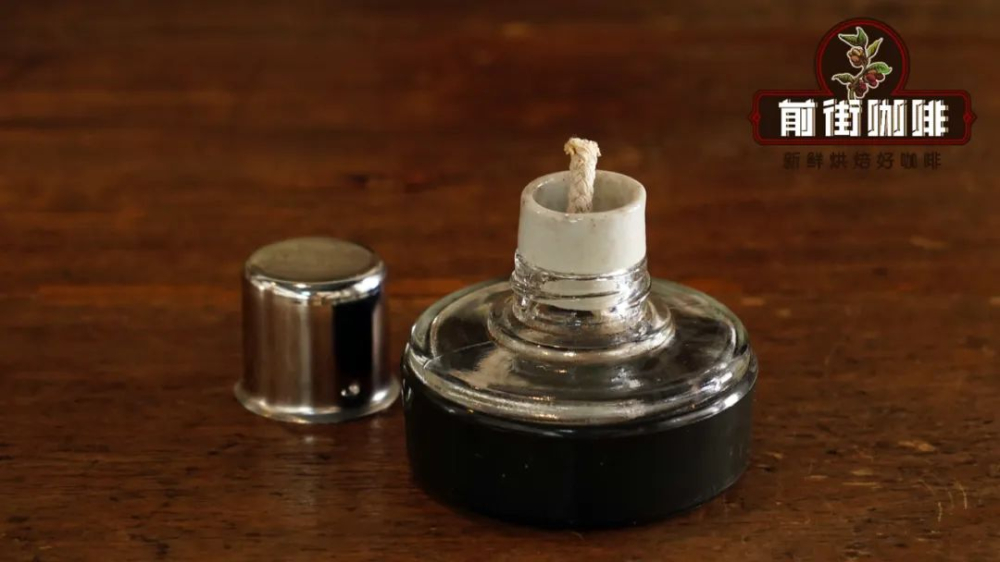
Heat source:
The siphon pot has no strict restrictions on the heat source. An open-flame gas stove, a safe infrared cooker, or an alcohol lamp with a scientific feel can all be used. Which one to choose depends on personal preference, and ultimately all can achieve the heating effect!
Grind size of the coffee grounds:
As for the grind size for siphon coffee, Front Street has previously conducted tests. It is finer than pour-over, with a 90% passing rate through a No. 20 sieve. (The passing rate for regular pour-over is usually 80–85%.)
When making siphon coffee in daily practice, the coffee-to-water ratio is mostly controlled between 1:10 and 1:12, among which 1:12 is favored by more people, while the parameter Front Street commonly uses is 1:11, that is, 20 g of coffee grounds with 220 ml of water.

Timing of adding coffee grounds:
The timing of adding coffee grounds is a rather controversial point in discussions about the siphon pot: should the grounds be added first, or after the water has fully risen? Traditional practice tends to favor the former, as adding the grounds first can make the flavor fuller; but most people believe that adding the grounds first easily leads to uneven extraction—during the process of the water level rising, it will first come into contact with a small portion of the coffee grounds at the bottom of the vessel, and before the water has finished rising and stirring has even begun, this portion of grounds has already been extracted ahead of time.
Therefore, many people choose to add the coffee grounds after the water level has finished rising. Front Street believes that for beginners, adding the grounds afterward is the safer choice, as it reduces unstable factors.
Stirring method:
A total of three stirrings are performed throughout the process: when the coffee grounds enter the water, when half of the steeping time has passed, and before turning off the heat. There are many kinds of stirring techniques: the cross stirring method, the Z-shaped stirring method, the ∞-shaped stirring method, the rotary stirring method, the patting method, and so on! There is no single standard method, but for friends who are new to this and lack stirring experience, Front Street recommends the patting method! This method is easy to control and quick to learn. You can pat the layer of coffee grounds according to the trajectory shown in the figure below, with the stirring rod using the center as a pivot and both ends moving back and forth in an offset manner.
Determining the end time:
When should the heat be turned off for siphon coffee? Some people like to judge by changes in aroma, but this greatly tests one's basic skills, so Front Street recommends that beginners use timing instead. If the coffee grounds are added first, start timing from the beginning of stirring; if the coffee grounds are added later, start timing from the moment the grounds are added. Turning off the heat source at around 50–70 seconds is sufficient.
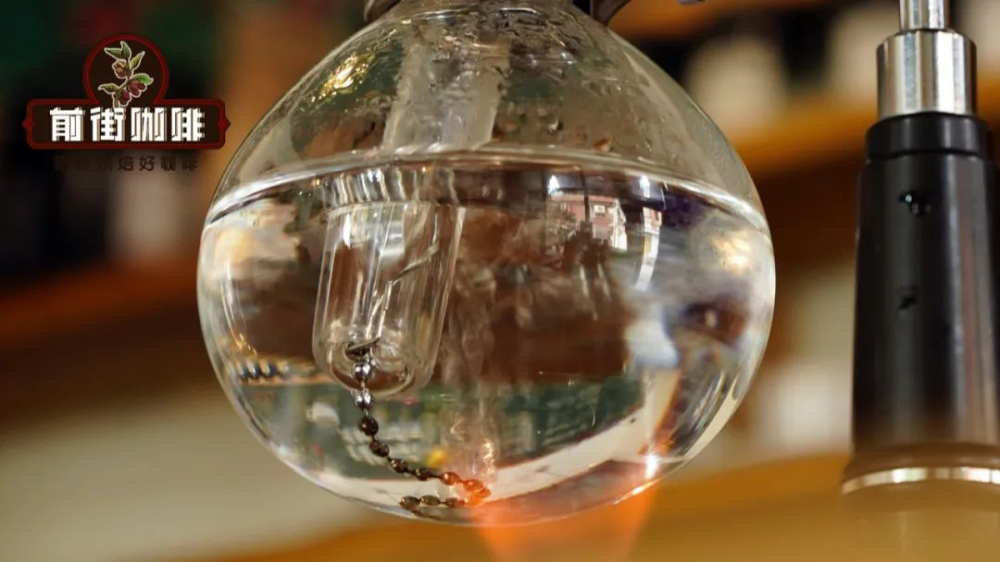
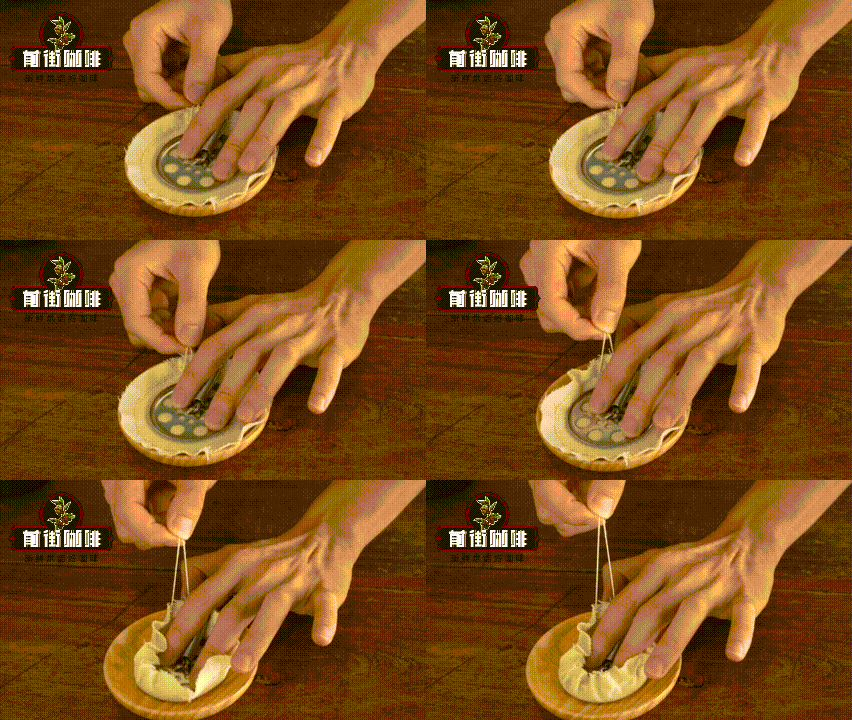
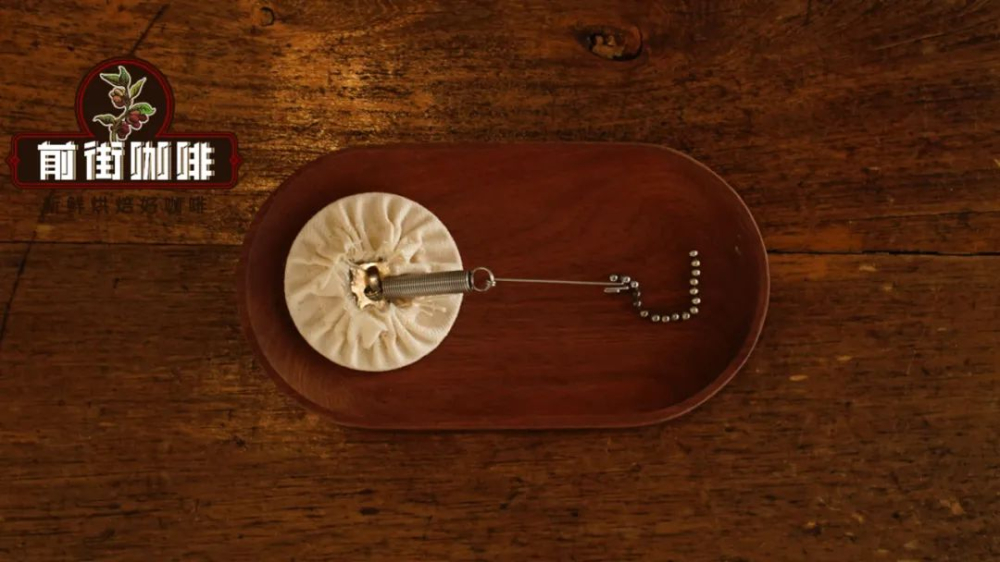
Step 1: Set up the lower chamber and the alcohol lamp, and install the hook of the upper chamber filter cloth in advance (place the filtration device into the upper chamber, stretch the hook out from below the tube, and hang it on the end of the tube).
Step 2: Pour in 220 ml of hot water.
Step 3: Wipe the lower chamber dry and turn on the heat source (wiping the lower chamber dry is to prevent it from cracking during heating).
Step 4: Insert the upper chamber diagonally into the lower chamber, and make sure the anti-explosion bead touches the bottom of the lower chamber.
Step 5: When the lower chamber begins to boil and water droplets appear, straighten the upper chamber and press it firmly, then wait for the water in the lower chamber to be drawn up into the upper chamber.
Step 6: When the upper chamber stops drawing up water, pour in the coffee grounds and start timing. In the first stage, use the patting method to press the coffee grounds into the water and begin even extraction.
Step 7: In the second stage, at 25 seconds, begin using the stirring method recommended by Front Street to shake evenly, so that the coffee can clearly be divided into three layers: coffee foam, coffee liquid, and coffee grounds.
Step 8: In the final stage, at fifty seconds, stir clockwise. At 60 seconds, remove the heat source and wait for the coffee liquid to flow back into the lower chamber. (After removing the heat source, wiping the lower chamber with a dry cloth can speed up the reflux time.)
The above content is compiled by CoffeeHunters, a coffee news website.


